AI Tech News Last 24 Hours
SubmitArtificial intelligence moves quickly, and this section captures its most recent developments. Coverage includes new model releases, research milestones, AI product launches, startup funding, and the policy debates surrounding the technology. It is a convenient briefing for anyone trying to keep pace with AI's constant stream of news.
A single day can bring a frontier model announcement, benchmark disputes, an enterprise adoption deal, a lab safety controversy, and a nine-figure funding round, and this section aims to catch them all. Coverage spans research labs, chip suppliers, application startups, and the regulators trying to keep up.
No area of technology compresses more change into less time, and staying a day behind in AI can mean missing something genuinely important. Engineers building with these models, executives planning around them, and researchers tracking the field use a rolling AI briefing to keep their bearings.
2026-11-11
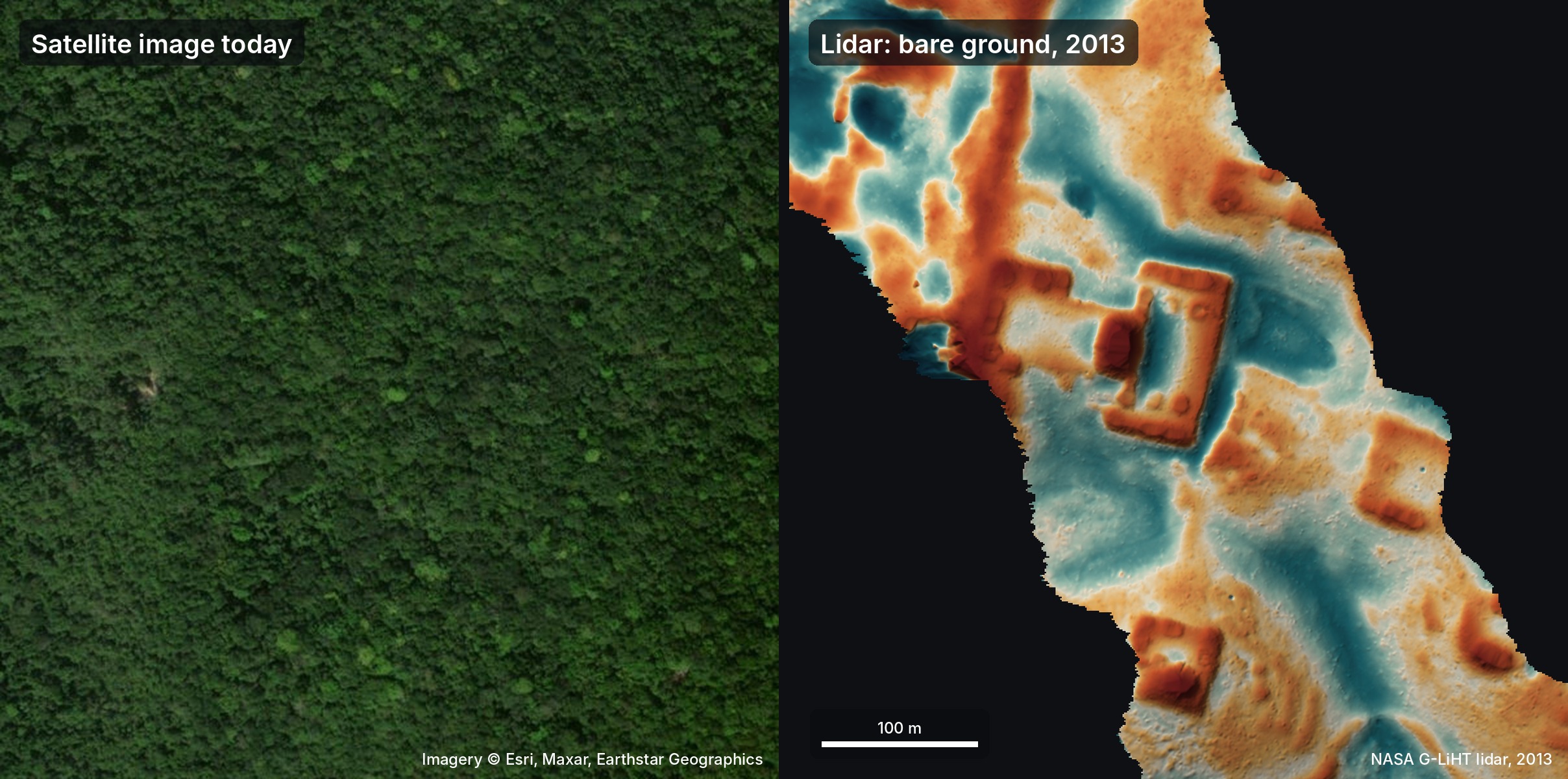
My AI agents found an unmapped Maya site
2026-11-11AI agents analyzed public lidar data overnight and identified a Maya site beneath the jungle. Archaeologists had already mapped the site, but it had not yet been added to Mexico’s official register.
CommentsAWS Finally Built Its Own AWS Emulator
2026-11-11AWS has released its own AWS Emulator, a local emulator for the AWS APIs. The project is available on GitHub under aws/aws-emulator, giving developers a way to simulate AWS services locally.
Comments
Google SWE used 48 AI agents to analyze NASA lidar data overnight, uncovering an unmapped Maya site with a pyramid hidden beneath the jungle. Mexico’s INAH responded within 72 hours.
Comments
Nvidia is reportedly preparing to oust CEO Jensen Huang, according to a news report. The move follows an internal company investigation into an affair with a Chinese woman who is alleged to be a spy.
Comments
United Airlines has banned AI agents from booking flights on behalf of travelers, citing security risks and possible violations of federal rules. The policy targets automated tools that make reservations for passengers.
Comments
Announcing .NET 11
2026-11-11.NET 11 has been released, bringing C# 15, faster developer tools, and improvements to the runtime and libraries. The update also adds new capabilities for building web, mobile, desktop, and AI applications.
CommentsEmacs in the Age of Magic
2026-11-11A group of Emacs users and developers is pushing for an LLM-free version of Emacs, vowing to continue it even if GNU adopts a different policy and urging GNU to reject LLM-generated contributions. The debate around the effort highlights broader concerns about AI dependency, software freedom, and whether coding agents make programming more accessible or undermine understanding.
CommentsUsing voltage fault injection, the author bypassed restrictions on an Nvidia CMP 170HX mining card to unlock hardware features and effectively unleash A100-class capabilities. The writeup details how voltage glitching was used to access functionality that the card normally keeps disabled.
CommentsMIT CSAIL’s recent “Sparks of Weight-Space Programming” paper showed that GPT-6 Astra could identify which game a small network had been trained on directly from its raw weights. The new piece asks whether a linear program can perform comparable weight-space programming, probing whether such capabilities require large models or can be replicated with simpler linear methods.
Comments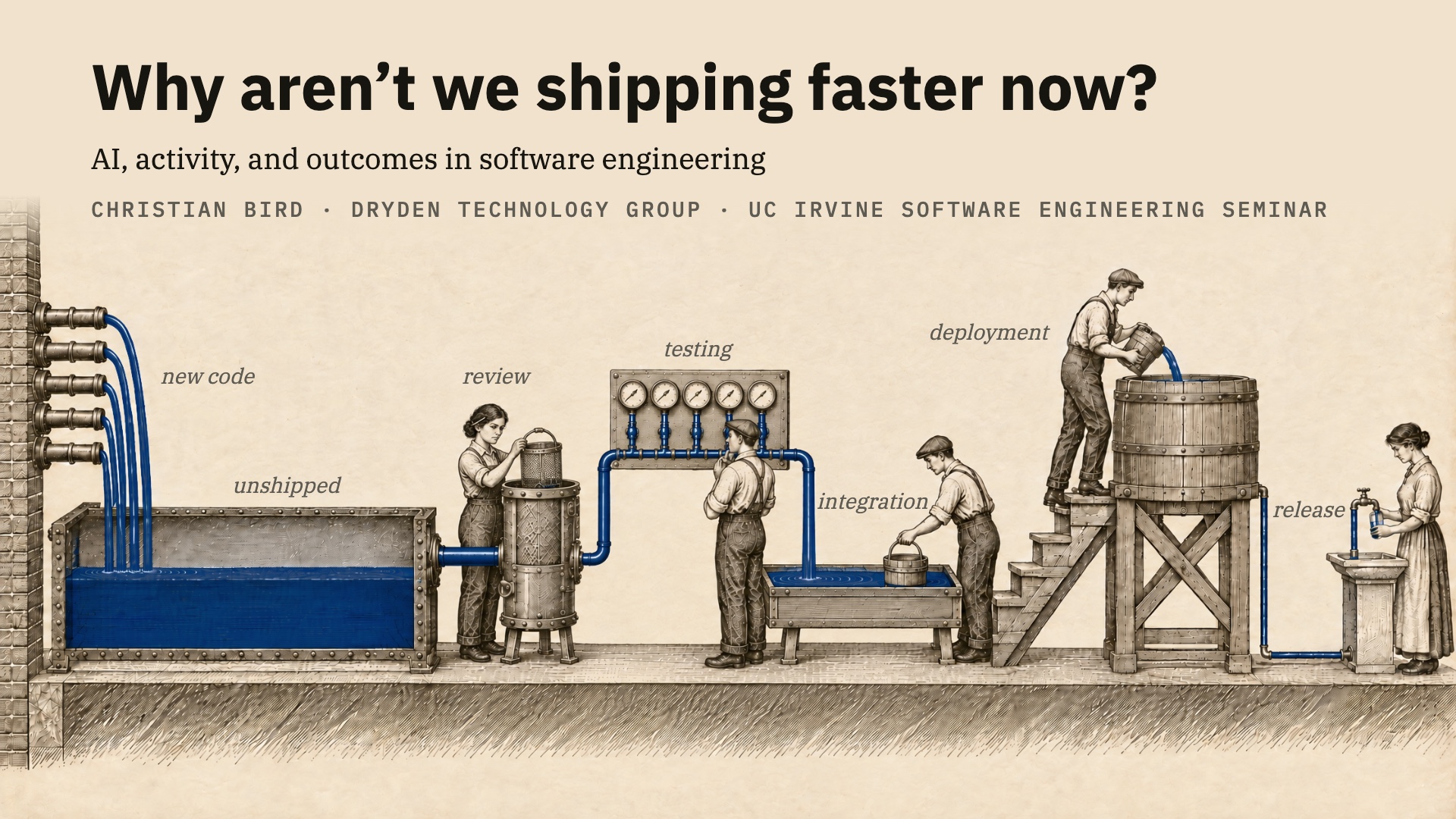
A UC Irvine software engineering seminar on October 30, 2026 will examine AI, activity, and outcomes in software engineering. Video, slides, and a script from the talk are available.
Comments
Americans overwhelmingly oppose the AI data center buildout, but their retirement accounts are helping fund it anyway. The piece examines how retirement savings are channeling money into the AI boom despite public opposition.
Comments
Gemini Decisions API
2026-11-11Google has introduced the Gemini Decisions API, offering fast, calibrated multimodal decisions for Google apps. The API can evaluate 1,000 questions in a single pass, supporting high-volume decision-making tasks.
Comments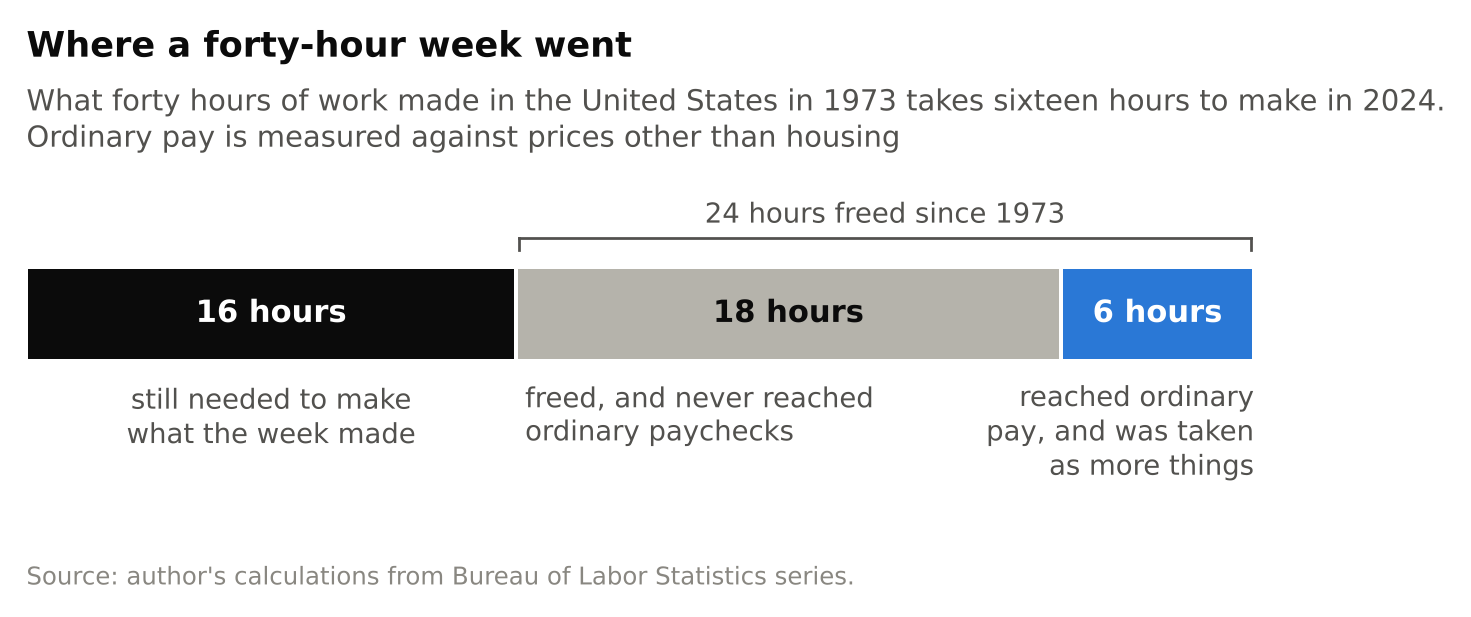
Why are we still working this hard?
2026-11-11Despite productivity gains that mean a 1973 forty-hour week’s output now takes about sixteen hours, Americans still work long hours. An hour of U.S. business labor now produces roughly two and a half times what it did in 1973. The piece examines why these gains have not translated into shorter workweeks.
CommentsWhy Amstrad chose the 3" drives
2026-11-11Amstrad’s choice of 3-inch floppy drives was likely driven by cost savings—especially reusing common 5.25-inch controllers and drivers—rather than the long-rumored bankruptcy-auction or scrapheap explanations. Readers recall the disks as robust and reliable, though expensive and lower-capacity than 3.5-inch media. The format also appeared in Sinclair/Amstrad machines and a few niche systems, but 3.5-inch drives soon became the standard.
Comments
Lock Your GitHub Actions
2026-11-11GitHub Actions workflow lockfiles aim to make action dependencies immutable, but discussion notes they currently cover only normal action calls—not reusable workflows, Docker-based uses clauses, or composite actions themselves—and can weaken transitive pinning by removing hashes. Commenters welcomed the long-awaited feature as an improvement over manual SHA pinning while warning that fully locked setups can still run mutable or compromised code unless lockfiles are verified in CI. Some argued GitHub should enforce immutable tags or handle immutability at the platform level.
Comments
Nvidia is reportedly preparing to fire CEO Jensen Huang, according to a Wall Street Journal report. The development was reported as a just-in news item, with no further details provided in the brief.
CommentsThe Utah Teapot
2026-11-11Discussion around the Utah Teapot highlights its status as a foundational computer-graphics model, from its real-world Melitta origins to its use in OpenGL and game engines. Commenters also note the original teapot’s availability and museum ownership, question the 3D model’s proportions, and joke about a pelican-on-a-bike becoming the next graphics mascot.
CommentsThe U.S. is imposing new rules on ordering synthetic DNA to deter bioterrorism, with the policy apparently affecting government-funded researchers and suppliers. Commenters question how much supply-side restrictions will help, noting that DNA manipulation is not especially difficult and determined actors may find workarounds. Some also speculate about whether restrictions relate to hidden AI biotech capabilities, but the discussion offers no clear evidence.
CommentsHuawei has released MACaQ, an internally developed, model-agnostic quantizer aimed at local inference and beyond. It supports GGUF and can quantize and run text, image, video, and audio models across llama.cpp, vLLM, Diffusers, and PyTorch.
CommentsA 2019 paper found that 93% of paint splatters qualify as valid Perl programs, thanks to the language’s famously permissive syntax. It frames this as an answer to whether paint can be smeared on a wall without producing valid Perl and includes a gallery of the accidental programs.
CommentsFirefox is strengthening its defenses against fingerprinting trackers that can recognize users across websites even without cookies. The latest protections reduce the distinguishing details browsers expose, making Firefox users harder to identify and track.
Comments
A new guide explains how to store SSH keys in the macOS Secure Enclave and require Touch ID for every use. The method works without third-party apps, offering stronger local key protection on Macs.
CommentsA new Show HN project introduces Micron, a programming language described as Oberon with the power of C. It includes a compiler and IDE, with source available in the rochus-keller/Micron repository.
Comments$30M Raised to Redo the CPU
2026-11-11A startup has raised $30M to develop a parallel-first CPU with thousands of cores that abandons shared mutable memory and linear instruction sequences, paired with its open-source Vine language. Commenters are skeptical, comparing the approach to GPUs and long-standing superscalar optimizations while stressing that the real challenge is building compilers and software for a new architecture.
Comments
A Compendium of Abandoned Greenhouses
2026-11-11Messy Nessy’s compendium gathers images of abandoned greenhouses, showcasing their eerie beauty and the way neglected glass structures are reclaimed by overgrowth. The piece surveys these forgotten sites as relics of past cultivation, quiet decay, and unexpected visual charm.
Comments
Counterfeit wine fraud, long focused on high-end bottles, is increasingly targeting everyday wines found on supermarket shelves. Criminal gangs are producing fake wine at broader price points, raising concerns for consumers and brands.
Comments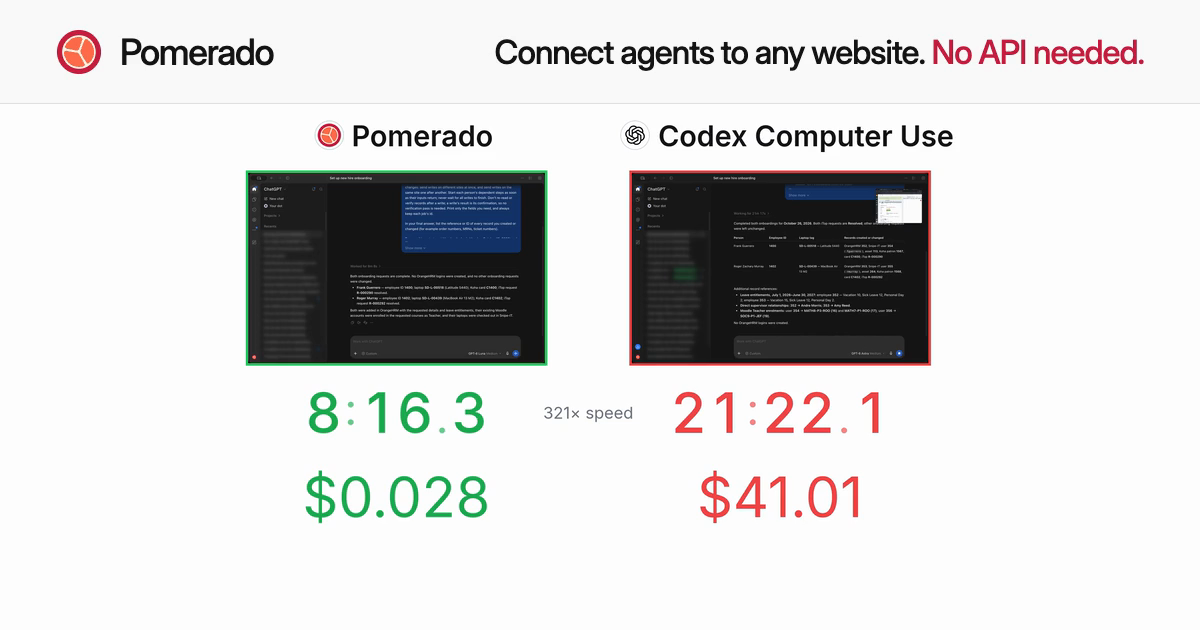
Pomerado, a YC F26 startup, lets users turn any website into an API/MCP in minutes. It claims to be faster and more reliable than browser agents and is open source.
CommentsThomas Neumann’s blog post examines “next-level” benchmarking overfitting in database systems, warning that benchmark-tuned performance gains can mislead comparisons and fail to reflect real-world workloads. Aimed at database architects, it highlights how over-optimization can distort system design choices.
Comments
Researchers propose a cross-architecture distillation recipe for transferring knowledge from Transformer models to Mamba-style state space models. The approach aims to combine Transformers’ strengths with SSMs’ lower memory consumption and greater efficiency as Mamba emerges as a popular alternative.
Comments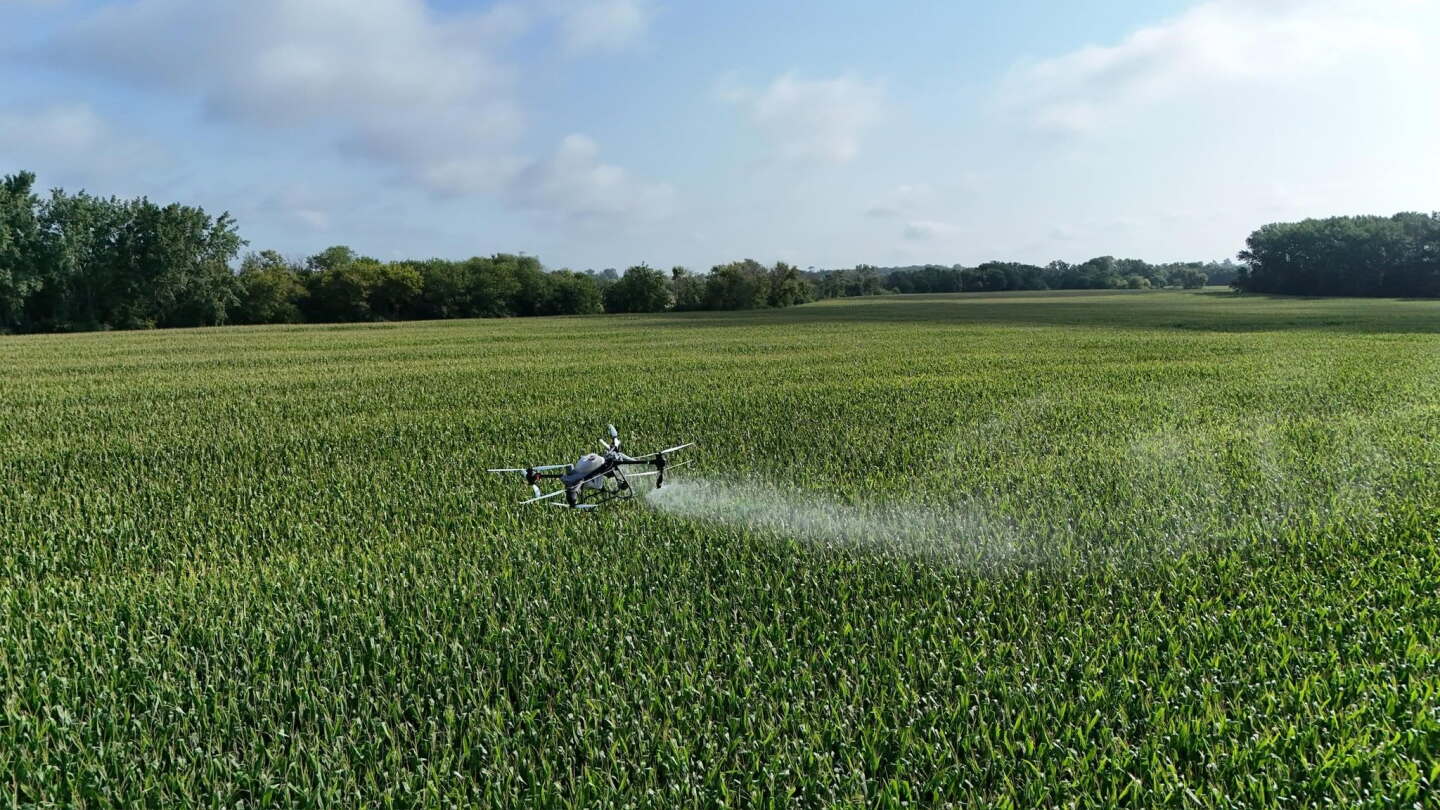
Farmers in Illinois and Nebraska are increasingly using drones to seed cover crops into standing corn, citing benefits such as avoiding soil compaction and better timing with rainfall. They are also learning how to make the practice economically viable while managing weather and field conditions.
Comments