Programming Tech News
Submit2026-11-17

AI has made it easy to build new apps in a weekend, but the piece argues that effort would be better spent improving the open source tools people already rely on. Rather than adding more apps, it calls for making existing open source software faster, lighter, and easier to run.
Comments
What is the best harness for each model?
2026-11-17A new FrontierHarness Eval tested 22 coding-agent harnesses across 5 models on the same 62 tasks, running each combination four times for 27,280 total runs. The best-value harness differed for every model, and cost rankings shifted substantially depending on the model. With the model held fixed, the most expensive harness cost 1.8 to 5.0 times as much per task as the cheapest.
Comments
A new Show HN project, Alloy CSS, provides dialogs, menus, and tabs that work with JavaScript disabled. A demo page for a made-up invoicing app showcases the library built entirely without JavaScript.
CommentsA Turbo Pascal 7 command-line compiler has been released as source code written in Turbo Pascal itself. It is aimed at developers interested in compiler design and provides a self-hosted example for study or reuse.
CommentsVisualBasic.World offers a gallery of archived Visual Basic projects from Planet Source Code, spanning 1997 to 2012. The collection lets visitors explore the programs through their original screenshots.
Comments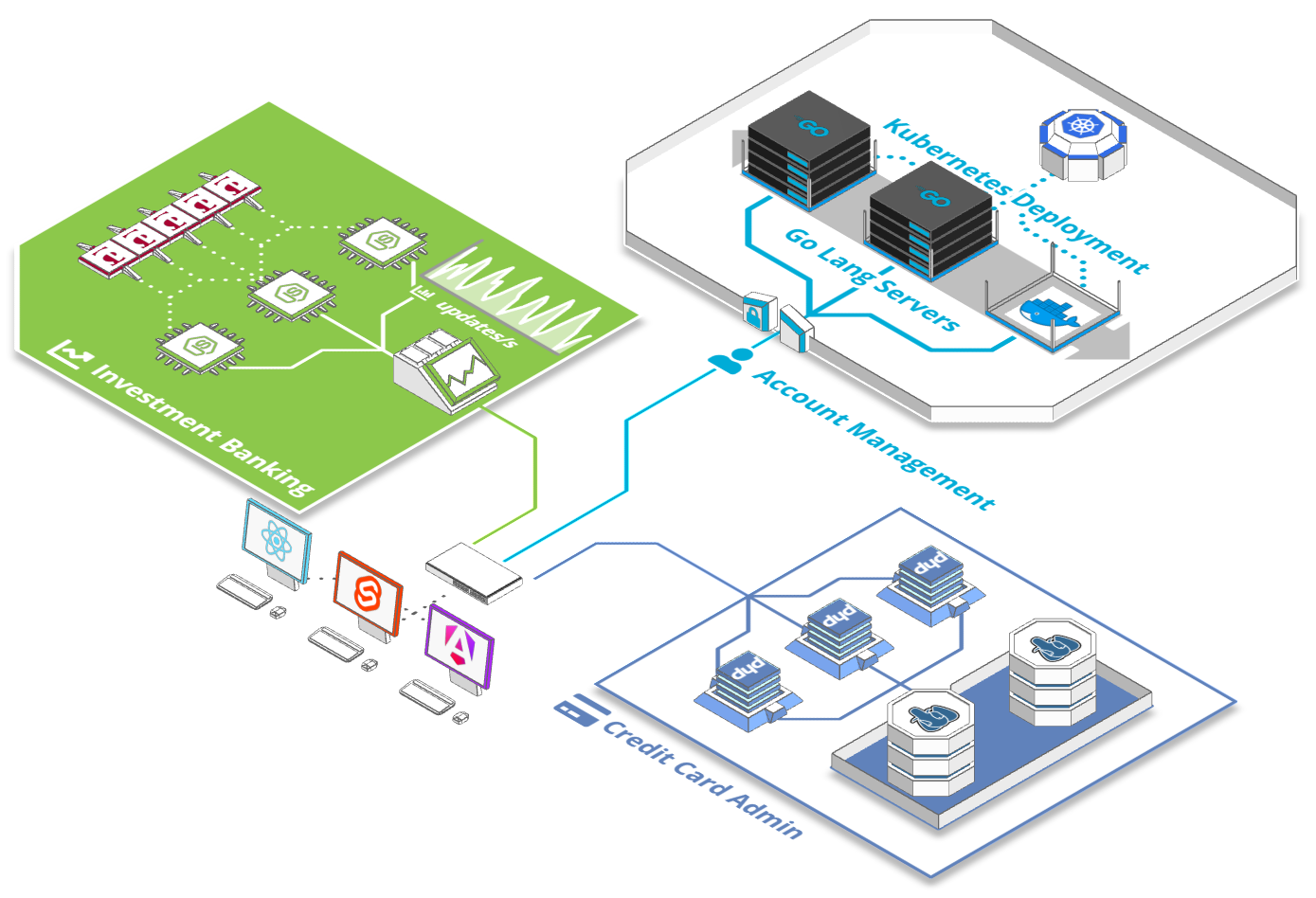
Do Repeat Yourself
2026-11-17Sometimes repetition is beneficial in software design. Service-oriented architectures let teams work independently in the ways that suit them best.
Comments
The Claude Code team says coding agents should verify their work with evidence rather than assertions, using end-to-end, property-based, and differential tests to check outputs. The team also focuses on keeping those verifiers honest so the checks themselves don’t give agents a false sense of correctness.
CommentsNimony: A New Compiler for Nim
2026-11-17The Nim team has introduced Nimony, a new compiler for Nim, with readers praising the project’s momentum and improvements such as sum types, borrow checking, and a promising Nim 3. Commenters see the technical direction as strong but question adoption given breaking changes, while some also criticize the project’s website design as dated or AI-generated.
Comments
A piece on running coding agents without exposing credentials sparked discussion about secret-injection approaches. Readers highlighted Docker sandboxes’ secret injection and expressed interest in a tool called lend that could route HTTP requests and automatically inject secrets. One commenter said they’re moving off Agent Vault, which is being sunset and turned into a SaaS product, and plans to try lend.
Comments
New open source C4 Diagram tool
2026-11-17MapleSpire is a new open-source C4 diagramming tool that keeps a single model of a system’s architecture and generates every diagram as a view of it. This lets changes like renaming a service propagate across diagrams, helping prevent architecture documentation from going stale.
CommentsRunAnywhere has released TrnRT, an open-source LLM inference engine for AWS Trainium. It offers NKI megakernels, support for up to 1M-token context, and an OpenAI-compatible API.
CommentsA Show HN project reports that BF16 tiling on an NVIDIA A40 delivers a 1.499x speedup. The approach also cuts dynamic energy use by 28.5%.
CommentsUnkernel: Linux kernel in WASM
2026-11-17Unkernel runs a Linux kernel and Alpine environment in WebAssembly, giving users a browser-based Linux machine with a shell, package manager, persistent disk, internet access, and screen/sound entirely on-device with no install or server. Its benchmarks show near-native syscall and fork performance, with the kernel reaching /init in about 70 ms and Alpine’s prompt appearing 0.3 s after launch using a ~10 MB download and 48 MiB guest memory.
CommentsTokendoctor is a local Claude Code plugin that identifies where usage is overpaying and can cut costs by up to 38% while keeping the same Claude Code experience. It proposes fixes as diffs for user approval and can revert any change, running entirely on the user’s machine.
CommentsA new item examines the effectiveness of test and verification techniques when used with Astra. It focuses on assessing how well these methods perform in that context.
CommentsA new Show HN project, VennDB, is an append-only in-memory database written in Rust. It lets users query rows using bit flags, enabling Venn-diagram-style filtering of data. The project is available under plabayo/venndb.
Comments2026-11-16

Carnegie Mellon University has made lectures from its Kenneth C. Griffin School of Computer Science available for free on YouTube. The school plans to add self-paced courseware next.
CommentsIn a blog post, Jimmy Breck-McKye argues that software failures are no longer isolated incidents but symptoms of systemic problems in how software is built and maintained. He contends the industry must address underlying structural issues rather than treating each breakdown as a one-off.
CommentsHow to make almost anything
2026-11-16A discussion around an overview course on making almost anything weighs criticism that it only skims topics against the argument that broad exposure is valuable because students learn what is possible and where to start. Commenters say such survey knowledge complements later specialization and on-the-job learning, and may matter more as AI agents take over implementation while engineers focus on knowing what can be done.
CommentsA small browser flight demo made with UI8's Forge. You fly a pixel-art fighter jet over islands drawn with sprite stacking, from just above the waves up to high altitude. Press Space to switch between overhead, chase and cockpit views, click to roll, and hold to fire the thrusters.
Comments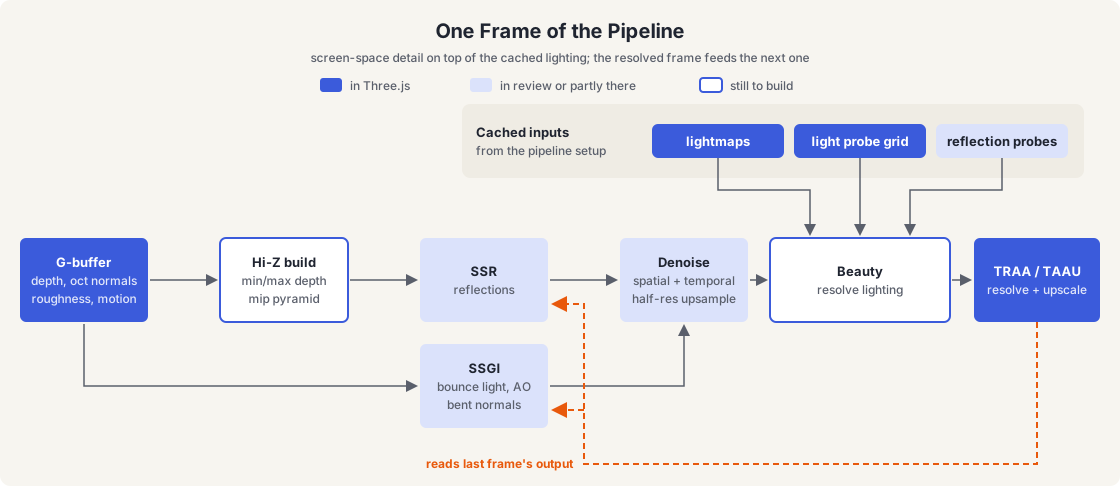
A developer is documenting an effort to bring native Three.js rendering quality closer to AAA game engines, covering the pipeline from G-buffer to temporal upscaling. The piece examines lightmap, probe, and screen-space reflection stages against what games require, what Three.js currently offers, and which pull requests are in review or still needed.
Comments
OpenCode Browse
2026-11-16OpenCode Browse lets OpenCode and other MCP clients control a user's real browser. Agents can read, click, type, take screenshots, and record tabs, while login and 2FA prompts are handed back to the user. The tool aims to give agents real-browser access without taking over authentication.
Comments
Aristotle Expands into Rust
2026-11-16Aristotle announced its expansion into Rust, citing the language’s rapid growth and use for high-stakes software. The move extends Aristotle’s capabilities to Rust developers.
CommentsJolt – Clojure that speaks C
2026-11-16Jolt is a new Clojure implementation built on Scheme, running natively via Chez and targeting JavaScript through Gambit. It includes a self-hosted compiler and a Clojure-compatible standard library while avoiding the JVM.
Comments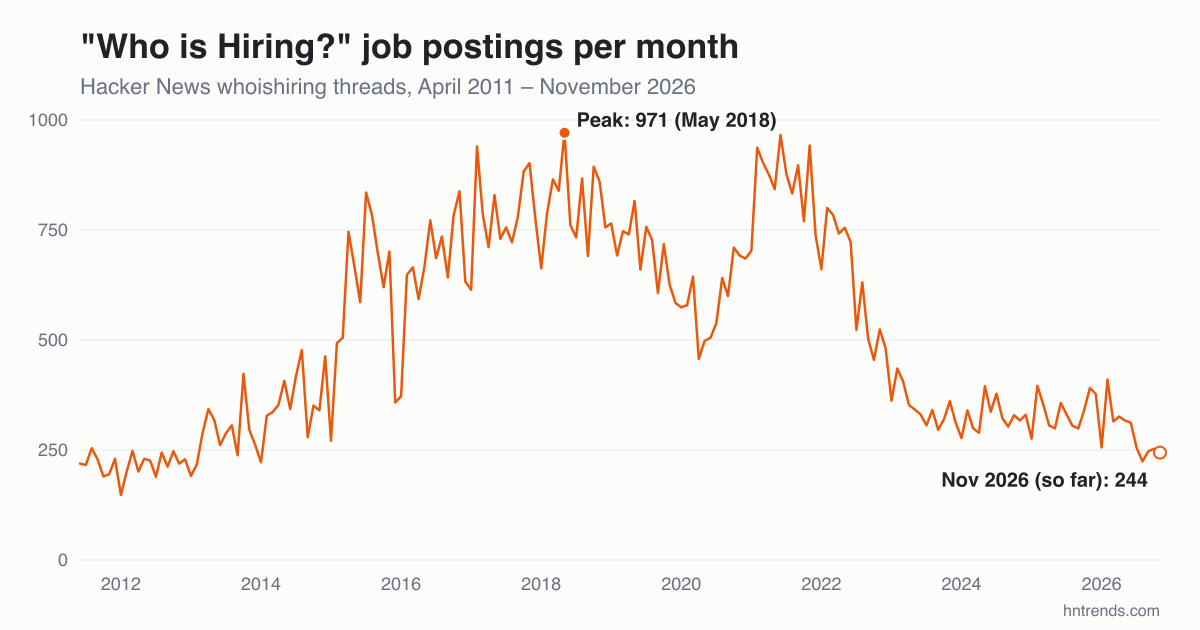
Hacker News' “Who is Hiring?” postings are hovering near 12-year lows, even as AI appears in more than half of all listings. The November 2026 roundup also tracks the most popular programming languages and technologies among those postings.
CommentsReaders revisiting a 2012 guide to breaking into security say the field’s career ladder has tightened amid post-ZIRP and AI shifts, though boutique security still rewards hands-on hacking and peer recognition more than certificates. Incident-response hiring remains focused on broad knowledge and resilience under pressure, with AI proving useful mainly for low-level tasks like log review.
Comments
“…and the proof is checked in Lean”
2026-11-16The post explains how to interpret claims that a theorem is correct because it was checked in Lean, noting that Lean code provides an important signal. However, if the code is AI-generated, additional tests are needed to validate the claim.
CommentsMini.nvim Is Now on Tangled
2026-11-16Mini.nvim, a collection of more than 45 independent Lua modules that enhance the Neovim experience with minimal effort, is now available on Tangled. The project continues to offer lightweight, modular improvements for Neovim users.
Comments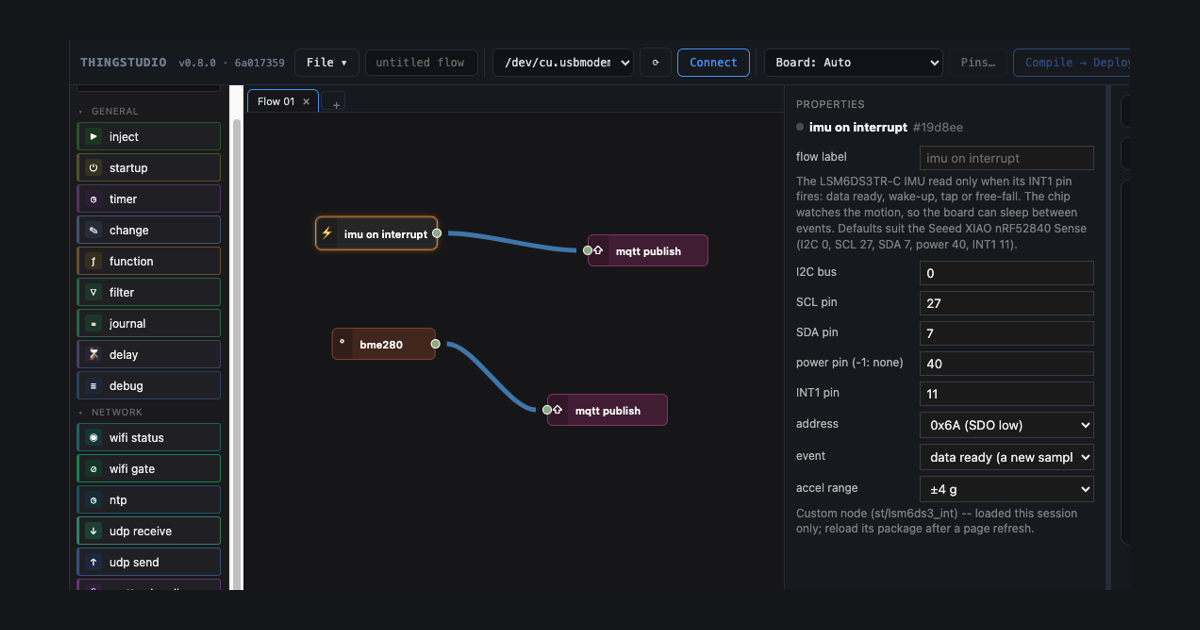
ThingStudio is a new open-source, Apache 2.0 beta tool that brings Node-RED-style flow programming to microcontrollers including ESP32, Raspberry Pi Pico, nRF52840, and STM32 boards. It compiles visual flows to MicroPython so the board runs them independently.
Comments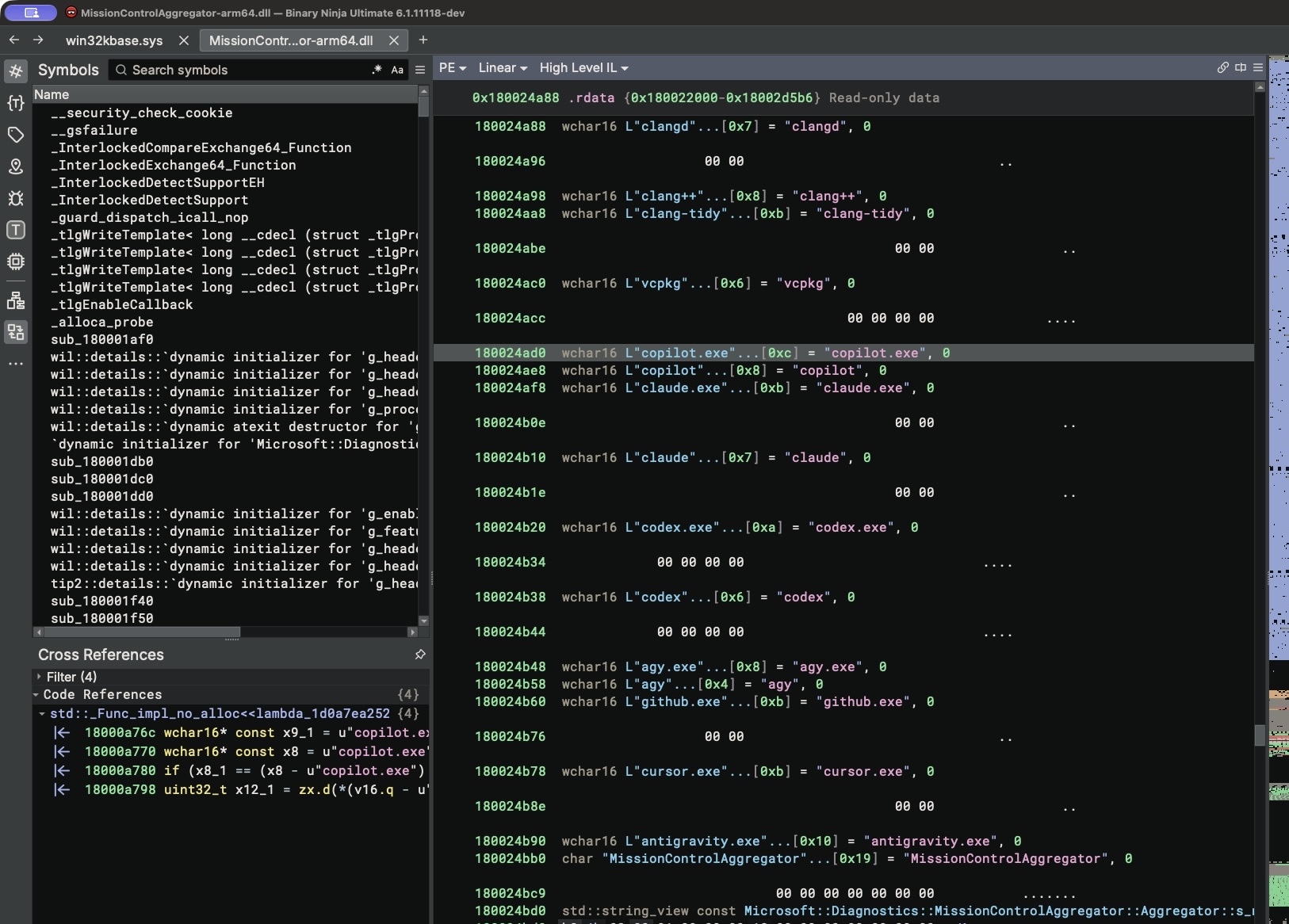
Reverse engineering of Windows 11’s MissionControlAggregator shows that a diagnostic ETW report includes usage bits for coding agents and developer tools. The finding indicates Windows 11 can collect data on which development tools and AI coding agents are in use.
Comments