Programming Tech News
Submit2026-11-10

AlphaProof Code
2026-11-10AlphaProof Code agents generated over three million lines of machine-checked Lean proofs to verify Signal’s core cryptographic protections down to the machine-instruction level. The effort aims to provide formal assurance for critical cryptographic code.
Comments
Fable 5.2 reportedly generated a complete, multi-level game in a single attempt, bringing a user’s nephew’s dream game to life. The result suggests LLMs can now produce full playable games that are genuinely fun.
Comments
Google Chrome has released modern-web-guidance, a resource designed to keep coding agents aligned with current web best practices instead of outdated ~2019 JavaScript. The Show HN project aims to steer AI coding assistants toward modern web primitives so generated code follows up-to-date standards.
CommentsThe Hardest Tarball?
2026-11-10A curious archive can be created with a single GNU tar invocation but extracts in eight distinct ways depending on which tool is used. The demonstration highlights how tar format quirks and implementation differences can produce wildly different results from the same file.
Comments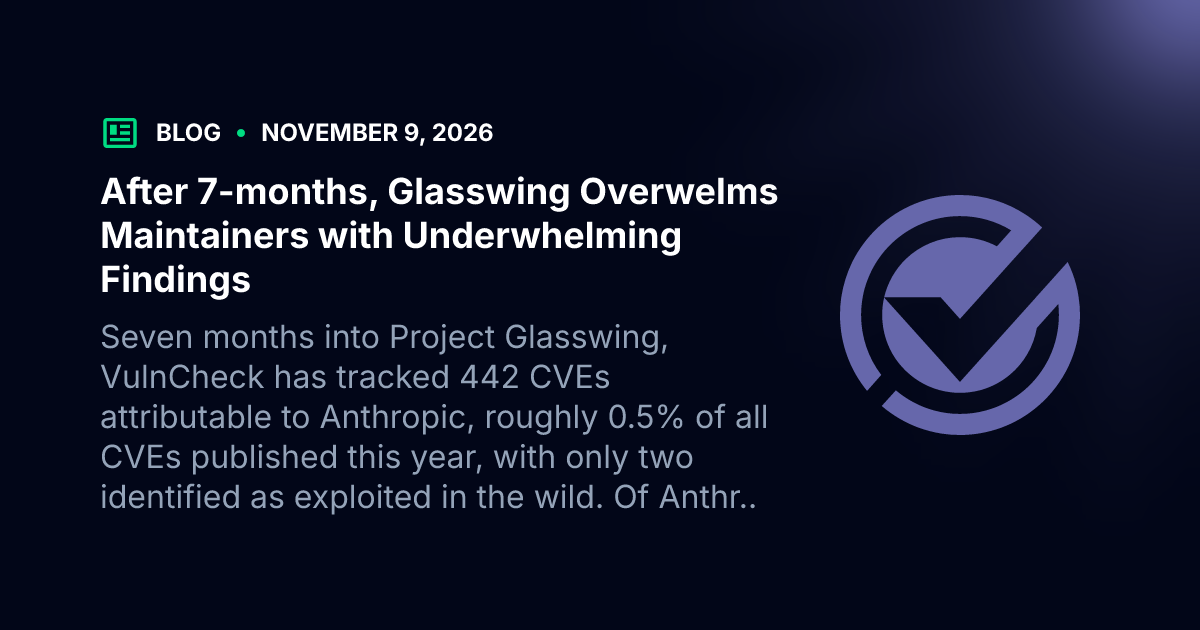
Seven months into Project Glasswing, VulnCheck has tracked 442 Anthropic-attributable CVEs—about 0.5% of all CVEs published this year—with only two exploited in the wild. Of 37,966 reported findings, just 7,349 (19.4%) are public and only 217 have been marked fixed.
CommentsExpo has introduced Exact, a new cross-platform UI framework. The project is hosted on GitHub, where developers can contribute to its development.
Comments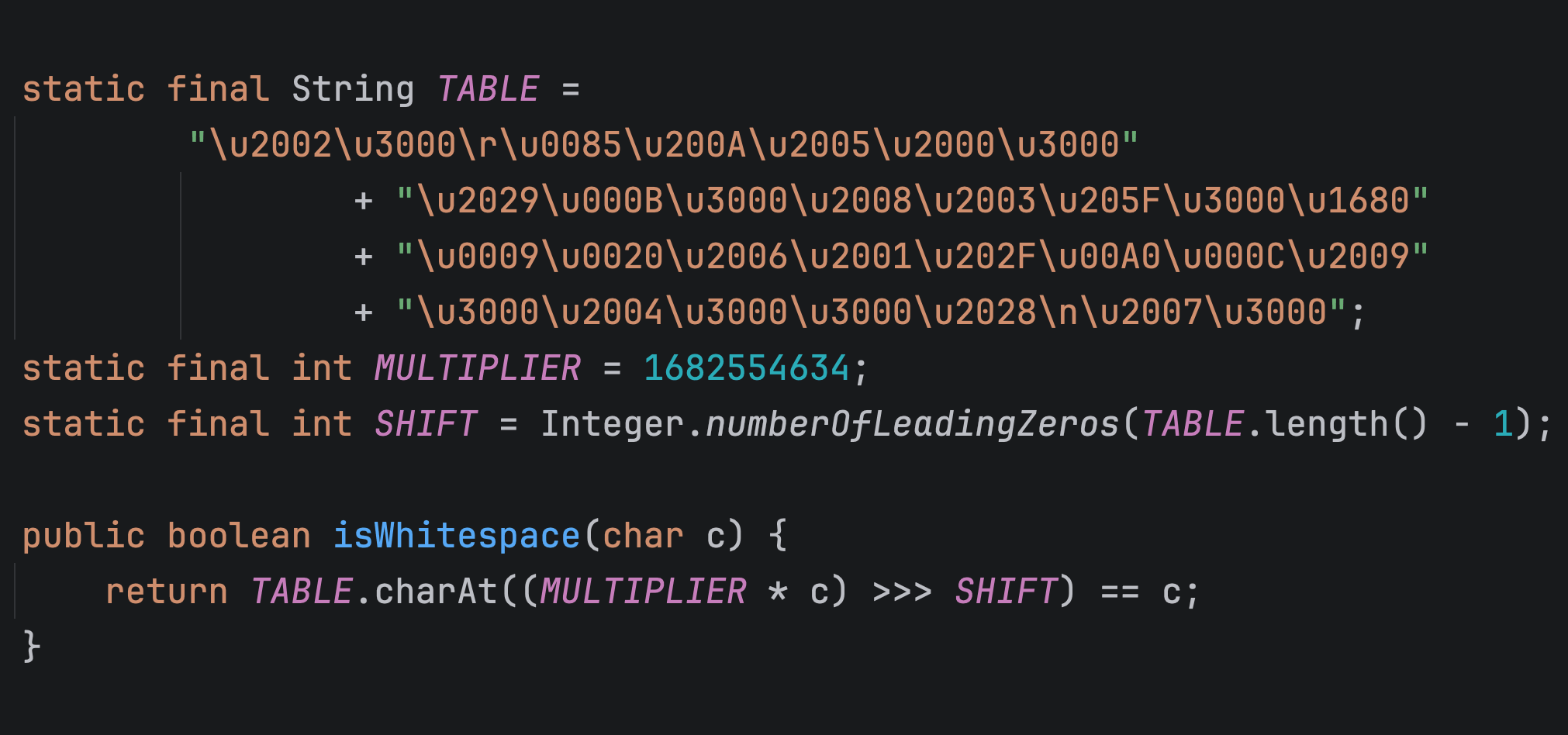
How hard is it to check for whitespace?
2026-11-10Checking for whitespace seems trivial, but Unicode’s many whitespace characters make correct detection surprisingly tricky. The piece explores those edge cases and shows how perfect hashing can enable a fast, reliable check.
Comments
What's new in the .NET 11 runtime
2026-11-10The .NET 11 runtime introduces a range of new features, detailed in a new overview. The piece explains the runtime changes and what they mean for developers building .NET applications.
CommentsA new open field guide examines inference engineering for platform engineers, covering core concepts, production operations, and tooling. It also offers guidance on career development for engineers working on inference platforms.
CommentsVariable-width Bézier curves (2025)
2026-11-10A new article explains variable-width Bézier curves and the stroke-boundary algorithm behind them, earning praise for clear exposition and visualizations. Readers discuss extending the method to 3D by generating rings of boundary points at each sample point, suggesting uses in CNC V-carving toolpaths and virtual incising tools.
Comments
AI usage generates a fragile codebase
2026-11-10Readers discussed the article’s warning that AI-generated code can become fragile when developers rely on it without human oversight, though some argued AI can support robust code if guided by strong patterns and tests. Many expect brittle codebases to persist unless employers incentivize more thoughtful AI use.
Comments
PHP2Shell Deep Dive
2026-11-10A new deep dive examines PHP2Shell, showing how CVE-2026-109618 and CVE-2026-109619 chain an out-of-memory crash into remote code execution in PHP 8.4.26. The walkthrough details heap grooming, a use-after-free, zend_string forgery, and the full exploit pipeline.
Comments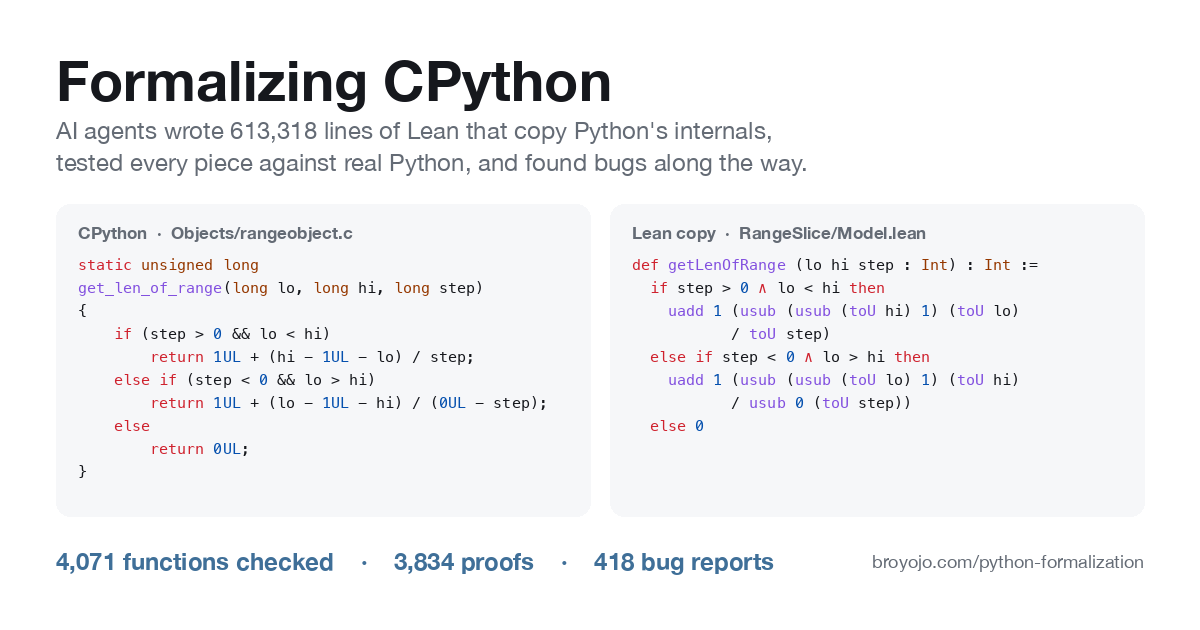
Formalizing CPython
2026-11-10AI agents formalized CPython’s internals in 613,318 lines of Lean, validating each component against real Python behavior. The effort surfaced 418 bug reports along the way.
Comments
A new project write-up details the Daylight Clock, an analog clock that uses edge-lit illumination to show day versus night and offer passive awareness of the passage of time. It includes time and location controls, allowing it to track local sunlight conditions.
CommentsLet over Lambda–50 Years of Lisp
2026-11-10The piece marks 50 years of Lisp, reflecting on the programming language’s history and lasting influence. Its title nods to Lisp’s lambda-based traditions and enduring ideas about closures and functional programming.
Comments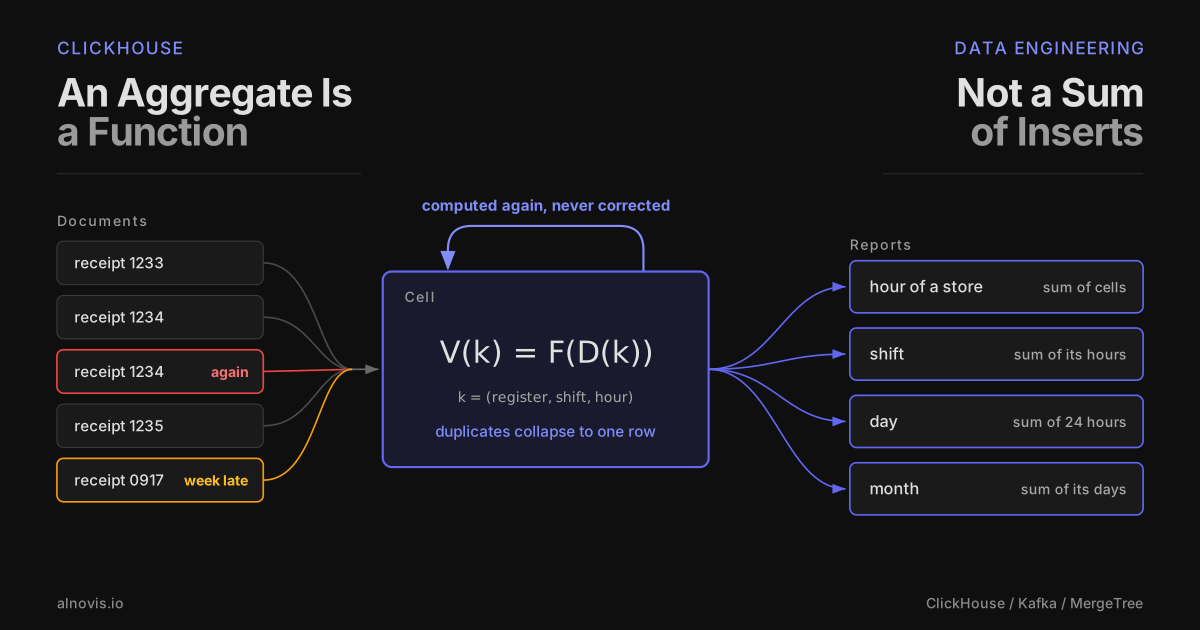
An Aggregate Is a Function, Not a Sum
2026-11-10A new piece examines four approaches to maintaining report aggregates over a stream of receipts in ClickHouse and explains why each failed. The design ultimately kept recomputes aggregate cells from their underlying documents rather than adding up incremental values. It argues that an aggregate is a function, not a sum.
Comments2026-11-09
A discussion around Herb Sutter’s piece on the rift between C++’s creator and its stewards highlights growing doubts about C++’s future, with commenters citing memory safety, AI-assisted rewrites, and weak safe-concurrency support as reasons legacy C++ may be increasingly hard to defend. Others credit Sutter and the C++ committee for foundational work on concurrency and memory models, while debating whether those efforts made parallel programming meaningfully easier.
CommentsZebkit is a new project that packages Chromium as an embeddable library, offering a slim cross-platform browser engine for applications. It aims to let developers integrate web rendering into their apps without shipping a full browser. The project is available at ikey4u/zebkit.
Comments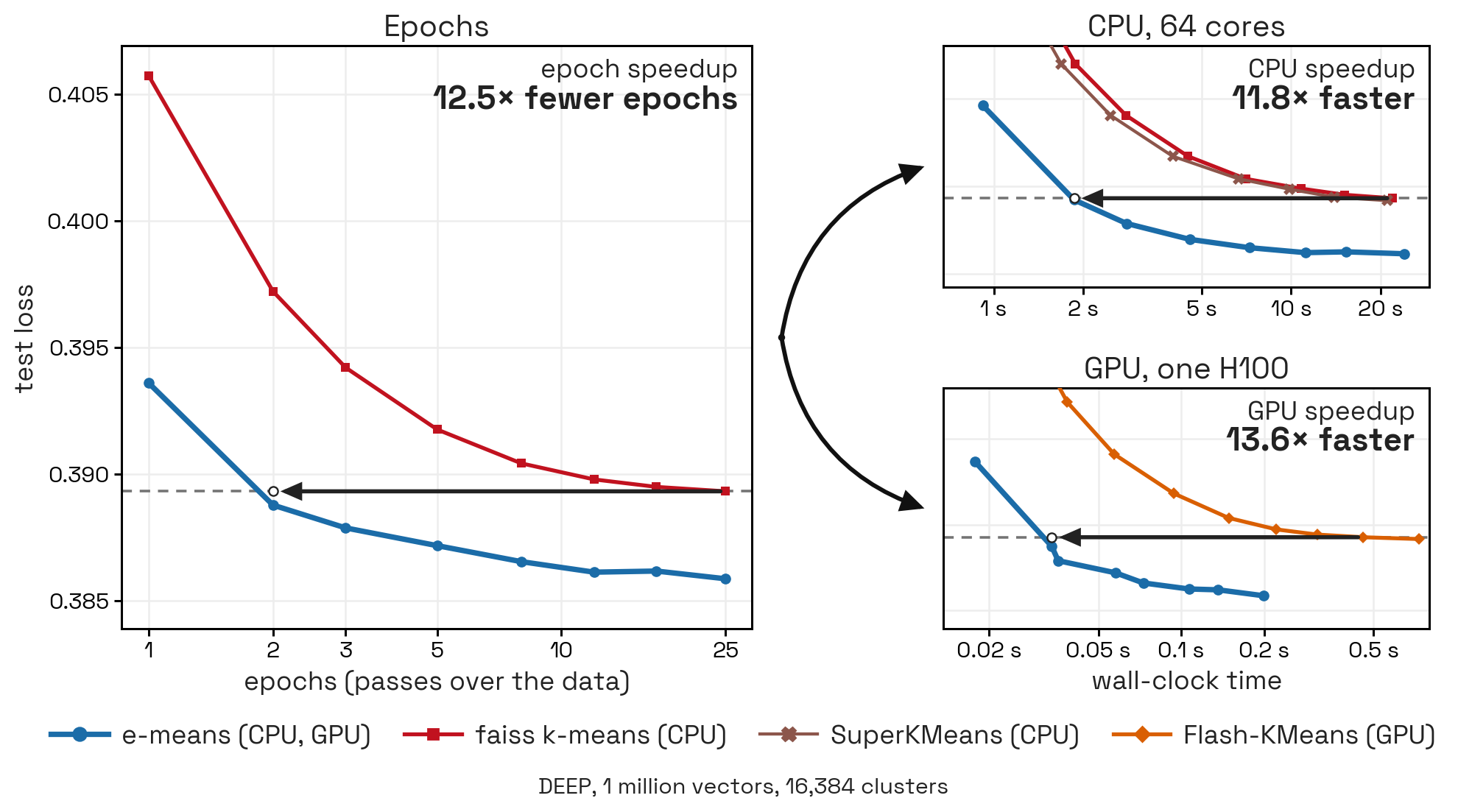
Researchers introduced E-means, a new k-means clustering method that achieves equal loss while running 10x faster. The approach applies modern optimization techniques and scaling laws to improve clustering efficiency.
CommentsA new GitHub project offers a small LLM inference engine built from scratch, accompanied by more than six hours of YouTube tutorials and 85+ pages of handwritten notes. The resource aims to help developers learn LLM inference fundamentals through hands-on implementation and detailed study materials.
Comments
What is malloc doing, anyway?
2026-11-09The piece explores the hidden mechanics behind malloc’s deceptively simple interface. Callers request a contiguous block of memory and receive a void pointer, then release it with free, but the article examines what is really happening beneath that abstraction.
CommentsCUI – Native UI components for C
2026-11-09CUI is a new library of native UI components for C, offering about 170 components with spring-based motion and keyboard support. The components are available to run live.
CommentsChatGPT Desktop is reportedly forwarding users' SSH agents to remote machines as a convenience feature, prompting criticism that it removes important security friction. Commenters argue auto-forwarding should require per-request approval or filtering, and recommend hardware-backed keys such as Secure Enclave or YubiKey with fingerprint or touch confirmation. The discussion also highlights broader concerns that local agent guardrails rely on leaky blacklists and broad permissions.
Comments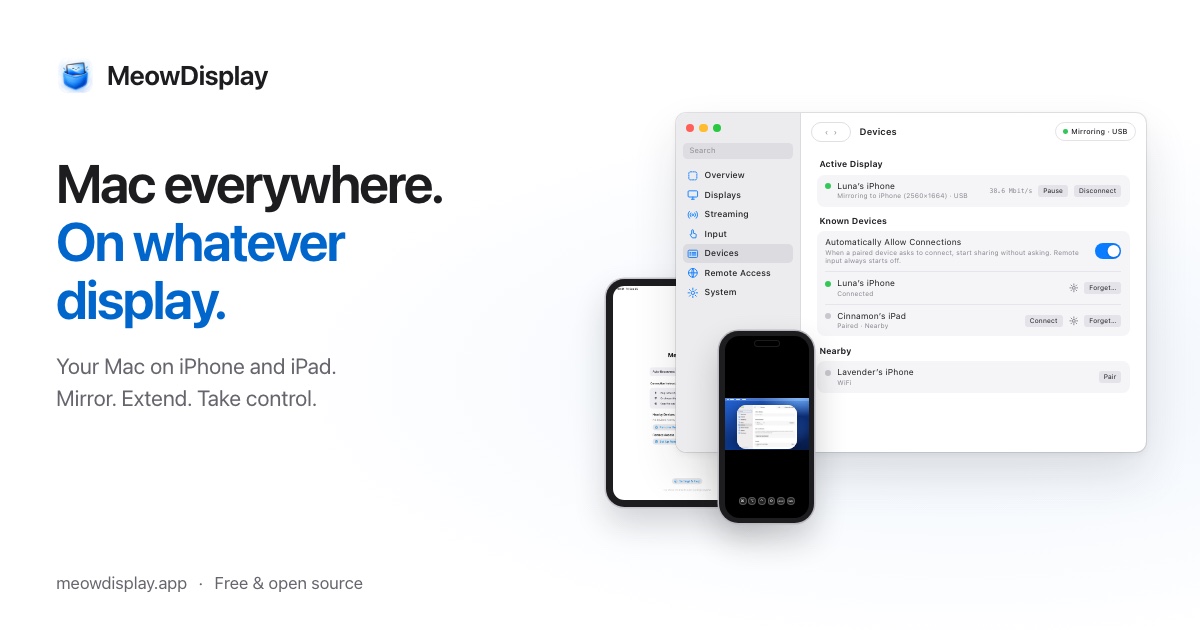
MeowDisplay is a free, open-source tool that reverses iPhone mirroring by letting you use your Mac on an iPhone, iPad, or another display. It supports arranging windows into panes, switching via Stage Peek, touch and keyboard controls, and file access.
CommentsThe STE80 Humanizer is a new Show HN agent skill designed to remove AI tells from text by rewriting it 80% of the way toward ASD-STE100 Simplified Technical English. It follows a method shared by Andrej Karpathy for making generated writing sound less AI-like.
CommentsA Critique of GPUI
2026-11-09A personal-notes piece offers a critique of GPUI, examining the framework's shortcomings from the author's perspective. It is framed as informal observations rather than a formal review, with no broader news context supplied.
Comments
Psalm 7 has been released, bringing a large set of new features and bug fixes to the PHP security and static analysis tool. The update is detailed in Daniil Gentili’s announcement blog post.
CommentsReaders discussing how to manage AI-agent context across clients and projects largely recommend building custom lightweight harnesses and workflows rather than relying on one tool. Suggested practices include gatekeeper scripts that force wiki/documentation updates, semantic search over project knowledge, commit-linked chats, issue trackers and write-only ledgers for coordination, plus sandboxing agents and keeping granular usage data. Commenters also stress managing one's own attention and mental load, and staying ready to ditch tools as the fast-changing ecosystem evolves.
Comments
A primer on GPUs and kernel optimization
2026-11-09This primer covers GPU fundamentals, profiling tools, distributed computation, and kernel optimization for readers seeking a foundation in accelerated computing. It explains the basics needed to understand and improve performance across GPU workloads.
Comments