Programming Tech News
Submit2026-11-11
AWS Finally Built Its Own AWS Emulator
2026-11-11AWS has released its own AWS Emulator, a local emulator for the AWS APIs. The project is available on GitHub under aws/aws-emulator, giving developers a way to simulate AWS services locally.
Comments
Hyper-Realistic Sand with WebGL2
2026-11-11A new browser-based sand simulator delivers hyper-realistic sand physics using WebGL2 and JavaScript. It supports touch controls and device motion on phones and tablets, letting users play directly in their browser.
Comments

Announcing .NET 11
2026-11-11.NET 11 has been released, bringing C# 15, faster developer tools, and improvements to the runtime and libraries. The update also adds new capabilities for building web, mobile, desktop, and AI applications.
CommentsEmacs in the Age of Magic
2026-11-11A group of Emacs users and developers is pushing for an LLM-free version of Emacs, vowing to continue it even if GNU adopts a different policy and urging GNU to reject LLM-generated contributions. The debate around the effort highlights broader concerns about AI dependency, software freedom, and whether coding agents make programming more accessible or undermine understanding.
CommentsMIT CSAIL’s recent “Sparks of Weight-Space Programming” paper showed that GPT-6 Astra could identify which game a small network had been trained on directly from its raw weights. The new piece asks whether a linear program can perform comparable weight-space programming, probing whether such capabilities require large models or can be replicated with simpler linear methods.
Comments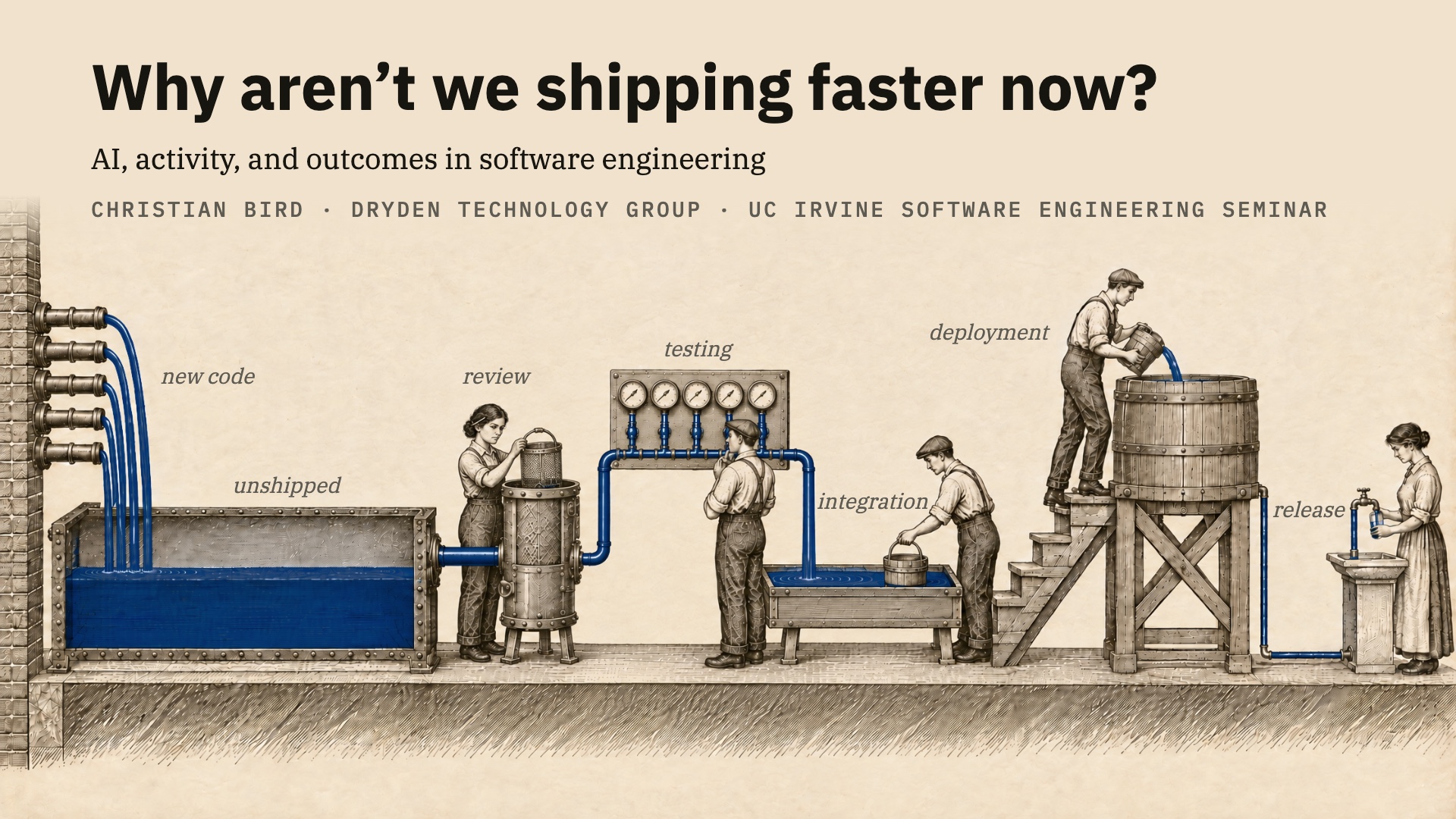
A UC Irvine software engineering seminar on October 30, 2026 will examine AI, activity, and outcomes in software engineering. Video, slides, and a script from the talk are available.
Comments
AWS Emulator, launched today and written and tested entirely by agents, provides a local copy of more than 200 AWS services for testing. Swami Sivasubramanian recounts an early high-fidelity simulation effort and explores how engineers’ work changes when agents write the code.
Comments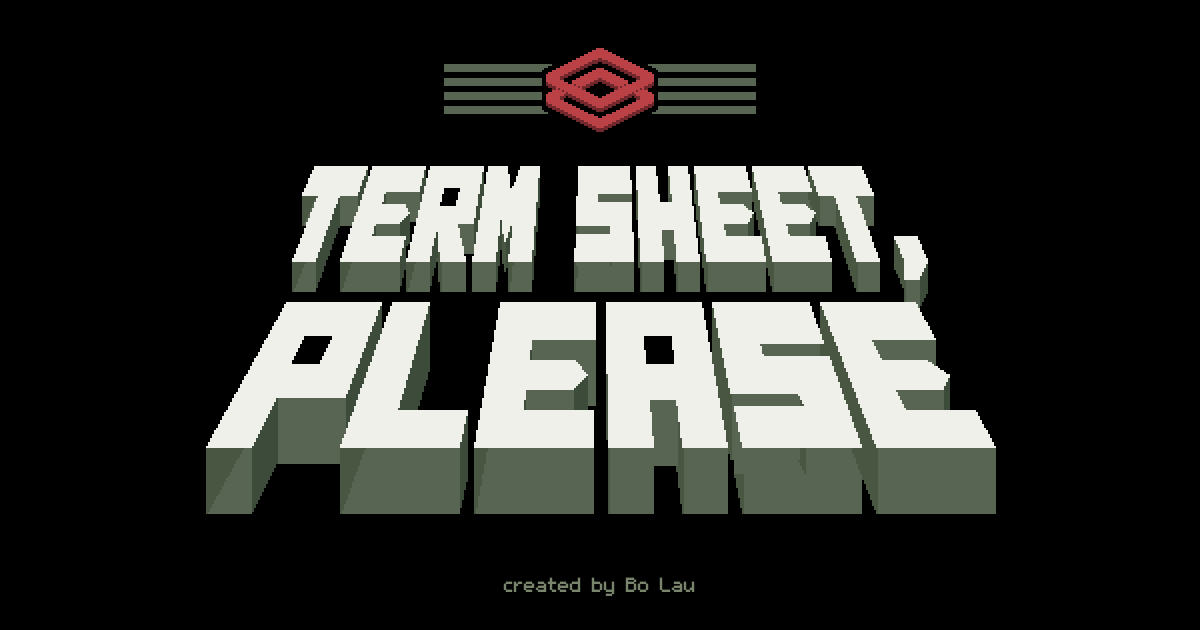
A new Show HN project recreates Papers, Please as a game where players decide which YC startups to fund. Players inspect financials and question records before choosing which founders get the money.
Comments
Lock Your GitHub Actions
2026-11-11GitHub Actions workflow lockfiles aim to make action dependencies immutable, but discussion notes they currently cover only normal action calls—not reusable workflows, Docker-based uses clauses, or composite actions themselves—and can weaken transitive pinning by removing hashes. Commenters welcomed the long-awaited feature as an improvement over manual SHA pinning while warning that fully locked setups can still run mutable or compromised code unless lockfiles are verified in CI. Some argued GitHub should enforce immutable tags or handle immutability at the platform level.
CommentsThe Utah Teapot
2026-11-11Discussion around the Utah Teapot highlights its status as a foundational computer-graphics model, from its real-world Melitta origins to its use in OpenGL and game engines. Commenters also note the original teapot’s availability and museum ownership, question the 3D model’s proportions, and joke about a pelican-on-a-bike becoming the next graphics mascot.
CommentsTimeNet is an open-source data infrastructure project for temporal foundation models. It lets users download and explore time-series datasets through a single standardized format.
CommentsA 2019 paper found that 93% of paint splatters qualify as valid Perl programs, thanks to the language’s famously permissive syntax. It frames this as an answer to whether paint can be smeared on a wall without producing valid Perl and includes a gallery of the accidental programs.
CommentsA new Show HN project introduces Micron, a programming language described as Oberon with the power of C. It includes a compiler and IDE, with source available in the rochus-keller/Micron repository.
Comments$30M Raised to Redo the CPU
2026-11-11A startup has raised $30M to develop a parallel-first CPU with thousands of cores that abandons shared mutable memory and linear instruction sequences, paired with its open-source Vine language. Commenters are skeptical, comparing the approach to GPUs and long-standing superscalar optimizations while stressing that the real challenge is building compilers and software for a new architecture.
CommentsA developer has statically recompiled Call of Duty: Black Ops II from 32-bit x86 Windows to native ARM64 macOS. The project uses Remill to LLVM IR, a hand-written Win32 runtime, and Direct3D 11 rendering via Metal, with no Wine and no game files.
Comments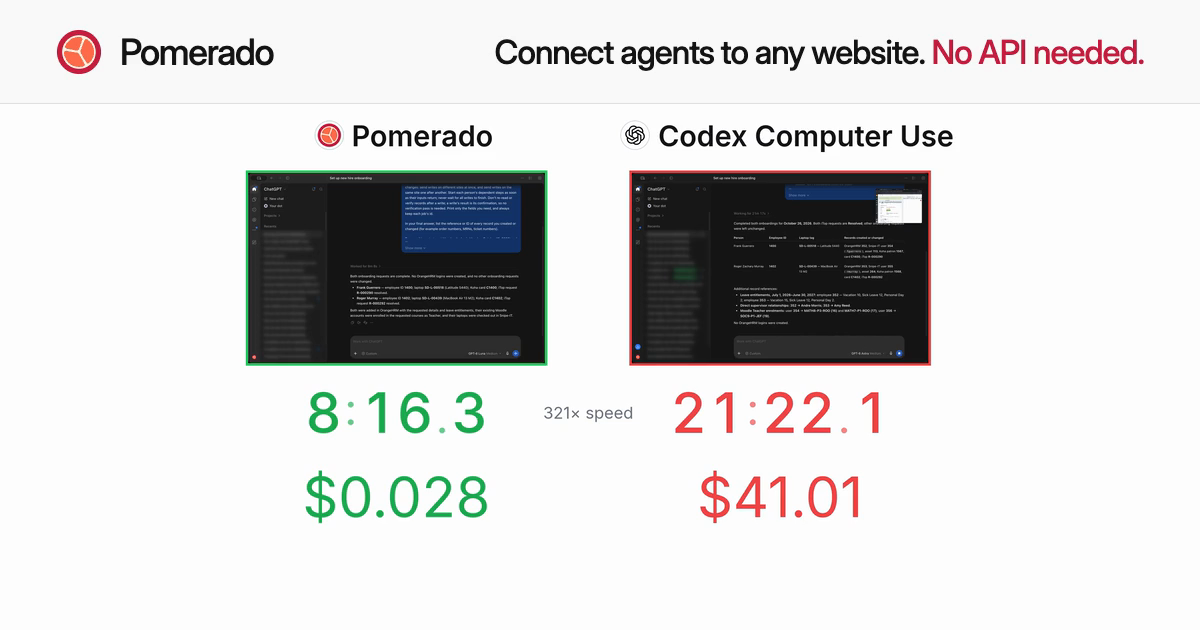
Pomerado, a YC F26 startup, lets users turn any website into an API/MCP in minutes. It claims to be faster and more reliable than browser agents and is open source.
Comments
Tim Peters has died
2026-11-11Tim Peters, a highly influential Python developer best known for writing the Zen of Python (PEP 20), died on July 15 earlier this year. His contributions had a profound impact on Python and its community.
CommentsA C++ Quicksort Faster Than std:sort
2026-11-11A discussed C++ quicksort reportedly beats std::sort and pdqsort on random data by using branchless partitioning and other low-level tricks to avoid branch-prediction penalties. Commenters note that real-world performance still depends heavily on memory/IO behavior, with quicksort’s O(log n) extra space and locality helping in some cases, while radix sort can be much faster when applicable.
CommentsThomas Neumann’s blog post examines “next-level” benchmarking overfitting in database systems, warning that benchmark-tuned performance gains can mislead comparisons and fail to reflect real-world workloads. Aimed at database architects, it highlights how over-optimization can distort system design choices.
Comments
Researchers propose a cross-architecture distillation recipe for transferring knowledge from Transformer models to Mamba-style state space models. The approach aims to combine Transformers’ strengths with SSMs’ lower memory consumption and greater efficiency as Mamba emerges as a popular alternative.
Comments
EventSourcingDB 1.3.0 Is Available
2026-11-11EventSourcingDB 1.3.0 has been released with faster writes, EventQL queries, and reads, plus bounded request times and more than sixty fixes for improved stability. It also introduces a new API that reports each request’s outcome in the response body and assigns every error its own code.
Comments
We need more goat sacrifices
2026-11-11In a wide-ranging interview, Oracle Java language architect Brian Goetz argues that Java remains healthy and well-served by Oracle’s stewardship—making the case that “Oracle Java is A-OK.” He also discusses the platform’s roadmap and the need for continued community contributions, hence the headline’s “goat sacrifices” pun.
CommentsKlad is a source-available paint app built for collaboration between coding agents and humans, allowing a coding agent to drive the drawing interface. The project is available on GitHub under klad-app/klad.
CommentsThe Computer Graphics Book of Knowledge
2026-11-11A resource titled The Computer Graphics Book of Knowledge promises a comprehensive reference covering key concepts and practices in computer graphics. It appears aimed at practitioners and learners seeking a consolidated guide to the field.
CommentsA new Show HN project called Yogurt offers a free, private, open-source alternative to Granola for AI meeting notes. The tool is available on GitHub under FrigadeHQ/yogurt, where users can contribute to its development.
CommentsThis 2013 article revisits a clever, old-fashioned game-programming trick that exemplifies resourceful coding from earlier eras. It highlights a notable hack used in classic game development, though further details are not provided.
CommentsPharo in the Browser with WebAssembly
2026-11-11Pharo, the Smalltalk environment, can now run in the browser thanks to WebAssembly. This brings the Pharo world to web users without requiring a local installation.
Comments100x Developers
2026-11-11The piece explores the long-used “10x developer” trope and argues that with AI, people are now casually referencing “100x developers.” It uses exaggerated comparisons to illustrate just how massive a 10x—and especially 100x—improvement would be.
CommentsOptimizing Reference Deletions in Git
2026-11-11A new blog post examines how to optimize reference deletions in Git, focusing on making the removal of refs faster and more efficient. The article is published on the author’s personal blog site.
Comments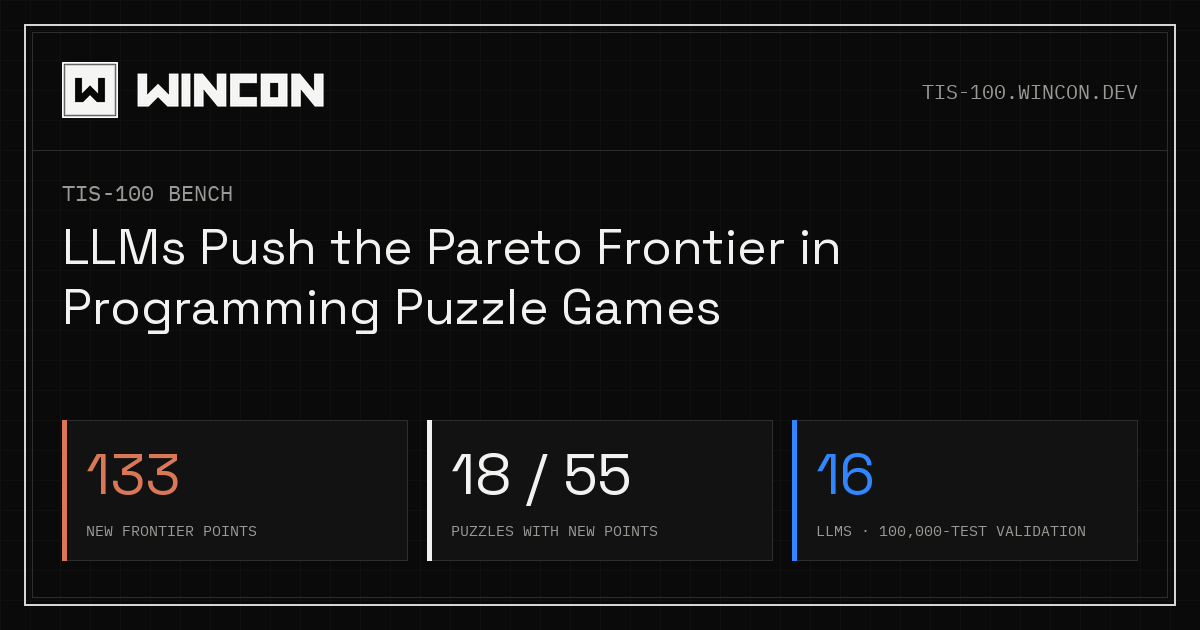
LLMs Play Zachtronics' TIS-100
2026-11-11Sixteen LLMs took on TIS-100’s community leaderboard, finding 133 new frontier points across 18 of 55 puzzles. Their runs included three outright cycle records, showing LLMs can produce competitive solutions to the programming puzzle.
Comments