Legal Tech News
2026-07-14

A zero-day vulnerability has been discovered in Cursor, prompting researchers to resort to full public disclosure. This drastic measure was taken to force action on a critical security flaw that the vendor has shown no interest in fixing.
CommentsThe kids with phones are alright
2026-07-14Discussions surrounding a recent article on youth smartphone access highlight concerns that algorithmic social media poses severe mental health and developmental risks to children. While many commenters advocate for strict regulations or outright bans to protect minors, others warn that such legislation could lead to government overreach and narrative control under the guise of child protection. The debate underscores the complex challenge of mitigating the harms of social media without sacrificing broader digital freedoms.
Comments
A controversial European age verification system is being implemented as a proprietary mobile application, effectively restricting users to the closed ecosystems of Android and iOS. Consequently, developers are being advised against integrating Google Play Integrity to avoid further platform lock-in and preserve open alternatives.
CommentsA controversial California bill could outlaw the infinite scroll, aiming to curb addictive digital design features that encourage endless doom scrolling. While the legislation highlights the broader challenge of distinguishing between manipulative technology and good user experience, critics argue that infinite scrolling intentionally removes natural stopping points to maximize continuous user engagement.
Comments2026-07-13

VEGA researchers have uncovered GhostLock (CVE-2026-43499), a severe Linux kernel vulnerability that has existed in all major distributions for 15 years. The stack-use-after-free flaw enables highly stable privilege escalation and container escapes without requiring special kernel configurations or privileges. Google awarded the team a $92,337 bug bounty for discovering and exploiting the flaw through its kernelCTF program.
Comments
The Los Angeles Police Department is allowing its contract to expire with surveillance giant Flock. As one of the company's largest government clients, the LAPD cited civil liberties concerns as the primary reason for ending the partnership.
Comments
Telegram's primary URL shortening domain has been suspended, disrupting access to shared links across the platform. A recent WHOIS lookup confirms the inactive registration status of the affected t.me domain.
CommentsSamsung is facing backlash over plans to collect sensitive user data, including medical records and cycle tracking details, to train its AI models through the Samsung Health app. Users who opt out of this data collection reportedly face the deletion of their stored information or lose access to essential app features. The controversial update has sparked widespread consumer outrage, prompting calls for regulatory intervention and boycotts against the company's aggressive data harvesting practices.
Comments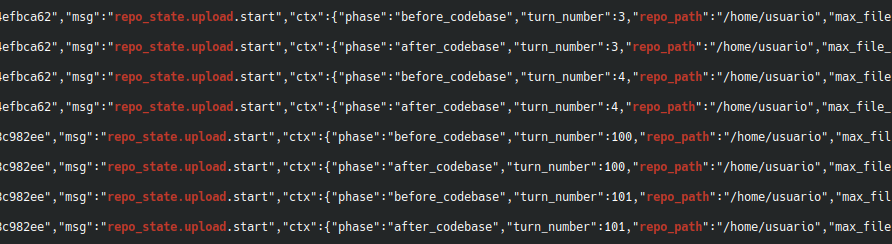
A user discovered that xAI's Grok AI uploaded their entire local directory to the company's servers. The exposed files included highly sensitive data such as SSH keys, a password manager database, and personal media. This incident highlights severe privacy and security risks regarding AI assistants with deep access to local file systems.
CommentsA user discovered that the Grok CLI inadvertently uploaded their entire home directory to xAI's Google Cloud Storage. The exposed data contained highly sensitive information such as SSH keys, password manager databases, and personal media files.
CommentsSecurity researchers have identified GhostLock, a critical Linux kernel stack-use-after-free vulnerability that has existed in all major distributions for 15 years. The flaw requires no special configurations or privileges to trigger and can be exploited for highly stable privilege escalation and container escapes. Google awarded a $92,337 bounty through its kernelCTF program for the successful proof-of-concept exploit.
Comments2026-07-12

Starting with Chromium 148, built-in JavaScript math, CSS trigonometric, and Web Audio functions now route through the host operating system's core math library. This routing causes the browser to exhibit unique rounding behaviors that inadvertently expose the user's specific operating system. As a result, these subtle calculation differences can now be exploited by developers for accurate OS fingerprinting.
Comments
A new federal regulation threatens to cut off federal student loans for college programs where graduates earn less than workers without a degree. While the rule aims to protect students from unmanageable debt, it raises broader questions about whether the value of a college degree should be measured solely by financial outcomes.
Comments2026-07-11

Apple has filed a lawsuit against OpenAI, accusing the AI company of stealing its trade secrets. The legal action specifically targets former Apple employees who allegedly transferred proprietary information to OpenAI. The tech giant claims these ex-workers illegally obtained and shared confidential data to benefit OpenAI's development efforts.
Comments2026-07-10

Starting October 1, New York City will enforce a new rule banning deceptive subscription practices to protect consumers from misleading cancellation processes. Alongside this initiative, the Mamdani administration is also pursuing efforts to prohibit companies from charging hidden junk fees.
CommentsFollowing an early 2025 report on the AI scraper bot scourge, this update examines the evolving tactics used by automated bots to bypass website security. It specifically focuses on the continued exploitation of residential proxies and highlights the ongoing technological arms race between content publishers and sophisticated scraping operations.
Comments2026-07-09
The European Parliament has greenlit the Chat Control 1.0 proposal following a controversial procedural maneuver by the European Commission to force a second-reading vote on previously defeated legislation. Critics argue this tactic undermines democratic norms by requiring an absolute majority to reject the measure, effectively bypassing prior parliamentary rejections to push through the surveillance initiative.
CommentsThe Federal Trade Commission and state attorneys general have secured a right to repair settlement with John Deere. Under the agreement, equipment owners will be allowed to independently fix their own machines without facing corporate restrictions.
Comments2026-07-08
A recently discovered obfuscated bash script printed on a novelty Uniqlo t-shirt has been decoded by the tech community, turning the apparel into a wearable piece of programming art. In response, legal experts are analyzing the garment to explore the intellectual property, technology, and commercial law implications of printing executable code on clothing.
Comments
Security researchers at Noma Labs discovered a critical prompt injection vulnerability named GitLost within GitHub's new Agentic Workflows. This flaw enables unauthenticated attackers to silently extract data from private repositories by posting a specially crafted issue in a public repository belonging to the same organization.
Comments
The European Parliament has approved an urgent procedure to fast-track legislation reviving the expired Chat Control 1.0 rules. This decision brings the private message scanning measures one step closer to official reinstatement.
Comments
The OpenMandriva Linux distribution has issued a statement addressing recent disruptions caused by an attempted sabotage of the project. The development team is informing the community about the incident to maintain full transparency regarding the situation and the individuals involved.
CommentsA use-after-free vulnerability in OpenBSD has been discovered that allows attackers to escalate local privileges to root access. The flaw was identified as part of the Patch The Planet initiative, which uses AI models to scan open-source projects for security vulnerabilities.
Comments2026-07-07
Chat Control 1.0 and 2.0 Explained
2026-07-07This article explains the key differences between the EU's proposed Chat Control 1.0 and 2.0 regulations. It provides a clear overview of their respective legislative timelines and implementation goals. Finally, it details the current status of the legislation and where the ongoing debates stand today.
Comments
Under new European Union regulations, all new cars must be equipped with driver monitoring cameras to help prevent accidents caused by distracted driving. While the mandate aims to improve road safety, the privacy safeguards and data handling rules for these in-car systems remain largely unresolved.
Comments
The Chat Control legislation has cleared its first round in the EU Parliament following a procedural maneuver by its proponents. This push comes just before the summer break and aims to reactivate the indiscriminate scanning of chat messages.
CommentsA criminal complaint revealed that Microsoft's telemetry can track users by correlating a Windows device ID with specific online activities, such as the creation of an ngrok account. Although readers initially suspected the third-party software was harvesting the machine identifier, an ngrok employee clarified that Microsoft's own data linked the suspect's device to the account's creation time despite the use of a VPN. This discovery highlights the significant privacy implications of operating system vendors correlating local device identifiers with remote network activity.
Comments2026-07-06

The Private Capture of Public Genius
2026-07-06The first essay in the Upstream of Everything series explores how private technology companies are monopolizing publicly funded research and collective innovation. It examines the historical and economic mechanisms that allow corporations to enclose shared scientific breakthroughs and open data. Ultimately, the piece argues that this privatization of public knowledge threatens future technological progress and exacerbates economic inequality.
Comments2026-07-05

PlayStation's announcement to stop producing physical game discs has sparked widespread consumer frustration. While the immediate backlash focuses on the loss of physical media, the core issue is actually the broader loss of true ownership over digital purchases.
CommentsMeta's Un-Stable Signature
2026-07-05Amid discussions about Meta's digital signature practices and new EU AI Act mandates, users are raising significant privacy and mass surveillance concerns over persistent AI watermarking and C2PA provenance tracking. Although these embedded identifiers are designed to authenticate media and clearly label AI-generated content, critics warn they could inadvertently expose sensitive personal data and tool usage in vulnerable contexts. In response to these controversies, developers are already creating specialized applications designed to detect and strip these embedded digital watermarks from images.
Comments