Software Tech News
SubmitSoftware is where most of the technology industry's ideas take shape. This section collects news about applications, platforms, open-source projects, and online services, along with the teams and companies that design, ship, and maintain them.
Typical stories include major releases and redesigns, open-source projects gaining traction, creators presenting tools they built, SaaS companies changing pricing or features, and post-mortems explaining why a product failed or an outage happened. Critical takes on bloat, reliability, and user experience are common too.
Knowing which software is improving, stagnating, or being abandoned helps people pick better tools and avoid costly migrations later. Developers, product teams, IT buyers, and everyday users follow this coverage to keep their stack current and discover useful alternatives.
2026-10-31

A new project called HackerTube offers a YouTube-like experience built from videos recommended on Hacker News. Instead of relying on YouTube’s algorithm, it surfaces clips curated by the HN community. The tool is pitched as an alternative way to discover and watch recommended videos.
Comments
A user alleges that Anthropic flagged them for “training a competitor” and now blocks any activity involving RFT, SFT, or training larger models. The user says they never distilled Claude—using it only to submit jobs and analyze rollouts from an open-source model—and reports an Opus 5.5 downgrade as a result.
Comments

Cisco has given 27-year-old engineer Paddy unlimited AI tokens and told him to “go nuts” as part of an effort to rewrite legacy code. The company president reportedly calls him an “energizer bunny,” underscoring the unusual experiment.
Comments
Molly, a Signal fork, has gone three months without updates and is reportedly vulnerable to attacks. Users relying on it should be aware of the security risk and consider alternatives until patches are released.
CommentsA new Rust library, cfsolve, claims to solve Cloudflare Turnstile and challenge pages through request-based reverse engineering without needing a headless browser. The project is hosted on GitHub under chris124567/cfsolve.
CommentsTell HN: Scribd Breached
2026-10-31Scribd has disclosed a breach in which an unauthorized third party may have accessed user email addresses and limited payment details, including the last four digits of credit cards, card issuer, expiry date, and country. Commenters criticized the company for not notifying all affected customers at once and debated broader cybersecurity issues such as AI-assisted vulnerability discovery and access to security tools.
Comments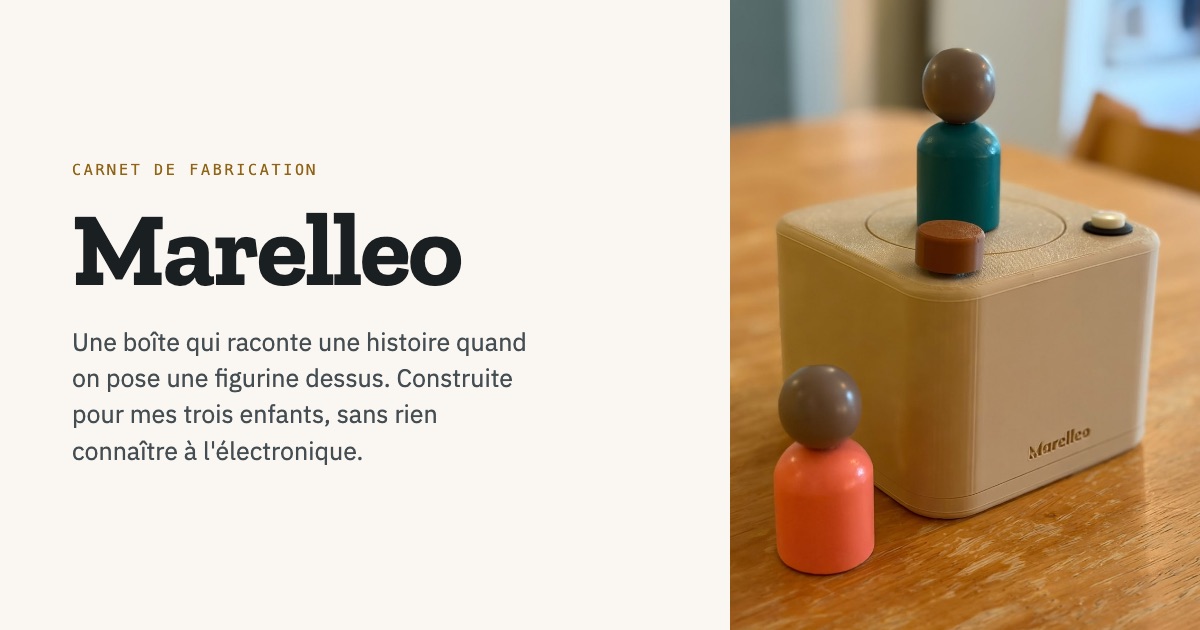
A developer has released Marelleo, an open-source ESP32 story box that plays a story when a child places a figurine on top. Built for their three kids by someone with no prior electronics experience, the project covers the breadboard, a burned potentiometer, five enclosure iterations, and a printed circuit board.
CommentsSwitch Lowering in GCC
2026-10-31A discussion around GCC’s switch-lowering work highlights frustration that GCC and Clang still lack perfect hashes for large sparse switch tables; one commenter says they implemented this in their rcc C compiler in a day, especially useful for Unicode. Commenters note an LLVM patch was rejected a decade ago and GCC’s Unicode-related patches remain in branches, while also debating jump-table indirection and missed switch simplifications.
Comments
Digital Minimalism
2026-10-31Readers criticized the “digital minimalism” framing, describing the discussed approach as a dashboard or multi-client for social platforms like X, Bluesky, Farcaster, and Lens rather than true minimalism. The discussion also covered airplane-mode phone setups, app and browser blocking, RSS-style aggregation, and concerns that using AI—especially as a substitute for human interaction—may not reduce digital overload so much as replace one vice with another.
CommentsA Show HN project offers a Star Trek: The Next Generation episode-guessing game made to honor Sir Patrick Stewart. Readers praise the tribute but find it too difficult, with even longtime TNG fans missing questions and suggesting multiple-choice answers, while noting the full-text search helps identify episodes by plot. Discussion also touches on how screenshots were sourced and ideas for other Stewart-themed games.
CommentsShiny Object Syndrome
2026-10-31Readers dismissed “Shiny Object Syndrome” as a rebranding of novelty bias, trading analogies about toddlers chasing soccer balls and dogs with balls while debating the term’s origins. The discussion also noted that AI has lowered the effort barrier to creating new features and libraries, making it harder to distinguish genuine work from endless shiny new options.
Comments
Lean creator Leo de Moura discusses how AI and Lean could reshape formal verification, moving software toward formal proofs and AI agents that help eliminate “trust me” code. The conversation explores the future of proof-driven development and its implications for trustworthy software.
CommentsA new Show HN project presents a USB-C LTE modem that gives a computer phone-line capabilities, including LTE data, SMS, and voice calls with call audio routed over USB. The modem is built on a 4-layer KiCad board designed by Koppar from a one-page spec.
CommentsRedox: Ring Buffers Project Summary
2026-10-31Redox has published a project summary on ring buffers, outlining the data structure’s role and implementation in the operating system. The write-up appears on the Redox official website and documents the project’s design and progress.
CommentsA Show HN project has ported the 1987 NES game Contra from assembly to C and then to WebAssembly, drawing enthusiasm from readers who call it a favorite and praise the co-op focus. Discussion centers on whether the port could add music or higher-resolution/color graphics and sample-based sound, with commenters pointing to emulator texture packs like Mesen and tools like 3dSen while noting NES hardware limits around digitized audio.
CommentsA developer has released kube32, a Kubernetes-compatible control plane, Kubelet agent, and WebAssembly runtime designed to run on ESP32 microcontrollers. The project aims to bring container-like orchestration to highly constrained embedded hardware.
CommentsProspero is a new coding harness with a native GUI and a notably space-efficient Dear ImGui-based interface, drawing praise for thoughtful, opinionated design amid a wave of AI “slopware.” Commenters want to compare it with Zed and see whether its UI could work atop opencode or the Codex app-server protocol, while others flagged confusion over inconsistent platform support on the Professional Edition page.
Comments
Hackers hijacked an Egyptian highway billboard and screens in Malaysia to display pornography, telling The Cairo Report they exploited LED display software in Egypt and abroad. The incident is raising questions about the Giza billboard’s intelligence-linked operator.
Comments
The article explains that I/O read and write operations are less symmetric than programmers often assume, using POSIX read(2) and write(2) as examples. It highlights the semantic and behavioral differences between the two syscalls that matter in practice.
Comments
The article explores the challenge of finding and removing "zombie accounts" in Active Directory, noting they are hard to identify and eliminate. It recounts hands-on methods the author has used across different systems to track down and cull these stale accounts.
CommentsBrief History of PDP Computers
2026-10-31A retrospective on DEC’s PDP line examines how these minicomputers carved out a cheaper, more accessible niche than batch-oriented mainframes. Readers recall programming on PDP-10s and note that the “Programmable Data Processor” name may have helped DEC sidestep procurement rules that treated “computers” as high-scrutiny mainframes. The discussion also highlights preservation work, including browser-based PDP-7 emulators running early UNIX, PIXIE CAD software, games, and newly built Forth systems.
CommentsJepsen: ParticleDB 1.1.4
2026-10-31Jepsen’s ParticleDB 1.1.4 report drew discussion over ParticleDB’s home-page claim that it was “formally proven” with a TLA+ proof, with readers joking it may have meant “formerly.” The linked GitHub repository was initially returning 404 and confirmed to still be private, though ParticleDB said it hoped to resolve that shortly.
CommentsConfigure a UPS on Linux with NUT
2026-10-31This guide explains how to install and configure Network UPS Tools (NUT) on Linux to detect a UPS and load the correct driver. It also covers setting up automatic safe shutdown when the battery runs low.
CommentsOqtaDrive marks five years since its first alpha release, having grown from a shelved hobby project into an Arduino Nano-based emulator of eight Sinclair Microdrives for the ZX Spectrum with Interface 1 and the QL. The project has shipped 34 releases over that period, and its creator is now looking back at its evolution.
CommentsDouble Buffering with Cloudflare Queues
2026-10-31The article presents a stateless double-buffering pattern using Cloudflare Queues to batch edge telemetry and drive Cloudflare write costs to zero by alternating even and odd queues by hour. Producers send to the queue matching the current hour’s parity, while consumers read from the opposite queue. Readers call the pattern clever but flag time-related assumptions and somewhat ugly implementation code.
CommentsCVE-2026-98432 is a CVSS 9.8 remote use-after-free vulnerability in Linux’s IPv4 TCP handshake that was fixed upstream on October 15. Ubuntu and RHEL have not yet shipped a patched kernel, leaving affected systems exposed until vendor updates arrive.
Comments
Distributed Proofreaders
2026-10-31Distributed Proofreaders is a web-based platform that helps convert public domain books into e-books. It divides the work into individual pages so many volunteers can proofread a book simultaneously.
Comments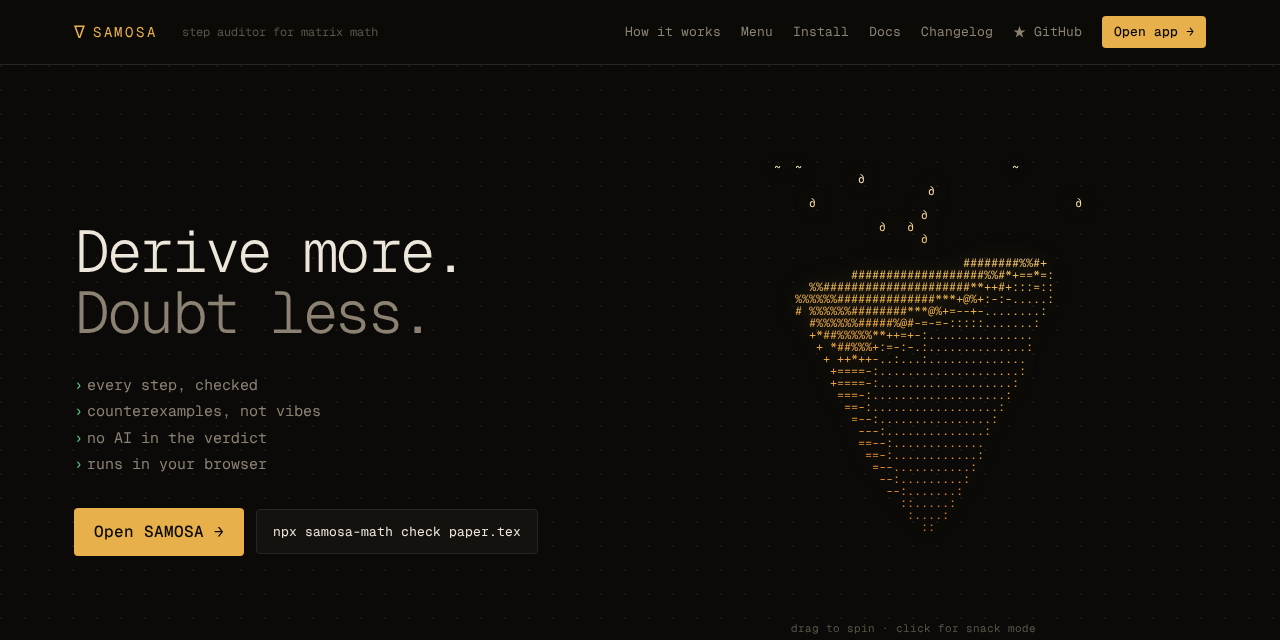
Show HN introduces Samosa, a linter that verifies every step of matrix derivations exactly over finite fields. It offers a browser-based 2x2 counterexample and fix, and its verdicts do not rely on AI.
CommentsEnlightenment 0.28 has been released with a range of improvements. The update follows 0.27, which arrived at the beginning of 2025, after the project fell off its roughly 12-month release cadence.
CommentsA developer has released bootgpt, a Show HN project that fits a language model into a boot sector. The GitHub project explores running a minimal language model directly from boot code, before any operating system loads.
Comments