Software Tech News
SubmitSoftware is where most of the technology industry's ideas take shape. This section collects news about applications, platforms, open-source projects, and online services, along with the teams and companies that design, ship, and maintain them.
Typical stories include major releases and redesigns, open-source projects gaining traction, creators presenting tools they built, SaaS companies changing pricing or features, and post-mortems explaining why a product failed or an outage happened. Critical takes on bloat, reliability, and user experience are common too.
Knowing which software is improving, stagnating, or being abandoned helps people pick better tools and avoid costly migrations later. Developers, product teams, IT buyers, and everyday users follow this coverage to keep their stack current and discover useful alternatives.
2026-11-01
HackerBooks is a new Show HN project that lets users browse thousands of books recommended in Hacker News comments from 2007 to 2026. The books are ranked by how many different people mention them.
CommentsMemdoor, a lightweight coding and automation agent packaged as a single CLI binary, uses a team of five Qwen3.8-27B models to outperform Fable 5 on LiveCodeBench Hard. It can run locally or over SSH, optimize token usage, and automate CI and cron jobs with durable workflows.
Comments
Nibnib is an image compression project from raphlinus that stores images at 4 bits per pixel while prioritizing extremely fast decompression. It targets use cases where quick decoding matters more than maximizing compression ratio.
CommentsNovellas with Groff
2026-11-01Readers discussed the varied writing and typesetting pipelines used by tech-savvy fiction writers, from Vim, Scrivener, and troff to Google Docs, Markdown, Git, Emacs, and Typst, while joking that tinkering with such setups can become procrastination. The thread also touched on George R.R. Martin’s WordStar routine, the value of established workflows, and debates over epic worldbuilding versus tighter short fiction.
Comments
The piece explores domain hacks built from obscure Unicode letterlike symbols, including ℡ and №, which visually combine letters and numbers. Since .tel and .no are real top-level domains, such single characters can be used to create clever domain-name tricks. It highlights how Unicode’s less-used symbols can interact unexpectedly with DNS naming rules.
CommentsA reader discussion highlights a bootstrapped SaaS run for 20 years by two brothers, with users praising its longevity and a practical MP3-to-text conversion tool. Commenters ask how AI and coding agents have affected revenue, while others suggest most of the service’s regular users are non-developers who are largely unaware of tools like Claude.
Comments
ChatGPT and Codex usage limits merging
2026-11-01OpenAI is merging ChatGPT and Codex usage limits into a shared allowance, according to reader discussion. Commenters criticize the move as a cost-cutting measure that could frustrate paying subscribers, since agentic coding consumes far more tokens than typical chat and decoupled billing had been a reason to stay. Some warn users may switch providers or use ChatGPT less as a result.
Comments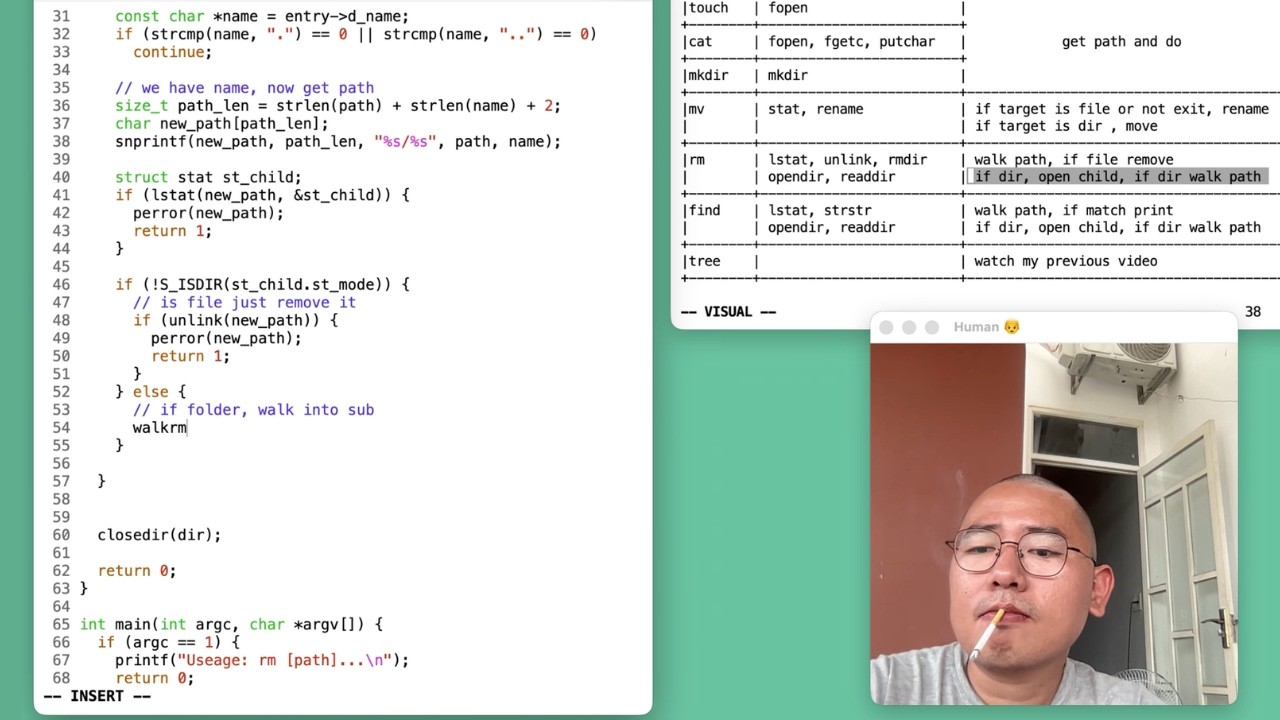
A developer has published a 52-minute video showing how to recreate core Linux file-management utilities—touch, cat, mkdir, mv, rm, and find—from scratch in C without using AI assistance. The project offers a hands-on look at implementing common Unix commands by hand for educational purposes.
CommentsShow HN phoria2 is a rebuilt canvas 3D library as a small WebGL 2 library that includes chart primitives for timeseries, heat-colored hour/day surface charts, and tiled dashboards, plus on-demand rendering and validation errors aimed at coding bots. Readers praised its mobile performance and aesthetics but raised questions about tween performance for live-streaming geometry updates, missing comparisons with Three/Babylon, and mobile hover/tap persistence.
CommentsOpenIDEA is a new Rust-built IDE that recreates familiar IntelliJ IDEA-style keymaps, tool windows, and search-everywhere in a fast native app. It bundles an editor, code insight, debugger, Git, terminal, database and HTTP clients with support for 60+ languages.
CommentsEnlightenment 0.28.0 Release
2026-11-01Enlightenment 0.28.0 has been released, prompting nostalgia for its effects-heavy past and surprise that the lightweight desktop/window manager is still active. Discussion highlighted its restored Pants module with skirts, kilts, lederhosen, malloc variants, and translations, while some users criticized its setup and stability.
CommentsA piece on domain hacks using unusual Unicode characters prompted discussion about how such domains expose URL-handling problems, including incorrect punycode encoding and browsers like Firefox refusing to open the links. Commenters also shared anecdotes about attempting to register symbol and one-letter domains, only to be blocked by registrar technical glitches or shifting rules.
Comments
Pac-Man's Siren Call
2026-11-01In “Pac-Man’s Siren Call,” a software craft and quality blog uses the game’s irresistible pull as a metaphor for the distracting allure of risky engineering shortcuts. The piece urges developers to resist quick fixes and prioritize maintainable, high-quality code.
Comments
A purported leak of an Anthropic "Mythos-class" model on Hugging Face is being met with heavy skepticism, with commenters calling it likely fake and a possible lure to get less knowledgeable users to run malware. Discussion cites a prior dubious "Fable 5" sale rumor and notes the model would be nearly 8 terabytes, making casual downloads unlikely, while others joke about Anthropic going open-weight or the model leaking itself.
CommentsRadiation Map of the World
2026-11-01A global radiation map built by the RadiaCode community visualizes detector measurements from around the world. It shows tracked locations, areas, and live radiation statistics contributed by users’ RadiaCode detectors.
CommentsOmniDiff is a new open-source Git difftool written in Rust that aims to deliver fast, robust, and accurate diffing with content-aware behavior. The project is available on GitHub and is positioned as a high-performance alternative for developers comparing changes.
Comments
Understanding Email Encryption
2026-11-01This piece offers a comprehensive overview of email encryption, explaining how encrypted email works and why it matters. It also covers the benefits of encryption alongside the trade-offs users and organizations should consider.
Comments
Everyone Has Email. Nobody Uses It Right
2026-11-01Email remains the internet’s most important tool, yet many people fail to use it effectively. This practical guide explains why email still matters and offers tips for mastering it.
CommentsBBRouter has shared a Show HN project that simulates Ben Eater’s 8-bit computer on 3D breadboards using its breadboard editor and simulator. Users can open the project to explore the layout and run the simulated computer.
Comments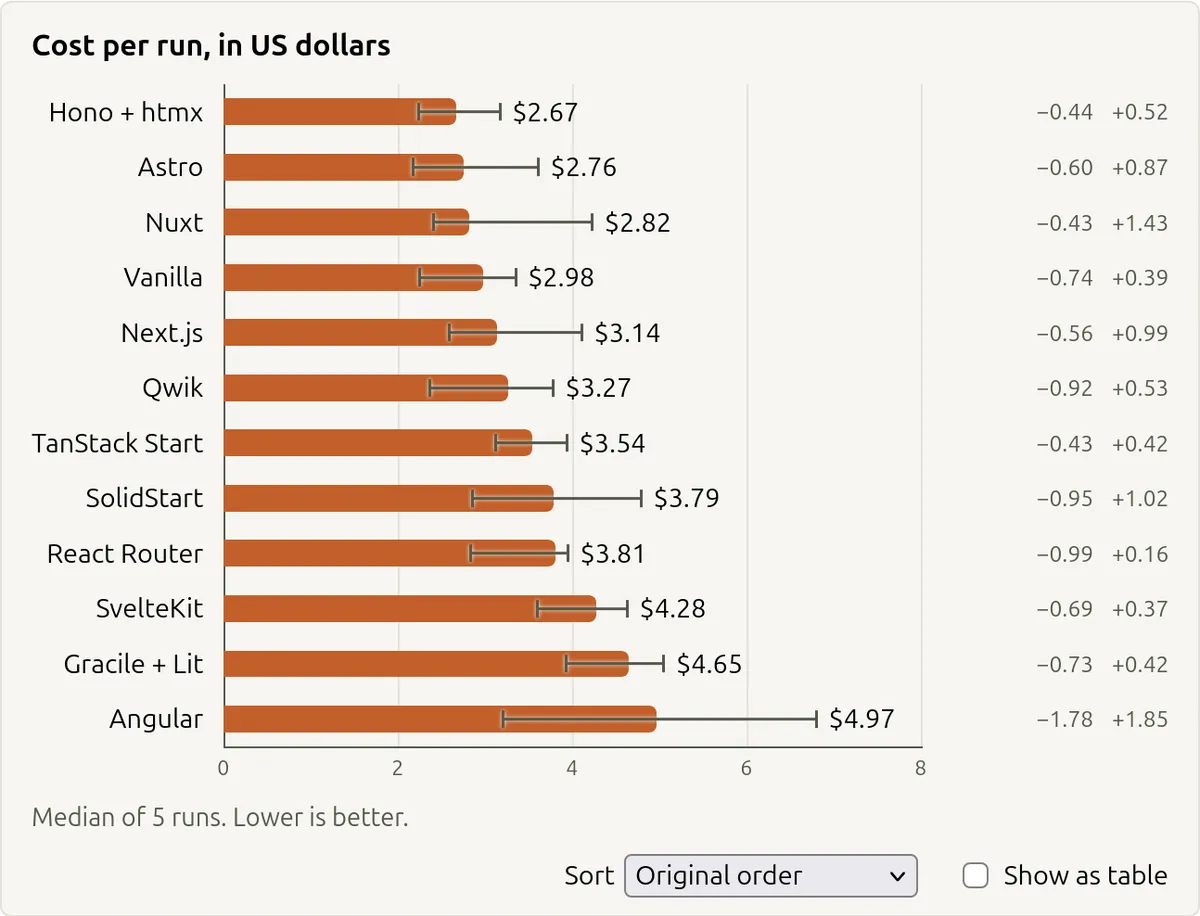
The AI cost of JavaScript frameworks
2026-11-01The article argues that JavaScript framework choices are often based on vibes, and that AI coding assistants add a new measurable cost: larger, more complex frameworks consume more context and tokens, making AI-assisted work slower and more expensive. It recommends weighing AI-readability and token efficiency alongside performance and developer experience.
CommentsThe article shares guidance on improving fuzz testing with AFL++, a widely used coverage-guided fuzzer. It focuses on practical tips to make AFL++ workflows more effective.
Comments
Outcrop is a new geology app for iPhone and Android that displays the geologic map wherever you are and uses augmented reality to overlay rock units onto the landscape in front of you. It names each rock unit in AR and works offline.
Comments
Decode kernel panic from QR Code photo
2026-11-01A GitHub Gist demonstrates how to decode a kernel panic from a photo of a QR code, offering a quick way to extract crash diagnostics captured on-screen. The snippet is shared as code, notes, and a practical troubleshooting reference for kernel panic reports.
Comments
Proton’s CEO dismissed a request for security testing as “loser thinking,” drawing attention to the company’s stance on AI-generated code. The episode highlights that for a privacy-focused company, the real product is not whether AI writes code but the guardrails that keep that code secure.
Comments2026-10-31

A new project called HackerTube offers a YouTube-like experience built from videos recommended on Hacker News. Instead of relying on YouTube’s algorithm, it surfaces clips curated by the HN community. The tool is pitched as an alternative way to discover and watch recommended videos.
Comments
A user alleges that Anthropic flagged them for “training a competitor” and now blocks any activity involving RFT, SFT, or training larger models. The user says they never distilled Claude—using it only to submit jobs and analyze rollouts from an open-source model—and reports an Opus 5.5 downgrade as a result.
Comments
Cisco has given 27-year-old engineer Paddy unlimited AI tokens and told him to “go nuts” as part of an effort to rewrite legacy code. The company president reportedly calls him an “energizer bunny,” underscoring the unusual experiment.
Comments
Molly, a Signal fork, has gone three months without updates and is reportedly vulnerable to attacks. Users relying on it should be aware of the security risk and consider alternatives until patches are released.
CommentsA new Rust library, cfsolve, claims to solve Cloudflare Turnstile and challenge pages through request-based reverse engineering without needing a headless browser. The project is hosted on GitHub under chris124567/cfsolve.
Comments