Software Tech News
SubmitSoftware is where most of the technology industry's ideas take shape. This section collects news about applications, platforms, open-source projects, and online services, along with the teams and companies that design, ship, and maintain them.
Typical stories include major releases and redesigns, open-source projects gaining traction, creators presenting tools they built, SaaS companies changing pricing or features, and post-mortems explaining why a product failed or an outage happened. Critical takes on bloat, reliability, and user experience are common too.
Knowing which software is improving, stagnating, or being abandoned helps people pick better tools and avoid costly migrations later. Developers, product teams, IT buyers, and everyday users follow this coverage to keep their stack current and discover useful alternatives.
2026-10-30
Phorion detected a backdoor in the official Claude Code for VS Code extension bundle on the Cursor Marketplace that installs a persistent SSH backdoor on macOS, Linux, and Windows. The finding affects users who obtained the extension through that marketplace.
CommentsA security researcher disclosed five critical cross-tenant elevation-of-privilege vulnerabilities in Azure API Connections, part of Logic Apps, that allowed full compromise of other tenants’ connected backends such as Key Vaults and Azure SQL databases. The flaws involved path traversal and runtime URL validation bypasses, and the researcher earned $200,000 for the reports. Microsoft fixed the issues, though some fixes were bypassed or addressed by blocking vulnerable endpoints.
Comments
Florilegium: Procedural Flowers in LaTeX
2026-10-30Florilegium is a new project that procedurally generates Delft-blue floral page margins for LuaLaTeX documents. The flowers are drawn in Lua, offering an automated way to add decorative margins to LaTeX layouts.
CommentsMy favourite PowerMac is a Nintendo Wii
2026-10-30Amid Nintendo shutting down Mario Kart Tour on mobile, readers are revisiting the modded Wii, where updated hacks have restored software, stability, and online play through projects like WiiLink. Discussion around “My favourite PowerMac is a Nintendo Wii” also hopes a Mac OS port arrives on the Open Shop Channel and praises the Wii’s disc-based, microtransaction-free approach and broad mainstream appeal.
Comments
GitHub is investigating an incident affecting Actions, Pages, and Webhooks, according to its status page. The notice does not specify the cause or scope of impact. Further updates are expected on GitHub’s status page.
Comments
The piece explains that a program can fail when launched from a batch file because it inherits a different working directory or environment than when double-clicked. It recommends mimicking Explorer’s launch behavior more accurately, such as setting the correct working directory or using the appropriate start command, to reproduce and fix the issue.
CommentsNorthflank Breached
2026-10-30Northflank has disclosed a security breach, with its status page listed as the source of information. Details on the scope and impact of the incident remain unclear.
CommentsPico CSS is no longer maintained
2026-10-30Pico CSS is no longer being maintained, according to the project’s status update. Users should expect no further updates or fixes, and teams relying on it may want to consider alternatives or a fork.
Comments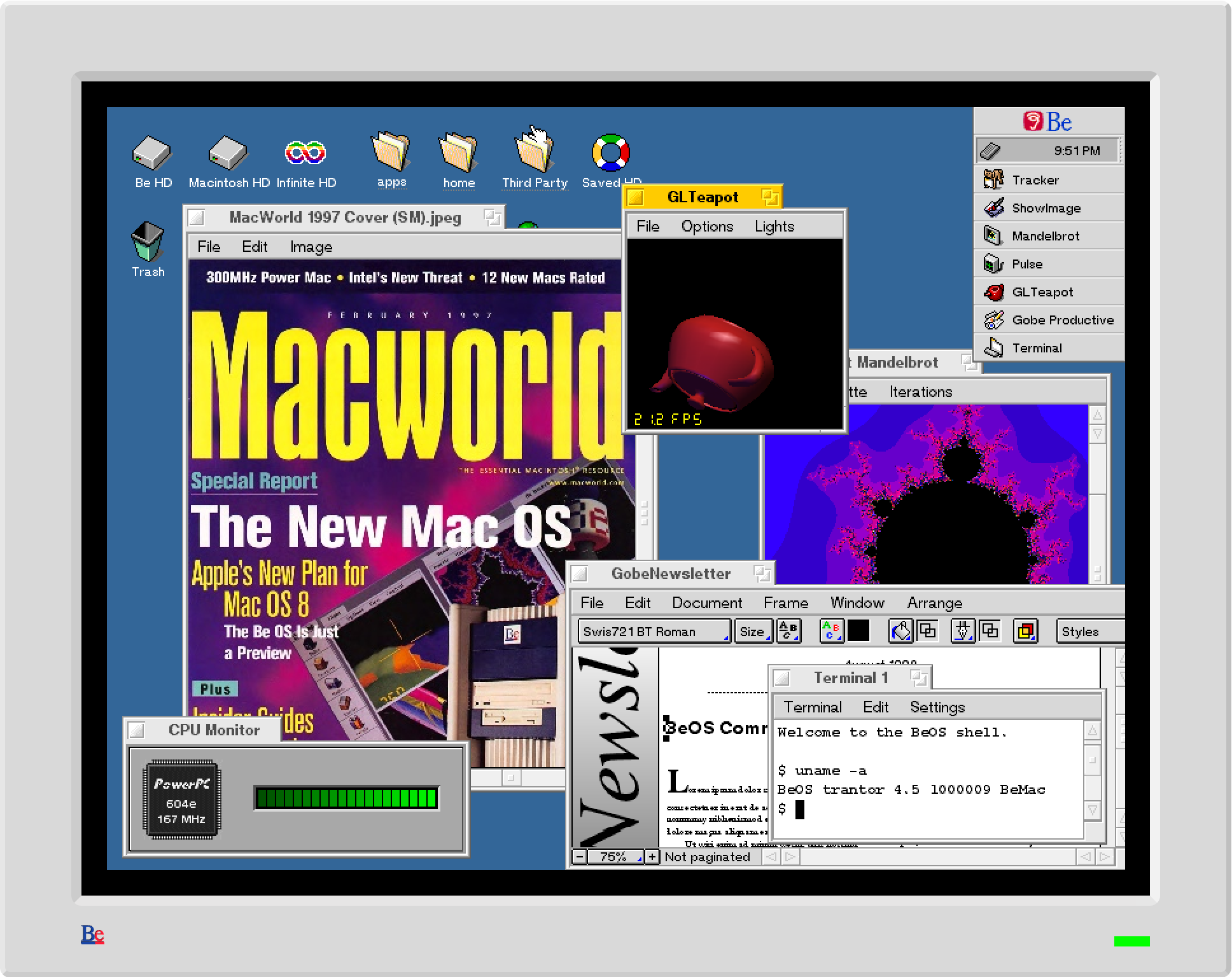
Infinite Mac: BeOS
2026-10-30The Infinite Mac: BeOS piece revisits BeOS’s distinctive UI and legacy, with readers recommending Haiku as its modern FOSS successor and noting how AI could help revive apps for bygone OSes. Discussion also debates whether Apple should have bought Be instead of NeXT, with former Be employees cited saying NeXT was technically stronger and that getting Jobs back mattered more than BeOS itself.
Comments
Linode Security Incident
2026-10-30Linode has published a customer security advisory on its status page about a security incident tracked as CVE-2026-98432. The provided notice gives no further details about the incident or its impact.
Comments
Researchers ran swarms of Claude and GPT agents in Minecraft and Mindustry to test multi-agent coordination in open-ended game environments. The experiment explores how LLM-powered agent swarms collaborate and behave across different simulated worlds.
Comments
Cisco has reportedly given an engineer unlimited AI tokens to rewrite 98% of the company’s code, with its president betting on Gen Z to drive the change. The move highlights Cisco’s push to use AI for large-scale code modernization.
CommentsAO3 Down for Maintenance
2026-10-30AO3 is currently down for maintenance. The Organization for Transformative Works is directing users to its system performance page for real-time and historical status updates.
Comments
Finding Panics with Call Graph Analyzer
2026-10-30Under the Open Device Partnership, a Microsoft collaboration has released Call Graph Analyzer (CGA), a tool that extracts the call graph from monomorphized MIR to identify functions in a compiled binary that can panic. The blog post explains the approach and compares it with existing methods, noting both its advantages and limitations.
CommentsAstroterm is a terminal-based planetarium that lets users explore stars, planets, constellations, and more directly in the command line. It renders celestial objects in the terminal, offering a telescope-free way to browse the night sky.
CommentsA developer has built “doomformer,” a project that compiles an integer neural network—specifically a transformer—into a DOOM map, using voodoo dolls for arithmetic and light levels and plane heights to store values. The implementation checks every computed value against NumPy with zero tolerance.
CommentsCuis: The Modern Smalltalk-80
2026-10-30Cuis is a modern Smalltalk-80 environment that aims to preserve the original Smalltalk philosophy while updating it for contemporary use. It offers a compact, self-contained system for developers interested in live programming and object-oriented computing.
Comments
ElementaryUI – Swift, in the Browser
2026-10-30ElementaryUI is a new Swift frontend framework designed to run in the browser. It enables developers to build web frontends using Swift.
Comments
The Federated Code Forge
2026-10-30Tangled, a Git collaboration platform built on the AT Protocol, has relaunched with stabilized lexicons, an overhauled architecture and UI, easier self-hosting, and support for organizations, with private repositories coming soon. Its federated “knot” model lets users host repos themselves while contributors use a portable AT Protocol account to open issues or send pull requests without registering on each server.
Comments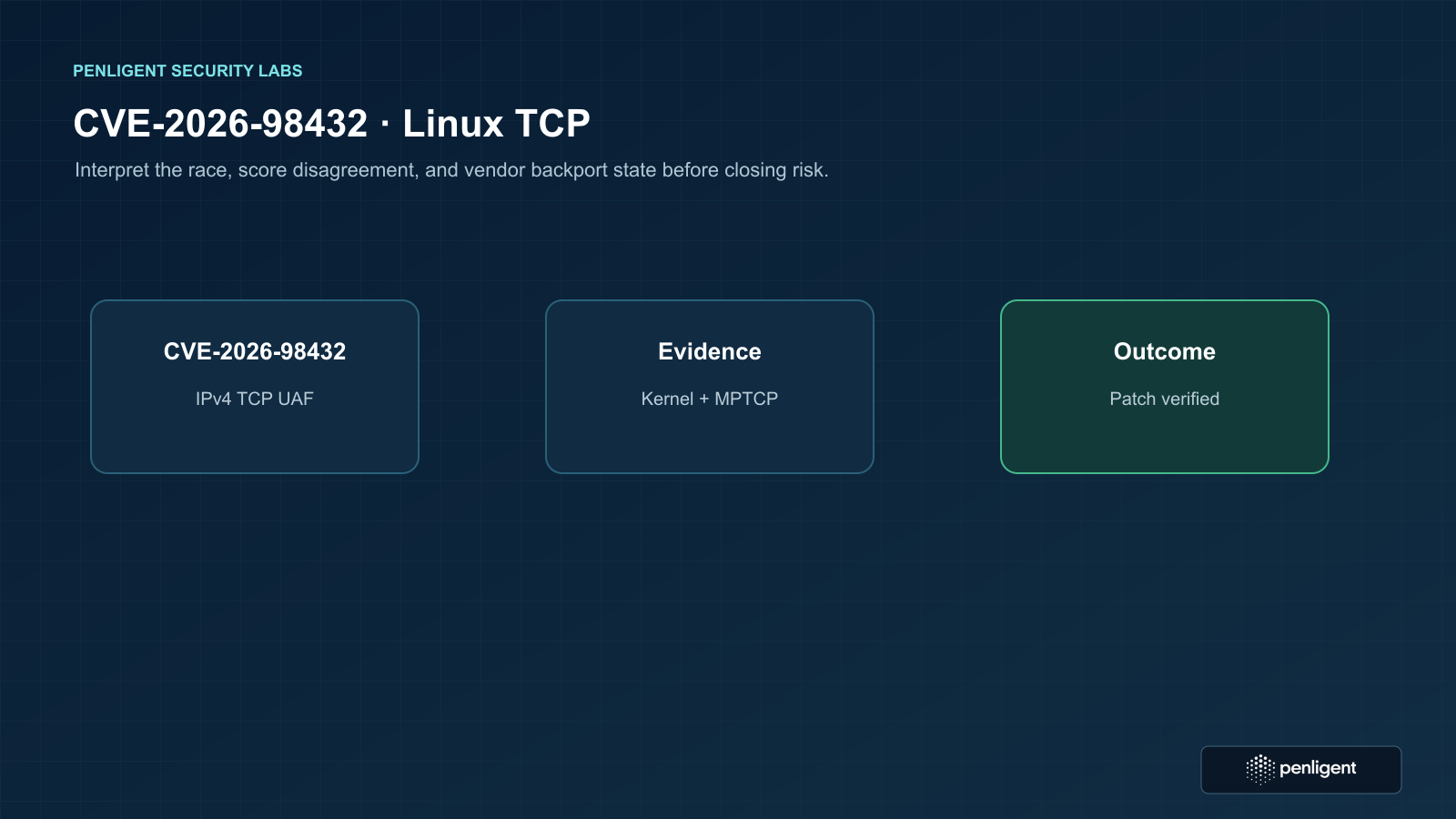
CVE-2026-98432 is a Linux IPv4 TCP use-after-free whose severity is disputed, rated 9.8 versus 5.9. The report covers lab evidence of MPTCP remote code execution, exposure checks, patches, and guidance for safe validation.
CommentsOvertone is a new Show HN project that transcribes audio into word-timed captions and lets users correct and cut them for any screen shape from a single file. It includes a caption format, a video.js plugin, and a CLI.
CommentsSanstun is a new sans-IO WireGuard implementation written in Rust, designed to be parallel-friendly and idiomatic. It aims to combine ease of use, security, and performance through its API.
CommentsSylphide OS is a general-purpose operating system designed for microcontroller-based computers. It aims to bring broader OS functionality to resource-constrained MCU hardware. The project targets systems that typically rely on bare-metal firmware or real-time operating systems.
CommentsA Show HN project demonstrates automatically deducing a FlashAttention kernel from about 25 lines of SQL. It stems from an experiment in querying Xarray datasets with SQL, developed in the xarray-sql GitHub repository.
CommentsLasm is a new Show HN project that lets developers write formally verified web apps in Lean and run them on JavaScript and WebAssembly runtimes, including Node, serverless, and edge environments. The tool aims to bring Lean’s verification capabilities to mainstream web deployment targets.
CommentsCompile-Time Dependent Types
2026-10-30A reader discussion on compile-time dependent types notes that mainstream systems-language features—C++ templates/constexpr, Rust const generics, Zig comptime, and C _Generic—are often restricted or lack a proper type system and are not true dependent types. It highlights Syl as an example of compile-time dependent typing with runtime simply typed code and type erasure, linked to staged compilation and two-level type theory, while questioning how well LTO and compiler optimization handle the resulting polymorphic code.
CommentsShow HN: Sketch Stadium lets users watch an AI agent play Pictionary through a remote MCP server with account-free OAuth; its developer says it exposes only game tools and marks server communication as untrusted to reduce prompt-injection risks from other players’ guesses. Commenters called the idea neat but warned against pasting HN prompts into agents or blindly installing MCP servers, while the creator noted related adversarial games like poker and mafia and said Pictionary clues tend to be either quickly guessed or too abstract.
Comments
A new internet-connected device called knock on wood lets users remotely perform the superstition when no wood is nearby. Tree-mounted machines connect to a web app so users can knock on wood from afar.
Comments
Solving Postgres' Count Problem
2026-10-30ParadeDB tackles Postgres’ COUNT performance with ctid-aware segment partitioning, an inverted DocId map, and bitmap postings, accelerating Wikipedia COUNT queries. It also reports 10–22x TIN’s throughput on filtered and time-sorted Hacker News search queries.
CommentsA 2011 article presents a sophisticated diagram for splitting one’s digital life into separate security domains to limit risk. The author acknowledges that most users would likely find the scheme too complex, but it offers a model for compartmentalizing accounts and data.
Comments