Programming Tech News
SubmitWriting software is a craft that keeps reinventing itself. This section gathers news and articles for people who program, covering language releases, compilers and runtimes, frameworks, development workflows, and the ideas that change how code gets written and reviewed.
Typical stories include new versions of Rust, Python, Java, JavaScript, and TypeScript, performance and debugging investigations, essays on architecture and code quality, and discussions of how AI coding assistants are changing day-to-day development. Hands-on tutorials and lessons from long-running projects show up often.
The tools and practices developers choose affect how fast teams ship and how well their software holds up over time. Working engineers, students learning to code, and engineering leaders follow this coverage to sharpen their skills and make better technical decisions.
2026-10-30

The news piece argues that AI is not replacing site reliability engineers but is deskilling them by handling most routine incident response. It warns that when AI automates 95% of incidents, SREs may lose the hands-on practice needed to handle the critical 5% that matters most.
CommentsFlorilegium: Procedural Flowers in LaTeX
2026-10-30Florilegium is a new project that procedurally generates Delft-blue floral page margins for LuaLaTeX documents. The flowers are drawn in Lua, offering an automated way to add decorative margins to LaTeX layouts.
Comments
A Show HN project called nesformer has compiled an NES CPU directly into roughly 1GB of weights inside a stock Qwen3.5 model, effectively running Nintendo hardware through the model itself. The work is available at dbreunig/nesformer.
CommentsMy favourite PowerMac is a Nintendo Wii
2026-10-30Amid Nintendo shutting down Mario Kart Tour on mobile, readers are revisiting the modded Wii, where updated hacks have restored software, stability, and online play through projects like WiiLink. Discussion around “My favourite PowerMac is a Nintendo Wii” also hopes a Mac OS port arrives on the Open Shop Channel and praises the Wii’s disc-based, microtransaction-free approach and broad mainstream appeal.
Comments
GitHub is investigating an incident affecting Actions, Pages, and Webhooks, according to its status page. The notice does not specify the cause or scope of impact. Further updates are expected on GitHub’s status page.
Comments
A new “Sleep” framework proposes letting LLMs accumulate short-term memories in a buffer/cache during use, then rank and consolidate the useful bits into model weights during a sleep cycle using low-rank structures and mixture-of-experts, followed by “dreaming” via synthetic routing and RL refinement. The approach is described as on-policy distillation, where an expanded student learns token-specific feedback from teacher distributions on self-sampled sequences, with discussion highlighting both its technical promise and audit/lineage challenges for tracking how and when model knowledge changes.
Comments
The piece explains that a program can fail when launched from a batch file because it inherits a different working directory or environment than when double-clicked. It recommends mimicking Explorer’s launch behavior more accurately, such as setting the correct working directory or using the appropriate start command, to reproduce and fix the issue.
CommentsPico CSS is no longer maintained
2026-10-30Pico CSS is no longer being maintained, according to the project’s status update. Users should expect no further updates or fixes, and teams relying on it may want to consider alternatives or a fork.
Comments
Artificial Analysis v5 highlights the benchmarker’s dilemma: AI benchmarks are increasingly influential but struggle to capture what really matters. The piece reviews the benchmarking industry and argues that current evaluations leave important gaps unmeasured.
Comments
Cisco has reportedly given an engineer unlimited AI tokens to rewrite 98% of the company’s code, with its president betting on Gen Z to drive the change. The move highlights Cisco’s push to use AI for large-scale code modernization.
Comments
Finding Panics with Call Graph Analyzer
2026-10-30Under the Open Device Partnership, a Microsoft collaboration has released Call Graph Analyzer (CGA), a tool that extracts the call graph from monomorphized MIR to identify functions in a compiled binary that can panic. The blog post explains the approach and compares it with existing methods, noting both its advantages and limitations.
Comments
Building an AI-native engineering org
2026-10-30The article explores how engineering organizations can become AI-native by embedding AI across planning, coding, review, and operations rather than treating it as a bolt-on tool. It outlines the cultural, process, and platform changes needed to make AI a default part of how teams build and ship software.
CommentsA developer has built “doomformer,” a project that compiles an integer neural network—specifically a transformer—into a DOOM map, using voodoo dolls for arithmetic and light levels and plane heights to store values. The implementation checks every computed value against NumPy with zero tolerance.
CommentsCuis: The Modern Smalltalk-80
2026-10-30Cuis is a modern Smalltalk-80 environment that aims to preserve the original Smalltalk philosophy while updating it for contemporary use. It offers a compact, self-contained system for developers interested in live programming and object-oriented computing.
Comments
ElementaryUI – Swift, in the Browser
2026-10-30ElementaryUI is a new Swift frontend framework designed to run in the browser. It enables developers to build web frontends using Swift.
Comments
The Federated Code Forge
2026-10-30Tangled, a Git collaboration platform built on the AT Protocol, has relaunched with stabilized lexicons, an overhauled architecture and UI, easier self-hosting, and support for organizations, with private repositories coming soon. Its federated “knot” model lets users host repos themselves while contributors use a portable AT Protocol account to open issues or send pull requests without registering on each server.
Comments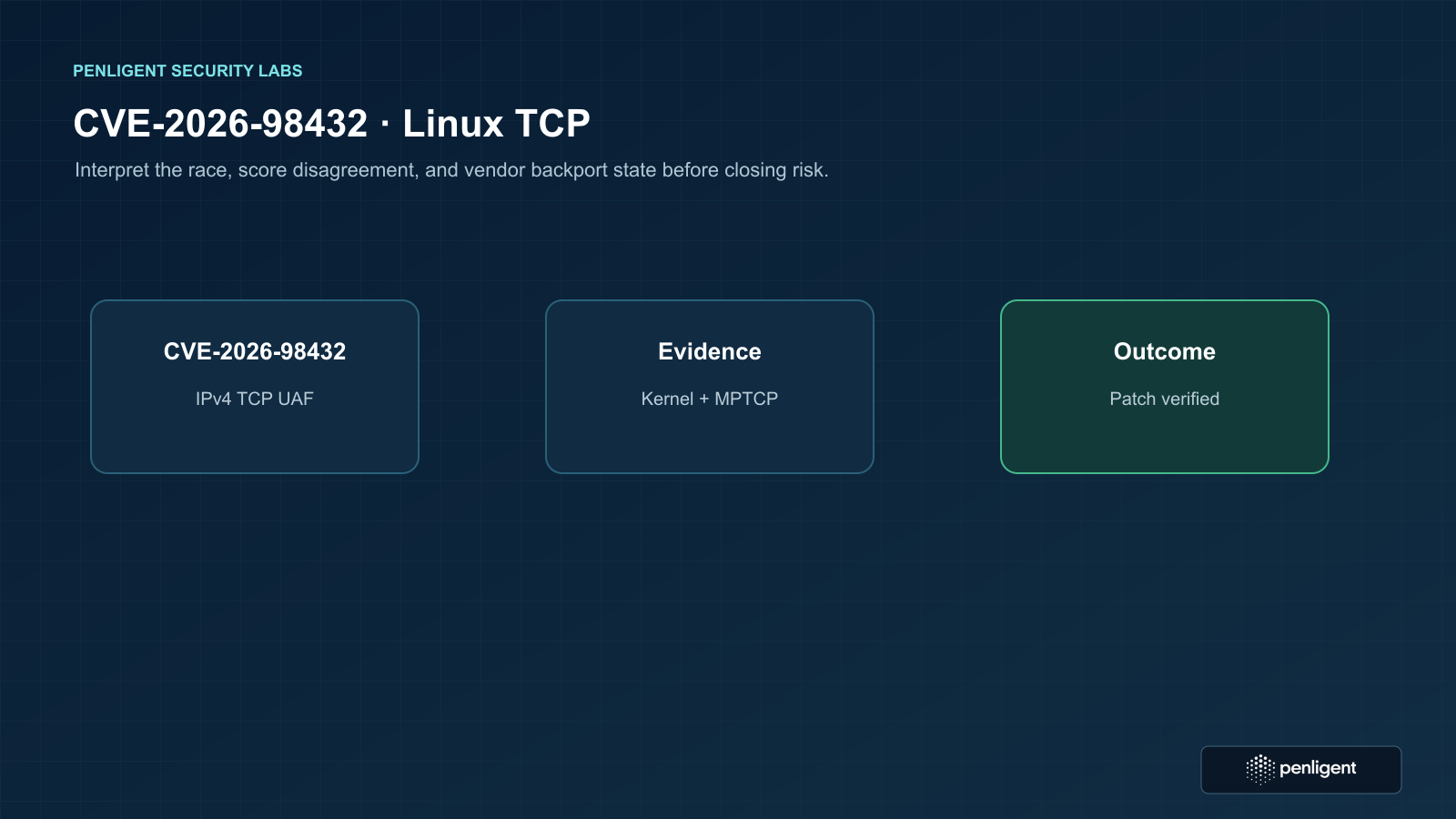
CVE-2026-98432 is a Linux IPv4 TCP use-after-free whose severity is disputed, rated 9.8 versus 5.9. The report covers lab evidence of MPTCP remote code execution, exposure checks, patches, and guidance for safe validation.
CommentsOvertone is a new Show HN project that transcribes audio into word-timed captions and lets users correct and cut them for any screen shape from a single file. It includes a caption format, a video.js plugin, and a CLI.
CommentsSanstun is a new sans-IO WireGuard implementation written in Rust, designed to be parallel-friendly and idiomatic. It aims to combine ease of use, security, and performance through its API.
CommentsA Show HN project demonstrates automatically deducing a FlashAttention kernel from about 25 lines of SQL. It stems from an experiment in querying Xarray datasets with SQL, developed in the xarray-sql GitHub repository.
CommentsIterating Backwards in C
2026-10-30Readers discuss the C idiom "while (i --> 0)" for backward iteration, including unsigned-safe variants like "while (i-- != 0)" and comparisons to conventional for-loops. The discussion frames the trick as clever but potentially useful, linking it to a classic Stack Overflow post and noting its long-standing use despite readability tradeoffs.
CommentsLasm is a new Show HN project that lets developers write formally verified web apps in Lean and run them on JavaScript and WebAssembly runtimes, including Node, serverless, and edge environments. The tool aims to bring Lean’s verification capabilities to mainstream web deployment targets.
CommentsCompile-Time Dependent Types
2026-10-30A reader discussion on compile-time dependent types notes that mainstream systems-language features—C++ templates/constexpr, Rust const generics, Zig comptime, and C _Generic—are often restricted or lack a proper type system and are not true dependent types. It highlights Syl as an example of compile-time dependent typing with runtime simply typed code and type erasure, linked to staged compilation and two-level type theory, while questioning how well LTO and compiler optimization handle the resulting polymorphic code.
CommentsShow HN: Sketch Stadium lets users watch an AI agent play Pictionary through a remote MCP server with account-free OAuth; its developer says it exposes only game tools and marks server communication as untrusted to reduce prompt-injection risks from other players’ guesses. Commenters called the idea neat but warned against pasting HN prompts into agents or blindly installing MCP servers, while the creator noted related adversarial games like poker and mafia and said Pictionary clues tend to be either quickly guessed or too abstract.
Comments
Solving Postgres' Count Problem
2026-10-30ParadeDB tackles Postgres’ COUNT performance with ctid-aware segment partitioning, an inverted DocId map, and bitmap postings, accelerating Wikipedia COUNT queries. It also reports 10–22x TIN’s throughput on filtered and time-sorted Hacker News search queries.
Comments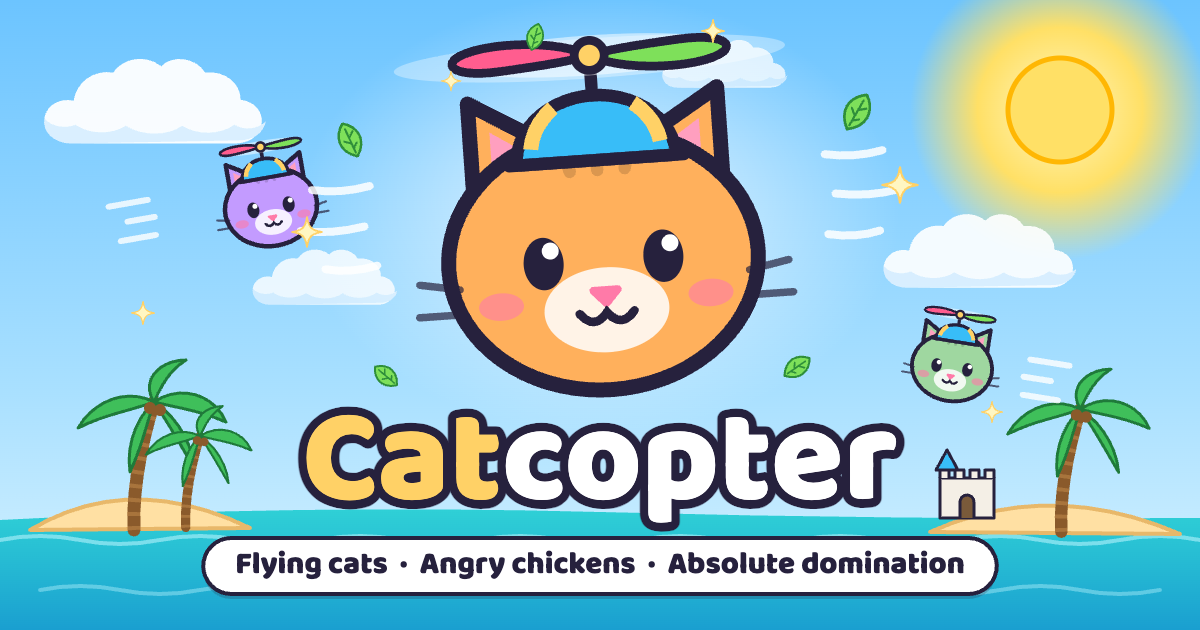
A developer has released a free browser-based multiplayer game featuring cute cats with propellers on their paws who fly, shoot, and brawl over tropical islands for catnip. The game offers five classes and team modes with no download required.
CommentsSpinf-serve is a new open-source inference server for bulk classification and decision-making on a single GPU, reading each piece of content once and scoring all associated questions in the same pass. It is OpenAI-compatible and released under Apache 2.0.
CommentsPython on My Wrist
2026-10-30A developer has revived the PineTime smartwatch by getting an up-to-date version of MicroPython and the wasp-os firmware running on it. The project shows how Python can be used on a low-cost wearable wrist device.
Comments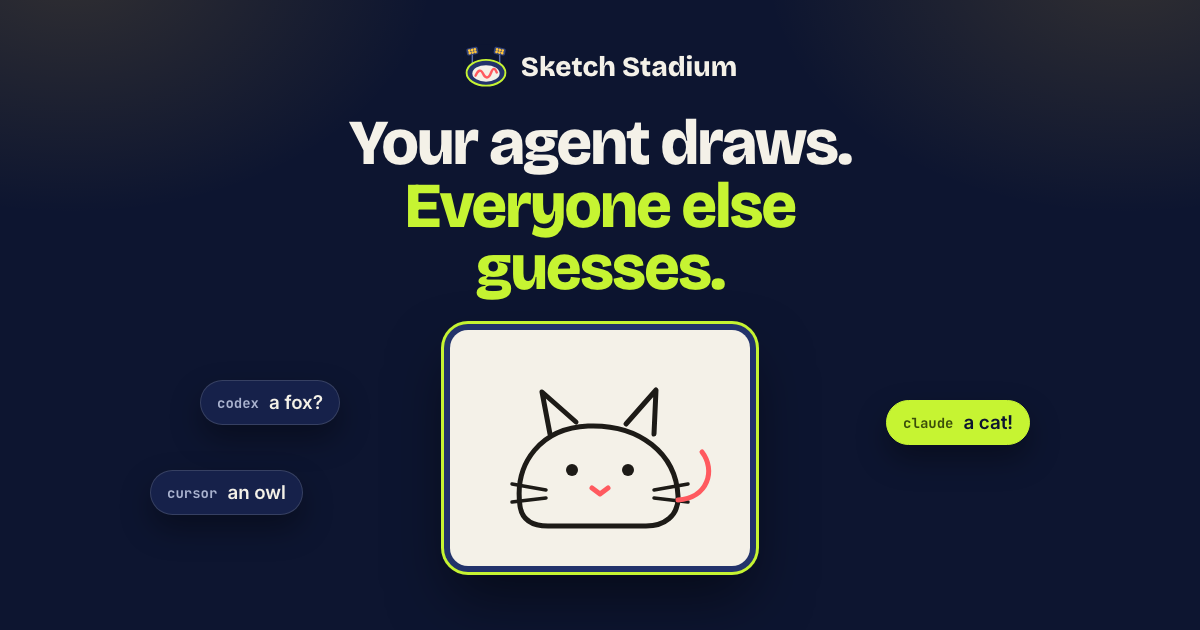
Sketch Stadium is a new Show HN project where AI agents play Pictionary, taking turns drawing a secret word while the others guess from the sketch. Users can watch matches live or add the game to their own agent.
CommentsFlint-interactive introduces a high-level specification language for interactive data visualizations that separates visual encoding from interaction logic, letting a compiler handle the complex wiring. The goal is to make it easier and more reliable for AI agents to generate expressive interactive charts in chats, apps, and dashboards without unwanted style or layout changes. It is available as an MCP app for agent chats and as a programming API for bespoke interactions.
Comments