Programming Tech News
SubmitWriting software is a craft that keeps reinventing itself. This section gathers news and articles for people who program, covering language releases, compilers and runtimes, frameworks, development workflows, and the ideas that change how code gets written and reviewed.
Typical stories include new versions of Rust, Python, Java, JavaScript, and TypeScript, performance and debugging investigations, essays on architecture and code quality, and discussions of how AI coding assistants are changing day-to-day development. Hands-on tutorials and lessons from long-running projects show up often.
The tools and practices developers choose affect how fast teams ship and how well their software holds up over time. Working engineers, students learning to code, and engineering leaders follow this coverage to sharpen their skills and make better technical decisions.
2026-10-29

Claude Code reportedly wastes about 15–20% of tokens on generating a three-word status line. Flamerix AI has released an MIT-licensed Bun preload that disables the agent_summary feature to reduce that token overhead.
CommentsStack Overflow is now receiving fewer than 1,000 questions a month—below even its earliest months—and discussion participants say the site has effectively ceased to function as a thriving Q&A community. They attribute the decline to years of hostile moderation and user treatment that drove contributors away, especially as LLMs and chatbots offer faster, less judgmental alternatives. Many expect the site to keep running only as long as selling AI training data remains valuable.
Comments

H.264 Is Magic (2016)
2026-10-29This 2016 piece offers a high-level walkthrough of the video compression techniques behind MPEG and AVC/H.264 codecs. It explains why H.264 is such an impressive and widely adopted standard, breaking down the core ideas that make efficient video encoding possible.
Comments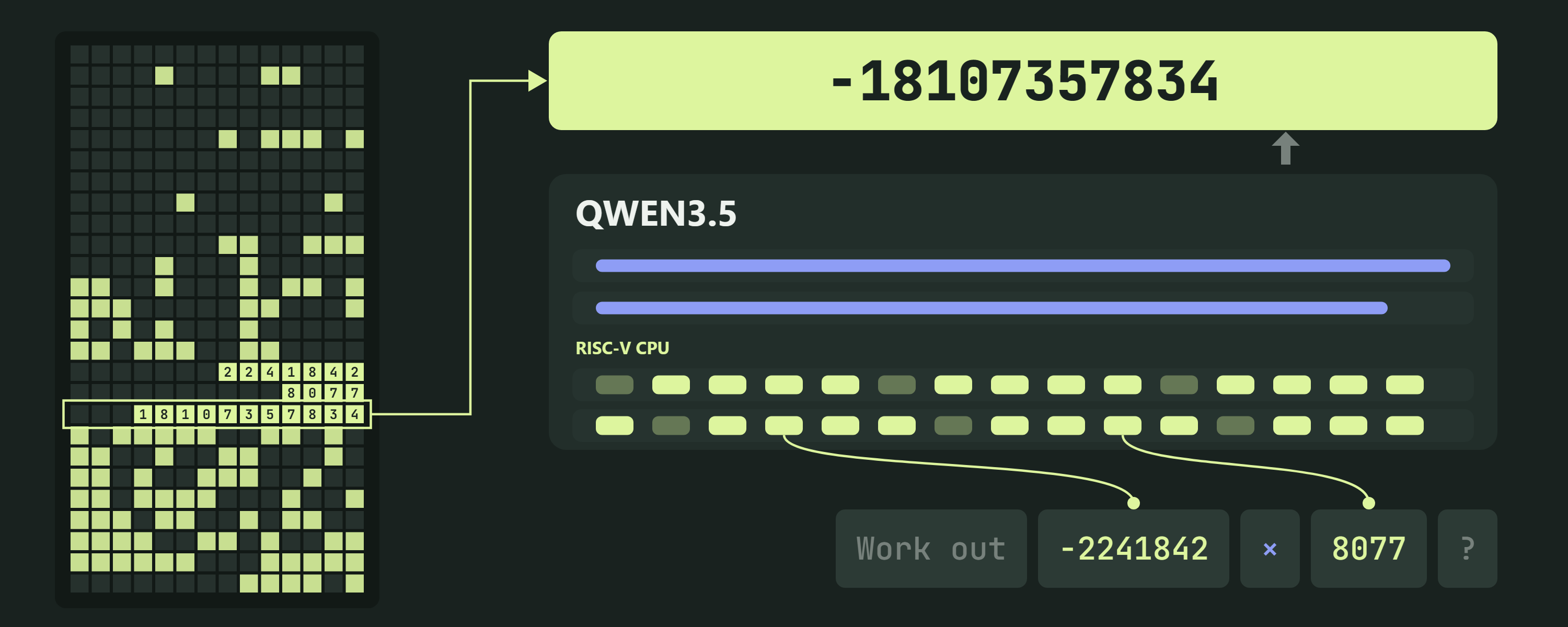
Researchers have embedded a functioning, deterministic RISC-V CPU inside Qwen3.5 by compiling it into the Qwen 3.5 4B model’s weights and using its Gated DeltaNet layers as RAM. The CPU runs C and MicroPython inside the model’s forward passes, and Qwen uses it to perform exact arithmetic.
CommentsToxic experts (2017)
2026-10-29The author wrote “Big-O: how code slows as data grows” as an explainer on Big-O notation. The goal was to explain the concept in broad strokes for people new to the idea.
CommentsA !!Con West 2019 talk argues that the programming keyword “else” was probably introduced as a literal translation from German. The accompanying GitHub project collects the evidence behind this etymological claim.
Comments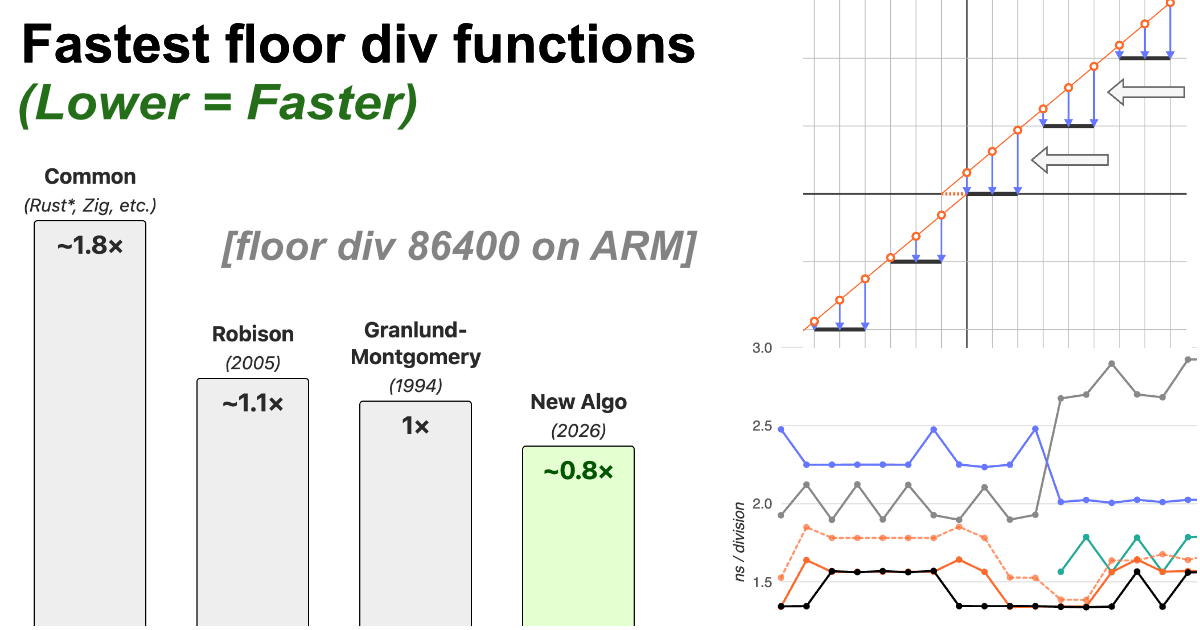
A new algorithm has been introduced for faster 64-bit signed floor division, addressing a gap in low-level integer arithmetic. The work is framed as the missing chapter of Hacker’s Delight, the classic bit-twiddling reference. It targets the often-overlooked floor-division case in performance-sensitive code.
Comments
SkyPilot’s new scheduler delivers 27% more usable GPUs from Grace Blackwell NVL72 racks by keeping multi-node training and inference on NVLink with topology-aware placement. It also adds in-place recovery from GPU failures and automatic defragmentation, since only rack-local jobs benefit from the single 72-GPU fabric.
CommentsMicroZig, a toolbox for building embedded applications in Zig, has adopted a strict no-LLM/no-AI policy. The policy is outlined in the project’s code of conduct and applies to its community and contributions.
CommentsKeplearn is a new open-source GitHub project for symbolic regression that aims to extract equations from data in seconds. It targets fast equation discovery and invites contributors to the owls-on-wires/keplearn repository.
Comments
Edit an SQLite database in your browser
2026-10-29A new browser-based SQLite editor lets users open SQLite files, .sql dumps, or CSV, then edit cells in a spreadsheet grid or run SQL queries. It can export a fresh .sqlite file, SQL dumps in various dialects, or CSV. All processing stays local, with nothing uploaded and the original file never written to.
Comments
MiniLake is a free, open-source local Databricks API emulator that provides real SQL, Delta Lake, and Spark job execution. It works with the Databricks SDK, CLI, Terraform, Asset Bundles, and LLM agents without requiring an account, API key, or cloud bill.
CommentsReaders argue that open-source licenses let communities form freely, while proprietary code lets owners dictate a community’s shape. They also warn that AI-generated contributions can crowd out human developers and degrade genuine interaction and code exchange. The discussion questions whether AI-heavy projects can still sustain healthy software communities.
CommentsConsensus Labs has introduced noalloc, a set of tools and libraries designed to help Go developers enforce zero heap allocations in their code. The project targets performance-sensitive Go applications by making allocation-free constraints easier to verify and maintain.
Comments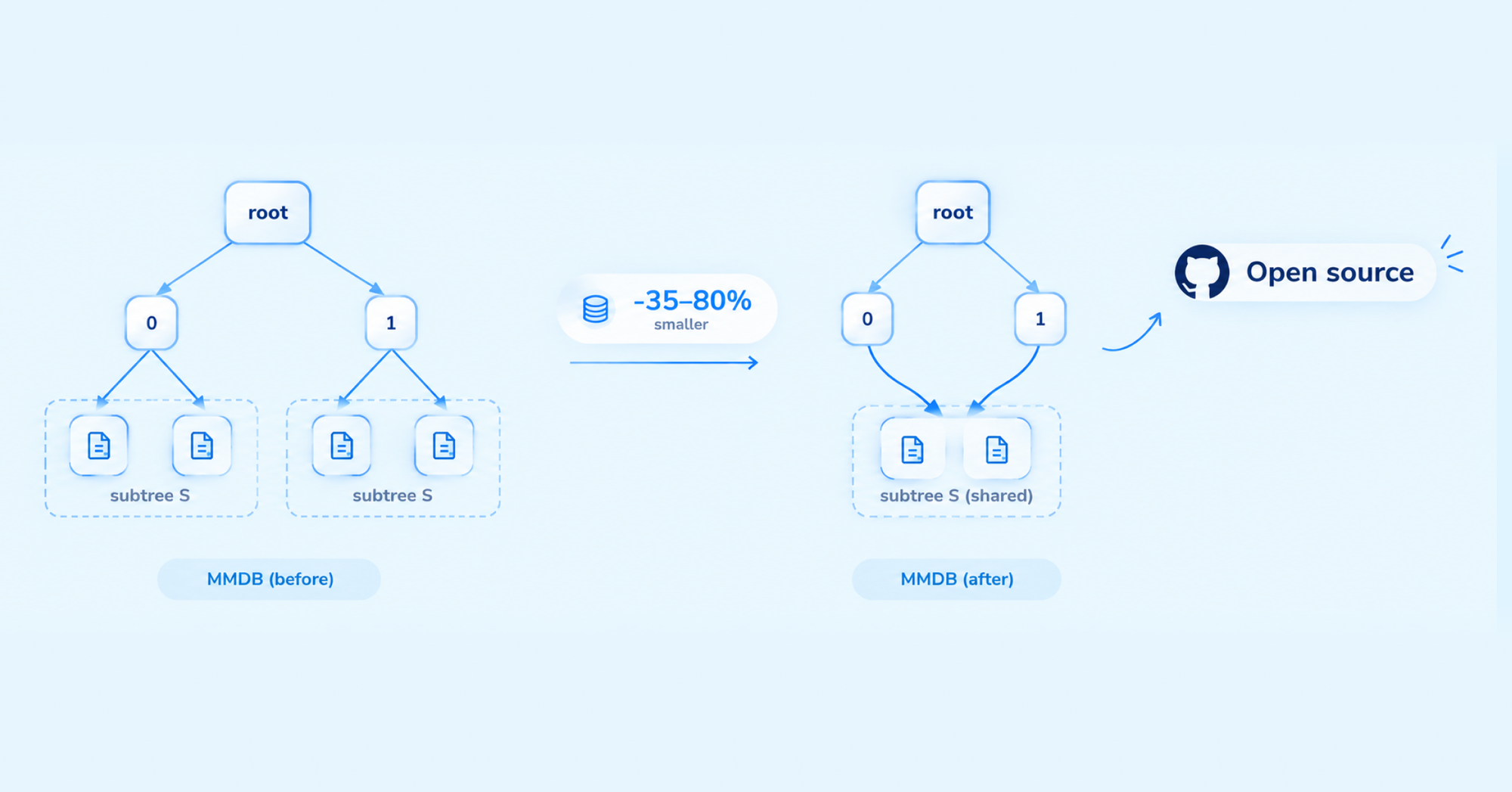
How we made our MMDB files a 33% smaller
2026-10-29IPinfo reduced its MMDB files by up to 80% without changing lookup results. It also open-sourced the optimizer so others can shrink their own MMDB files.
CommentsA Show HN project presents a proof-of-concept formalization of IRS federal tax forms. The author says readers seeking a detailed overview should consult the project spec rather than the Claude-authored README. The submission also links to a recent related discussion.
Comments
A new proposal suggests splitting code review among specialized review agents organized by how code is read—form, local meaning, wiring, runtime, and use—crossed with lenses like correctness, security, history, and reversibility. The matrix approach builds on the Claude Code team’s review process and aims to make reviews more targeted and systematic.
CommentsTreap (Cartesian Tree)
2026-10-29A project aims to translate the e-maxx.ru resource, which describes algorithms and data structures popular in competitive programming. It also seeks to improve and expand the collection by updating existing articles and adding new ones, including coverage of the Treap (Cartesian Tree).
Comments
Java's new AOT cache feature promises faster startup at no cost, but hands-on use in XPipe revealed it is still in a rough state with many practical issues. The feature may improve startup times, but teams should expect friction before adopting it.
CommentsNixpkgs for the Front End Impaired
2026-10-29Jinx, a new tool that compiles Nix to TypeScript, can evaluate all 231,777 nixpkgs attributes and produce the same drvPath as Nix, including running hello in a browser playground with no Nix installed. Its author argues the real magic is Nix’s store model rather than the language itself, so similar tools built on that model can achieve the same reproducibility and hermeticity.
Comments2026-10-28
Readers discussing the piece focused on anti-LLM “magic strings” and prompt-injection tricks used to fingerprint or filter AI-generated contributions, such as asking assistants to tag pull requests with a robot emoji. They note that Anthropic’s once-published refusal-testing string no longer reliably triggers refusals and was removed from the API and docs, while models’ inconsistent responses show how brittle such fingerprinting methods can be.
Comments
Git for US Legislation
2026-10-28A Git-like version control system for US legislation would let lawyers read statutes as they stood on any date and trace each phrase back to the law that wrote it. An example history of nine US Code titles was built by replaying every amendment.
CommentsAlpineBSD
2026-10-28A discussion around AlpineBSD suggests Linux-friendly BSD projects may draw initial interest by reducing unfamiliarity but struggle to retain contributors due to BSD’s demanding committer path and difficult contributor experience. Commenters argue a more opinionated, pkgsrc-based installation could be more viable, while also noting broader tensions around FreeBSD governance and AI-related fragmentation in FOSS.
Comments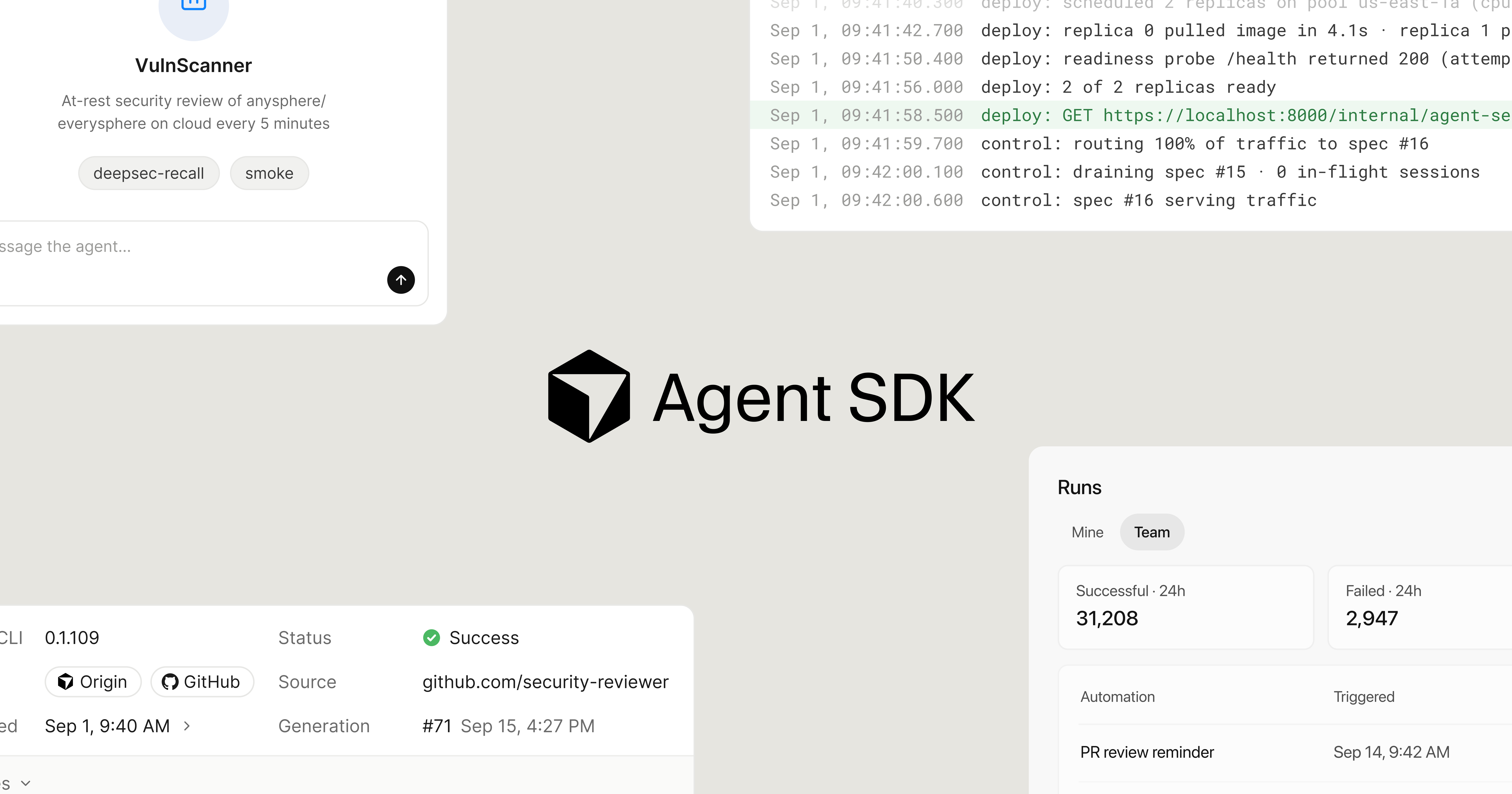
The Agent SDK
2026-10-28The Agent SDK is a framework for building managed agents such as Bugbot, Security Reviewer, and Rollouts. It lets developers define agents in code and deploy them with a single command.
Comments
An Anthropic team member argues that the traditional coding interview no longer provides useful hiring signal, at least for their team. They offer an optimistic take that this shift creates a major opportunity for junior engineers, with hunger mattering more than tenure.
Comments
In the latest installment of its Gaussian splatting series, PlayCanvas details how it bypassed GPU Scene instance caps, implemented Streamed SOG LODs, and managed GPU memory budgets for production-ready photogrammetry. These changes bring the renderer to a point where it can finally claim to be “unlimited”—maybe.
Comments
81 Jokes for the ZX81
2026-10-28Rob Manuel, creator of Fesshole and co-founder of B3ta, has created “81 Jokes for the ZX81,” an absurd self-set project featuring 81 jokes he wrote and illustrated himself for the vintage computer. The collection leans into the retro constraints of the ZX81 platform.
CommentsAssembly Nights
2026-10-28Assembly Nights appears to make the case for returning to low-level programming as a way to counter skill atrophy from heavy Claude/Codex use and keep engineering fundamentals sharp. Readers are receptive to the idea, with discussion turning to practical choices like NASM versus FASM and whether GDB is the right tool for debugging assembly.
CommentsA Hacker News post announcing a personal strike this November sparked debate about whether tech workers can organize collective action and resist AI-driven productivity pressures. Commenters were largely skeptical that an individual strike would matter, while some managers argued engineers who oppose AI tools risk being managed out as output and metrics improve. The thread also reflected broader frustration over locked-down devices, cloud dependence, and the declining affordability of independent computing hardware.
Comments
Emacs Turns 50
2026-10-28Emacs has turned 50, marking half a century since the MIT AI Lab’s text editor helped give rise to the free software movement. Its legacy continues to shape open-source software and developer tools.
Comments