Programming Tech News
SubmitWriting software is a craft that keeps reinventing itself. This section gathers news and articles for people who program, covering language releases, compilers and runtimes, frameworks, development workflows, and the ideas that change how code gets written and reviewed.
Typical stories include new versions of Rust, Python, Java, JavaScript, and TypeScript, performance and debugging investigations, essays on architecture and code quality, and discussions of how AI coding assistants are changing day-to-day development. Hands-on tutorials and lessons from long-running projects show up often.
The tools and practices developers choose affect how fast teams ship and how well their software holds up over time. Working engineers, students learning to code, and engineering leaders follow this coverage to sharpen their skills and make better technical decisions.
2026-10-28
Readers discussing the piece focused on anti-LLM “magic strings” and prompt-injection tricks used to fingerprint or filter AI-generated contributions, such as asking assistants to tag pull requests with a robot emoji. They note that Anthropic’s once-published refusal-testing string no longer reliably triggers refusals and was removed from the API and docs, while models’ inconsistent responses show how brittle such fingerprinting methods can be.
Comments
Git for US Legislation
2026-10-28A Git-like version control system for US legislation would let lawyers read statutes as they stood on any date and trace each phrase back to the law that wrote it. An example history of nine US Code titles was built by replaying every amendment.
Comments
AlpineBSD
2026-10-28A discussion around AlpineBSD suggests Linux-friendly BSD projects may draw initial interest by reducing unfamiliarity but struggle to retain contributors due to BSD’s demanding committer path and difficult contributor experience. Commenters argue a more opinionated, pkgsrc-based installation could be more viable, while also noting broader tensions around FreeBSD governance and AI-related fragmentation in FOSS.
Comments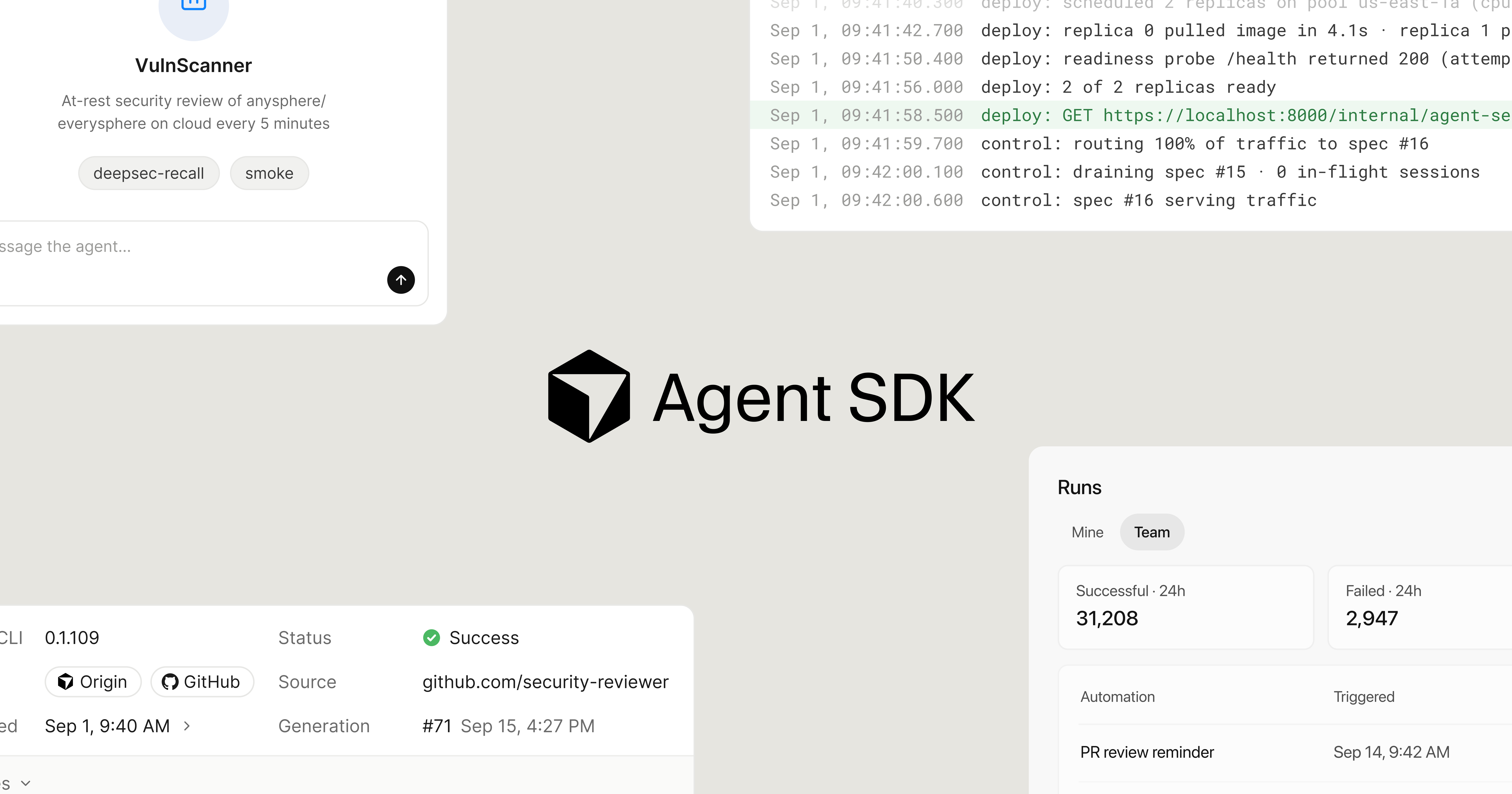
The Agent SDK
2026-10-28The Agent SDK is a framework for building managed agents such as Bugbot, Security Reviewer, and Rollouts. It lets developers define agents in code and deploy them with a single command.
Comments
An Anthropic team member argues that the traditional coding interview no longer provides useful hiring signal, at least for their team. They offer an optimistic take that this shift creates a major opportunity for junior engineers, with hunger mattering more than tenure.
Comments
In the latest installment of its Gaussian splatting series, PlayCanvas details how it bypassed GPU Scene instance caps, implemented Streamed SOG LODs, and managed GPU memory budgets for production-ready photogrammetry. These changes bring the renderer to a point where it can finally claim to be “unlimited”—maybe.
Comments
81 Jokes for the ZX81
2026-10-28Rob Manuel, creator of Fesshole and co-founder of B3ta, has created “81 Jokes for the ZX81,” an absurd self-set project featuring 81 jokes he wrote and illustrated himself for the vintage computer. The collection leans into the retro constraints of the ZX81 platform.
CommentsAssembly Nights
2026-10-28Assembly Nights appears to make the case for returning to low-level programming as a way to counter skill atrophy from heavy Claude/Codex use and keep engineering fundamentals sharp. Readers are receptive to the idea, with discussion turning to practical choices like NASM versus FASM and whether GDB is the right tool for debugging assembly.
CommentsA Hacker News post announcing a personal strike this November sparked debate about whether tech workers can organize collective action and resist AI-driven productivity pressures. Commenters were largely skeptical that an individual strike would matter, while some managers argued engineers who oppose AI tools risk being managed out as output and metrics improve. The thread also reflected broader frustration over locked-down devices, cloud dependence, and the declining affordability of independent computing hardware.
Comments
Emacs Turns 50
2026-10-28Emacs has turned 50, marking half a century since the MIT AI Lab’s text editor helped give rise to the free software movement. Its legacy continues to shape open-source software and developer tools.
Comments
A scan of 7.25 million public repositories on China’s Gitee uncovered 26,400 verified-live credentials, including cloud keys and enterprise AI tokens. The findings highlight serious secrets-exposure risks in public code hosted on the platform.
Comments
NVIDIA has introduced Nemotron 3.5 Transcribe, an open automatic speech recognition model covering 40 languages. Announced in a Hugging Face blog post, it aims to make multilingual ASR more accessible to developers.
CommentsA decompilation deep dive into Fast Food Tycoon 2 explains how the 2001 business sim rendered its rich, detailed city environments. The piece examines the game’s drawing techniques, offering a technical look at the tricks behind its visuals.
Comments
A new arXiv paper presents an “executable archaeology” approach to reviving two historical programming systems: the Heuristic Compiler (1961) and KBEmacs (1984). By reanimating these programs that model programming, the work aims to make early heuristic-compiler and knowledge-based editing ideas inspectable and runnable again.
CommentsRubber Duck I've Ever Had
2026-10-28This piece shares practical lessons from using AI in software engineering, including how it can help beat procrastination and counter code entropy. It argues that as AI takes on more coding work, system design matters more than ever.
CommentsMoxnox 1.0 has arrived as an NT-like, POSIX-compatible operating system that runs atop Btrfs. The project is hosted on GitHub under maharmstone/moxnox for development and contributions.
CommentsA developer generated 327 distinct CI/CD workflows in under an hour using a GitHub Actions toolkit and was subsequently flagged by GitHub as a spammer. The incident highlights the platform’s anti-spam enforcement against rapid automated workflow creation.
Comments
Converge, a YC S23 startup, is hiring a founding platform engineer in NYC to own and build the platform behind agents that buy and scale ads for consumer brands. The role offers founding-level ownership of core platform infrastructure.
Comments2026-10-27
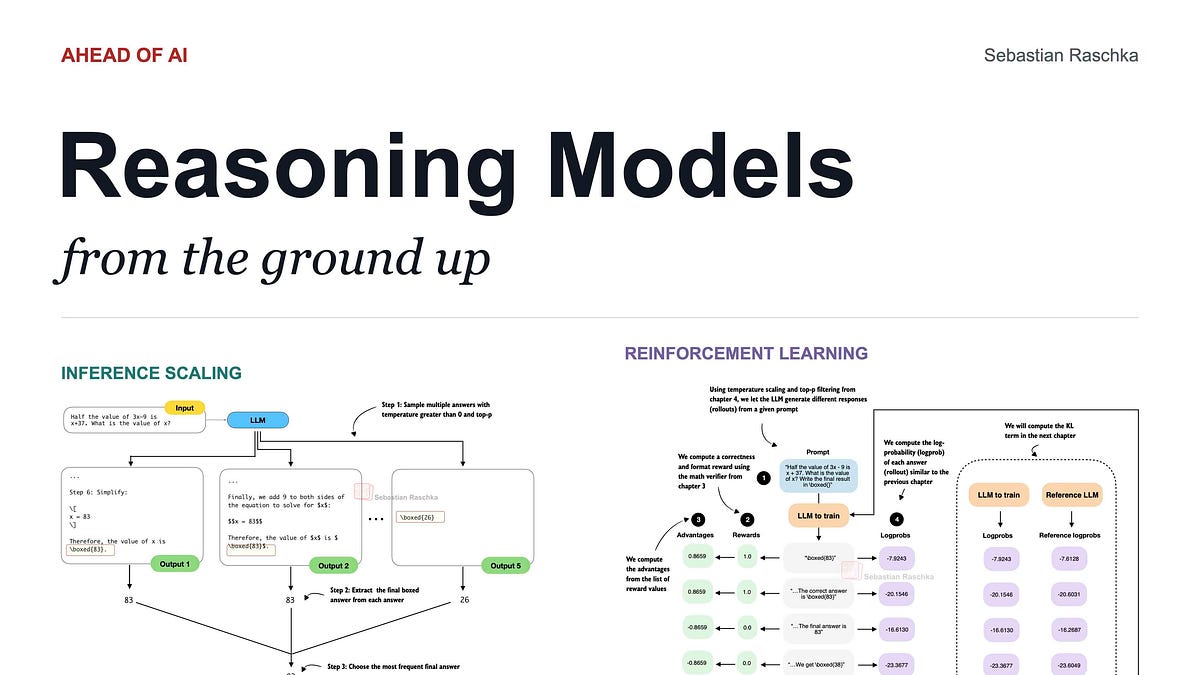
Sebastian Raschka has launched an extensive 11-hour video course teaching developers how to build reasoning models from scratch. Utilizing Python and PyTorch, the curriculum covers critical techniques including evaluation, inference-time scaling, reinforcement learning, and model distillation.
CommentsResearchers have published a paper claiming to disprove the Exponential Time Hypothesis, a major conjecture in computer science regarding the computational complexity of NP-hard problems. The mathematical development and proofs for this claim are being hosted on GitHub within OpenAI's dedicated math repository.
Comments
CSS-Tricks has a new owner
2026-10-27The popular web development website CSS-Tricks has officially transitioned to a new owner. After twelve years of working on the platform, the incoming leader expressed feeling both nervous and overwhelmed by the responsibility of taking full control.
Comments
The Mythical Man-Month in the Age of AI
2026-10-27This article reevaluates Fred Brooks's classic software engineering principles to determine how artificial intelligence impacts modern development productivity. By examining whether Brooks's Law still holds true for developers augmented by AI, the piece offers an updated framework for managing software teams and estimating project timelines in the AI era.
CommentsPython's experimental JIT to be removed
2026-10-27Python developers are removing the experimental just-in-time compiler that was recently introduced in CPython after it failed to deliver significant performance improvements. The core team will now redirect its efforts toward alternative optimization strategies for future releases.
CommentsSoftware quality is declining as massive increases in code production have outpaced improvements in error rates, resulting in buggier applications. However, the author argues that despite these current frustrations, software used to be horrible.
CommentsPharo 14
2026-10-27The release of Pharo 14 has prompted developers to reflect on the unique benefits of Smalltalk's image-based workflows and its continued relevance in the AI era. While many note that AI coding tools have made them less particular about which programming languages they use, enthusiasts still champion environments like Pharo, Squeak, and Cuis for recreational programming and practical deployment.
CommentsType Server Protocol
2026-10-27Microsoft hosts the official documentation and issue tracker for Pylance, its Python language server, on GitHub. Developers can contribute to the project's development and report bugs directly through the microsoft/pylance-release repository.
CommentsA newly optimized FAST feature detector brings accelerated computer vision to the low-cost ESP32-S3 microcontroller by leveraging 128-bit SIMD instructions. This optimization achieves roughly double the performance of the standard reference implementation, making advanced image processing highly viable on two-dollar hardware.
Comments
Wiz researchers report that while PHP2Shell exploitation attempts are ongoing, none have succeeded to date. Their latest analysis breaks down the specific attack techniques, the defenses that blocked them, and how system exposure has evolved since the vulnerability was first disclosed.
CommentsNietzschian Debugger
2026-10-27A new open-source tool called the Nietzschian Debugger offers an anti-AI approach to troubleshooting by using confrontational questioning to challenge developers. Instead of providing automated fixes, the project forces programmers to rigorously defend their logic based on the philosophy that what doesn't kill your code makes it stronger.
CommentsThis tech profile examines Johnny, a developer whose addiction to deep thinking drives his relentless compulsion to abstract software systems. By contrasting his intense intellectual focus with the general tendency to avoid complex thought, the piece explores the psychological motivations behind his constant over-engineering and abstraction.
Comments