Programming Tech News
Writing software is a craft that keeps reinventing itself. This section gathers news and articles for people who program, covering language releases, compilers and runtimes, frameworks, development workflows, and the ideas that change how code gets written and reviewed.
Typical stories include new versions of Rust, Python, Java, JavaScript, and TypeScript, performance and debugging investigations, essays on architecture and code quality, and discussions of how AI coding assistants are changing day-to-day development. Hands-on tutorials and lessons from long-running projects show up often.
The tools and practices developers choose affect how fast teams ship and how well their software holds up over time. Working engineers, students learning to code, and engineering leaders follow this coverage to sharpen their skills and make better technical decisions.
2026-05-21
With the Python 3.15.0b1 feature freeze complete, the upcoming release is bringing several under-the-radar improvements alongside its major announcements. This update highlights the lesser-known features and hidden enhancements that developers should watch for in the new version.
CommentsA developer indexed a year of video into a local, queryable archive using a 2021 MacBook Pro M1 Max and the Gemma4-31B model via LM Studio. The intensive build required utilizing 50GB of swap memory to handle the large AI model and provided valuable technical insights through the resolution of four distinct bugs.
Comments
Google's Antigravity bait and switch
2026-05-21Google is facing user backlash after abruptly pivoting its specialized Antigravity IDE into a general agentic tool, effectively resetting the product and breaking established workflows. The controversial update, which also sunsets the Gemini CLI, has been criticized for missing key features like Windows WSL support and causing significant local storage bloat. Although some users found the new standalone command-line interface works as a basic drop-in replacement, the transition highlights a frustrating pattern of abrupt product changes and rapid AI tool churn.
CommentsThe launch of a new peer-to-peer platform named Freenet has sparked backlash after a dormant board repurposed the original project's funding and name to build a new system that abandons anonymity. The ousted original development team continues their censorship-resistant and privacy-focused work under the rebranded name Hyphanet. Critics accuse the new Freenet of capitalizing on the original project's legacy while fundamentally diverging from its core design principles.
CommentsA developer reverse-engineered Apple's dynamic video wallpaper feature to create Phosphene, an open-source tool for macOS. The project enables users to apply any custom video as a desktop or lock screen background directly through the native System Settings menu.
CommentsA 2023 technical guide details how developers can mount historical git commits directly as standard directories using the Network File System. This approach allows teams to browse and interact with past repository states using basic file system commands instead of traditional git operations. By bridging version control with standard directory structures, it simplifies legacy code access and enables seamless file-based automation workflows.
CommentsHaskell Foundation 2026 Update
2026-05-21The Haskell Foundation is transitioning to a new sponsorship model that directly funds technical challenges to attract a broader range of production companies. Community discussions surrounding the update highlight Haskell's potential strengths for AI-assisted coding due to its strong typing and small context requirements. However, developers continue to debate the ecosystem's overall tooling and package management, with practitioners split between praising mature solutions like Stackage and citing ongoing friction with cross-platform compilation compared to languages like Rust.
Comments
YC P26 startup Runtime has launched a platform that enables non-engineering teams to build and run sandboxed cloud coding agents. The tool allows users to create customized agents using company-specific context and guardrails, which can be triggered directly from existing workflows like Slack, Linear, or the browser.
CommentsA new project revives obsolete scanners by utilizing an in-browser Linux virtual machine bridged to WebUSB over USB/IP. In community discussions, the developer clarified that the core Linux components are fully open-source, though some printing-related code is temporarily withheld for potential monetization. Additionally, contributors suggested optimizing the setup by compiling printer filters with Emscripten to bypass the need for full operating system emulation.
Comments
GCC 16 introduces several new debugging enhancements for C++ developers, including hierarchical error messages and updated SARIF output. The release also features experimental HTML diagnostic tools designed to further streamline code analysis and error resolution.
Comments2026-05-20

GitHub confirmed a security breach affecting approximately 3,800 of its internal repositories. The compromise occurred after a company employee installed a malicious Visual Studio Code extension.
Comments
Saying goodbye to asm.js
2026-05-20Mozilla is discontinuing asm.js by disabling its specific optimizations within the SpiderMonkey JavaScript engine. This move reflects the broader industry's transition to WebAssembly as the modern standard for delivering high-performance web applications. Developers relying on asm.js should begin migrating their codebases to WebAssembly to maintain optimal execution speeds in future browser updates.
CommentsForge is a new Python framework that enables self-hosted large language model tool-calling and multi-step agentic workflows. By implementing specialized guardrails, the project boosts the performance of an 8B model on agentic tasks from 53% to 99%.
Comments
GitHub is investigating unauthorized access to its internal repositories. The company stated there is currently no evidence indicating that customer data or external repositories were compromised by the breach.
Comments
The Gemini CLI will stop working on June 18, 2026, and is being replaced by the Antigravity CLI. This successor offers a more robust, agent-first platform specifically designed to handle the multi-agent complexities of 2026.
CommentsEverything in C is undefined behavior
2026-05-20A recent article highlights the pervasive nature of undefined behavior in the C programming language, illustrating how easily even expert developers can trigger unpredictable outcomes. By playfully adapting a famous historical quote, the author emphasizes that no amount of programming skill can fully protect C code from the language's notoriously unforgiving rules.
CommentsIn a 2014 blog post, Paul Khuong explores the Steel Bank Common Lisp compiler, highlighting its effectiveness as a low-level breadboard for experimenting with assembly code. The article delves into advanced Lisp optimization and explores various mathematical and computer science concepts, providing valuable insights for developers interested in compiler internals and low-level programming.
Comments
Sharla Boehm was a math teacher who spent her summers programming and ultimately wrote foundational code that evolved into the modern Internet. Her pioneering work laid the essential technical groundwork for the global network infrastructure the world relies on today.
CommentsA developer used AI coding agents to write over 130,000 lines of Rust in a few weeks, building a modern, high-performance multi-Paxos consensus engine to upgrade Azure's Replicated State Library. By leveraging AI-driven code contracts, lightweight spec-driven development, and automated performance tuning, the developer boosted system throughput from 23,000 to 300,000 operations per second. This project highlights the massive productivity gains and practical techniques available when using AI to architect and optimize complex, production-grade distributed systems.
Comments2026-05-19

A developer has published the annotated slides from a PyCon US 2026 lightning talk summarizing the major developments in Large Language Models over the past six months. The five-minute presentation utilized a custom slide tool to concisely highlight recent advancements and tooling in the artificial intelligence space.
CommentsA new command-line tool and Python library called Remove-AI-Watermarks enables users to strip both visible and invisible AI watermarks from images. The utility specifically targets provenance metadata and embedded trackers, including SynthID, C2PA, and Nano Banana sparkle.
Comments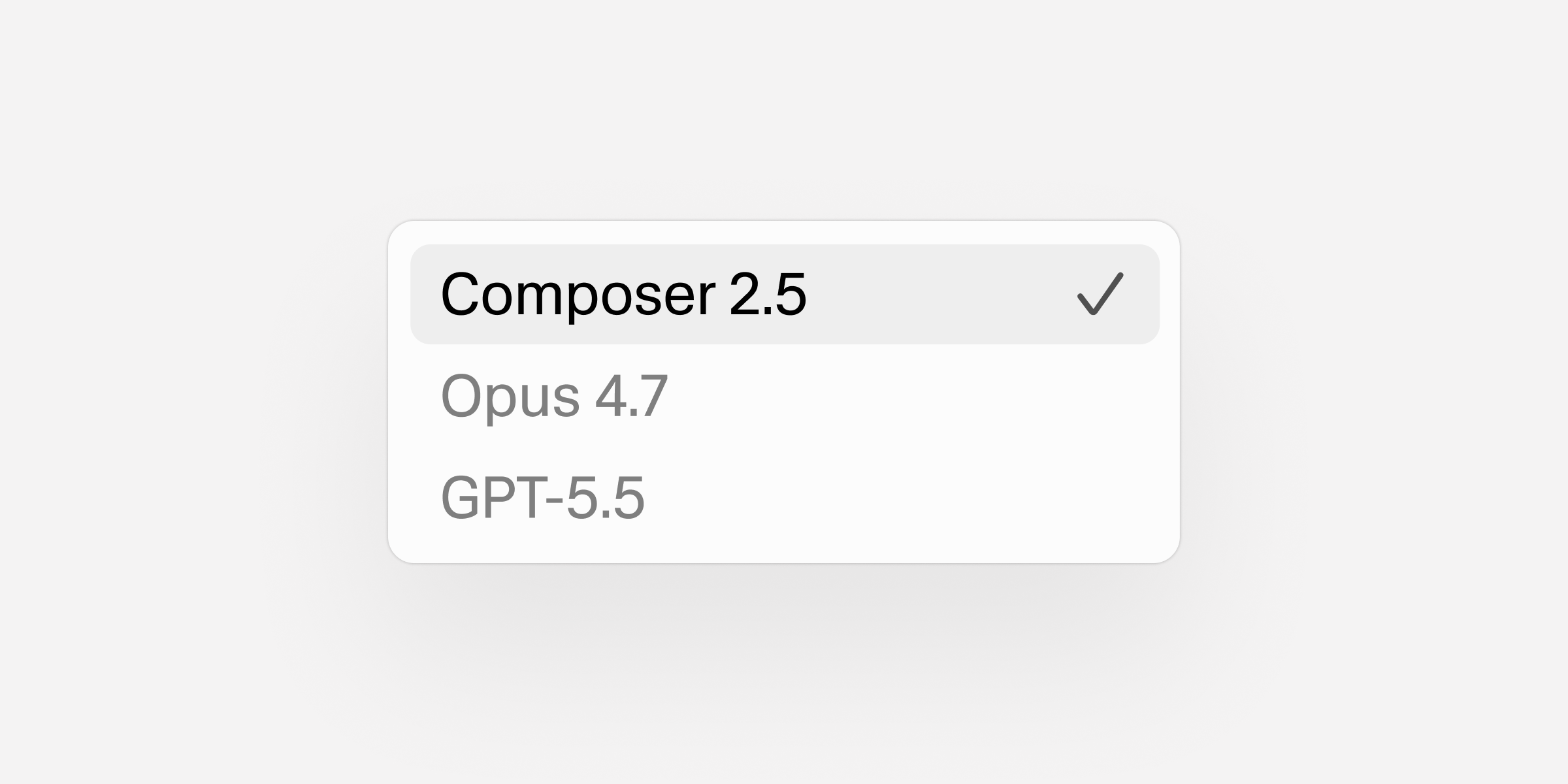
Cursor Introduces Composer 2.5
2026-05-19Cursor has introduced Composer 2.5, delivering significant upgrades in intelligence and overall behavior compared to the previous version. The update specifically targets improvements in handling long-horizon agentic tasks for complex coding workflows. This release provides developers with a much more capable and autonomous programming assistant.
Comments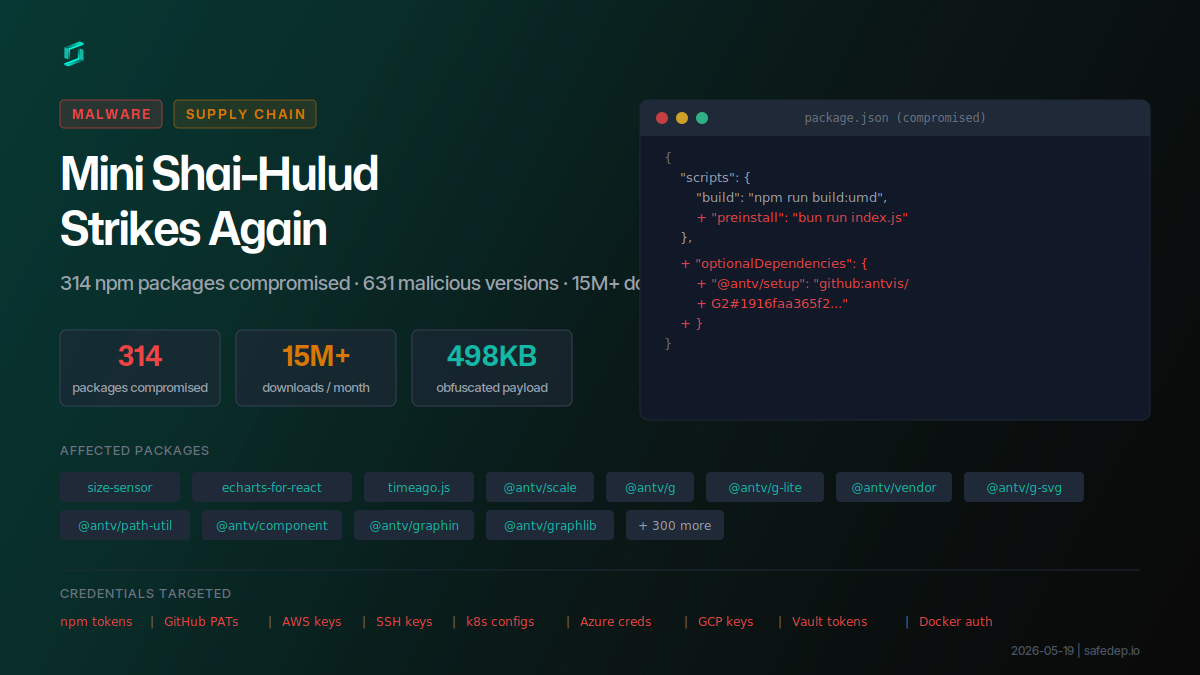
A compromised npm maintainer account recently published over 600 malicious versions across more than 300 popular packages in an attack dubbed Mini Shai-Hulud. This widespread supply chain incident impacts over 15 million monthly downloads by injecting malicious code into widely used libraries like size-sensor and timeago.js. Developers are advised to immediately audit their dependencies and ensure they are running secure versions.
Comments
A new game called Number Gacha, featured on Hacker News, distills the popular gacha genre down to its absolute core mechanics. The minimalist project challenges players to collect all 100 unique numbers in a simplified gaming experience.
Comments
A new guide highlights how Large Language Models can simplify TLA+ by allowing developers to generate complex syntax through natural language prompts. Despite this shortcut removing the need to manually write code, the article emphasizes that a strong foundational understanding of temporal logic remains essential for success.
CommentsLisp in Web-Based Applications (2001)
2026-05-19Recent reader discussions highlight the modern viability of Lisp for web development, pointing to contemporary frameworks, successful products like ScreenShotBot, and the unmatched productivity of interactive environments. Commentators also debated whether the efficiency gains of modern AI coding assistants mirror the historical productivity highs of Lisp, while veterans shared anecdotes about using Lisp macros to easily generate complex HTML. Ultimately, the conversation questions whether highly productive but niche languages still offer a distinct competitive advantage for building modern SaaS applications.
CommentsA developer has created a weak but functional chess engine using 84,688 regular expressions to execute a two-ply minimax search. This unconventional project demonstrates the extreme computational capabilities of regular expressions by using them to evaluate board states and execute game moves.
Comments2026-05-18
Files.md is a newly launched open-source application designed as a simpler alternative to Obsidian for managing Markdown files. It offers a private and distraction-free environment intended to serve as a quiet space for focused thinking.
CommentsMinishLab has introduced Semble, a fast and accurate code search tool specifically designed for AI agents. It significantly reduces processing time and API costs by consuming approximately 98% fewer tokens than traditional grep and read commands.
Comments
Developers successfully blocked AI-generated spam commits in a GitHub repository by implementing a simple filter using Git's native author flag. This growing influx of automated bots has raised broader concerns within the tech community about the declining quality and future integrity of open-source software.
Comments