Programming Tech News
Writing software is a craft that keeps reinventing itself. This section gathers news and articles for people who program, covering language releases, compilers and runtimes, frameworks, development workflows, and the ideas that change how code gets written and reviewed.
Typical stories include new versions of Rust, Python, Java, JavaScript, and TypeScript, performance and debugging investigations, essays on architecture and code quality, and discussions of how AI coding assistants are changing day-to-day development. Hands-on tutorials and lessons from long-running projects show up often.
The tools and practices developers choose affect how fast teams ship and how well their software holds up over time. Working engineers, students learning to code, and engineering leaders follow this coverage to sharpen their skills and make better technical decisions.
2026-05-20

GitHub confirmed a security breach affecting approximately 3,800 of its internal repositories. The compromise occurred after a company employee installed a malicious Visual Studio Code extension.
Comments
Saying goodbye to asm.js
2026-05-20Mozilla is discontinuing asm.js by disabling its specific optimizations within the SpiderMonkey JavaScript engine. This move reflects the broader industry's transition to WebAssembly as the modern standard for delivering high-performance web applications. Developers relying on asm.js should begin migrating their codebases to WebAssembly to maintain optimal execution speeds in future browser updates.
Comments
Forge is a new Python framework that enables self-hosted large language model tool-calling and multi-step agentic workflows. By implementing specialized guardrails, the project boosts the performance of an 8B model on agentic tasks from 53% to 99%.
Comments
GitHub is investigating unauthorized access to its internal repositories. The company stated there is currently no evidence indicating that customer data or external repositories were compromised by the breach.
Comments
The Gemini CLI will stop working on June 18, 2026, and is being replaced by the Antigravity CLI. This successor offers a more robust, agent-first platform specifically designed to handle the multi-agent complexities of 2026.
CommentsEverything in C is undefined behavior
2026-05-20A recent article highlights the pervasive nature of undefined behavior in the C programming language, illustrating how easily even expert developers can trigger unpredictable outcomes. By playfully adapting a famous historical quote, the author emphasizes that no amount of programming skill can fully protect C code from the language's notoriously unforgiving rules.
CommentsIn a 2014 blog post, Paul Khuong explores the Steel Bank Common Lisp compiler, highlighting its effectiveness as a low-level breadboard for experimenting with assembly code. The article delves into advanced Lisp optimization and explores various mathematical and computer science concepts, providing valuable insights for developers interested in compiler internals and low-level programming.
Comments
Sharla Boehm was a math teacher who spent her summers programming and ultimately wrote foundational code that evolved into the modern Internet. Her pioneering work laid the essential technical groundwork for the global network infrastructure the world relies on today.
CommentsA developer used AI coding agents to write over 130,000 lines of Rust in a few weeks, building a modern, high-performance multi-Paxos consensus engine to upgrade Azure's Replicated State Library. By leveraging AI-driven code contracts, lightweight spec-driven development, and automated performance tuning, the developer boosted system throughput from 23,000 to 300,000 operations per second. This project highlights the massive productivity gains and practical techniques available when using AI to architect and optimize complex, production-grade distributed systems.
Comments2026-05-19

A developer has published the annotated slides from a PyCon US 2026 lightning talk summarizing the major developments in Large Language Models over the past six months. The five-minute presentation utilized a custom slide tool to concisely highlight recent advancements and tooling in the artificial intelligence space.
CommentsA new command-line tool and Python library called Remove-AI-Watermarks enables users to strip both visible and invisible AI watermarks from images. The utility specifically targets provenance metadata and embedded trackers, including SynthID, C2PA, and Nano Banana sparkle.
Comments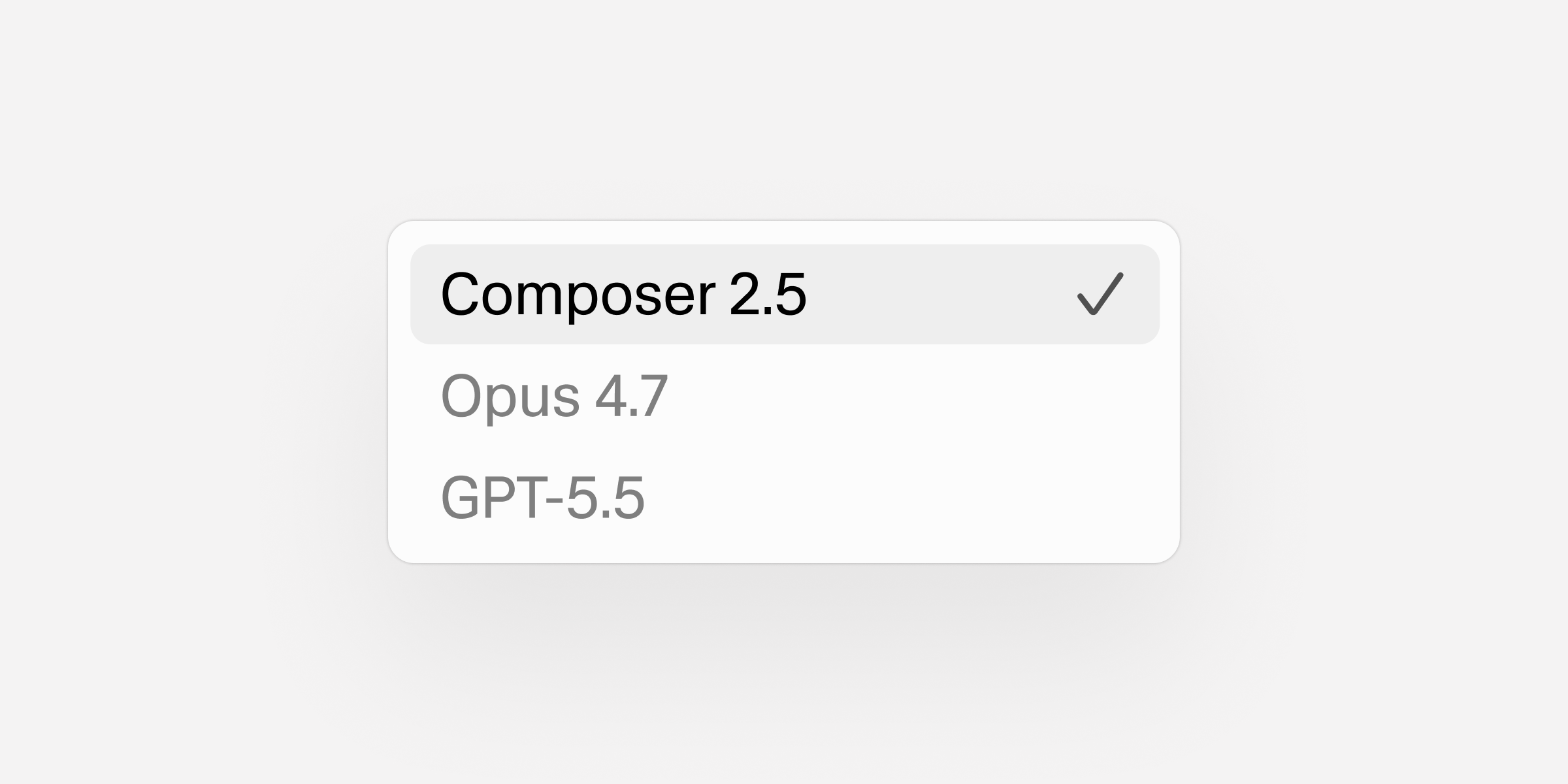
Cursor Introduces Composer 2.5
2026-05-19Cursor has introduced Composer 2.5, delivering significant upgrades in intelligence and overall behavior compared to the previous version. The update specifically targets improvements in handling long-horizon agentic tasks for complex coding workflows. This release provides developers with a much more capable and autonomous programming assistant.
Comments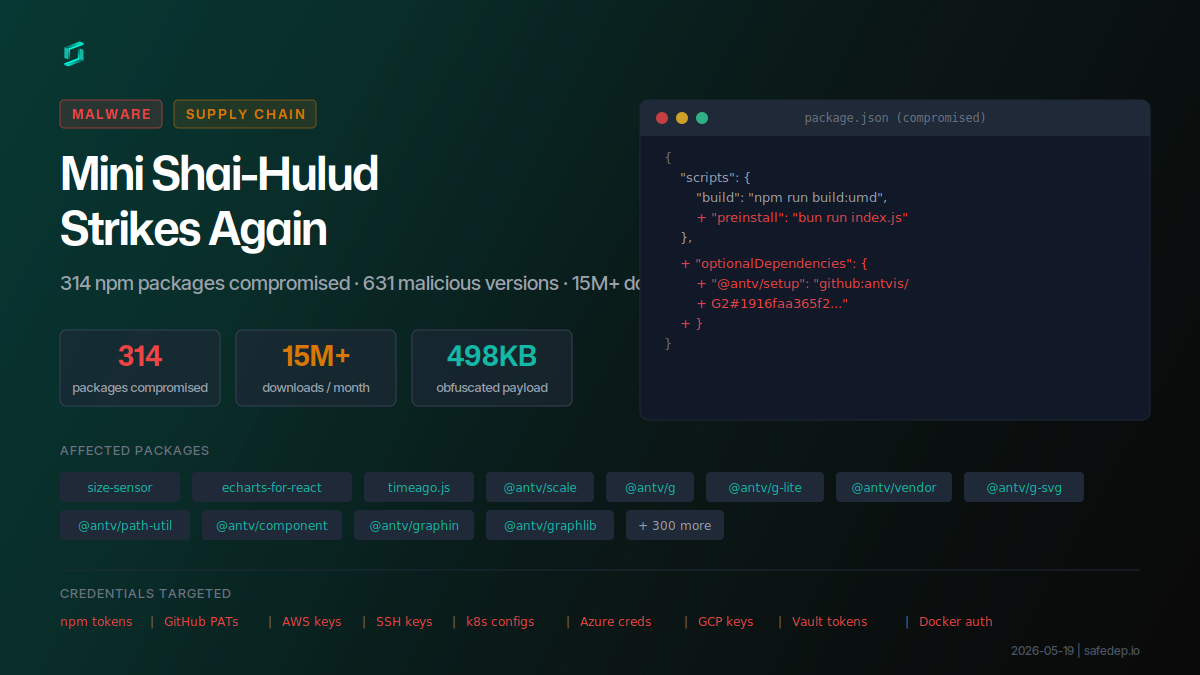
A compromised npm maintainer account recently published over 600 malicious versions across more than 300 popular packages in an attack dubbed Mini Shai-Hulud. This widespread supply chain incident impacts over 15 million monthly downloads by injecting malicious code into widely used libraries like size-sensor and timeago.js. Developers are advised to immediately audit their dependencies and ensure they are running secure versions.
Comments
A new game called Number Gacha, featured on Hacker News, distills the popular gacha genre down to its absolute core mechanics. The minimalist project challenges players to collect all 100 unique numbers in a simplified gaming experience.
Comments
A new guide highlights how Large Language Models can simplify TLA+ by allowing developers to generate complex syntax through natural language prompts. Despite this shortcut removing the need to manually write code, the article emphasizes that a strong foundational understanding of temporal logic remains essential for success.
CommentsLisp in Web-Based Applications (2001)
2026-05-19Recent reader discussions highlight the modern viability of Lisp for web development, pointing to contemporary frameworks, successful products like ScreenShotBot, and the unmatched productivity of interactive environments. Commentators also debated whether the efficiency gains of modern AI coding assistants mirror the historical productivity highs of Lisp, while veterans shared anecdotes about using Lisp macros to easily generate complex HTML. Ultimately, the conversation questions whether highly productive but niche languages still offer a distinct competitive advantage for building modern SaaS applications.
CommentsA developer has created a weak but functional chess engine using 84,688 regular expressions to execute a two-ply minimax search. This unconventional project demonstrates the extreme computational capabilities of regular expressions by using them to evaluate board states and execute game moves.
Comments2026-05-18
Files.md is a newly launched open-source application designed as a simpler alternative to Obsidian for managing Markdown files. It offers a private and distraction-free environment intended to serve as a quiet space for focused thinking.
CommentsMinishLab has introduced Semble, a fast and accurate code search tool specifically designed for AI agents. It significantly reduces processing time and API costs by consuming approximately 98% fewer tokens than traditional grep and read commands.
Comments
Developers successfully blocked AI-generated spam commits in a GitHub repository by implementing a simple filter using Git's native author flag. This growing influx of automated bots has raised broader concerns within the tech community about the declining quality and future integrity of open-source software.
CommentsReaders of a recent syntax comparison for Common Lisp, Racket, Clojure, and Emacs Lisp have criticized the article for featuring unidiomatic code and technical inaccuracies. Commenters specifically highlighted major flaws in the Common Lisp examples, such as the improper use of eval and literal mutation, which cast doubt on the accuracy of the other language columns. Additionally, users noted that the article lacks depth and misses several standard libraries that would provide better idiomatic examples for each dialect.
CommentsA collaborative team has successfully completed the largest Minecraft world download project in history, capturing over a trillion blocks of data from the notoriously chaotic 2b2t server. The comprehensive release includes detailed visual renders, timelapses, and an upcoming torrent file allowing the public to freely explore the sprawling digital landscape.
Comments
Jank now has its own custom IR
2026-05-18The Jank compiler has introduced a custom intermediate representation to enhance its processing capabilities. Developers are pushing this new feature to its limits by running extreme Fibonacci benchmarks to determine which implementation achieves the fastest execution times.
Comments
Project Glasswing: what Mythos showed us
2026-05-18Researchers from Project Glasswing recently evaluated Mythos and other security-focused large language models by testing them on live code across critical infrastructure. The report details the practical strengths and weaknesses of these AI tools based on their observations. It also outlines the necessary operational work required to successfully scale these models in the future.
CommentsA recent writeup details the impressive technical achievement of a 16-byte x86 demo that transforms Matrix-style rain into sound. The feat has sparked widespread discussion among demoscene enthusiasts, who marvel at the extreme sizecoding skills required to create such complex audiovisual experiences using barely any code.
CommentsThe Fil-C Optimized Calling Convention
2026-05-18Filip Pizlo has introduced Fil-C, a new optimized calling convention that utilizes a novel fat pointer system called InvisiCaps to track types and access rights. The project aims to streamline C-based interpreters by eliminating redundant type checks and offering over 20 measured performance optimizations.
Comments
What Is Date:Italy?
2026-05-18A recent article explores the Ruby programming constant Date::ITALY, detailing its role in handling historical date calculations and Julian day numbers. The piece highlights the unexpected intersection of computer science and history by showing how Italy's early adoption of the Gregorian calendar continues to influence modern software library design.
Comments2026-05-17
A developer has successfully transformed a budget $80 RK3562 Android tablet into a fully functional Debian Linux workstation. The open-source project is now hosted on GitHub, where the creator is inviting the community to contribute to its ongoing development.
CommentsProlog Basics Explained with Pokémon
2026-05-17A newly published tutorial breaks down the fundamentals of Prolog logic programming by utilizing familiar data from the Pokémon franchise. By applying core concepts like rules and facts to Pokémon types and stats, the guide makes mastering this unique language much more accessible and engaging for developers.
CommentsCUDA Books
2026-05-17A new GitHub repository called awesome-cuda-books offers developers a curated collection of the best books for mastering CUDA programming. The open-source project welcomes community contributions to help expand and maintain this essential library of parallel computing resources.
Comments