Privacy Regulation Tech News Today
How companies collect and use personal data is under constant legal scrutiny. This section tracks privacy regulation news, including GDPR enforcement and major fines, new state and national privacy laws, rules around AI and biometric data, and the compliance challenges facing the tech industry.
Stories here cover data protection authorities issuing fines and corrective orders, new privacy statutes taking effect in US states and countries worldwide, disputes over cross-border data transfers, and emerging rules on biometric identification and the personal data used to train AI systems.
Privacy rules now influence product design directly, determining what data apps can gather, how consent works, and where information can be stored. Compliance officers, product teams, and privacy-conscious users follow this coverage to understand rights and obligations that keep expanding year after year.
Meta's Un-Stable Signature
2026-07-05Amid discussions about Meta's digital signature practices and new EU AI Act mandates, users are raising significant privacy and mass surveillance concerns over persistent AI watermarking and C2PA provenance tracking. Although these embedded identifiers are designed to authenticate media and clearly label AI-generated content, critics warn they could inadvertently expose sensitive personal data and tool usage in vulnerable contexts. In response to these controversies, developers are already creating specialized applications designed to detect and strip these embedded digital watermarks from images.

EU Council forces Chat Control via fast-track
2026-07-05The European Union Council has fast-tracked Chat Control 1.0, allowing messaging platforms to scan user communications for illegal content by overriding a recently expired temporary exemption. Although the measure enables widespread chat scanning, the EU Parliament successfully blocked the more severe Chat Control 2.0, which would have compromised end-to-end encryption. Privacy advocates criticize the Council's maneuver, arguing that national governments are forcefully pushing for increased digital surveillance and outsourcing policing to tech companies.

Leaking YouTube creators' private videos
2026-07-04A bug bounty hunter discovered a vulnerability on YouTube that potentially exposed the private videos of content creators to unauthorized access. The issue was promptly reported to Google, which has since patched the flaw to secure user privacy on the platform.
Potential session/cache leakage between workspace instances or consumer accounts
2026-07-04A newly reported bug has revealed a potential session and cache leakage issue involving an AI agent. Despite strict authentication to a secure Enterprise workspace, the agent unexpectedly began discussing an unrelated consumer Minecraft project from another user's session. This cross-account contamination highlights critical vulnerabilities in data isolation and raises privacy concerns for enterprise environments.
SearXNG: A free internet metasearch engine
2026-07-03SearXNG is a free metasearch engine that aggregates results from various search services and databases. It provides a privacy-focused alternative to traditional search platforms by ensuring that users are neither tracked nor profiled.

An American Privacy Emergency
2026-07-03Harvard computer science professor Cynthia Dwork warns of an American privacy emergency following a reported Trump administration action that threatens to ban differential privacy and algorithmic fairness. The proposed restrictions have sparked widespread concern among academic and tech communities regarding the future of data protection.

Virginia bans sale of precise geolocation data
2026-07-02Virginia has passed legislation prohibiting the sale of precise geolocation data to protect consumer privacy. The ban targets data brokers and tech companies that monetize users' exact physical locations, marking a significant step in state-level digital privacy regulation.

Opening up 'Zero-Knowledge Proof' technology to promote privacy in age assurance
2026-07-02Zero-Knowledge Proof libraries have been open-sourced to enhance privacy in digital age verification systems. This technology release builds upon a partnership with Sparkasse to support age assurance compliance across the European Union. Making these cryptographic tools publicly available will empower developers to build more secure age verification solutions.

EFF letter to FTC on X consent order [pdf]
2026-07-02The Electronic Frontier Foundation submitted a letter to the FTC urging strict enforcement of X's consent order regarding user data privacy. The organization warns that the platform has a continued history of misusing and profiting from user information, necessitating vigilant oversight and strong data safeguards.

Weave Robotics launches Isaac 1, a $7,999 home robot with Fall 2026 deliveries
2026-07-01Weave Robotics is launching the Isaac 1, a privacy-focused, $7,999 mobile home robot designed and assembled in San Francisco. Deliveries for the device, which comes in five colorways and offers capabilities beyond simple household folding, are scheduled to begin in Fall 2026.

Claude Code is steganographically marking requests
2026-06-30A developer inspecting Claude Code for privacy reasons discovered that the tool secretly embeds hidden steganographic markers within its system prompts. These undisclosed tags are dynamically generated based on the API base URL and timezone, raising concerns about hidden tracking in AI coding assistants.

From brain waves to words: a new path to communication without surgery
2026-06-30A new non-invasive brain-computer interface technique leverages machine learning and EEG data to translate brain waves into text without surgery, offering incremental but notable improvements over existing methods. However, the technology has sparked intense debate over neural privacy and corporate data tracking, prompting experts to urge lawmakers to establish strict national regulations before such commercial mind-reading tools become widespread.

US Supreme Court rules geofence warrants require constitutional protections
2026-06-29The US Supreme Court has ruled that law enforcement must adhere to constitutional privacy protections when using geofence warrants to sweep smartphone location data. This decision ensures that authorities cannot access broad digital location records without meeting strict legal standards.
The CEO of Mullvad is the main financer of the Swedish Örebro party
2026-06-29The CEO of the privacy VPN provider Mullvad is the primary financial backer of the far-right Swedish Örebro party, contributing over 70 percent of their funds. This revelation has led some users to boycott the service in protest of the political party's platform.
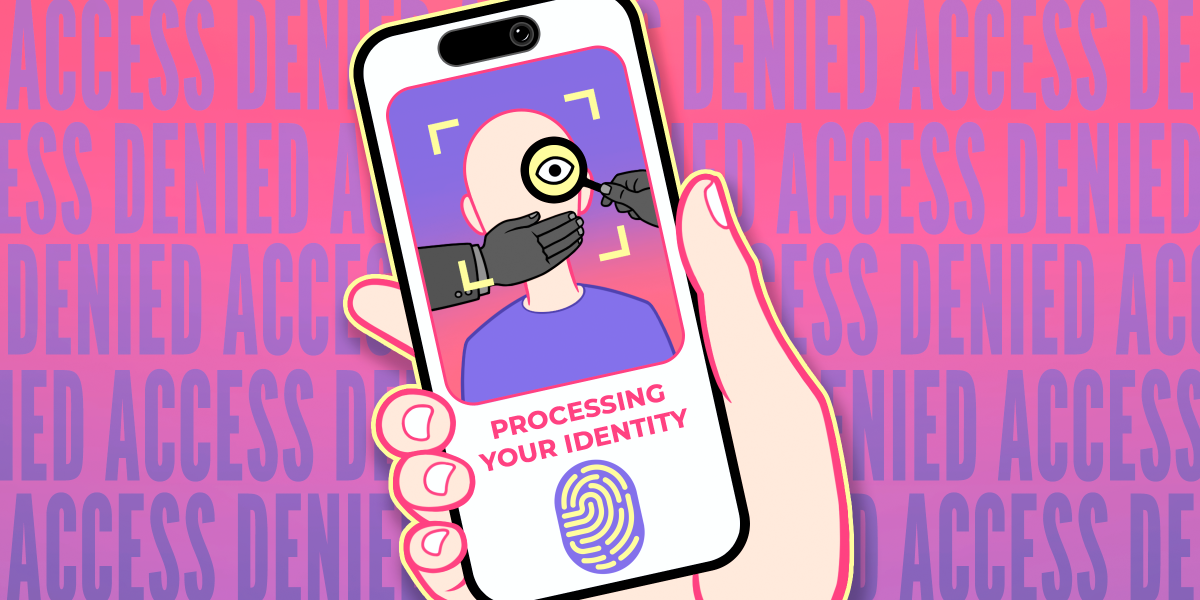
The KIDS Act would require age checks to get online
2026-06-28The proposed KIDS Act would require age verification for all internet users to protect minors, while also introducing government-directed content moderation and new encryption rules. Critics argue that despite its child safety goals, the legislation severely compromises digital privacy, free expression, and secure communications.
A way to exclude sensitive files issue still open for OpenAI Codex
2026-06-28Users have submitted an open feature request for OpenAI Codex to prevent the AI agent from reading or transmitting sensitive files to the model. The proposed solution involves implementing both repository and global level ignore files to explicitly block confidential data. This issue remains unresolved as developers seek stricter data privacy controls for the coding assistant.
Choosing a Public DNS Resolver
2026-06-28A new interactive resource helps users select the most suitable public DNS resolver by comparing 30 global options. Users can evaluate these services across critical metrics including privacy, content filtering, security protocols, and regional jurisdiction. Additionally, the platform allows individuals to benchmark DNS over HTTPS speeds directly from their own web browser to ensure optimal network performance.
EU to legislate about Chat Control behind closed doors
2026-06-28The European Union is advancing chat control legislation behind closed doors, prompting widespread concern that the policy will compromise end-to-end encryption for everyday citizens. Critics argue that forcing major messaging providers to implement message scanning will result in mass surveillance and privacy violations without effectively stopping criminals. Furthermore, users fear that upcoming EU interoperability mandates could ultimately be leveraged to enforce these surveillance backdoors across both centralized and decentralized communication platforms.
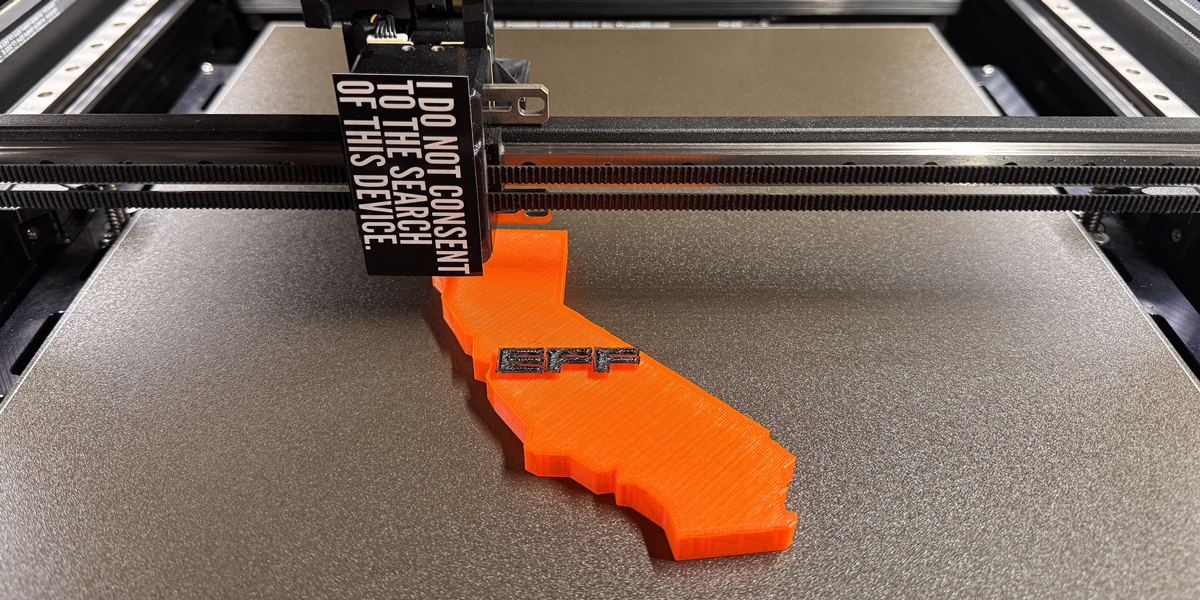
We can still stop California's 3D printer surveillance scheme
2026-06-26Despite warnings from the Electronic Frontier Foundation regarding severe privacy and technical risks, the California State Assembly has approved a bill mandating surveillance software for 3D printers. The amended legislation ignores significant threats to consumer rights and speech, prompting advocates to renew their efforts to stop the mandate.
Libre Barcode Project
2026-06-26The Libre Barcode Project introduces a privacy-focused, web-based frontend for the Zint barcode library that uses WebAssembly to generate vector SVGs directly in the browser. Users praise the tool for providing robust output without server-side data exposure, ads, or mandatory signups. However, some community members note the 1MB initial payload size and suggest minor code optimizations for the resulting SVG files.