Privacy Regulation Tech News Today
How companies collect and use personal data is under constant legal scrutiny. This section tracks privacy regulation news, including GDPR enforcement and major fines, new state and national privacy laws, rules around AI and biometric data, and the compliance challenges facing the tech industry.
Stories here cover data protection authorities issuing fines and corrective orders, new privacy statutes taking effect in US states and countries worldwide, disputes over cross-border data transfers, and emerging rules on biometric identification and the personal data used to train AI systems.
Privacy rules now influence product design directly, determining what data apps can gather, how consent works, and where information can be stored. Compliance officers, product teams, and privacy-conscious users follow this coverage to understand rights and obligations that keep expanding year after year.

The 'papers, please' era of the internet will decimate your privacy
2026-06-25New internet regulations requiring age verification are effectively forcing Americans to undergo mandatory identity checks, ushering in a papers, please era of the web. Consequently, these measures will severely decimate online privacy for everyday users.

Meta Pauses Employee-Tracking Program Following Internal Data Leak
2026-06-24Meta has suspended its employee-tracking program after an internal data leak exposed potentially sensitive information. The company halted the initiative to address the security vulnerability and protect employee privacy.
What we call "age verification" is actually mass surveillance
2026-06-23Critics argue that proposed online age verification mandates are a Trojan horse for mass surveillance, as enforcing these rules requires linking user identities to specific devices and accounts. While privacy advocates suggest digital identity wallets could authenticate users anonymously, skeptics warn that the underlying device attestations act as stable tracking identifiers that destroy online privacy. Furthermore, lawmakers' insistence on preventing credential sharing ensures these systems will inherently function as invasive surveillance tools.

Never Give Them Your Face
2026-06-22This article argues against the use of facial recognition for age verification, warning that it creates a permanent biometric identity checkpoint in public life. The author urges users to refuse installing these invasive systems on their personal devices to protect their digital privacy.

Danish privacy activist Lars Andersen raided by police
2026-06-22Danish privacy activist and former police officer Lars Andersen was raided by police at his home. During the operation, officers deliberately targeted his circuit breaker panel to cut the power and avoid being filmed.
Loupe – A iOS app that raises awareness about what native apps can see
2026-06-21A new privacy-focused iOS app called Loupe has been released to show users exactly what data native applications can access on their devices. Developed by researchers at mysk-research, the tool aims to raise awareness about mobile data visibility and empower Apple users to better protect their personal information.

Identity verification on Claude
2026-06-21Anthropic's implementation of identity verification for Claude is driving some international users away due to frustrations over US export controls and data privacy concerns. As affected subscribers begin migrating to alternative models like Mistral, the broader tech community is actively debating the company's underlying motives. Many question whether the new restrictions are merely a temporary compliance measure or a calculated strategy to achieve regulatory capture against open-weight AI.

I told them forced consent was unlawful. 5 years later it cost Elkjop €1.8M
2026-06-18The Norwegian Data Protection Authority has fined electronics retailer Elkjop €1.8 million for enforcing unlawful forced consent practices within its loyalty club. The penalty arrives five years after a privacy advocate explicitly warned the company's data protection officer that the practice was illegal.
US holds off blacklisting DeepSeek, more than 100 firms deemed security risks
2026-06-17Although the US has temporarily delayed blacklisting DeepSeek while flagging over 100 other firms as security risks, developers continue to praise the AI model for its unmatched cost-effectiveness for everyday coding tasks. In community discussions, users express apathy toward data privacy concerns and heavily debate the model's capabilities against other frontier systems. Many developers note that while DeepSeek excels at routine programming, a temporarily available model named Fable significantly outperformed both DeepSeek and Claude Opus in complex software engineering and reasoning tasks.

Volkswagen started blocking GrapheneOS users
2026-06-17Volkswagen has reportedly begun blocking users of the privacy-focused GrapheneOS from accessing its mobile applications, an issue recently highlighted on the GrapheneOS discussion forum. This restriction prevents owners utilizing the custom Android operating system from using the automaker's digital services.
GrapheneOS has been ported to Android 17
2026-06-16GrapheneOS has officially been ported to Android 17, bringing its enhanced privacy and security features to the new mobile platform. The community is currently discussing the technical details and rollout of this update on the official GrapheneOS discussion forum. This milestone ensures users can benefit from the latest underlying security patches and system improvements.
Apple is about to make Hide My Email useless
2026-06-16Apple is changing the domain for its Sign in with Apple and Hide My Email aliases to a new private.icloud.com subdomain. This consolidation makes it significantly easier for third-party services to identify and block these privacy-focused email addresses. Consequently, the update diminishes the plausible deniability and overall privacy benefits previously enjoyed by iCloud users.
Ask HN: Has anyone replaced Claude/GPT with a local model for daily coding?
2026-06-15Developers on Hacker News are sharing positive experiences replacing proprietary AI coding assistants with local, offline models like Qwen to prioritize data privacy and eliminate subscription costs. Although users note that local models require more precise prompting and act more like junior developers than frontier models like Claude, they still provide a substantial productivity boost for free. The community is also actively troubleshooting technical hurdles, such as context caching inefficiencies, by optimizing inference backends and preserving reasoning traces.
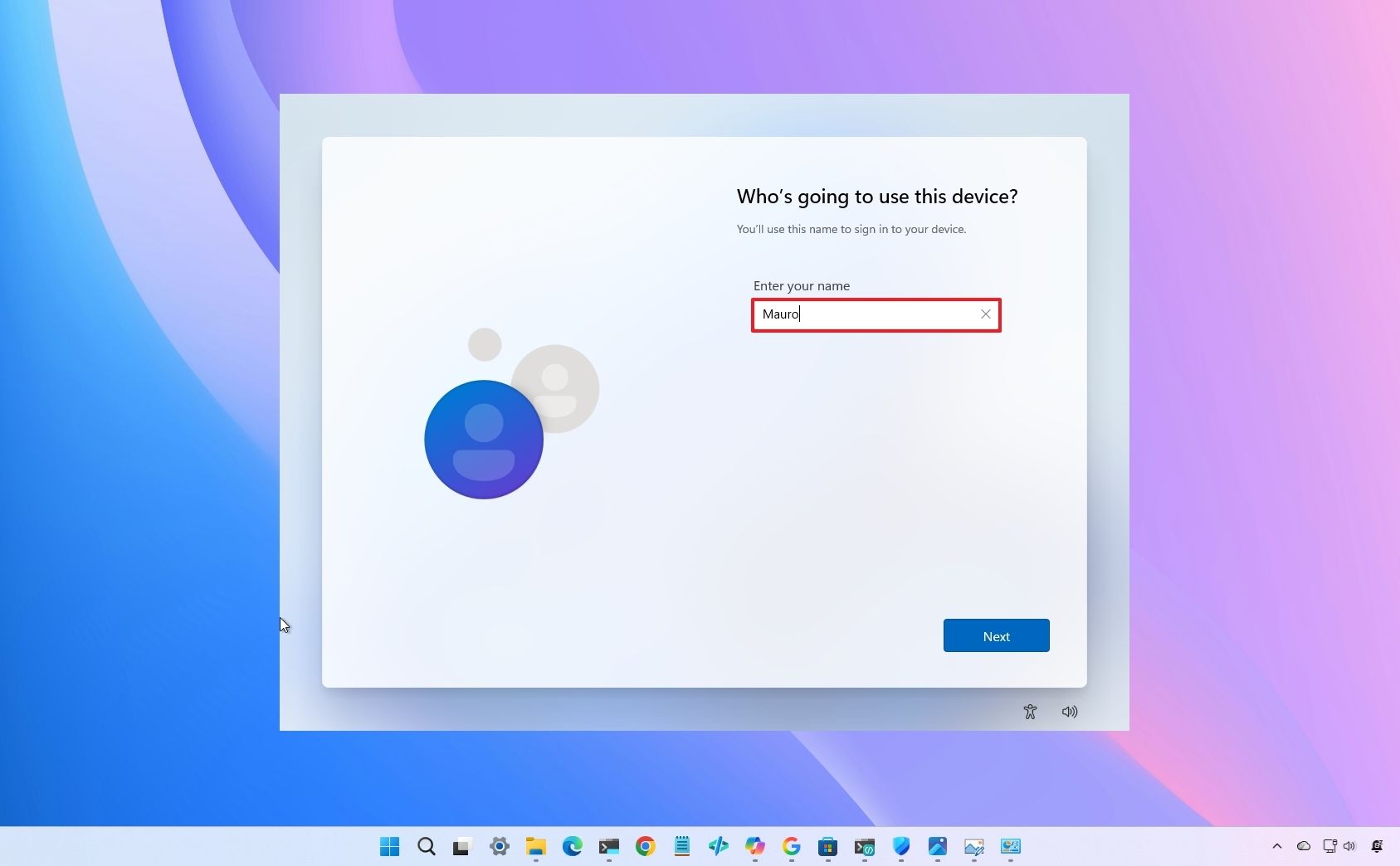
Windows 11 users are tired of MS account requirements creeping into everything
2026-06-15Windows 11 users are increasingly frustrated as Microsoft continues to mandate online accounts for system setup and everyday features. A recent Reddit thread advocating for local accounts has escalated this specific grievance into a broader debate concerning user privacy, transparency, and overall system control.
I indexed 669 GB of my GoPro videos using my M1 Max computer and local ML models
2026-06-14A developer successfully indexed 669 GB of personal GoPro videos using an M1 Max computer and local machine learning models, showcasing the growing capabilities of on-device AI for media management. The project sparked community discussions about using similar local tools to automatically generate personalized video compilations of family memories. Participants praised this on-device processing approach for its strict privacy benefits, contrasting it with the data collection practices of cloud-based photo services.
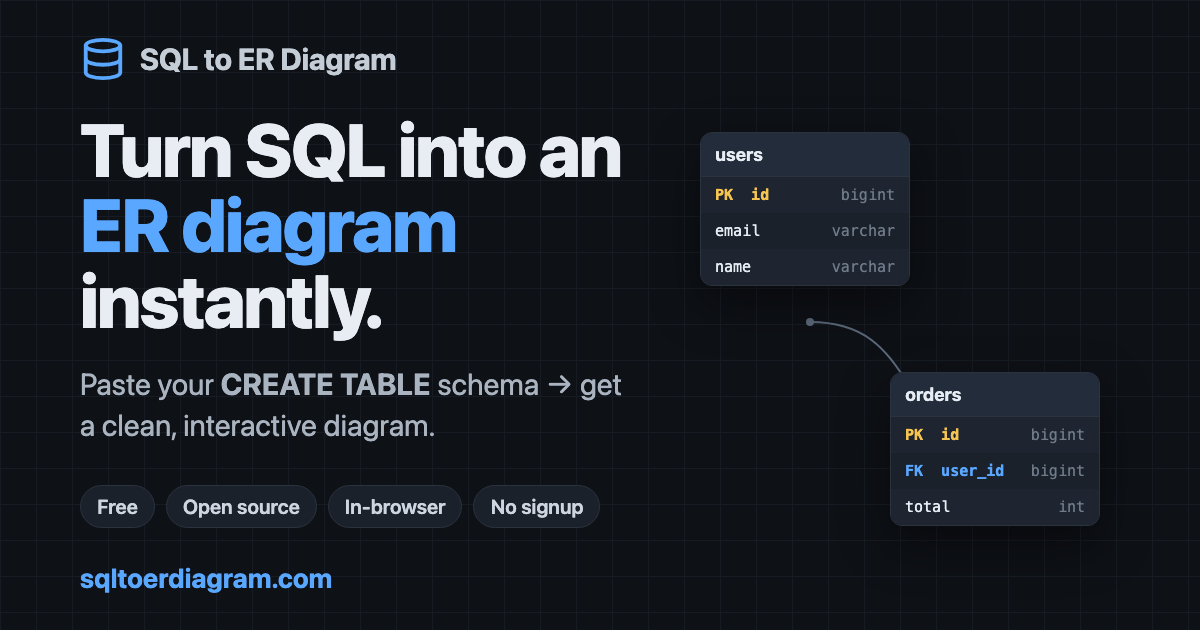
Free SQL→ER diagram tool, runs in the browser, nothing uploaded
2026-06-14A new free, browser-based tool enables developers to instantly convert SQL and other schema formats into visual ER diagrams. The application supports inputs like Prisma, DBML, and standard DDL statements to quickly visualize database schemas. It requires no signup and ensures complete privacy by not uploading any data outside the browser.
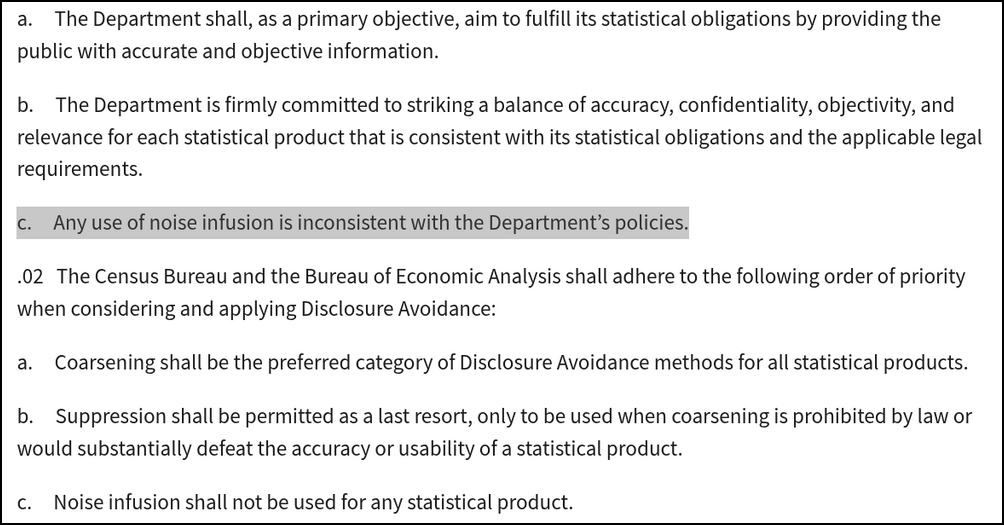
Noise infusion banned from statistical products published by Census Bureau
2026-06-13The Census Bureau has banned the use of noise infusion, a differential privacy technique, in its official statistical products. However, experts warn that removing this disclosure avoidance tool does not resolve the fundamental trade-offs between data accuracy and respondent confidentiality.

A Call to Action: Stop the FCC's KYC Regime
2026-06-12The Federal Communications Commission is proposing a mandate requiring KYC verification for all mobile phone users. Privacy advocates are urging the public to take immediate action to oppose the policy. They warn that implementing such strict identification requirements would lead to a severe erosion of personal privacy.
Petition to Withdraw Canada's Bill C-22
2026-06-11A petition is urging the Canadian government to withdraw Bill C-22 and the upcoming Bill C-34, legislation that critics warn will severely compromise digital privacy through encryption backdoors and bulk metadata retention. Meanwhile, industry observers are debating whether these strict surveillance measures will further stifle Canada's domestic tech sector or if the ecosystem's struggles stem primarily from local investment and capital market deficiencies.
AWS Bedrock to require sharing data with Anthropic for Mythos and future models
2026-06-10AWS Bedrock's decision to require data sharing with Anthropic for its upcoming Mythos AI models has sparked significant privacy concerns among enterprise users. The controversy centers on a 30-day data retention policy that critics fear could be exploited to train future models under the guise of abuse monitoring, potentially bypassing Zero Data Retention contracts. This has fueled broader skepticism regarding the trustworthiness of AI-as-a-service providers and their ability to keep private corporate data secure from model training.