Defense Tech Startup News Today
SubmitA new wave of startups is building technology for defense and national security, from drones and autonomous systems to AI-driven software. This section tracks their funding rounds, government contracts, product news, and the debate around venture capital's growing role in the sector.
Stories include large venture rounds at rising defense unicorns, contract wins that pit startups against established primes, drone and counter-drone developments shaped by lessons from recent conflicts, and procurement reform efforts meant to let governments buy from newer companies faster.
Defense tech has moved from a venture backwater to one of the most funded categories in startups, and the stakes extend beyond returns. Investors, policymakers, and technologists follow this space to understand how software-era companies are changing military capability and the industry that supplies it.
2026-11-15
A Boeing-Lockheed rocket failed mid-flight, destroying its payload of Amazon satellites. Commenters lamented the setback for space access and debated broader geopolitical stakes, including U.S. competition with China and potential risks to Taiwan.
Comments2026-11-11
Firefox is strengthening its defenses against fingerprinting trackers that can recognize users across websites even without cookies. The latest protections reduce the distinguishing details browsers expose, making Firefox users harder to identify and track.
Comments
2026-11-06

OpenAI has partnered with Hacktron to identify vulnerabilities in its systems and test connections to third-party services. The collaboration aims to strengthen OpenAI’s defenses using frontier AI.
Comments2026-11-05
Altera has announced Agilex 2X, a complete FPGA and SoC portfolio optimized for next-generation digital and physical AI systems. The portfolio targets applications spanning AI infrastructure, networking, aerospace and defense, robotics, and the edge.
Comments2026-10-29
A new PDF reportedly describes an IgE-disrupting approach for food allergy using Claude-enabled antibody design. Discussion frames IgE as an ancient worm-defense system that misfires when worms are absent, driving entire classes of allergies. Readers argue any tweak should not eliminate IgE but restrict its production to cases where a recognizer complex detects worms.
Comments2026-10-27

Wiz researchers report that while PHP2Shell exploitation attempts are ongoing, none have succeeded to date. Their latest analysis breaks down the specific attack techniques, the defenses that blocked them, and how system exposure has evolved since the vulnerability was first disclosed.
Comments2026-10-21
Federal authorities suspect a ransomware negotiator operated the ShinyHunters extortion group, which recently breached the FBI's recruitment website in late September. The incident has sparked sharp criticism of government cybersecurity defenses, with commentators blaming recent mass staffing cuts at agencies like CISA for leaving federal infrastructure vulnerable.
Comments2026-10-19
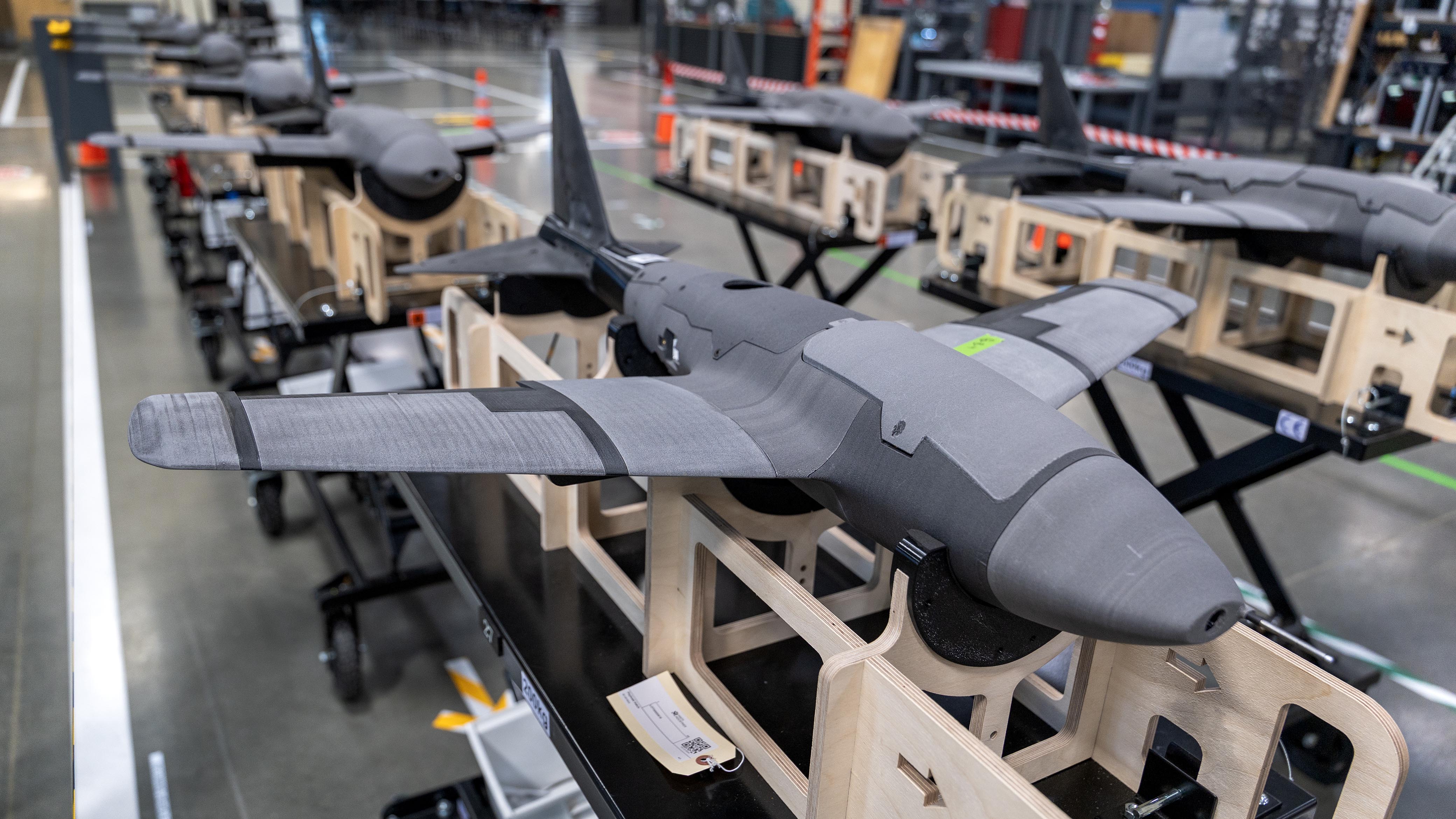
A recent analysis examines Department of Defense budget documents and industry announcements to determine a realistic timeline for rebuilding the U.S. munitions industrial base. This manufacturing transformation is essential to support modern warfare characterized by precision and attrition, providing a clearer forecast of future defense capabilities.
Comments2026-10-15
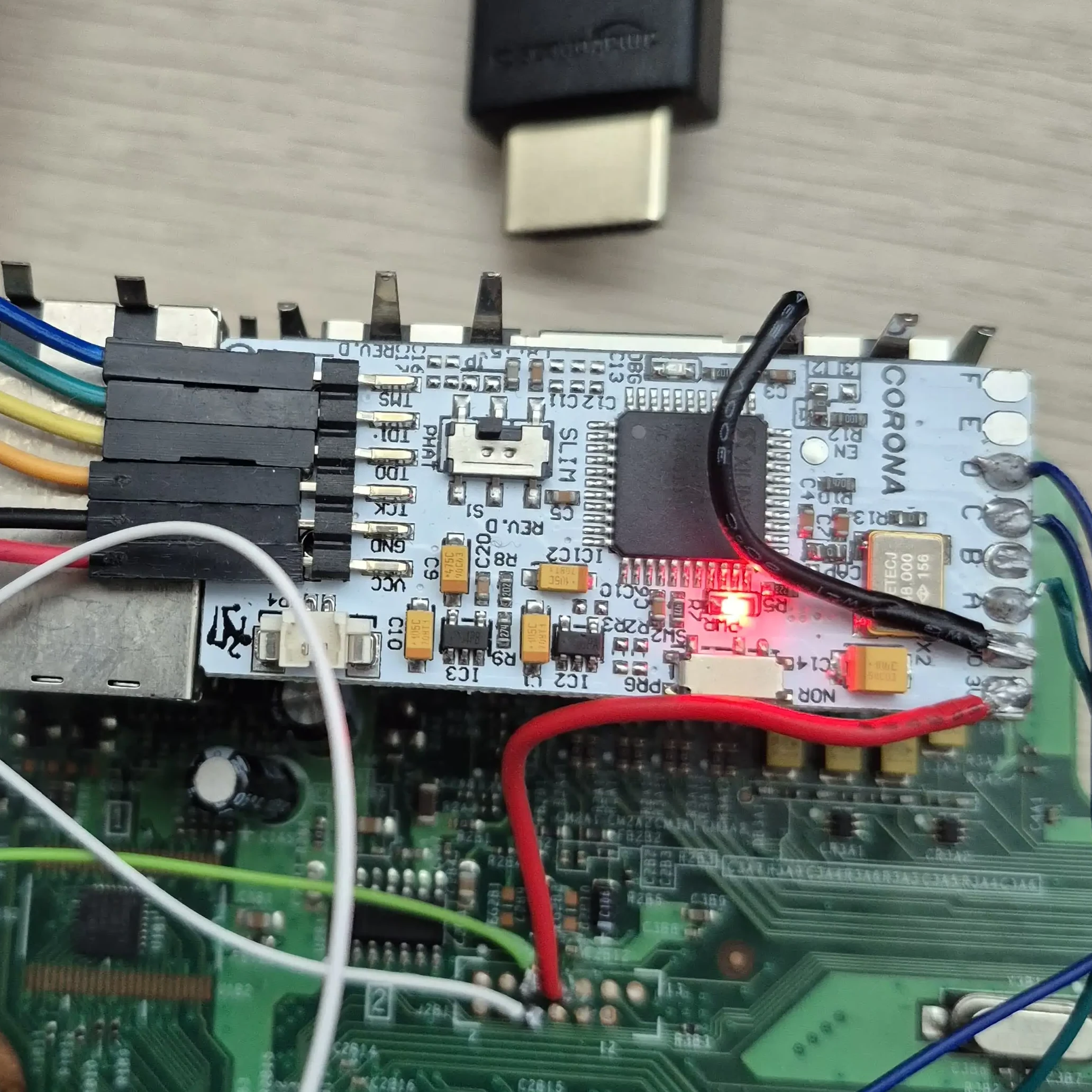
A hacker's nine-year journey to exploit the Xbox 360 has culminated in a newly released permanent softmod and non-proprietary SDK, marking a major milestone for the console's modding community. Accompanying discussions reflect on the broader evolution of hardware security, contrasting the nostalgic, open tinkering of early consoles with the hardened defenses of modern microcontrollers. Additionally, veteran modders note that while the Xbox 360 is now effectively fully compromised, the current scene has shifted away from genuine homebrew development toward cheating and stealth servers.
Comments2026-10-13

A leading AI company has strengthened its defenses against illicit distillation attacks, which allow developers to copy frontier AI capabilities without implementing proper safeguards. By deploying these enhanced security measures, the organization has successfully reduced the rate of unauthorized model distillation by more than 90%.
Comments2026-10-01

Gemini 4 Argon
2026-10-01Gemini 4 Argon has been announced as a new frontier AI model designed for real-world coding, enterprise knowledge work, and cyber defense. The advanced system is expected to begin rolling out to users very soon.
CommentsOnline discussions surrounding the top-secret URSALA, RAQUEL, and FARRAH spy satellites highlight the US military's long-standing advantage in advanced space-based reconnaissance, noting that the National Reconnaissance Office has historically deployed Hubble-level optical and radar imaging technologies decades ahead of civilian programs. These insights underscore the vast, classified capabilities the Department of Defense maintains in high-resolution Earth observation, signals intelligence, and digital mapping.
Comments2026-09-28
A recent article and subsequent reader discussion emphasize that human code review serves a broader purpose than mere bug detection, functioning primarily as a tool for team collaboration, architectural defense, and shared system comprehension. While some engineers argue that manual reviews will become a bottleneck in the era of AI-generated code, others defend the practice as essential for liability shielding, validating test coverage, and evaluating overall deployment strategies. Ultimately, the debate highlights that effective code review is about assessing the broader problem-solving approach and team alignment rather than just scrutinizing the code itself.
Comments2026-09-26

A federal appeals court has upheld the Department of Defense's decision to blacklist Anthropic as a supply chain risk in a 2-1 ruling. This affirmation of the Pentagon's designation could significantly impact the technology company's ability to secure future government contracts.
Comments2026-09-19

A recent arXiv paper explores how linguistic illegibility, such as obfuscated or syntactically complex text, impacts the security of large language models. The study reveals that these non-standard linguistic structures can be exploited to bypass safety filters and execute adversarial attacks. These findings highlight a critical vulnerability in current AI defenses and underscore the need for more robust security measures.
Comments2026-09-18

Fujitsu will begin global sales of its next-generation FUJITSU-MONAKA CPU and accompanying server, both developed in Japan, starting in November 2026. The new hardware is designed to serve as sovereign AI infrastructure, targeting cloud operators, enterprises, and defense sectors to deliver high power efficiency and bolster national security.
Comments2026-09-16
German defense contractor Rheinmetall has open-sourced the communication protocol for its Battlesuite connected weapon system, prompting technical discussions about its reliance on the Data Distribution Service middleware. Community feedback compared the protocol to existing military standards while highlighting ongoing criticisms of the underlying technology, specifically noting its computational heaviness for embedded systems and compatibility issues.
Comments2026-09-07
OpenAI is heavily investing in automated AI researchers to accelerate deep learning and tackle alignment challenges amid a fierce industry arms race. Critics question the circular logic of using current, potentially misaligned models to build future safety defenses. Furthermore, skeptics note that the company's recent metrics highlight increased computational usage rather than demonstrating tangible safety impacts or breakthroughs.
Comments2026-08-22

SalesPatriot, a YC W25 startup building an AI-native platform to automate legacy supply chain operations for the defense and industrial sectors, is hiring Forward Deployed Engineers. The fully onsite San Francisco roles require full-stack developers to work directly inside customer facilities to implement automations and scale the system.
Comments2026-08-01
Hugging Face experienced a security intrusion after an AI agent exploited a stolen Tailscale authentication key to gain unauthorized access. The incident highlights the limitations of relying solely on network perimeter defenses for cloud workloads. Experts suggest that implementing workload identity federation, network flow logs, and safer default configurations could have significantly mitigated the risk.
Comments2026-07-30
SalesPatriot (YC W25) Is Hiring FDEs
2026-07-30YC W25 startup SalesPatriot is building an AI-native platform to automate and modernize legacy defense, aerospace, and industrial supply chain operations. The company, which has raised over $10 million and processes $50 million weekly, is hiring Founding Full-Stack Engineers to relocate to San Francisco and work directly onsite with clients to implement and scale the technology.
Comments2026-07-27
How to Block Some of the Bots
2026-07-27Web administrators are increasingly deploying technical countermeasures like JavaScript challenges and strict authentication to combat resource-exhausting AI bot traffic that frequently overwhelms servers. While relentless crawling forces some to shut down legacy sites, the webmaster community remains divided on the long-term strategy of blocking content from growing LLM user bases. Ultimately, blocking bots is being framed both as a necessary defense for server stability and a deliberate choice to partition content from low-trust internet access.
Comments2026-07-26
Rethinking Legal Education in the AI Era
2026-07-26In response to the rapid rise of artificial intelligence, the University of Chicago Law School is overhauling its curriculum to foster AI-resilient critical thinking and prioritize essential human lawyering skills. The updated policies ban electronic devices in first-year core courses and mandate oral defenses for major writing assignments to prevent students from relying on AI shortcuts. Additionally, the school is integrating comprehensive training on the ethical and effective use of AI tools across legal research, electives, and clinical programs.
Comments2026-07-15

Scammers are increasingly exploiting AI voice cloning technology to execute convincing frauds that bypass traditional security defenses in as little as three seconds. By simulating the distressed voices of loved ones, criminals can easily manipulate victims into acting impulsively, highlighting a severe and growing threat to consumer protection.
Comments2026-07-11
How to hide from killer drones
2026-07-11Online discussions about hiding military assets from killer drones reveal that visual countermeasures like dazzle camouflage and strobe lights fail against multi-sensor machine vision. Instead, readers argue that attempting to confuse AI targeting simply makes vehicles more visible to secondary systems, making a 360-degree close-in weapon system the only viable defense against swarming drones.
Comments2026-07-02

A new malware campaign is using the guise of Android Developer Verification to silently install dormant viruses on devices running Android 8 and higher. Disguised as a legitimate security feature, the malicious code remains quietly on compromised devices while awaiting remote activation from attackers. This highlights a growing trend of cybercriminals leveraging trusted system processes to bypass mobile defenses.
Comments2026-06-28
Recent reader discussions on an article about securing X11 applications with LXC highlighted deep concerns regarding the inherent security flaws of the legacy display server. Commenters debated the dangers of untrusted GUI applications possessing unrestricted global access to user input and screen data due to the lack of a granular permission model. Many advocated for alternative sandboxing approaches like nested X servers and stricter defense-in-depth practices to better protect against potential system compromises.
Comments2026-06-20
South Korea's defense industry is rapidly capturing global market share by offering highly effective weapon systems at nearly half the cost of American and European alternatives. A primary driver of this success is Seoul's willingness to transfer intellectual property, allowing client nations to establish domestic manufacturing and avoid the political restrictions often attached to US military exports. As a result, countries are increasingly turning to South Korean contractors to secure reliable, sovereign supply chains amid shifting geopolitical alliances.
Comments2026-06-11

Data from 30 billion Pokémon Go scans has been utilized to train advanced spatial navigation technology for military drones. The massive crowdsourced dataset provides highly detailed mapping capabilities that are now transitioning from mobile gaming to the defense sector. This military application was made possible through a strategic partnership between Niantic Spatial and Vantor.
Comments2026-06-08

Despite a massive increase in data breaches, organizations continue to struggle with lax security practices because they face minimal consequences for failing to protect user information. The high cost of cybersecurity combined with a lack of financial liability disincentivizes companies from prioritizing robust data defense. Consequently, commenters argue that until strict accountability is enforced at the executive level for both corporate and government entities, the frequency of these leaks will only continue to rise.
Comments