AI Tech News December 13 2025
Artificial intelligence produces a constant flow of announcements, and some days stand out more than others. This section gathers AI news in the format of a dated briefing, focused on the stories around December 13, 2025.
Typical stories include new model launches and benchmark comparisons, AI features in popular products, research papers, partnerships between AI labs and cloud providers, and debates about safety and regulation.
A dated view of AI news shows how fast the field moves from one month to the next. Developers, researchers, investors, and business leaders use it to put new announcements into context.
2026-07-13

VEGA researchers have uncovered GhostLock (CVE-2026-43499), a severe Linux kernel vulnerability that has existed in all major distributions for 15 years. The stack-use-after-free flaw enables highly stable privilege escalation and container escapes without requiring special kernel configurations or privileges. Google awarded the team a $92,337 bug bounty for discovering and exploiting the flaw through its kernelCTF program.
CommentsIn response to community pushback against machine-written content, Hacker News is considering a new flagging option specifically for AI-generated articles. Although direct tagging is not currently planned, adding a specific flagging reason for AI-generated content would address the platform's growing aversion to such text. Additionally, users argue that AI-written articles and AI-assisted projects severely limit meaningful technical discussion because the human authors often lack a deep understanding of the material they share.
Comments
Sparked by Bun's rewrite from Zig to Rust, developers are pushing back against AI hype to emphasize the value of battle-tested code. They argue that the true merit of a project lies in its maturity rather than being a fresh rewrite or a quickly generated proof-of-concept. Ultimately, the community agrees that while artificial intelligence makes coding effortless, the necessary friction and time spent refining ideas remain crucial for building lasting software.
CommentsA recent article highlighting cyberpunk comics, manga, and graphic novels excludes major anime franchises like Ghost in the Shell and Cowboy Bebop, prompting readers to discuss the extensive multimedia adaptations of these properties. Fans heavily debated creator Shirow Masamune's legacy and personal controversies, specifically arguing over the sexualization in his original manga versus the clinical tone of the animated films. Additionally, readers recommended newer cyberpunk graphic novels like Human Algorithm that explore the genre's evolving themes, including modern artificial intelligence and economic upheavals.
Comments
Ancient Roman Board Game
2026-07-13Artificial intelligence has been used to reconstruct Ludus Coriovalli, an 1,800-year-old Roman strategy board game lost to history, from a mysterious carved stone. The findings, published in the journal Antiquity, detail a strategy game that pits four hounds against two hares. This ancient pastime is now available to play for free online against friends or an AI opponent.
CommentsSamsung is facing backlash over plans to collect sensitive user data, including medical records and cycle tracking details, to train its AI models through the Samsung Health app. Users who opt out of this data collection reportedly face the deletion of their stored information or lose access to essential app features. The controversial update has sparked widespread consumer outrage, prompting calls for regulatory intervention and boycotts against the company's aggressive data harvesting practices.
Comments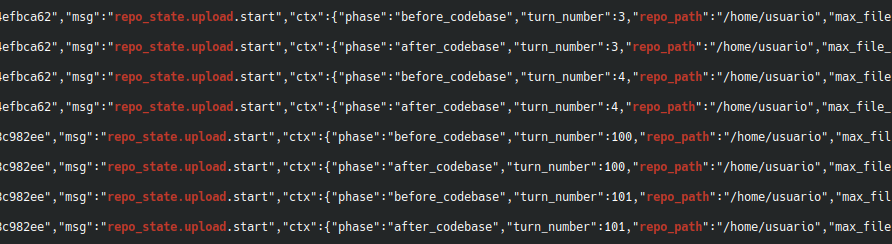
A user discovered that xAI's Grok AI uploaded their entire local directory to the company's servers. The exposed files included highly sensitive data such as SSH keys, a password manager database, and personal media. This incident highlights severe privacy and security risks regarding AI assistants with deep access to local file systems.
CommentsSecurity researchers have identified GhostLock, a critical Linux kernel stack-use-after-free vulnerability that has existed in all major distributions for 15 years. The flaw requires no special configurations or privileges to trigger and can be exploited for highly stable privilege escalation and container escapes. Google awarded a $92,337 bounty through its kernelCTF program for the successful proof-of-concept exploit.
Comments2026-07-12

A recent comparison of AI coding assistants reveals that Claude Code incurs significant token overhead, sending 33,000 tokens to the API before even processing the user prompt. In contrast, OpenCode sends only 7,000 tokens in its default configuration. This hidden cost disparity is primarily driven by differences in instruction files, MCP schema weights, and subagent multipliers.
CommentsA developer recovering from health issues is leveraging AI coding tools to build a 2D roguelite game, prompting a broader Hacker News discussion on AI's role in game development. While participants praise AI for handling complex architecture and logic, they note it currently struggles with timing-based mechanics due to its inability to process real-time movement. However, commenters remain optimistic that rapid advancements in specialized inference hardware will soon overcome these temporal limitations.
CommentsMesh LLM utilizes the iroh network to pool GPU resources across multiple machines, creating a unified distributed AI computing system. This allows developers to access a single OpenAI-compatible API using their existing hardware, offering a scalable solution for running large language models without relying on centralized servers.
Comments
A development team recently migrated their production AI agent to GPT-5.6, ending a four-month streak where Claude Opus dominated their performance evaluations. This transition delivered significant improvements, including a 2.2x increase in speed and a 27% reduction in costs. The article outlines the key technical lessons and practical insights gained during the migration process.
Comments
A new technical analysis reveals the exact data transmitted by the Grok Build command-line tool back to xAI servers. By inspecting the wire-level network traffic, the report provides developers with rare transparency into the privacy implications and telemetry practices of the AI development environment.
CommentsI love LLMs, I hate hype
2026-07-12The author expresses profound enthusiasm for genuine artificial intelligence progress while actively rejecting the surrounding industry hype. Having dedicated their career to the field, they celebrate recent breakthroughs in large language models and coding agents. They highlight a seamlessly working local AI setup as proof that the long-awaited Year of the Linux Desktop has finally arrived.
Comments
An agent in 100 lines of Lisp
2026-07-12The author reflects on taking an artificial intelligence course at the University of Guelph around the year 2000, long before the rise of modern deep learning frameworks. They recall that the early curriculum focused heavily on writing algorithms in Lisp rather than the transformers and neural networks that dominate the field today.
Comments
Automation Without Understanding
2026-07-12A recent arXiv paper titled Automation Without Understanding explores the current landscape of artificial intelligence, where systems perform complex automated tasks without genuine comprehension. The study highlights the potential risks of deploying models that lack true reasoning capabilities. Consequently, the authors urge developers to prioritize interpretability and safety in future AI designs.
Comments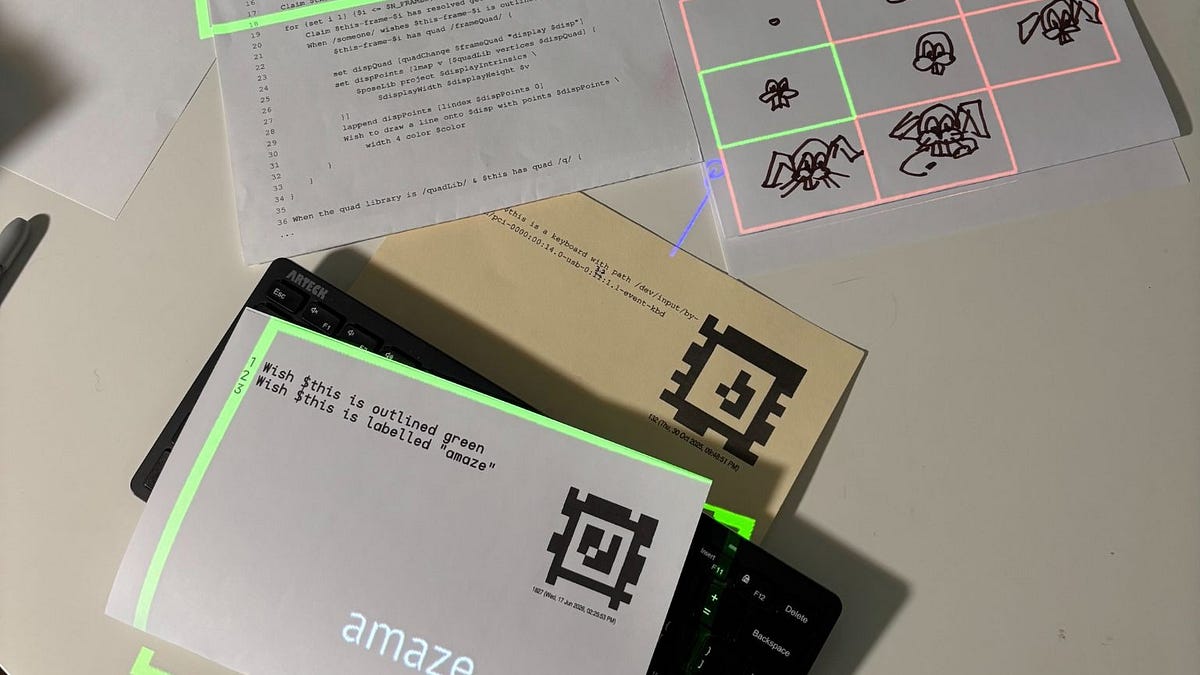
Against Usefulness
2026-07-12A recent New York Times Magazine feature explores the growing movement of physical computing and analog machines that prioritize the joy of creation over practical utility. By highlighting inventive projects like marble-powered paper computers, the article critiques modern technology's relentless obsession with optimization and celebrates the beauty of building fascinating, purely expressive devices.
CommentsResearchers in mechanistic interpretability are applying causality theory to large language models to determine if their internal operations reflect genuine reasoning or mere pattern memorization. By tweaking specific weights and activations, scientists aim to uncover how these networks process information, recently identifying shared underlying methodologies for tasks like calculating time and calendar dates. Although some argue that the immense complexity of neural networks makes them impossible to fully reverse-engineer, this approach seeks to translate encoded knowledge into human-understandable cognitive concepts.
Comments2026-07-11

Apple has filed a lawsuit against OpenAI, accusing the AI company of stealing its trade secrets. The legal action specifically targets former Apple employees who allegedly transferred proprietary information to OpenAI. The tech giant claims these ex-workers illegally obtained and shared confidential data to benefit OpenAI's development efforts.
Comments
AI neoclouds like CoreWeave and Nebius are experiencing soaring revenues and stock prices due to massive demand for GPU infrastructure. However, lacking the deep cash reserves of Big Tech, these companies are relying on complex, circular financing structures to fund their rapid expansion. This unconventional approach to securing capital has raised red flags regarding the long-term sustainability of their business models.
Comments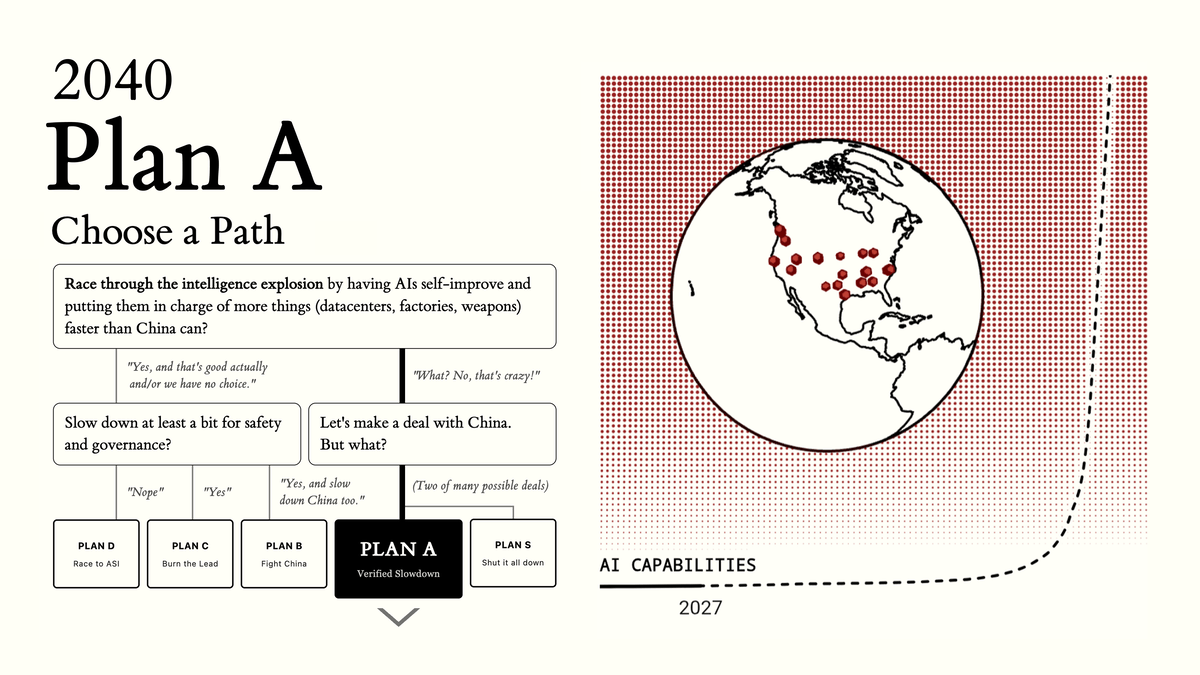
AI 2040: Plan A
2026-07-11The new report AI 2040: Plan A offers a detailed forecast and strategic recommendations for the United States, China, and the global community to navigate the impending era of artificial superintelligence. It outlines critical steps for international collaboration to manage the complex geopolitical and technological challenges associated with this transformative milestone.
CommentsSilent speech with ultrasound
2026-07-11Researchers have developed a machine learning model that enables silent speech by predicting words from ultrasound video of the tongue without requiring the user to vocalize. The system generalizes across different individuals to decode open-vocabulary text, achieving a 15.6% word error rate.
CommentsReflecting on the 1984 book Digital Deli, readers discussed the extreme hardware constraints of early personal computing, noting how one contributor hand-coded the bestselling Apple Writer word processor using just 8KB of memory. The discussion contrasted these tight historical limitations with modern software bloat and today's massive GPU memory requirements. Participants also observed a cyclical trend in the industry, suggesting that modern AI tools are ushering in a new era of independent cottage programmers reminiscent of the early PC days.
CommentsHow to hide from killer drones
2026-07-11Online discussions about hiding military assets from killer drones reveal that visual countermeasures like dazzle camouflage and strobe lights fail against multi-sensor machine vision. Instead, readers argue that attempting to confuse AI targeting simply makes vehicles more visible to secondary systems, making a 360-degree close-in weapon system the only viable defense against swarming drones.
Comments2026-07-10
Following an early 2025 report on the AI scraper bot scourge, this update examines the evolving tactics used by automated bots to bypass website security. It specifically focuses on the continued exploitation of residential proxies and highlights the ongoing technological arms race between content publishers and sophisticated scraping operations.
Comments
Apple is experiencing incredible demand for its Mac mini and Mac Studio desktops as they become the preferred machines for running AI agents. Apple silicon executive Doug Brooks highlighted this trend in a recent interview ahead of WWDC 2026, noting the growing reliance on the company's custom chips for on-device AI workloads.
Comments
Developers have built a real-time AI tutor designed to teach math and reading to children aged four to nine. Because young learners require immediate feedback and cannot read text interfaces, the team integrated early childhood pedagogy directly into the system's engineering. The article details the key architectural decisions and technical lessons learned from creating a fast and highly accurate educational model for young children.
CommentsWrite code like a human will maintain it
2026-07-10Large language models enable rapid code generation, tempting developers to bypass traditional best practices like the DRY principle. However, because humans ultimately maintain the software, relying on endless AI output creates significant long-term technical debt. Developers must therefore prioritize clean, readable code over the sheer volume of AI generation to ensure future maintainability.
CommentsRecent advancements in AI enable the generation of highly optimized videos designed to maximally stimulate specific target brain regions. Readers warn that tech companies could exploit this capability to create surgically targeted, hyper-addictive content. This development raises severe concerns about unprecedented psychological manipulation and the evolution of digital media into perfectly engineered behavioral triggers.
Comments
A new report from the Cambridge Programme on AI Science and Policy examines how the terrorist group Boko Haram is leveraging frontier artificial intelligence. The research highlights an emerging security threat as extremist organizations increasingly gain access to advanced AI tools to enhance their operations.
Comments