Software Tech News
2026-07-12
Tiny Emulators
2026-07-12The updated Tiny Emulators project utilizes a unique cycle-stepped approach to emulate 8-bit CPUs and system chips, ticking the processors alongside other components rather than treating them as central controllers. Featuring stb-style C headers and an experimental Zig variant, the open-source library has been integrated into projects like the BizHawk emulator and inspired community discussions about the appeal of deep-hardware programming concepts reminiscent of the cancelled game 0x10c.
CommentsMesh LLM utilizes the iroh network to pool GPU resources across multiple machines, creating a unified distributed AI computing system. This allows developers to access a single OpenAI-compatible API using their existing hardware, offering a scalable solution for running large language models without relying on centralized servers.
Comments

A development team recently migrated their production AI agent to GPT-5.6, ending a four-month streak where Claude Opus dominated their performance evaluations. This transition delivered significant improvements, including a 2.2x increase in speed and a 27% reduction in costs. The article outlines the key technical lessons and practical insights gained during the migration process.
Comments
How we can reduce traffic congestion
2026-07-12Google researchers modified their Maps routing algorithm to divert traffic away from congested roads, yielding a two percent increase in driving speeds and lower fuel consumption across ten major cities. However, the initiative has sparked debate regarding the need for government oversight on algorithmic changes and raised concerns that tech-driven solutions may distract from the necessity of investing in public transit.
Comments
A new technical analysis reveals the exact data transmitted by the Grok Build command-line tool back to xAI servers. By inspecting the wire-level network traffic, the report provides developers with rare transparency into the privacy implications and telemetry practices of the AI development environment.
Comments
Tracing a journey that began with Java 1.0 applets in 1999, this article explores the author's long-standing interest in machine-assisted mathematics education. It highlights how modern coding agents are now being utilized to revamp and recreate these legacy educational tools.
CommentsI love LLMs, I hate hype
2026-07-12The author expresses profound enthusiasm for genuine artificial intelligence progress while actively rejecting the surrounding industry hype. Having dedicated their career to the field, they celebrate recent breakthroughs in large language models and coding agents. They highlight a seamlessly working local AI setup as proof that the long-awaited Year of the Linux Desktop has finally arrived.
CommentsA recent piece by artist pmjv explores the creation of the Prahou universe using the 9front operating system on vintage ThinkPads. The project highlights delightfully unconventional drawing techniques, such as using a physical ruler directly on a touchscreen and utilizing an old Windows XP disc. Ultimately, the work showcases an impressive blend of retro hardware, digital art, and creative world-building.
CommentsGhostel is a new terminal emulator for Emacs powered by libghostty that integrates terminal output directly into native Emacs buffers for seamless keyboard navigation and text manipulation. By treating terminal text as standard buffer content, the project aims to outperform existing Emacs packages like vterm and eat while eliminating the need for standalone terminal applications.
Comments
Starting with Chromium 148, built-in JavaScript math, CSS trigonometric, and Web Audio functions now route through the host operating system's core math library. This routing causes the browser to exhibit unique rounding behaviors that inadvertently expose the user's specific operating system. As a result, these subtle calculation differences can now be exploited by developers for accurate OS fingerprinting.
Comments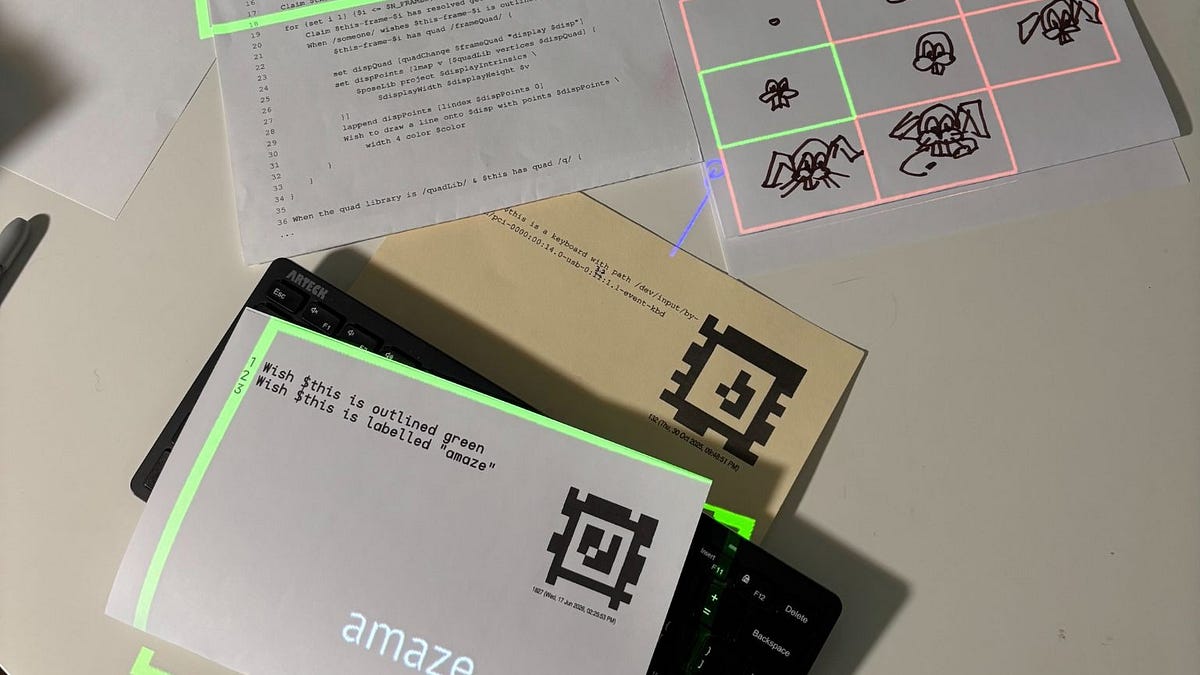
Against Usefulness
2026-07-12A recent New York Times Magazine feature explores the growing movement of physical computing and analog machines that prioritize the joy of creation over practical utility. By highlighting inventive projects like marble-powered paper computers, the article critiques modern technology's relentless obsession with optimization and celebrates the beauty of building fascinating, purely expressive devices.
CommentsMindwalk is a new visualization tool that allows developers to replay coding-agent sessions on an interactive 3D map of their codebase. This spatial interface helps engineering teams easily track, analyze, and debug automated coding workflows in a more intuitive way.
Comments
The newly announced protobuf-py introduces a fully conformant Protobuf runtime built specifically for Python. It delivers a native developer experience while matching the performance of Google's C engine on real-world workloads.
Comments2026-07-11
We scaled PgBouncer to 4x throughput
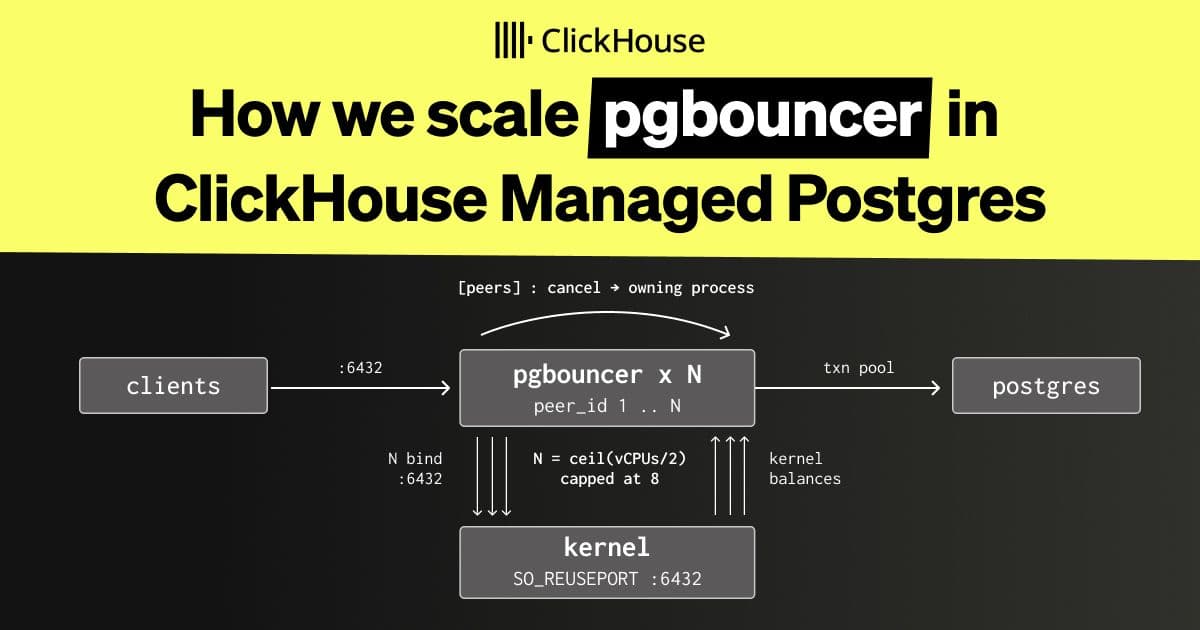
2026-07-11ClickHouse Managed Postgres overcame PgBouncer's single-threaded CPU limitations by deploying a peered fleet of processes utilizing the so_reuseport feature to scale across all available cores. This approach allows the connection pooler to fully utilize the entire CPU capacity of the host machine. Consequently, the team achieved a fourfold increase in throughput, as confirmed by recent performance benchmarks.
Comments
Ant is a new lightweight JavaScript runtime capable of running npm packages and TypeScript from a single 9 MB binary. Built from scratch on its own engine, it features a Node-compatible API, VM-isolated sandboxing, and built-in Wasm support.
CommentsPrefer strict tables in SQLite
2026-07-11The author argues that using strict tables in SQLite improves data integrity by preventing common datatype errors. Enforcing strict types blocks invalid entries, such as accidentally inserting text into numeric columns. Adopting this practice ensures more reliable and predictable database behavior.
Comments
UPI: Anatomy of a Payment Transaction
2026-07-11A recent analysis breaks down the complex backend architecture of the Unified Payments Interface, revealing how a seamless transaction completed in seconds actually involves seven distinct parties working behind the scenes. Although users only interact with a single app interface, this intricate ecosystem of banks, payment gateways, and clearinghouses ensures instant fund transfers. The article highlights the remarkable engineering that makes modern digital payments feel completely effortless to the end consumer.
CommentsAlternate clock designs and time systems
2026-07-11A recent article on alternate clock designs sparked a community discussion highlighting innovative and unconventional methods for visualizing time. Readers shared several creative web projects, including a twelve-variation visualizer and a unique Triclock design. The conversation also featured minor bug reports and widespread praise for specific favorites, most notably a digital Pi clock and a mesmerizing falling sand visualization.
CommentsA new Show HN project introduces an interactive platform for developers to learn programming by rebuilding complex systems from scratch. Users can choose to construct their own versions of foundational tools like Redis, Git, and databases. Each hands-on lesson follows a simple choose, write, and run approach to teach core software engineering concepts.
CommentsAn iroh powered smart fan
2026-07-11A recent project demonstrates how to implement iroh on a bare ESP32 microcontroller to build a custom smart fan that automatically adjusts based on ambient temperature. This IoT device allows users to monitor its status remotely from anywhere, highlighting a practical application of modern networking tools on minimal hardware.
CommentsThe Biff web framework for solo Clojure developers has introduced a new utility called Biff.graph. This tool allows programmers to organize and query their codebases as interactive graphs.
Comments
Google has introduced a new platform properties feature to Search Console, allowing content creators to track how users discover their social media profiles through search. This update provides website owners with deeper insights into their cross-platform reach and overall online discoverability.
CommentsThe Python library Otary for image processing and 2D geometry has launched a new tutorials section featuring step-by-step guides and interactive Jupyter notebook workflows. These resources aim to help developers practically apply the library's clean API to real-world computer vision tasks beyond standard documentation. Community members note the tool excels at solving niche problems in just a few lines of code, often succeeding where large language models fail.
CommentsIn a 2019 blog post, Paul Khuong draws a conceptual parallel between thread preemption and garbage collection to explain the complexities of memory reordering. He illustrates how preemption can inherently resolve concurrent memory ordering issues, offering a unique perspective on system optimization. This insight adds to his broader body of work exploring advanced computing concepts, mathematical theories, and compiler design.
Comments
Optimization Solver as a Service
2026-07-11Quicopt has launched a new optimization solver service designed to streamline complex mathematical modeling for developers. Programmers can easily install the package via pip to build models using Pyomo or OR-Tools MathOpt. The platform then solves these models through its API in a simple three-step process.
Comments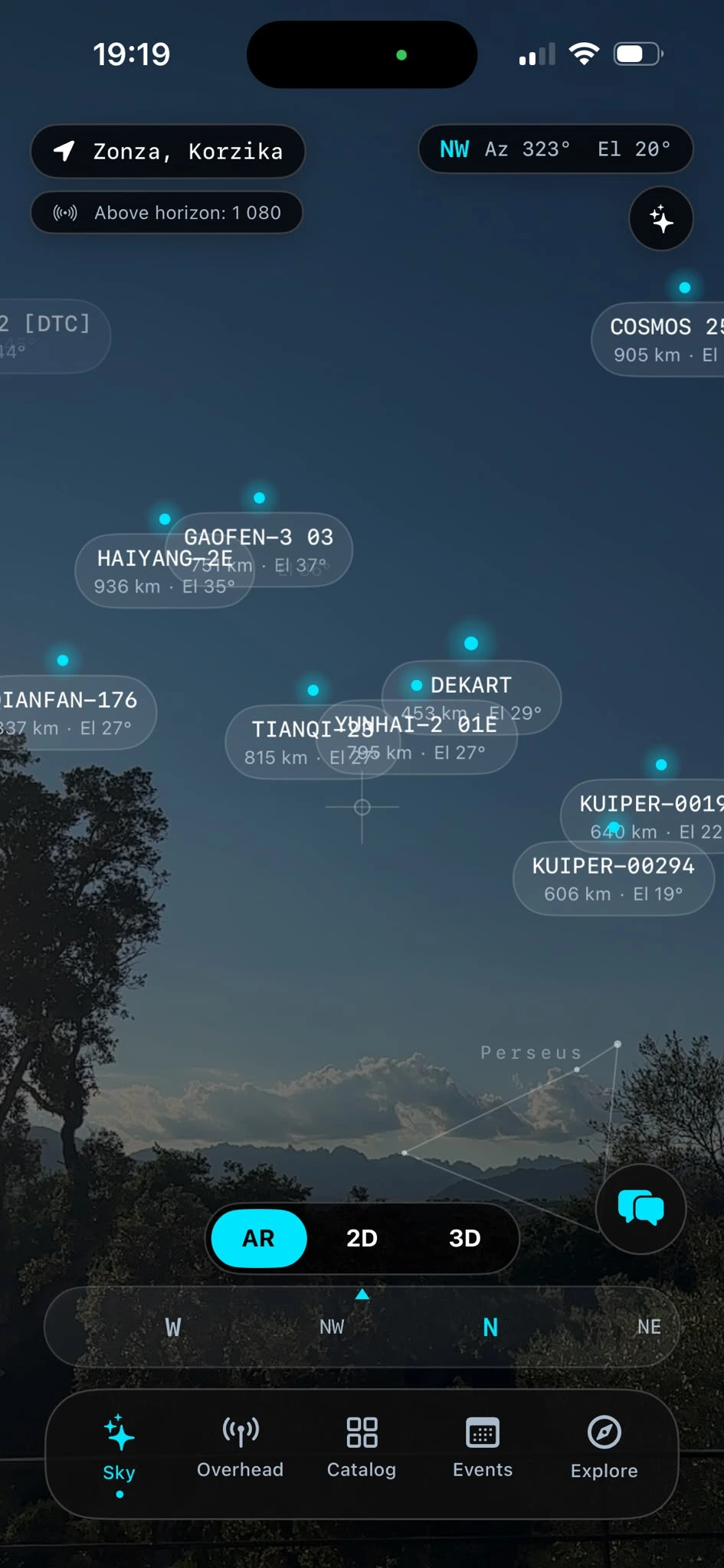
A new app called Orbit uses augmented reality to turn iPhones and iPads into real-time satellite trackers. The app allows users to point their device cameras at the sky to visually pinpoint objects in space. It currently tracks more than 15,000 items, including the ISS, planets, constellations, and orbital debris.
CommentsReflecting on the 1984 book Digital Deli, readers discussed the extreme hardware constraints of early personal computing, noting how one contributor hand-coded the bestselling Apple Writer word processor using just 8KB of memory. The discussion contrasted these tight historical limitations with modern software bloat and today's massive GPU memory requirements. Participants also observed a cyclical trend in the industry, suggesting that modern AI tools are ushering in a new era of independent cottage programmers reminiscent of the early PC days.
Comments
Amber is a new programming language designed to compile modern syntax directly into safe and readable Bash, Ksh, and Zsh shell scripts. It provides developers with a robust alternative to traditional shell scripting for automating system tasks. By catching errors at compile time, Amber significantly reduces the common pitfalls and debugging headaches associated with complex command-line environments.
Comments
ZeroFS vs. Amazon S3 Files
2026-07-11A recent comparison highlights the architectural differences between ZeroFS and Amazon S3 Files. While Amazon S3 Files routes initial writes through an AWS-managed high-performance tier before exporting to S3, ZeroFS persists its filesystem format directly to object storage. This distinction underscores their different approaches to balancing performance and direct object storage integration.
Comments2026-07-10
The open-source QuadRF is a Raspberry Pi 5-powered phased-array radio that utilizes advanced beamforming to track drones and detect WiFi signals through walls. Functioning as a wireless equivalent to network sniffers like Wireshark, this device highlights the advanced remote surveillance capabilities currently available to both the open-source community and government agencies.
Comments