Software Tech News
2026-04-18

Migrating from DigitalOcean to Hetzner
2026-04-18A complex production infrastructure was successfully migrated from DigitalOcean to Hetzner dedicated servers with zero downtime. The extensive transition seamlessly accommodated 248 GB of MySQL data across 30 databases, 34 Nginx sites, and critical services like GitLab EE and Neo4j while supporting live mobile app traffic.
CommentsState of Kdenlive
2026-04-18In 2025, the Kdenlive open-source video editor focused on steady development by balancing new features with routine bug fixes and user interface polish. The team explicitly prioritized overall system stability and workflow performance over adding excessive new features to prevent feature creep.
Comments

Readers discuss how the high hourly costs of frontier AI agents compare to human software engineers, suggesting that cheaper distilled models and custom ASIC hardware could eventually drive down inference expenses. The conversation also highlights a potential industry shift from time-based project estimates to token-based spending models. Furthermore, commenters emphasize the critical need for better cost-attribution tools to accurately track granular AI agent expenses.
Comments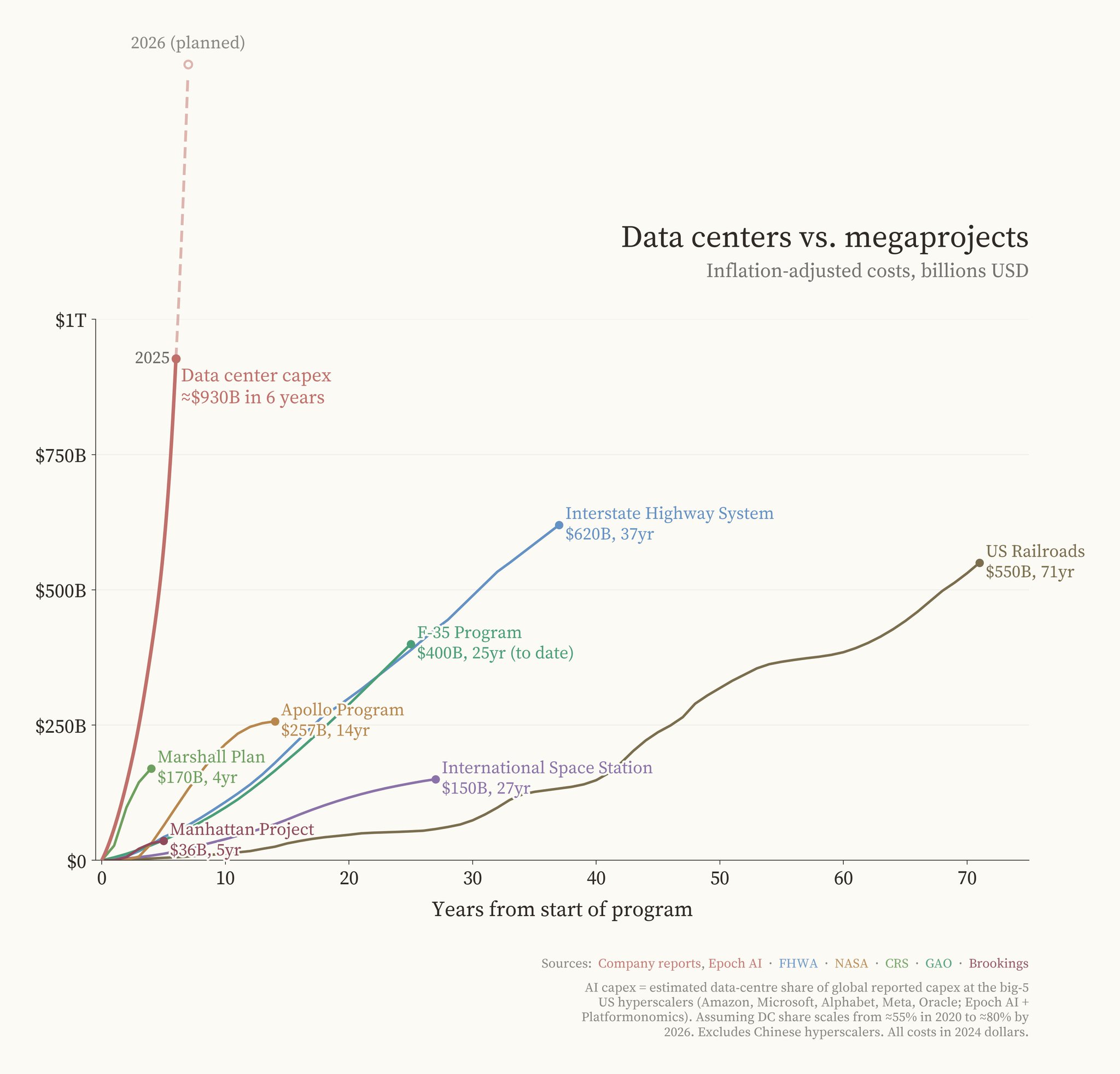
Major tech hyperscalers are investing unprecedented capital into data center and AI infrastructure, with their current spending already surpassing the historical costs of the most famous US megaprojects. This massive financial commitment highlights the intense industry race to dominate the next generation of cloud computing and artificial intelligence.
Comments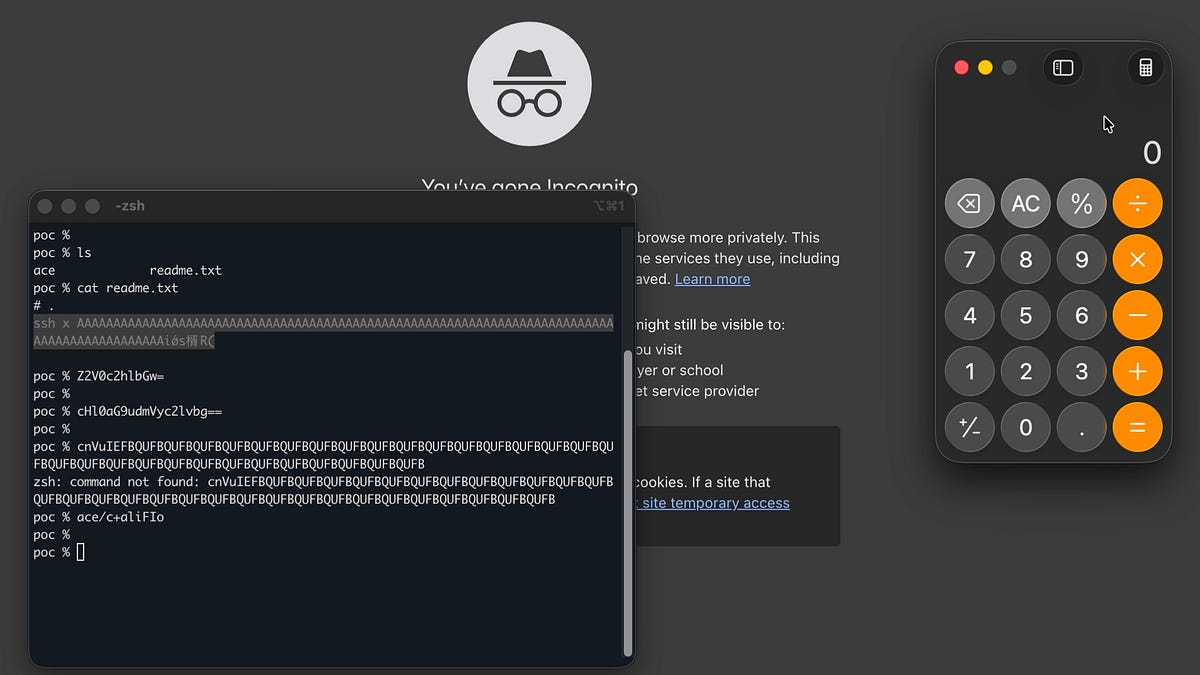
A newly identified vulnerability in the iTerm2 terminal emulator allows attackers to turn a simple "cat readme.txt" command into arbitrary code execution. By exploiting how the application processes terminal output, hackers can weaponize seemingly harmless file reads to run malicious scripts.
Comments
Early users of Claude Design report mixed results, praising the tool for its logical information architecture but criticizing its strict usage limits and tendency to generate generic outputs. The conversation around the AI's homogenization problem quickly evolved into a broader debate about the current state of user interface and user experience design. Many participants lamented that marketing-driven demands for unique brand recognition have ultimately sacrificed the predictable, platform-level consistency found in older software.
CommentsA developer has showcased a novel calculator that utilizes interval and union arithmetic to overcome floating-point precision issues and compute true inverses of mathematical functions. Originally built to test a custom TypeScript library for handling disjoint sets of intervals, the project has sparked community discussions regarding interval math standards, notation, and related graphical applications.
CommentsTowards trust in Emacs
2026-04-18Eshel Yaron has introduced the Emacs Trust Manager to enhance security within the Emacs ecosystem. This new feature allows users to safely manage and verify trusted content directly inside the editor. The addition marks a significant step forward in improving the overall reliability of the platform.
CommentsSlop Cop
2026-04-18Readers discuss a new tool designed to strip verbose AI-generated phrasing from text, noting its value for concise business communication. However, they argue that the true flaw of AI content is a lack of substance rather than specific vocabulary, warning that over-optimizing for brevity can lead to half-baked ideas and fragmented messaging styles. Ultimately, the discussion emphasizes that effective writing requires a careful balance between concise editing and preserving necessary nuance.
CommentsA new tool called MDV acts as a Markdown superset for creating data-rich documents, dashboards, and slides. It enables users to embed data and visualizations directly into their files. Additional features include live preview capabilities, HTML and PDF export options, and a dedicated VS Code extension.
CommentsOptimizing Ruby Path Methods
2026-04-18An Intercom engineer explains how optimizing Ruby path methods improved the continuous integration pipeline for their monolithic application. The optimization effort was one of the author's first major projects after joining the company.
CommentsFuzix OS
2026-04-18FUZIX is a micro-Unix operating system designed for retrocomputing on old and resource-constrained hardware like 8-bit microcontrollers and the Raspberry Pi Pico. Although the project supports standard Unix-style processes and is making steady progress, poor documentation remains a notable issue for hobbyists. The development team is currently working on a portable C compiler to help alleviate the steep learning curve associated with the cross-compilation toolchain.
Comments
A presentation at the Onward! 2025 conference explores the concept of treating Unix executables as native Smalltalk methods to bridge the gap between the operating system and the programming environment. Joel Jakubovic from Charles University details this technical approach and discusses the broader implications for unifying Unix and Smalltalk.
Comments2026-04-17
A newly announced project called Smol Machines has introduced a lightweight, self-contained virtual machine that boasts ultra-fast subsecond coldstart times. This highly portable tool provides developers with an efficient solution for rapidly spinning up isolated computing environments.
CommentsA new macOS utility called PanicLock allows users to instantly disable Touch ID and require a password to unlock their Mac. The tool can be triggered via a single click, a keyboard shortcut, or by simply closing the laptop lid, providing a quick security measure for sensitive situations.
Comments
NIST gives up enriching most CVEs
2026-04-17The US National Institute of Standards and Technology announced a new policy this Wednesday regarding the US National Vulnerability Database. Under this change, the agency will no longer enrich most CVEs with extended analysis. This shift represents a major change in how critical cybersecurity data is processed and distributed across the tech industry.
CommentsCadQuery is an open-source Python library that allows developers to build parametric 3D CAD models entirely through code. This scripting approach replaces traditional graphical interfaces to enable highly automated, customizable, and version-controlled design workflows.
CommentsA simplified model of Fil-C
2026-04-17A recent community discussion highlights Fil-C as an underrated project that brings memory safety to C without requiring a rewrite in Rust. However, critics emphasize that the project currently suffers from data race vulnerabilities due to non-atomic pointer updates and incurs noticeable performance overheads compared to compile-time safe alternatives. Despite these limitations, developers continue to experiment with the language, recently introducing a Bazel template to facilitate hermetic builds and invisible capability system variations.
Comments
Stage is a new AI tool that streamlines the code review process by organizing pull requests into logical chapters. This structured approach allows human reviewers to comprehend code changes much faster, ultimately putting developers back in control of their workflows.
CommentsA new demonstration highlights an integrated workflow combining SPICE circuit simulation, LeCroy oscilloscope control, and Claude Code for automated hardware verification. This toolchain allows developers to simulate electronic designs and leverage AI to verify the results directly against physical oscilloscope measurements.
CommentsA Python Interpreter Written in Python
2026-04-17A new project called Byterun implements a Python interpreter written entirely in Python, sparking community debate over the architectural differences between self-hosting interpreters and compilers. While critics note that circular interpreters can create inefficient runtime chains compared to self-hosted compilers, supporters highlight the project's value for educational experimentation and demystifying language execution. The ensuing discussion also delves into the technical nuances of bootstrapping and the exact definitions of interpreters, JIT compilers, and PyPy's compiled RPython subset.
CommentsIntroducing: ShaderPad
2026-04-17Programmer and designer Riley J. Shaw has introduced ShaderPad, a new project reflecting his commitment to repair and craft in technology. This release aligns with his broader mission to build transparent, remixable tools that promote a sustainable and accessible future.
Comments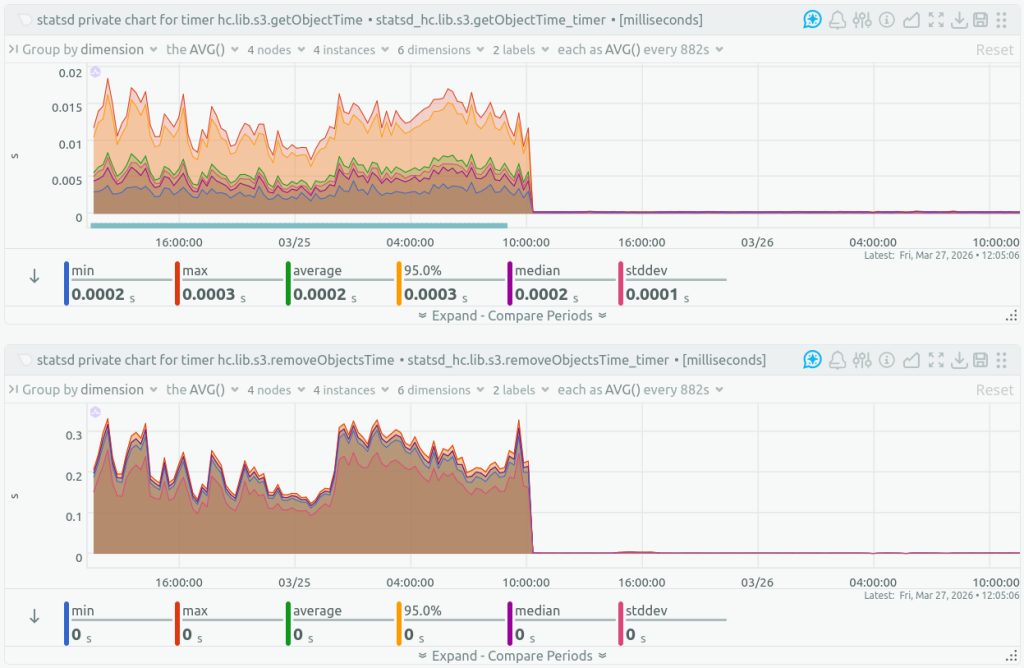
Healthchecks.io has migrated to a self-hosted, S3-compatible object storage system to manage larger request payloads from its monitoring endpoints. The service now routes HTTP POST bodies up to 100kB to this new infrastructure, while continuing to store smaller payloads directly in its PostgreSQL database.
CommentsFIM – Linux framebuffer image viewer
2026-04-17FIM is a Linux framebuffer image viewer that enables users to display images and perform file recovery directly from the terminal without a graphical desktop. Community discussions highlight similar framebuffer tools for media playback, though users note that modern lightweight Wayland setups often provide better hardware performance than traditional framebuffer devices. Despite these performance trade-offs, developers continue to embrace these minimalist environments for their extreme system simplicity and potential security benefits in an AI-driven landscape.
CommentsThe GNU libc atanh is correctly rounded
2026-04-17The GNU C Library has updated its math functions to achieve fully correct rounding for the double-precision atanh operation, moving beyond the traditional 1 ULP accuracy target. This ongoing initiative provides strict numerical guarantees that are essential for designing reliable algorithms in critical fields like aerospace and medical simulations. While these highly accurate implementations perform well on modern CPUs, developers still face significant optimization challenges when adapting them for GPU and NPU architectures.
Comments
Everything we like is a psyop?
2026-04-17This article examines the growing concern that TikTok's algorithmic feed is artificially shaping modern culture and consumer trends. It questions whether popular digital phenomena are the result of organic interest or manipulative growth hacking. Ultimately, the piece urges society to establish clear boundaries between legitimate marketing practices and inauthentic algorithmic manipulation.
Comments
Discourse Is Not Going Closed Source
2026-04-17Following Cal.com's recent decision to close its source code over AI concerns, Discourse has announced it will remain open source. The platform's creators reaffirmed their commitment to transparent development after 13 years of building the software in public.
Comments2026-04-16

Claude Opus 4.7
2026-04-16The latest model, Claude Opus 4.7, is now generally available. This update delivers notable improvements over Opus 4.6, specifically enhancing performance in advanced software engineering and tackling the most difficult tasks.
Comments
Codex for almost everything
2026-04-16Positioning itself as a tool for almost everything, the updated Codex app for macOS and Windows introduces advanced features like computer use, in-app browsing, image generation, memory, and plugins. These comprehensive enhancements are designed to significantly accelerate and streamline developer workflows.
CommentsIPv6 traffic crosses the 50% mark
2026-04-16Despite IPv6 traffic crossing the 50% mark, technical discussions highlight ongoing debates regarding its practical benefits and the internet's persistent reliance on NAT. While widespread adoption is recognized as crucial to combat IPv4 address exhaustion, many practitioners still prefer IPv4 for local network setups due to its cleaner architecture and the complexities of bridging the two protocols.
Comments