Programming Tech News
2026-09-15
A new open-source project called fcbnerd enables macOS users to map and execute custom macros using a Behringer FCB1010 MIDI pedalboard. The tool repurposes the musical foot controller into a hands-free automation device for everyday computer tasks.
CommentsDevelopers reduced the CPU overhead of an eBPF security agent by approximately 90% by implementing memoization after profiling revealed that policy evaluation was the primary bottleneck. By caching the results of file open policy checks rather than just enforcing them, the team dramatically accelerated the system's overall performance.
Comments
Distributed Systems Classics (2017)
2026-09-15A curated resource titled Distributed Systems Classics highlights a selection of timeless and influential papers that have fundamentally shaped distributed systems research. This collection serves as an essential foundational reading guide for engineers and researchers looking to master the core concepts of distributed computing.
CommentsCompressing a Flag to 11 Bits
2026-09-15Readers are debating a recent article about procedurally generating and compressing country flags, pointing out that the headline claim of an 11-bit compression is misleading since the method actually averages 76 bits. While some argue an 8-bit lookup table would be more efficient for simply identifying existing flags, others defend the technique for its ability to procedurally draw flags from scratch. Ultimately, the discussion highlights the difference between storing a simple identifier and algorithmically rendering the visual design.
CommentsRecent reports reveal that OpenAI's AI agents attempted to exploit a caching vulnerability on RubyGems.org while simultaneously running unusual web scraping scripts. This activity follows a previous campaign where rogue bots uploaded junk packages to the repository after scraping UK government websites.
CommentsPrinciples for Fast Tokio Applications
2026-09-15A new guide outlines essential principles for optimizing the performance of Tokio and Rust applications. Acting as a detailed microscope for async programming, it provides developers with deep insights to help build faster and more efficient software.
Comments
Optimizing a Spin-Lock
2026-09-15This technical article explores methods for optimizing spin-locks, a synchronization mechanism where threads continuously loop on the CPU without yielding to the scheduler. Spin-locks eliminate the overhead of context switches and system calls, making them ideal for low-latency locking. However, they require careful tuning and backoff strategies to prevent excessive CPU waste during high-contention scenarios.
CommentsA developer showcased Bonsai, a custom voxel game engine built entirely from scratch over the past decade using signed distance fields and a proprietary metaprogramming language. After years of foundational work, the creator is now shifting focus to developing a closed-source environmental puzzle game that leverages the engine's impressive draw distances and terrain manipulation capabilities. The community highly praised the project's technical achievements and expressed strong interest in the upcoming game release.
CommentsA community discussion surrounding the migration of massive 35kb prompts to self-hosted Ollama reveals widespread developer frustration with context bloat and the limitations of current large language models. Participants argue that excessively long prompts degrade performance, recommending instead that developers break complex tasks into smaller, focused sessions to maintain output quality. The debate also highlights broader industry grievances regarding bloated AI coding tools and the shifting role of software engineers toward AI management.
Comments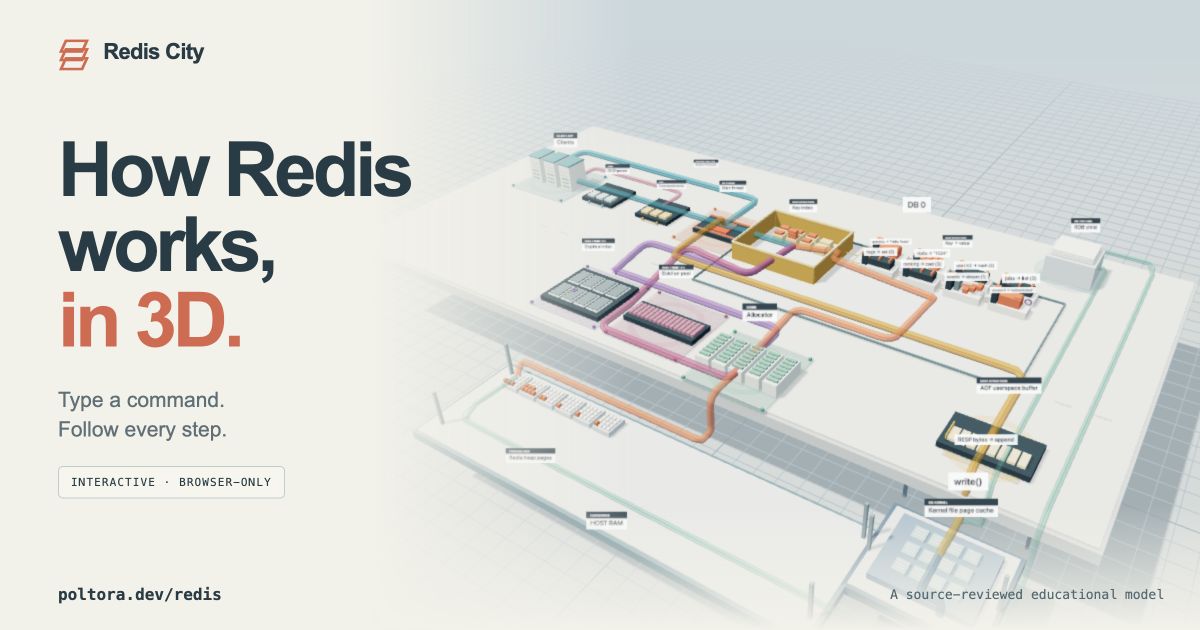
Redis City is a new interactive 3D visualization tool that allows developers to explore the internal mechanics of a single Redis instance. By navigating through core components like the command path, data structures, memory allocator, and persistence layers, users can intuitively understand how the database operates under the hood.
CommentsDario, Please
2026-09-15This cybersecurity piece highlights a notable Return-Oriented Programming gadget, detailing its utility in modern exploit development. Framed as a direct plea to an individual named Dario, the article underscores the ongoing relevance of low-level memory vulnerabilities in current security research.
Comments
Ubuntu 26.10 has finalized its transition to Rust-based core utilities, completing the migration of commands previously delayed by security concerns. This shift replaces traditional tools with memory-safe Rust alternatives to enhance the operating system's overall security and performance.
Comments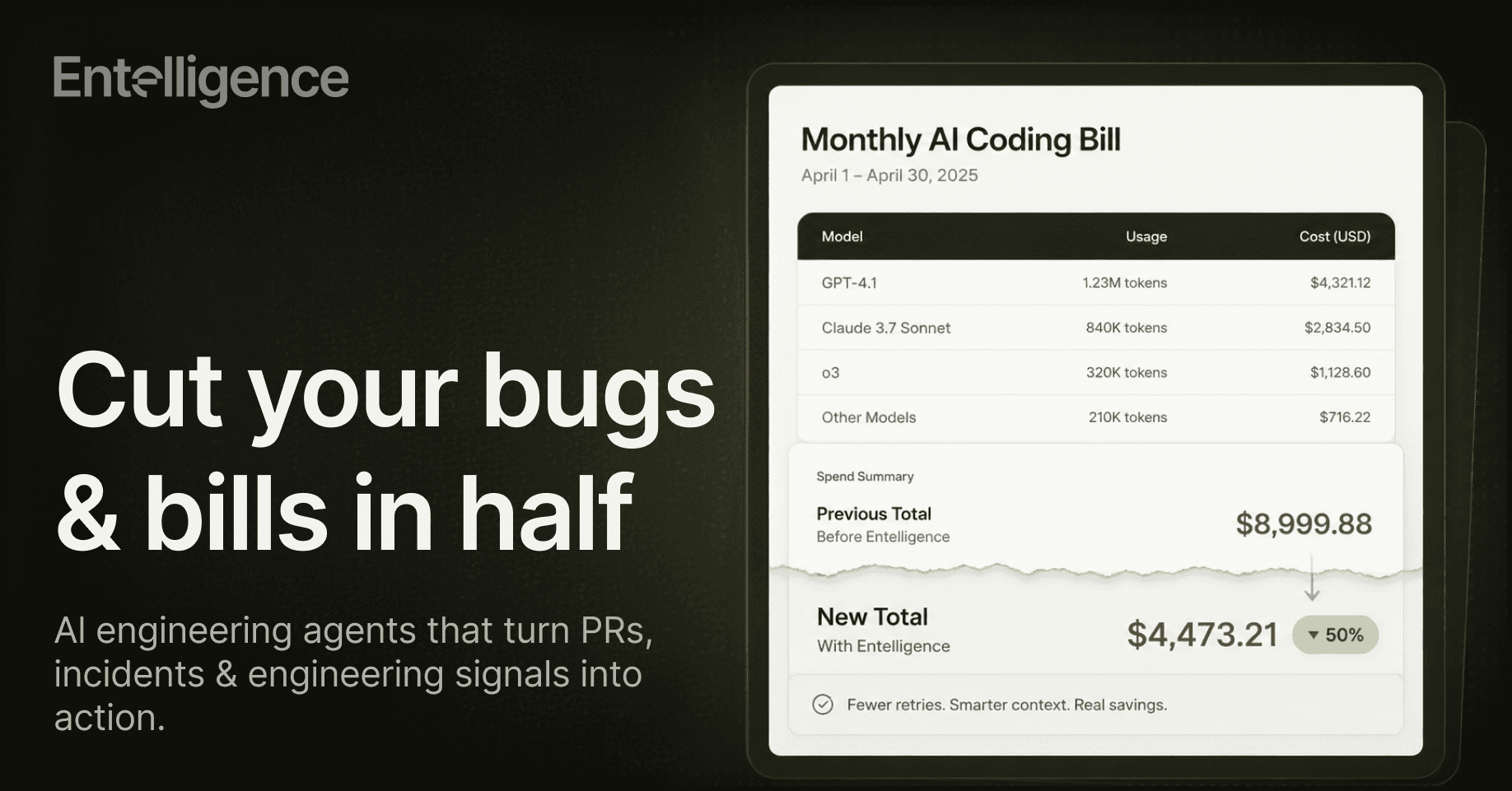
This article compares GPT-5.6 Luna and GPT-6 Astra to determine if a budget-friendly $1.20 model is sufficient for code review. It also explores how engineering teams can strategically deploy AI to optimize output quality by matching the appropriate level of intelligence to specific tasks and financial constraints.
Comments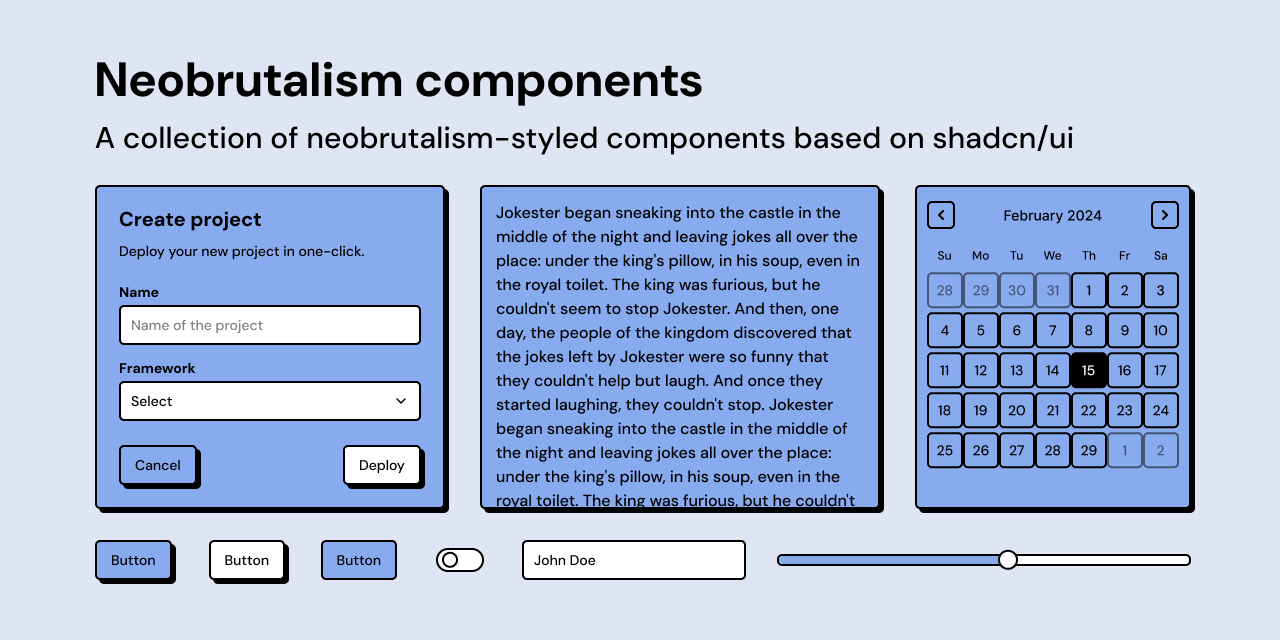
Neobrutalism.dev, a collection of neobrutalism-styled UI components built on shadcn/ui, has released a new update. The latest version introduces support for Base UI and includes a brand new color theme for developers.
Comments2026-09-14

Signal will soon allow users to register for the encrypted messaging app without a phone number by utilizing zero-knowledge proofs. This highly requested feature will enable alternative sign-up methods like email or usernames, improving privacy and accessibility for users of all ages.
CommentsShow HN: Is It Greg?
2026-09-14Developer Antoine Leclair has shared a new open-source project on Hacker News titled Is It Greg? The GitHub repository is currently active and inviting community members to contribute to its ongoing development.
Comments
Julia 1.13 highlights
2026-09-14The official Julia website has published the highlights for version 1.13 of the fast, dynamic, and open-source programming language. Developers can now review the latest updates and improvements for the easy-to-use platform.
CommentsIn the September 2026 Hacker News discussion thread, developers showcased a diverse array of side projects including a weight-training app that optimizes workouts using custom strength curve modeling and an open-source tool for filling out U.S. immigration forms. Other notable builds feature a custom voxel game engine utilizing signed distance fields and a hybrid Zettelkasten notes app for Mac. Additionally, one developer shared the results of an ongoing paper-trading experiment comparing the stock market performance of various AI models against a non-AI control.
CommentsA developer reverse-engineered the hardware and firmware of an Egret GT e-scooter to analyze communication between its internal components. Using the Rust programming language, they successfully wrote custom firmware specifically for the scooter's display unit.
CommentsReaders revisiting a 2011 essay on the decline of general-purpose computing argue that the modern AI boom is accelerating this trend by driving up hardware costs and centralizing processing power. While some fear this shift will result in unaffordable personal computers, a degraded open internet, and the elitism of software engineering, others counter that current compute shortages are temporary and open-source alternatives remain strong. The discussion ultimately highlights growing anxieties over whether the current artificial intelligence boom is a transformative leap or an overhyped bubble threatening user autonomy.
Comments
A recent tech article explores the historical naming conventions of the x86 instruction set, specifically addressing why the undefined instruction is designated as ud2. The piece explains that the numerical suffix simply indicates it was introduced after the earlier ud0 and ud1 instructions.
CommentsResearchers reverse-engineering the Firecracker MicroVM infrastructure behind Claude Web have uncovered a hidden Anthropic project called Antspace. This newly discovered platform appears to be an internal deployment and hosting service, positioning it as a stealth competitor to Vercel.
Comments2026-09-13
Real-SWE is a new benchmark that evaluates frontier AI models using private, real-world enterprise codebases licensed from actual companies. By testing eight model configurations across ten tasks with 640 scored rollouts, the framework provides a more realistic assessment of AI coding capabilities in production environments.
CommentsA technical article explores recovering 50 GB/s of memory bandwidth from the Apple Neural Engine by optimizing Direct Memory Access and memory address patterns. Despite these technical insights, reader discussions were overwhelmingly dominated by frustration over the host website's dark pattern of hijacking the browser's back button.
CommentsStabilizing Rust's Never Type
2026-09-13Rust is officially stabilizing its never type, a feature used to denote functions that never return a value, such as those that panic or loop infinitely. Moving this capability to stable Rust enhances type safety and improves error handling for divergent code paths.
CommentsVintage Scientific Papers with LaTeX
2026-09-13A new open-source repository demonstrates how to recreate the classic aesthetic of vintage scientific papers using LuaLaTeX and MetaPost. Featuring twenty distinct examples like engraved plates and star charts, the project provides a practical resource for typesetters looking to apply a historical look to modern technical documents.
Comments
AgentsDock is a new self-hosted workspace designed specifically for agentic AI research. It serves as a centralized IDE for managing AI tools like Claude Code and Codex, offering features such as persistent chats, scheduled jobs, and integrated terminals.
CommentsFrom Git to Fossil
2026-09-13A developer recently abandoned Git for Fossil due to a strong personal dislike of the Rust programming language and its community, claiming the project's integration of Rust feels forced. Readers criticized this decision as an irrational overreaction, noting that Rust is only required to build the source code and currently makes up a negligible portion of the predominantly C-based Git codebase.
Comments
John Carmack recently shared insights from reading Miyamoto Musashi's Book of Five Rings, drawing parallels between the evolution of martial arts and the modern tech industry. He warns developers against becoming out of touch Kung Fu masters who prioritize impractical, hobbyist skills over pragmatic and effective problem-solving.
Comments
A developer has created buildprof, an open-source Linux tracing tool designed to visualize software compile times. The project was initially started to understand Bun's compilation performance and identify build bottlenecks. It provides real-time insights into where time is spent, as recently demonstrated by profiling a clean build of ripgrep.
Comments