Programming Tech News
2026-09-14

Signal will soon allow users to register for the encrypted messaging app without a phone number by utilizing zero-knowledge proofs. This highly requested feature will enable alternative sign-up methods like email or usernames, improving privacy and accessibility for users of all ages.
CommentsShow HN: Is It Greg?
2026-09-14Developer Antoine Leclair has shared a new open-source project on Hacker News titled Is It Greg? The GitHub repository is currently active and inviting community members to contribute to its ongoing development.
Comments
Julia 1.13 highlights
2026-09-14The official Julia website has published the highlights for version 1.13 of the fast, dynamic, and open-source programming language. Developers can now review the latest updates and improvements for the easy-to-use platform.
CommentsIn the September 2026 Hacker News discussion thread, developers showcased a diverse array of side projects including a weight-training app that optimizes workouts using custom strength curve modeling and an open-source tool for filling out U.S. immigration forms. Other notable builds feature a custom voxel game engine utilizing signed distance fields and a hybrid Zettelkasten notes app for Mac. Additionally, one developer shared the results of an ongoing paper-trading experiment comparing the stock market performance of various AI models against a non-AI control.
CommentsA developer reverse-engineered the hardware and firmware of an Egret GT e-scooter to analyze communication between its internal components. Using the Rust programming language, they successfully wrote custom firmware specifically for the scooter's display unit.
CommentsReaders revisiting a 2011 essay on the decline of general-purpose computing argue that the modern AI boom is accelerating this trend by driving up hardware costs and centralizing processing power. While some fear this shift will result in unaffordable personal computers, a degraded open internet, and the elitism of software engineering, others counter that current compute shortages are temporary and open-source alternatives remain strong. The discussion ultimately highlights growing anxieties over whether the current artificial intelligence boom is a transformative leap or an overhyped bubble threatening user autonomy.
Comments
A recent tech article explores the historical naming conventions of the x86 instruction set, specifically addressing why the undefined instruction is designated as ud2. The piece explains that the numerical suffix simply indicates it was introduced after the earlier ud0 and ud1 instructions.
CommentsResearchers reverse-engineering the Firecracker MicroVM infrastructure behind Claude Web have uncovered a hidden Anthropic project called Antspace. This newly discovered platform appears to be an internal deployment and hosting service, positioning it as a stealth competitor to Vercel.
Comments2026-09-13
Real-SWE is a new benchmark that evaluates frontier AI models using private, real-world enterprise codebases licensed from actual companies. By testing eight model configurations across ten tasks with 640 scored rollouts, the framework provides a more realistic assessment of AI coding capabilities in production environments.
CommentsA technical article explores recovering 50 GB/s of memory bandwidth from the Apple Neural Engine by optimizing Direct Memory Access and memory address patterns. Despite these technical insights, reader discussions were overwhelmingly dominated by frustration over the host website's dark pattern of hijacking the browser's back button.
CommentsStabilizing Rust's Never Type
2026-09-13Rust is officially stabilizing its never type, a feature used to denote functions that never return a value, such as those that panic or loop infinitely. Moving this capability to stable Rust enhances type safety and improves error handling for divergent code paths.
CommentsVintage Scientific Papers with LaTeX
2026-09-13A new open-source repository demonstrates how to recreate the classic aesthetic of vintage scientific papers using LuaLaTeX and MetaPost. Featuring twenty distinct examples like engraved plates and star charts, the project provides a practical resource for typesetters looking to apply a historical look to modern technical documents.
Comments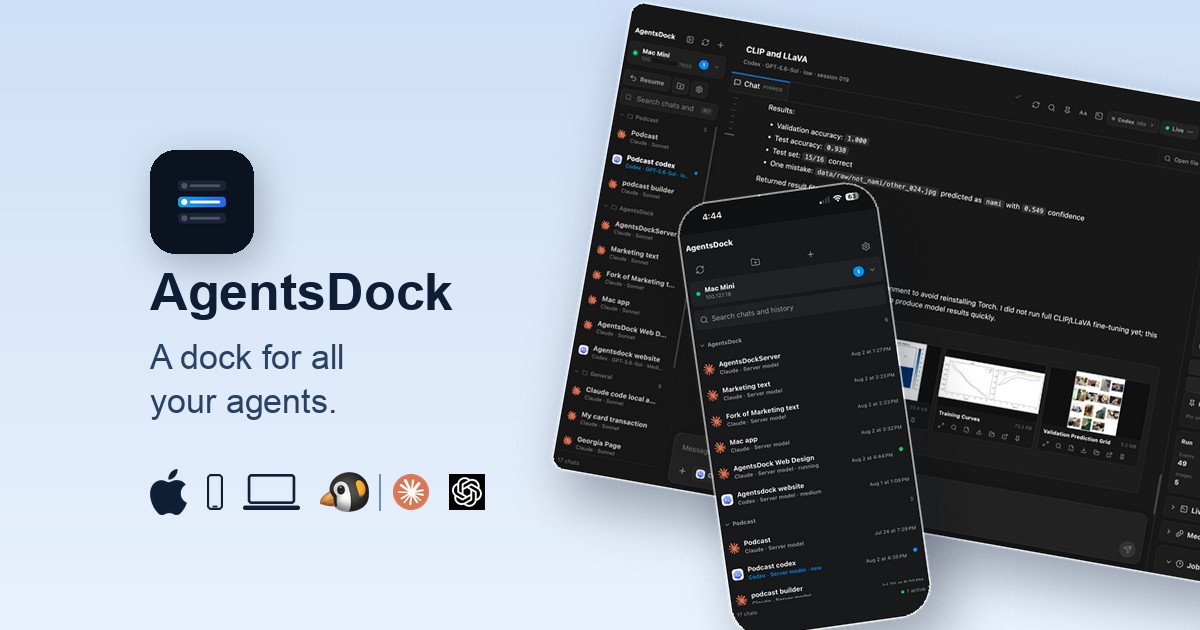
AgentsDock is a new self-hosted workspace designed specifically for agentic AI research. It serves as a centralized IDE for managing AI tools like Claude Code and Codex, offering features such as persistent chats, scheduled jobs, and integrated terminals.
CommentsFrom Git to Fossil
2026-09-13A developer recently abandoned Git for Fossil due to a strong personal dislike of the Rust programming language and its community, claiming the project's integration of Rust feels forced. Readers criticized this decision as an irrational overreaction, noting that Rust is only required to build the source code and currently makes up a negligible portion of the predominantly C-based Git codebase.
Comments
John Carmack recently shared insights from reading Miyamoto Musashi's Book of Five Rings, drawing parallels between the evolution of martial arts and the modern tech industry. He warns developers against becoming out of touch Kung Fu masters who prioritize impractical, hobbyist skills over pragmatic and effective problem-solving.
Comments
A developer has created buildprof, an open-source Linux tracing tool designed to visualize software compile times. The project was initially started to understand Bun's compilation performance and identify build bottlenecks. It provides real-time insights into where time is spent, as recently demonstrated by profiling a clean build of ripgrep.
CommentsColliding the Sum Checksum (2019)
2026-09-13The sum command-line utility, included in BSD and GNU Coreutils, lacks cryptographic security. To demonstrate this vulnerability, a developer created a tool that manipulates file contents to generate checksum collisions. This new utility allows users to easily set the sum hash of any file to an arbitrary, predetermined value.
Comments2026-09-12

Pandas Should Go Extinct
2026-09-12This article provides practical guidance on writing effective code comments, emphasizing the importance of explaining the underlying reasoning behind the code rather than simply restating its function. It offers developers actionable strategies to eliminate redundant documentation and avoid common pitfalls that clutter codebases. Ultimately, the piece aims to help programmers write annotations that genuinely enhance overall code readability and long-term maintainability.
Comments
A new research paper maps the underlying design space of the async/await syntax across modern programming languages. The authors reveal nine independent design decisions that cause seven major runtimes to handle even the simplest asynchronous programs differently. This comprehensive exploration helps developers understand the hidden variations and specific implementation nuances of their preferred runtime environment.
CommentsLitelm: LiteLLM Without the Bloat
2026-09-12A new open-source GitHub project called Litelm has been released as a lightweight, streamlined alternative to the popular LiteLLM library. Created by developer kennethwolters, it provides essential LLM API integration features without the extra bloat of the original tool.
CommentsResolveHQ is a newly launched open-source helpdesk and shared support inbox for small teams that was recently showcased on Hacker News. The application features a fully cloud-native architecture built entirely on the Cloudflare ecosystem, leveraging Workers, D1, R2, and Queues.
CommentsDeveloped by UC Berkeley, Snap is a blocks-based programming language designed to make computer science education engaging for both children and adults. The platform has achieved significant global reach and is currently utilized by hundreds of thousands of programmers worldwide.
CommentsA new open-source project called Graphify C# equips LLM coding agents with compiler-accurate find usages capabilities. By replicating the advanced code navigation of JetBrains Rider, the tool allows AI assistants to better analyze codebases while fully supporting C# 15 syntax.
Comments
An engineer shares five years of experience managing petabyte-scale ClickHouse clusters in production. The retrospective details the practical lessons, successes, and failures encountered while operating the database at a massive scale. It provides a valuable, real-world guide for teams deploying and maintaining ClickHouse in demanding environments.
Comments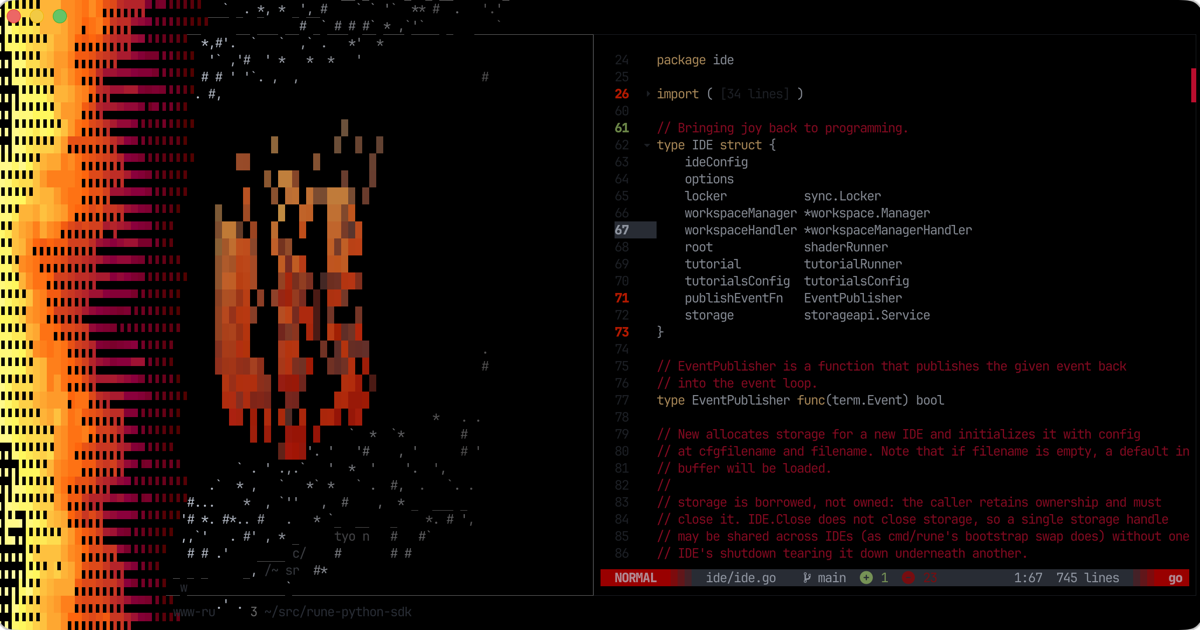
Rune is now open source
2026-09-12Rune, a native keyboard-driven IDE written primarily in Go, has been released as open source under the GPLv3 license. This update allows Go developers to inspect the codebase, make modifications, and actively contribute to the project.
CommentsLogo Programming Language
2026-09-12A community discussion highlights the enduring legacy of the Logo programming language, with readers sharing nostalgic memories of learning foundational coding concepts through its iconic turtle graphics. Educators and professionals emphasize that despite its age, Logo remains a gentle and highly effective tool for teaching computational thinking and complex concepts like recursion to learners of all ages.
Comments
Testing Race Conditions
2026-09-12Many security vulnerabilities stem from race conditions, which occur when multi-threaded executions interleave in specific ways. These bugs only trigger negative effects under precise timing conditions. Consequently, testing for race conditions remains a notoriously difficult challenge for software developers.
Comments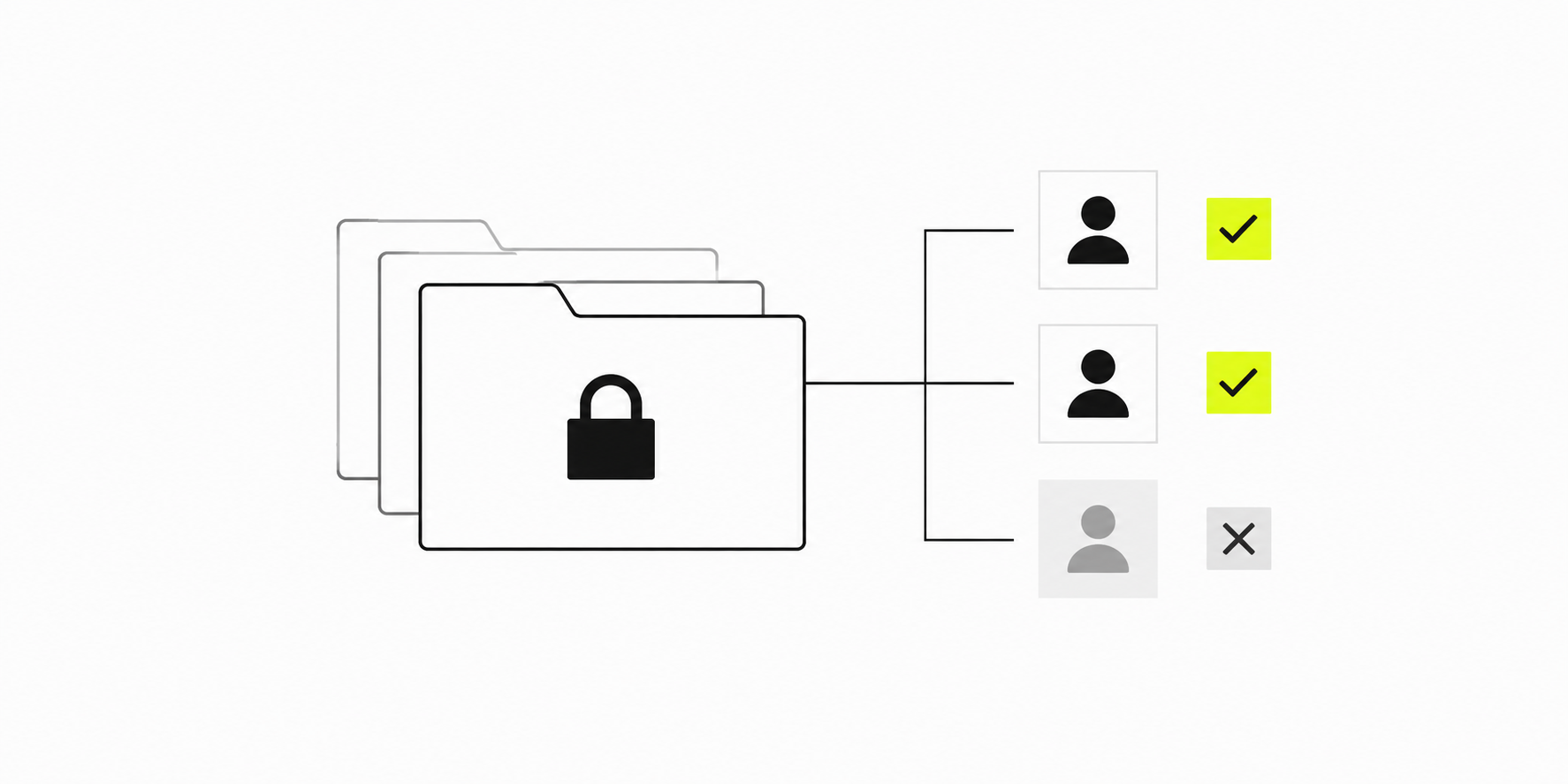
Infisical has rebuilt its complex permissions architecture to support granular folder-level access control without migrating to Google's Zanzibar system. The update allows users to grant and deny access on a per-folder basis. The engineering team notes that while robust permissions are essential, they are rarely a primary selling point and remain a notoriously difficult engineering problem to solve.
CommentsQueryBrew is a system-agnostic tool that optimizes SQL queries by passing them through the Umbra database optimizer and distilling the resulting execution plan back into refined SQL. Although initially mistaken for an AI wrapper by some readers, the developers clarified that the system relies on purpose-built algorithms for millisecond-level optimization and uses machine learning only for testing. The community generally views the project as a practical optimizer-as-a-service, despite some debate over using SQL as the intermediate representation.
Comments
A recent review of the Rust Token Killer reveals a disconnect between the tool's claimed token savings and actual cost benchmarks. While developers report significant token reductions using Claude Code and OpenCode on Fable 5.0 and Terminal-Bench 2.1, independent testing shows these savings do not translate into meaningful financial decreases.
Comments