Programming Tech News
2026-05-30
The true competitive moat in software development lies in deep domain expertise rather than the actual act of writing code. Developers must first understand the specific business context and build an accurate mental model of the problem before they can successfully build and ship a product.
CommentsThe OpenBSD team has introduced Openrsync, a new BSD-licensed implementation of the popular rsync file synchronization utility. The open-source project is currently hosted on GitHub and welcomes community contributions to assist with its ongoing development.
Comments

Pandoc Templates
2026-05-30A comprehensive collection of Pandoc templates simplifies document conversion across PDF, LaTeX, HTML, and Word formats. These customizable layouts streamline the formatting process for writers and developers. Users can easily generate professional reports, articles, and other structured content with minimal effort.
CommentsDeveloper Hawzen has created a uniquely named GitHub repository titled "I found a seashell in the middle of the desert." The quirky open-source project is now live and actively inviting other developers to contribute to its codebase.
CommentsVoxel Space (2017)
2026-05-30Voxel Space is an impressively minimal terrain rendering algorithm introduced in 2017 that generates 3D landscapes in fewer than 20 lines of code. This ultra-compact approach highlights the extreme algorithmic efficiency possible in real-time graphics rendering. It continues to serve as a fascinating technical showcase for developers interested in optimizing visual pipelines and minimizing code complexity.
CommentsZig: Build System Reworked
2026-05-30The release of Zig 0.16.0 introduces a new I/O mechanism praised by early adopters for its clean implementation across single-threaded, multi-threaded, and event-driven architectures. While some argue the performance overhead is negligible for system calls, critics point out that the reliance on dynamic dispatch and pointer indirection can introduce inefficiencies in other scenarios. Upcoming releases are expected to address these dispatch issues to fully realize the language's high-performance potential.
CommentsOpenRouter raises $113M Series B
2026-05-30OpenRouter has raised $113 million in Series B funding for its large language model API aggregation platform. The service offers developers a centralized hub to easily experiment with various AI models while providing crucial billing caps to prevent runaway costs. Additionally, users highlight the platform's transparent caching metrics as a valuable tool for optimizing expenses in context-heavy applications like AI agents.
Comments
An open-source tool called ColorMix has been released for PrusaSlicer, allowing 3D printers to produce models with dozens of colors. This software innovation overcomes traditional hardware limitations by enabling users to blend and generate new shades beyond the physical filaments loaded in the machine.
CommentsZig ELF Linker Improvements Devlog
2026-05-30Community discussions surrounding the Zig ELF linker improvements highlight widespread excitement for the language's potential to serve as a modern C replacement. Developers are optimistic that upcoming linker enhancements and incremental compilation will deliver high performance alongside rapid iteration speeds and an improved developer experience. Participants also favor Zig's manual memory control and lack of garbage collection pauses over alternatives like Go and Rust for systems programming and UI development.
Comments
Snowboard Kids 2 is 100% Decompiled
2026-05-30Snowboard Kids 2 for the Nintendo 64 has officially achieved a 100% matching decompilation, meaning its original source code has been fully and accurately reconstructed. This major milestone paves the way for potential modern ports, fan modifications, and improved preservation of the classic game.
Comments
The Last Technical Interview
2026-05-30The traditional technical interview process is nearing its end as tech companies shift away from standard coding evaluations. This piece discusses the decline of this long-standing hiring practice and explores the emerging alternatives replacing it across the industry.
CommentsA newly published guide breaks down the mathematics of Navier-Stokes fluid simulations using the Godot game engine to make the concepts accessible for developers. Readers have praised the tutorial for its clear explanations, while also sharing technical feedback to improve the implementation. Community discussions highlight specific optimizations for advection schemes and GPU interpolation to enhance both fluid realism and performance.
CommentswolfSSL has released wolfCOSE, a zero-allocation C implementation of the COSE and CBOR protocols designed for fast and portable use in embedded systems. The lightweight stack supports post-quantum cryptography and complies with rigorous industry standards including FIPS 140-3, DO-178, and MISRA C.
CommentsA developer has created a unique observability dashboard that visualizes 500 years of historical events and omens from the Joseon dynasty's Veritable Records. The project playfully applies modern software monitoring concepts to ancient Korean data, celebrating the meticulous historical record-keeping of an era where even kings' secrets were permanently logged. Community members are praising the creative tool for its brilliant intersection of traditional tech dashboards and fascinating historical archiving.
Comments2026-05-29
Following DBOS's argument that Postgres is sufficient for durable execution, a new article posits that SQLite is all you need for durable workflows. The author explains that relying on a trusted embedded database eliminates the need for a separate orchestration tier. This approach significantly simplifies application architecture while maintaining the reliability required for long-running tasks.
Comments
The tech community is debating whether the rapid integration of AI in programming is repeating the lost decade of frontend development caused by an obsession with frameworks. Some worry this shift toward automated coding is actively deskilling software engineers. Others argue that AI simply enables developers to operate at a higher level of abstraction.
Comments
A newly introduced variable-length integer encoding scheme named Bijou64 is surprising developers with its unexpectedly high performance. Although not originally optimized for speed, the algorithm proved to be remarkably fast, making it a highly efficient option for data serialization and storage.
Comments
MCP is dead?
2026-05-29Despite claims that MCP is obsolete, an OpenAI executive defends its relevance, noting that companies are rapidly building MCP servers to grant AI agents access to otherwise unreachable services. Critics argue that the protocol is merely a temporary workaround that unnecessarily duplicates existing human interfaces like public APIs and command-line tools. However, proponents counter that MCP provides essential security advantages by easily sandboxing agents, separating access tokens from requests, and strictly limiting executable commands.
Comments
I am retiring from tech to live offline
2026-05-29An open-source developer is retiring from the technology industry to pursue a completely offline lifestyle. They cited the rapid rise of artificial intelligence as the final catalyst, noting that it ultimately extinguished their passion for open-source software development.
CommentsDeveloper jmaczan has released Tiny-vLLM, a lightweight and high-performance alternative to the popular vLLM framework for large language model inference. Built entirely with C++ and CUDA, the project provides a streamlined tool for engineers looking to build their own optimized inference engines.
Comments
We should be more tired than the model
2026-05-29The increasing ease of AI-assisted coding has left developers less mentally fatigued than the very models they rely on, prompting concerns about intellectual complacency. To counter this trend, the article suggests reintroducing deliberate friction into software development workflows to ensure engineers maintain deep cognitive engagement and prevent skill atrophy.
Comments
On Rendering Diffs
2026-05-29A recent technical deep dive details the creation of the @pierre/diffs package and CodeView component for zero-blanking diff rendering. This new system provides developers with a significantly improved visual experience when reviewing code changes.
Comments
A newly published guide uncovers hidden configuration features for Claude Code that are missing from the official documentation. It explores advanced capabilities like persistent agent memory, command-rewriting hook fields, plain English auto-mode rules, and self-improving dream loops. The guide includes copy-paste ready examples for every feature to ensure easy implementation.
CommentsLet's compile Quake like it's 1997
2026-05-29A retrospective on compiling the classic game Quake using 1990s-era tools like Visual C++ 6 has sparked nostalgic reflections on early integrated development environments. The project prompted readers to debate the historical capabilities of legacy systems like Borland and NeXTSTEP, while also contrasting the enduring appeal of command-line interfaces with modern graphical development tools.
Comments
Orchestrating AI code review at scale
2026-05-29A newly developed CI-native AI code reviewer built with OpenCode is helping engineering teams automate code reviews at scale. By integrating directly into the continuous integration pipeline, the tool enables developers to consistently ship safer and higher-quality software.
Comments2026-05-28
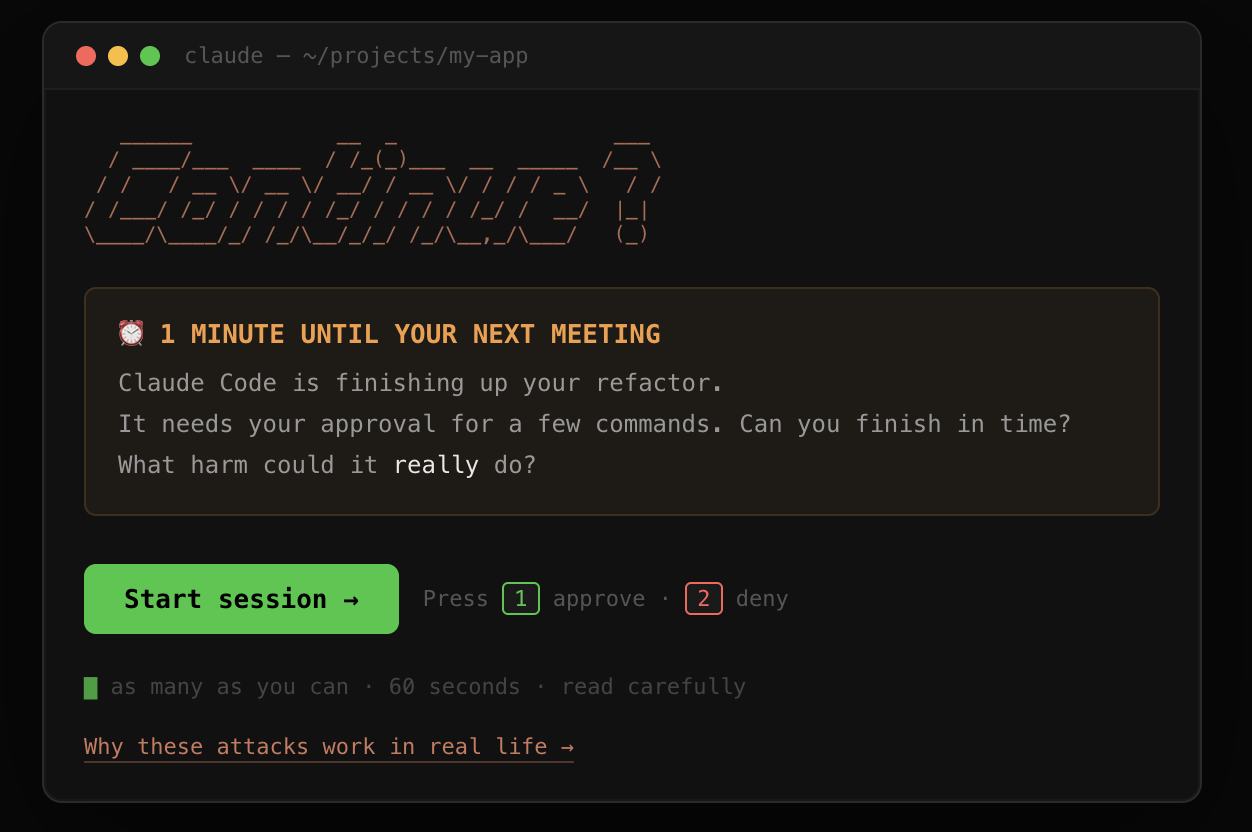
A new 60-second game highlights the growing issue of LLM permission fatigue among developers using AI coding assistants. The interactive experience challenges users to recognize how often they blindly approve automated commands from tools like Claude Code without actually reading the underlying instructions.
CommentsDuring a recent Reddit AMA, lead Raspberry Pi engineers discussed microcontroller development and provided a timeline for the highly anticipated Raspberry Pi 6. By analyzing the historical release cycles of previous generations, the team suggested that the next-generation board will likely launch in 2026 or 2027.
Comments
Building durable workflows on Postgres
2026-05-28This article explores Postgres-backed durable execution systems like DBOS, which embed workflow management directly within the database rather than relying on separate infrastructure. It compares this integrated, database-native approach to external orchestration platforms like Temporal, highlighting the architectural tradeoffs developers must consider when building resilient applications.
Comments
GitHub has banned a security researcher for publishing zero-day exploits targeting the Windows operating system on its platform. The incident escalated when the researcher responded by issuing violent threats promising to inflict physical harm on a specific date.
Comments
Hallucinate is an open-source, massively multiplayer online rave platform designed for virtual DJ sets, with its creator recently releasing the project on GitHub under an MIT license to invite community contributions. Discussions surrounding the launch highlight the significant technical challenges of remote collaborative mixing, particularly regarding the physical limitations of network latency and audio synchronization.
Comments