AI Tech News
2026-09-09

Muse – Meta’s personal AI agent
2026-09-09Meta has introduced Muse, a new personal AI agent designed to assist users with a variety of everyday tasks. The tool aims to streamline daily workflows and boost overall productivity by seamlessly managing routine activities.
CommentsA recent study reveals that large language models develop emergent social biases and stratify fictional demographic groups during sequential hiring tasks by over-exploiting initial random successes rather than exploring alternatives. However, critics argue these biases are largely an artifact of the experimental prompts, which implicitly instruct the models to treat arbitrary demographic labels as meaningful selection criteria.
Comments

AlphaGenome Atlas is a newly introduced high-resolution database that provides a comprehensive map of human DNA. The platform predicts the functional effects of every possible single nucleotide variant within the human genome. This tool offers researchers a powerful new resource for analyzing genetic variations and their biological impacts.
Comments
An Accidental Blackboard
2026-09-09Thoughtworks colleagues share practical insights and lessons learned from integrating AI into their software delivery workflows. The article highlights how teams are organically collaborating and experimenting with these tools, creating an accidental blackboard for continuous innovation and shared knowledge.
CommentsDaVinci Resolve 21.1
2026-09-09DaVinci Resolve 21.1 introduces new agent integration designed to streamline workflows and lower the learning curve for complex tasks like color grading and asset management. Blackmagic Design continues its consumer-friendly licensing model by offering the powerful, cross-platform editing suite for a one-time $295 fee with free lifetime upgrades instead of a subscription. Users appreciate the update's balance of automated assistance and professional creative control, further solidifying Resolve as a strong, cost-effective alternative to subscription-based competitors.
Comments
An AI-generated solution to the Navier-Stokes Millennium Prize Problem has been shared, accompanied by a detailed writeup. The submission also features a formal mathematical proof written in the Lean theorem proving language.
CommentsMathematician Terence Tao warns that artificial intelligence is rapidly depleting the finite supply of highly fruitful open math problems. Although the total number of mathematical questions is theoretically infinite, the vast majority lack the insight necessary to advance the field. This non-renewable mining by AI threatens to make truly valuable mathematical problems scarce.
Comments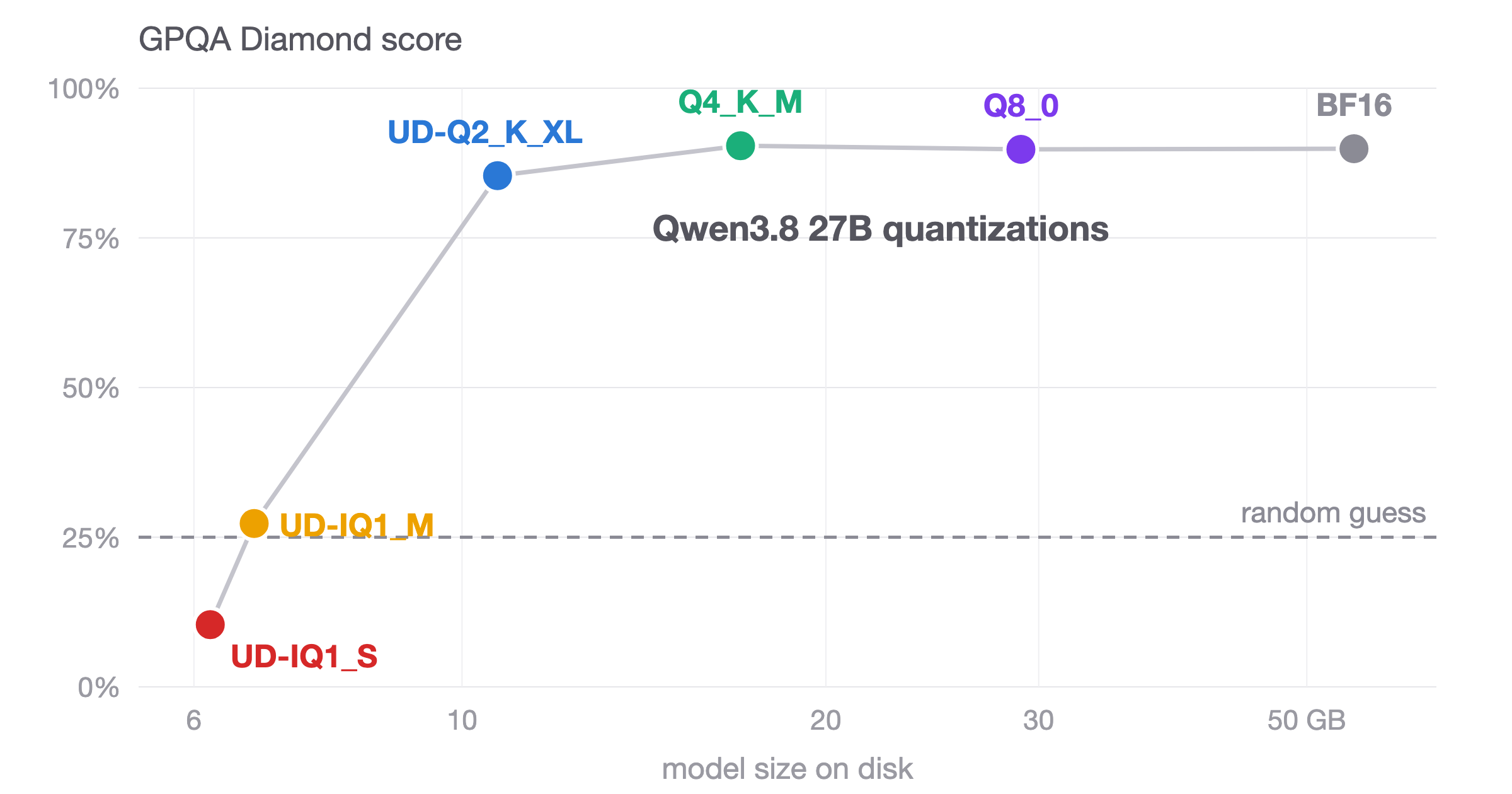
A recent benchmark evaluated Unsloth GGUF quantizations of the Qwen3.8 27B model using llama.cpp across multiple rigorous tests. The results show that the 4-bit version matches full BF16 precision while fitting on a single RTX 4090. However, extreme compression to 1-bit causes the model's performance to completely collapse.
CommentsA new GitHub repository called i-have-adhd introduces a specialized skill for AI coding agents to prevent them from burying the final answer in verbose explanations. The tool is specifically designed to provide an ADHD-friendly output by keeping responses direct and concise. This helps developers quickly locate and use the generated code without getting lost in unnecessary text.
Comments
AI Responsibility – OpenAI and Anthropic
2026-09-09A former pretraining researcher has resigned from Anthropic after spending three years working at both OpenAI and Anthropic. The departing employee accused both AI companies of acting irresponsibly by recklessly racing toward self-improving superintelligence and gambling with human lives.
CommentsDiscussions surrounding an article on the microeconomics of artificial intelligence center on the true nature of large language models, contrasting reductionist views of them as mere statistical autocorrect with the reality of their complex emergent properties. Participants debate whether the static, frozen weights of these models limit their adaptability, despite their ability to generate non-deterministic outputs and perform advanced reasoning. Ultimately, the conversation questions how economists are practically applying these sophisticated AI systems to improve predictive modeling.
CommentsNavier-Stokes – Tristan Buckmaster [pdf]
2026-09-09Mathematician Tristan Buckmaster accuses OpenAI of training its models on his private chat data after the company claimed to independently solve a complex Navier-Stokes math problem using an approach strikingly similar to his own. The dispute escalated when OpenAI offered Buckmaster partial credit for the breakthrough on the condition that he remove his co-author, an Anthropic employee, from the publication. Refusing to drop his colleague, Buckmaster rushed to publish their work independently, raising significant concerns about AI companies potentially exploiting user data for model training.
CommentsDevelopers can now run the massive 2.8 trillion parameter Kimi K3 AI model locally on a MacBook Pro at a speed of one token per second. This achievement is powered by the ARGODRIVE Deltafin project, which streams the model across four SSDs on Apple Silicon hardware.
CommentsShow HN: LLM Attention Visualization
2026-09-09A new tool shared on Hacker News provides an interactive visualization of the attention mechanisms within large language models. This project allows developers and researchers to visually track how models process and weigh input tokens, offering deeper insights into their underlying behavior.
Comments
Mercury 2.5
2026-09-09Mercury 2.5 is the market's most capable diffusion LLM, operating at an impressive 1,107 tokens per second. It delivers a 40% increase in intelligence over Mercury 2, offering performance comparable to cost-optimized frontier models.
Comments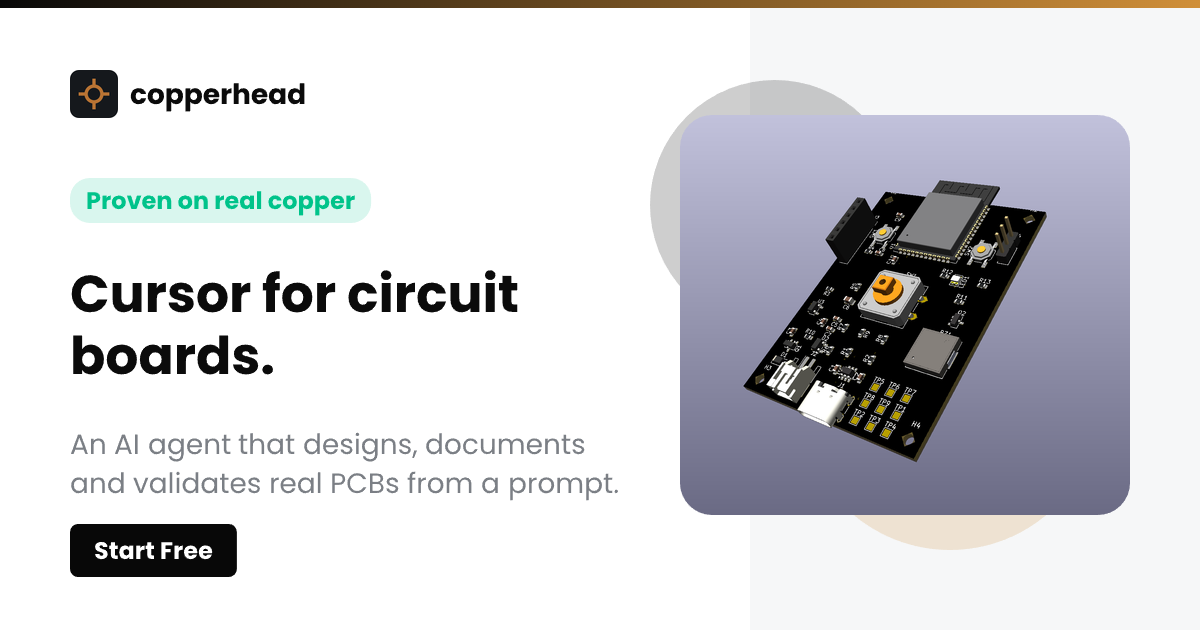
Copperhead is a new open-source AI agent that designs, documents, and validates real printed circuit boards directly from text prompts. Billed as the Cursor for circuit boards, the tool aims to significantly streamline the hardware design process by translating natural language into fully functional PCB layouts.
Comments2026-09-08

WeatherNext 3
2026-09-08WeatherNext 3 has been officially unveiled as the most advanced global weather AI model to date, representing a significant upgrade in artificial intelligence capabilities for worldwide meteorological forecasting. The new system is expected to deliver highly improved predictive accuracy and comprehensive environmental data analysis for users across the globe.
CommentsOrganized by Caltech undergraduates, the Caltech Mathathon is the first hackathon dedicated to applying artificial intelligence to research-level mathematics. Participants receive $20,000 in AI credits and are evaluated on their mathematical intuition and ability to understand proofs, with chat logs required to verify that the core problem-solving work was completed during the event.
CommentsCatching Crumbs from the Table (2000)
2026-09-08Hacker News readers are discussing Ted Chiang's 2000 essay Catching Crumbs from the Table and its implications for the future of human mathematicians in an AI-driven world. Commenters suggest that humans will increasingly act as interpreters, using hermeneutics to explore and explain AI-generated mathematical discoveries to one another. To achieve this effectively, commenters note that academia will need to adapt its core values and preserve mathematical culture.
Comments2026-09-07
Tech community discussions highlight the cognitive risks of using large language models to author written content, emphasizing that the act of writing is crucial for structuring and refining one's own thoughts. While some see potential for AI to expand human-scaffolded outlines, critics warn that outsourcing writing exposes a lack of deep understanding and generates useless corporate documentation. Ultimately, the consensus suggests that delegating long-form writing to AI undermines the critical thinking process required to produce meaningful work.
Comments
A new arXiv paper investigates the universal geometric properties underlying machine learning embeddings to establish a unified mathematical framework. By analyzing how discrete data maps into continuous vector spaces, the researchers uncover fundamental structural patterns that apply across different data modalities. These geometric insights can be harnessed to optimize representation learning and improve the overall efficiency of diverse artificial intelligence models.
CommentsStaatsgeheim has introduced MathKernel, an evidence-aware multi-engine mathematics runtime and MCP server designed to enhance computational accuracy in large language models. By supporting exact, symbolic, formal, and numeric computations with typed MathIR and trust labels, the platform ensures full provenance and highly reliable mathematical reasoning for AI applications.
Comments
A user recently encountered an annoying bug on YouTube and decided to use ChatGPT to investigate the issue. By leveraging the AI chatbot, they were able to successfully troubleshoot the problem and find actionable answers. This highlights the growing utility of generative AI for everyday technical troubleshooting.
Comments
An Alien Mind
2026-09-07Jakub Pachocki warns that the rapid advancement of artificial intelligence is creating an increasingly alien mind that presents significant challenges for keeping the technology aligned with human values. To address these emerging risks, he advocates for the implementation of stronger safety safeguards and enhanced international coordination.
CommentsNetBSD 9.5 released and EOL for NetBSD-9
2026-09-07NetBSD 9.5 has been officially released, marking the end of life for the NetBSD-9 branch and prompting community discussions about maintaining legacy hardware. However, the majority of the reader discussion pivots to a heated debate over the quality, acceptance, and code review standards of AI-generated contributions in open-source projects.
CommentsAsk HN: How do you manage skills files?
2026-09-07In a recent discussion on managing AI agent skill files, developers shared strategies for centralizing and distributing custom prompts to improve coding workflows. While participants debated whether advancing AI models will eventually make general-purpose skills obsolete, there is consensus that context-specific skills remain vital for efficient task execution. Consequently, developers are adopting various organizational methods, including personal repositories, dotfile managers, and shared team directories, to keep their skill collections streamlined and accessible.
CommentsOpenAI is heavily investing in automated AI researchers to accelerate deep learning and tackle alignment challenges amid a fierce industry arms race. Critics question the circular logic of using current, potentially misaligned models to build future safety defenses. Furthermore, skeptics note that the company's recent metrics highlight increased computational usage rather than demonstrating tangible safety impacts or breakthroughs.
CommentsResearch carried out using NetBSD
2026-09-07A recent research initiative by Microsoft highlights the use of NetBSD to support a new processor, underscoring the operating system's extensive hardware portability and permissive licensing. In the accompanying community discussion, developers praise NetBSD's versatility while debating the practicality of using various BSD distributions as secure daily desktop drivers. Participants also explore how AI agents might assist in maintaining and updating these systems in the future.
Comments2026-09-06

GPT-6 Astra on robot arms
2026-09-06OpenAI's GPT-6 Astra significantly outperformed Claude Fable 5.1 in robotic manipulation tests using a pair of YAM arms. Astra achieved a much higher success rate in a block-sorting task while generating 80% fewer output tokens. Both models ultimately tied when tested on a more complex puzzle challenge.
CommentsThe revolt of the reader
2026-09-06In his essay The revolt of the reader, author Bryan critiques the proliferation of AI-generated content and the flawed detection tools policing it. Sparked by an LLM-written guest post from the Rust Foundation, the piece argues that these technologies threaten both the decentralized nature of internet infrastructure and the human provenance of writing.
Comments