AI advances, privacy risks grow, NYC mandates easy cancellations
Whatever became of holography? (2011)
Despite early promises of high-density data storage and immersive 3D experiences, holographic technology has struggled to achieve mainstream consumer adoption. While researchers continue to advance 3D volumetric displays, scaling these innovations for everyday commercial use remains a distant engineering challenge. Meanwhile, the hobbyist holography community is navigating supply chain disruptions and high equipment costs as they transition to alternative photopolymer materials.
CommentsTotal Annihilation, rebuilt for modern computers
Total Annihilation has been rebuilt for modern computers using Nanolathe, an open-source 2.5D real-time strategy engine. Players can experience the original demo directly in their web browser or install the native beta for online multiplayer. The open-source nature of the project also allows the community to explore the underlying code and create new modifications.
CommentsFingerprints are the new cookies
As browser fingerprinting replaces cookies for user tracking, readers note that standard anti-fingerprinting tools often make users more identifiable by standing out from the crowd. While spoofing common browser configurations or restricting hardware access can improve privacy, many argue that banning third-party ads is the only definitive solution. However, completely eliminating fingerprinting remains difficult since it is still necessary to differentiate legitimate users from bots and prevent platform fraud.
CommentsCartographers of North Korea (2019)
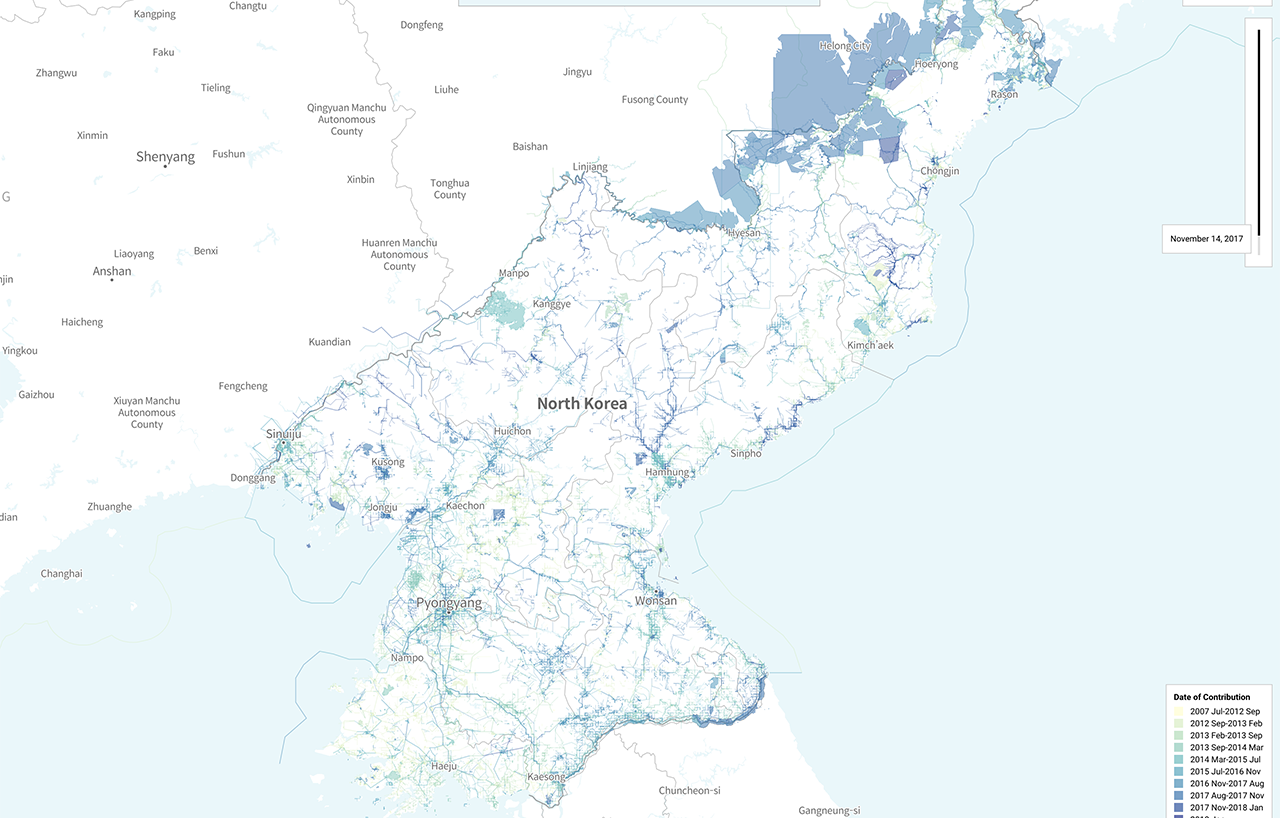
A 2019 analysis of OpenStreetMap data investigates the individuals responsible for mapping North Korea, one of the world's most isolated nations. By examining contributor activity and demographics, the study reveals the surprising origins of the volunteers charting the closed country's geography.
CommentsThe gap in shared understanding of LLM capability is widening
A growing divide among software developers over large language models pits those who embrace rapid, unreviewed AI-generated code against those who insist on strict human oversight. While the speed-focused camp accepts occasional AI mistakes for massive productivity gains, cautious engineers warn that skipping code review leads to hidden bugs, skill atrophy, and severe long-term maintenance issues that could ultimately negate those early benefits.
CommentsTattoos you can turn on and off
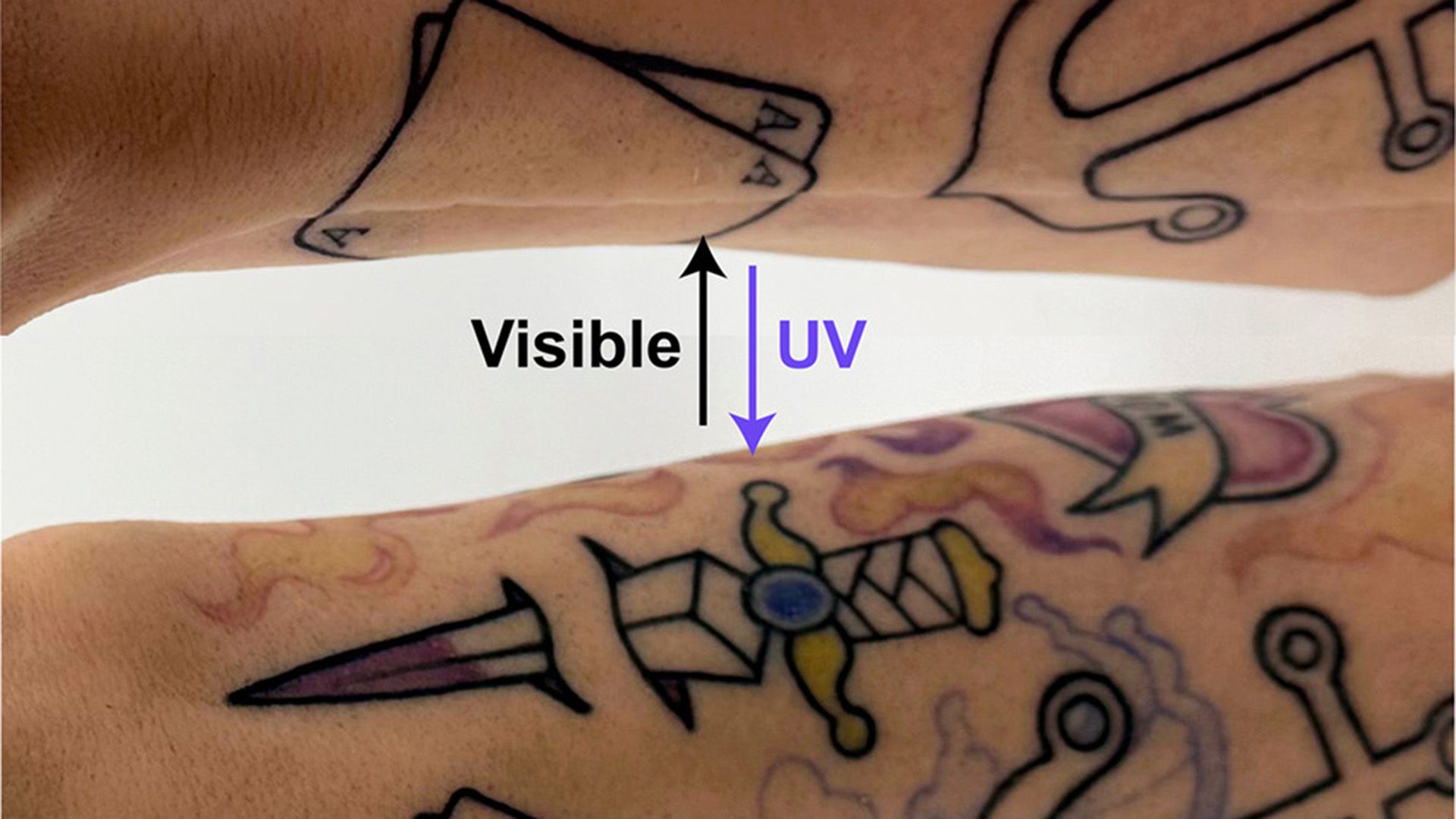
Researchers have developed multicolored tattoo inks that can be toggled on and off using specific wavelengths of light. This innovation allows individuals to easily conceal their body art in various professional or social situations.
CommentsIllustration Beyond Proof

Mathematicians Kate Stange and Edmund Harriss examine the evolving role of visual illustrations in mathematics, arguing that they serve purposes far beyond merely verifying proofs. They highlight how mathematical visualization fosters deeper intuition, enhances the communication of complex ideas, and actively drives the discovery of new concepts.
CommentsGoogle is illegaly cutting forest to build data centers

Google has been issued an order at two data center construction sites after illegally clearing forested land. The enforcement action was taken because the tech giant failed to conduct mandatory environmental impact assessments before beginning development.
CommentsTerence Tao: Math 2.0 [pdf]
Readers are debating mathematician Terence Tao's recent presentation on the future of AI, specifically focusing on his hypothetical example of an AI-discovered cancer drug that functions without a human-understandable mechanism. While some medical professionals argue this example is poorly informed and misrepresents how doctors would actually adopt such treatments, others defend his underlying warnings about AI misalignment and the dangers of blindly delegating complex reasoning to machines.
CommentsVectorized CLZ and CTZ

A developer has created a novel vectorizable polyfill for the CTZ instruction by leveraging floating-point arithmetic tricks originally developed for an FPU emulator. This technique, which also includes a CLZ implementation for completeness, provides a faster alternative to native CPU instructions that can sometimes suffer from high latency.
CommentsLocal Indexing to reduce tool calling and token usage

A new free Mac app uses local indexing to help AI agents locate code more efficiently, significantly reducing tool calls and token usage. The tool enables semantic and exact-word searching across local files, git repositories, and AI coding sessions by leveraging MCP context.
CommentsRecursive self-improvement through collective intelligence

Researchers have introduced MASS, a framework that enables a single language model to achieve recursive self-improvement through collective intelligence. The system autonomously solves tasks, designs workflows, and evaluates results across multi-agent executions to continuously learn and optimize. This approach marks a significant step toward AI systems capable of independently refining their own operational processes.
CommentsPasskeys are a trap

While tech companies promote passkeys as a seamless replacement for traditional passwords, this article warns everyday internet users about the hidden pitfalls of passwordless authentication. The piece explains in simple terms how relying on these systems can lead to frustrating account lockouts, platform restrictions, and unexpected privacy risks. Ultimately, the industry's aggressive push toward passkeys is framed as a deceptive trap rather than a convenient security upgrade.
CommentsCalculus with Julia
A newly published tutorial introduces the Julia programming language through the practical application of calculus. Readers highly recommend the well-paced guide as an excellent starting point for university students learning to code.
CommentsProgrammable pigments: Photochromic nanoparticle inks for rewritable tattoos
Researchers have developed photochromic nanoparticle inks that enable the creation of programmable, rewritable tattoos. By utilizing UV lasers, these dynamic pigments can be precisely applied, potentially allowing for 3D-printed, changeable skin displays. Tech enthusiasts speculate this breakthrough could eventually lead to futuristic applications like implanted, forehead-mounted lie detectors.
CommentsChapter 1 of "Ways of Seeing" by John Berger (1972)
John Berger's 1972 book Ways of Seeing explores how the mass reproduction of art has fundamentally changed the way society encounters visual media by altering its original context and meaning. Drawing on Walter Benjamin's theories, this foundational perspective on mechanical replication remains highly relevant to understanding modern digital content distribution.
CommentsSo, You’d Like To Sell Your Print Issues Of The Onion?

The satirical publication The Onion is actively seeking to purchase physical print copies of its newspaper from readers. The outlet provides a guide to help individuals identify their specific issues and submit them for potential acquisition.
CommentsDoory – Open-Source Canva
Doory is a newly released open-source alternative to the popular graphic design platform Canva. The project is currently hosted on GitHub for public access. Developers are actively encouraged to contribute to the tool's ongoing development and feature expansion.
CommentsNYC's "Click to Cancel" rule is now in effect
New York City's Click to Cancel rule is now in effect, but critics warn that companies like Adobe may circumvent the regulation by enforcing strict one-year contracts with hefty early cancellation fees. Some users suggest exploiting a 14-day subscription change window to bypass these penalties, while others anticipate more businesses will adopt similar long-term commitment strategies. Meanwhile, the broader tech community is discussing open-source alternatives to Adobe's software, highlighting a new Rust-based project called ArtCraft and debating the future of Affinity products under Canva's ownership.
CommentsI guess I'm using WebP now?

After relying on traditional image formats for over two decades, the author has finally adopted WebP for their web projects. This unexpected shift in their workflow has them looking forward to the eventual integration of additional modern image formats.
Comments500B tokens later: Letting AI agents decompile a first-person shooter

A developer recently spent 500 billion AI tokens to decompile and accurately recreate a popular first-person shooter game. The ambitious project aimed to produce a stable, feature-complete version of the title rather than a simple proof of concept. However, the developer was forced to remove the specific game details and related blog posts following corporate intervention.
CommentsThe tilde in your PATH may not be your HOME

A recent technical finding reveals that the tilde character in the PATH environment variable does not always resolve to the user's home directory outside of standard shell contexts. When processed by certain sandboxing utilities, the tilde is treated as a literal string rather than expanding to the actual home path. This discrepancy can trigger unexpected security warnings and highlights the importance of using fully resolved absolute paths in environment configurations.
CommentsSafe SIMD in Rust, even on the inside
A new approach to Rust's SIMD abstractions resolves previous safety concerns for developers writing performance-critical code. It eliminates the need for unsafe blocks by providing robust guarantees for low-level hardware optimizations. This improvement ensures that SIMD operations are now completely safe to use both at the API level and within internal implementations.
CommentsHashiCorp archives the Boundary open source repo
HashiCorp has archived the open-source repository for Boundary, its identity-based access management tool for dynamic infrastructure. This move effectively halts public community development and future updates for the project on GitHub.
CommentsFlowCE: Calculus on your TI-84 Plus CE
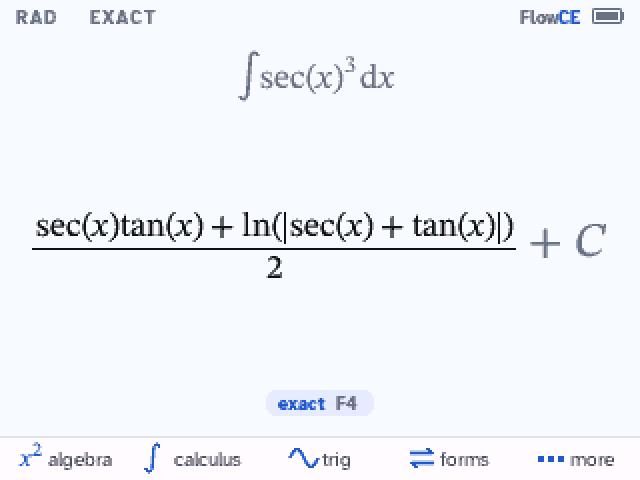
FlowCE is a new free computer algebra system designed specifically for the TI-84 Plus CE calculator to assist students with Calculus 1 and 2 coursework. The application provides natural math input, exact textbook-style answers, graphing capabilities, and customizable light and dark themes.
Commentsapsw: Another Python SQLite Wrapper
APSW, which stands for Another Python SQLite Wrapper, is an open-source project that provides a specialized interface for integrating SQLite databases within Python applications. Developers can explore the codebase and contribute to its ongoing development directly through its GitHub repository.
CommentsShow HN: BetterWispr – Free, open-source dictation for Mac
BetterWispr is a free, open-source dictation tool for Mac that allows users to seamlessly convert speech into clean text across any application using a simple shortcut. The app leverages local speech models to provide app-specific formatting styles and meeting insights without requiring an account.
CommentsHow I reverse engineered a commercial spatial audio effect
A developer reverse engineered a commercial spatial audio processor by measuring its output and extracting stereo impulse responses. The proprietary effect was successfully rebuilt and implemented as a convolution filter for Linux systems.
CommentsA Remote Employee Refused 160 Webcam Photos a Day. Her Employer Fired Her
A remote employee with over a decade of positive reviews was fired for refusing her employer's demand to take 160 webcam photos a day, a move readers suspect is a tactic to force a return to the office or enact soft layoffs. Critics argue the extreme surveillance highlights management's inability to track actual work output and underscores a stark double standard, as executives are typically exempt from such invasive privacy monitoring.
CommentsClickHouse C – Talk to ClickHouse using its native binary protocol
The newly released ClickHouse C is a minimalist, header-only library designed to bring database connectivity to embedded systems. It enables developers in resource-constrained environments to communicate directly with ClickHouse using its native binary protocol.
Comments