Nvidia acquisition, Telegram vulnerability, and AI agent developments
WallHop – 12ft.io is gone, so I built a replacement

Following the shutdown of 12ft.io, a developer has launched WallHop as a direct replacement. This free web-based tool allows users to paste any article link and read the content without paywalls, ads, or clutter. It requires no account registration or browser extensions to function.
CommentsBuild your own decision model
A new technical guide explores how to build System one decision models that infer and respond with calibrated probabilities for every allowed answer. It demonstrates how developers can use Structured Output to constrain everyday language models into generating guaranteed valid JSON in a single pass.
Comments500B Tokens Later: Letting AI Agents Decompile a First-Person Shooter

A developer spent 500 billion AI tokens to decompile and accurately recreate a popular first-person shooter game. Despite achieving a stable and feature-complete version, the project and its related blog posts were removed following legal intervention from the game's corporate publisher.
Comments2D Vehicles
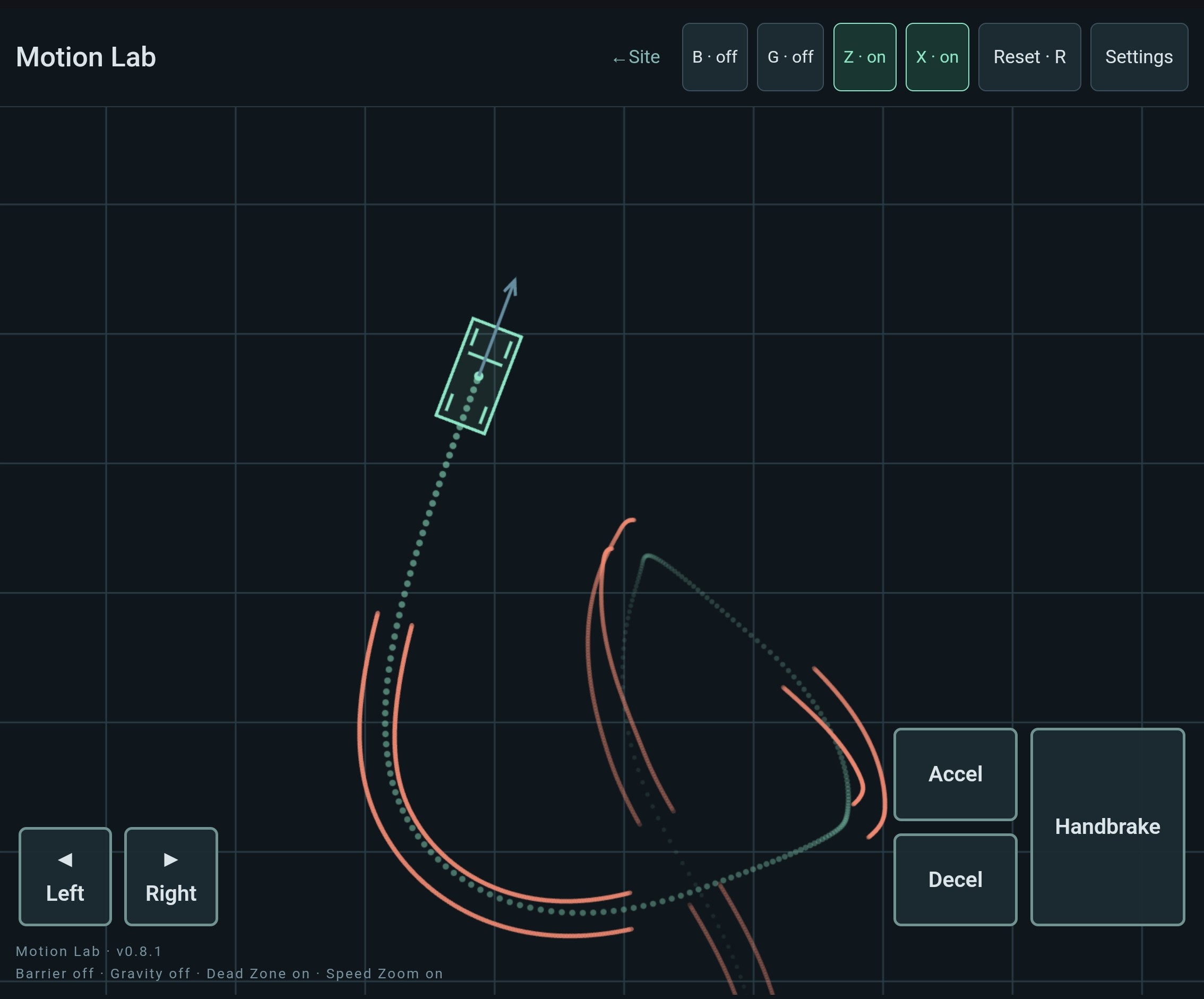
This tech retrospective explores the history of a 2D vehicle physics prototype originally developed in 1996. The article details the project's evolution over the years, culminating in its modern remaster released as Motion Lab.
CommentsA city-building game in which the city would prefer you didn't

Developer Oliver Sin has created a satirical city-building game that tasks players with navigating the frustrating bureaucracy of constructing housing in San Francisco. Instead of traditional gameplay obstacles, players must overcome the city's own red tape and administrative hurdles to succeed.
CommentsPSPi 6 – Raspberry Pi in a PSP
The PSPi Version 6 project enables makers to build a custom handheld gaming console by housing a Raspberry Pi inside a modified PlayStation Portable shell. Enthusiasts and developers can now contribute to the open-source hardware design and its ongoing improvements via the project's official GitHub repository.
CommentsThe Lightbulb Computer

A newly developed lightbulb-shaped computer combines a projector and computer vision to project digital information directly into the physical world. This innovative device represents a novel approach to augmented reality by seamlessly blending computing with our everyday environment.
CommentsVeda: The First Agentic Hobby Operating System
Developers have launched Veda, billed as the first agentic-native hobby operating system designed to integrate AI agents directly into the core computing experience. The open-source project is now live on GitHub, inviting the community to contribute to its ongoing development.
CommentsNix wrote half of my debugger
A developer details their experience using Rewind VM, a deterministic virtual machine that treats Nix builds as pure functions to effortlessly isolate and resolve race conditions. The tool has practically built its own advanced debugger features, rapidly expanding to include thread lanes, stack frames, and enhanced GDB support. Despite its powerful capabilities, the author questions why this deterministic approach to debugging complex build environments remains largely underutilized.
CommentsShow HN: Happy Hangul Day! An RNN for Generating Korean Handwriting Strokes

A developer has released a recurrent neural network designed to generate Korean handwriting strokes in celebration of Hangul Day 2026. The project adapts Alex Graves' architecture and features a newly published dataset compiled from 4,500 lines of smartpen handwriting.
CommentsKnuth reward check

The author reflects on receiving a famous hexadecimal reward check from computer science pioneer Donald Knuth twenty years ago. Knuth traditionally issues these checks to individuals who discover bugs in his foundational programming books or software.
CommentsWhy DuckDB 2.0 is faster

DuckDB 2.0 alpha introduces significant performance upgrades over version 1.5.5, achieving up to a 90x speedup for recursive CTEs, 6x faster VARIANT processing, and improved S3 async I/O. The update explores the specific architectural changes responsible for these gains and provides practical advice on data modeling to help developers fully leverage the enhanced speed.
CommentsFive months treating bugs like patients and coding agents like a medical team

Cockroach Labs developed MOLT Sinai, an AI coding teaching hospital that treats software bugs like patients and manages coding agents as a medical team. After five months of refining this clinical framework, the company successfully shipped IBM Db2 migration support in under two days.
CommentsTalorys – A self-hosted personal AI agent on Cloudflare's free tier
Talorys is a self-hosted personal AI agent that runs entirely on Cloudflare's free tier without collecting any telemetry. The single-user platform provides chat, memory, task management, and scheduled reminders, and can be easily deployed with a single command.
CommentsMxc: Microsoft Execution Containers version 1.0.0

Microsoft has released version 1.0.0 of its Execution Containers to address the security risks posed by AI agents requiring broad system access. Previously, organizations faced a difficult choice between maximizing agent productivity and maintaining strict security controls. This new tool resolves the dilemma by providing a secure, isolated environment for autonomous tasks.
CommentsUnikernels were hard. key word: were

Former MirageOS developer Justin Cormack explains that unikernels are experiencing a resurgence because the historical friction that made them difficult to use has disappeared. With traditional operating systems now viewed as design debt, unikernels offer a compelling and highly secure alternative for modern software deployment.
CommentsRetrofitting language models to operate over bytes

Researchers have introduced byteification, a novel method that retrofits existing subword-based large language models to operate directly on raw byte encoding with minimal extra training. This approach overcomes previous performance limitations, enabling byte-level models to match traditional systems while excelling at the fine-grained character-level reasoning required for complex scientific data like computer code and biological sequences.
CommentsOpenSCAD the Programmers Solid 3D CAD Modeller

OpenSCAD is highly regarded for allowing programmers to create parametric 3D models using plain, version-controllable text, but its code-based workflow makes iterative design and complex operations like filleting frustrating. While it remains an excellent niche tool for highly parametric tasks and AI code generation, users caution against using it for general-purpose modeling and instead recommend interactive, kernel-based alternatives like FreeCAD for broader CAD workflows.
CommentsShow HN: Diffle, a keyboard-centric diff viewer with LSP support
Diffle is a new keyboard-first diff viewer designed to help developers navigate code changes efficiently without relying on a mouse. The tool features Language Server Protocol support for enhanced code intelligence and includes direct GitHub integration for seamless version control workflows.
CommentsGetting old Macromedia Director Games to run on modern Hardware

A tech enthusiast has shared a guide detailing how to run classic Macromedia Director games on modern computer hardware. By successfully bypassing outdated copy-protection mechanisms, the author managed to revive numerous nostalgic childhood titles for contemporary systems.
CommentsGrieving the loss of details

In a personal reflection, an author expresses grief over the loss of details and their shifting perspective on the current state of the tech industry. They shared this journal entry publicly to connect with readers who share similar feelings and experiences.
CommentsRampart: Browser native on-device PII radaction

Rampart is a new open-source project that enables browser-native, on-device redaction of personally identifiable information. It operates entirely locally and is recognized as one of the smallest and most effective personal information filters capable of running in a web browser.
CommentsNvidia in talks to acquire US 'open' model startup Reflection AI

Nvidia is in talks to acquire US open model startup Reflection AI in a move supported by the Trump administration. The potential acquisition aims to strengthen domestic AI development and provide a robust competitor to cheap Chinese models like DeepSeek.
CommentsC for Rust programmers

A new guide explores the unexpected details and nuanced differences Rust developers encounter when learning the C programming language. It highlights key challenges to help programmers transition more smoothly between the two systems languages.
CommentsFood processing influences metabolism and brain activity

Food processing significantly impacts both metabolism and brain activity in healthy adults, according to new research. Even when meals are strictly matched for calories and nutrients, different preparation methods result in distinct metabolic responses and altered activity in the brain's reward system. These findings suggest that the physical structure of food plays a crucial role in human health beyond its basic nutritional content.
CommentsEye of Sauron: Long-Range Hidden Spy Camera Detection (2024)
A recent research paper titled Eye of Sauron introduces a method for detecting long-range hidden spy cameras, though it acknowledges limitations against completely passive surveillance devices. The findings spark broader discussions on the enduring challenges of electromagnetic eavesdropping and side-channel attacks. Ultimately, the conversation illustrates how modern shielded display technologies have made remote signal interception techniques like Van Eck phreaking significantly more difficult than in the past.
CommentsRecent AI models struggled to match a human algorithmic innovation

Early results from the InnovationEval assessment indicate that current AI models are struggling to replicate a recent human algorithmic innovation. The findings highlight a persistent gap in artificial intelligence, demonstrating that these systems cannot yet match human-level algorithmic breakthroughs.
CommentsTelegram Desktop vulnerability allowed any user's file to be stolen
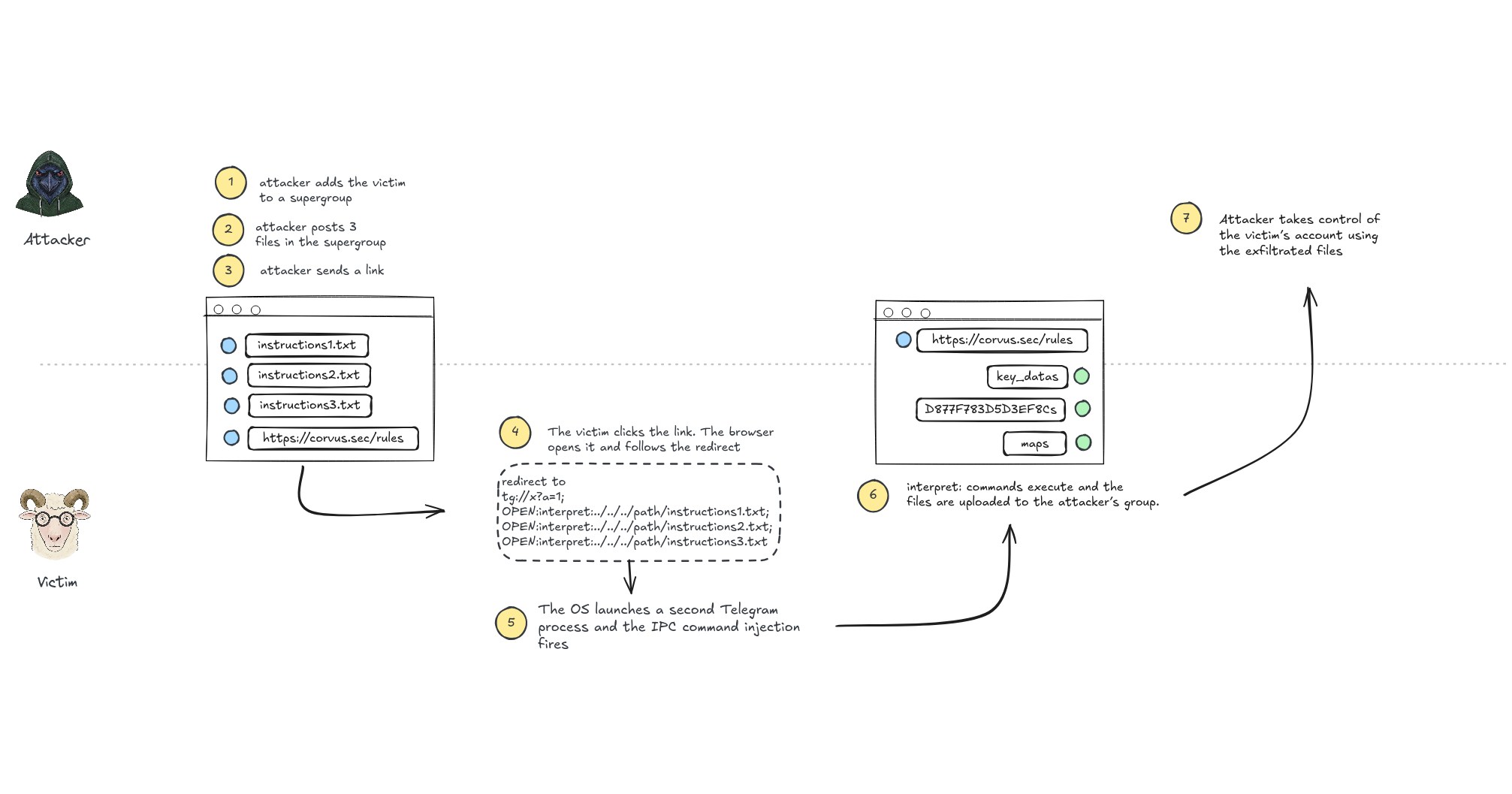
A critical vulnerability in Telegram Desktop allowed attackers to steal arbitrary files from a user's computer by simply clicking a malicious link. The flaw exploited an unescaped separator within the application's single-instance IPC mechanism to read and exfiltrate sensitive data, including active session files.
CommentsChernobyl particles reveal unexpectedly stable nuclear fuel after 40 years

Researchers analyzing tiny radioactive fragments from the 1986 Chernobyl disaster have discovered that the nuclear fuel is far more stable than previously assumed. This unexpected finding regarding the material's degradation over the past four decades could enable scientists to make much more precise assessments of the long-term health risks posed by radioactive contamination.
CommentsI would like the value of my home to rise, while my property taxes fall

The article explores the contradictory economic desires of homeowners, who want their own property values to rise to build wealth while hoping other housing prices fall to afford a better home. Additionally, these individuals expect their property taxes to decrease, highlighting the inherent inconsistencies in how people view personal financial gains versus broader market conditions.
Comments