YC Startup Funding News
SubmitMoney is the lifeblood of early-stage companies, and this section follows how YC startups raise it. Articles cover seed deals, Series A and later rounds, valuation shifts, and the investors backing accelerator graduates, offering a window into early-stage venture funding.
Individual stories range from oversubscribed seed rounds closed days after Demo Day to large growth-stage raises by long-graduated alumni. Alongside deal announcements you will find analysis of valuation trends, notes on which venture firms are most active with accelerator companies, and occasional down-round reporting.
Funding data doubles as a market thermometer, showing which categories investors currently reward and how generous or cautious the climate has become. Founders planning a raise, angels choosing where to write checks, and analysts mapping capital flows all draw on this kind of coverage.
2026-11-02
WTF Ubuntu?
2026-11-02Ubuntu is drawing criticism over its handling of CVE-2026-98432, which is rated High rather than Critical and accompanied by a vague priority explanation, copied NIST text, and no mitigations. Readers say the response reinforces a shift away from Ubuntu toward Debian, citing security-update prompts, Snap packaging, and Wayland changes as growing frustrations.
Comments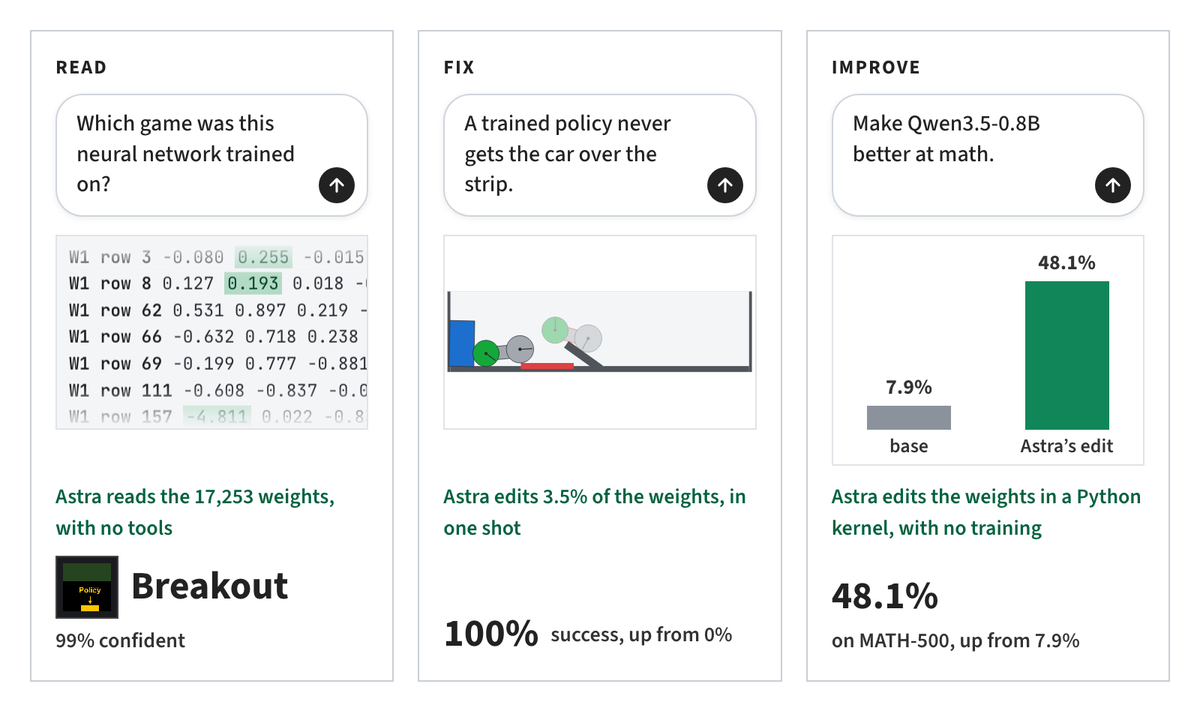
Astra can natively read and write neural network weights to improve Qwen. The work finds frontier LLMs are surprisingly capable at manipulating weights directly, exceeding expectations for humans or conventional algorithms.
Comments
Subvocal is a pair of smart glasses that lets users silently “talk” to their computer, with decoding handled by a companion app/cloud and end-to-end latency usually under 500ms. The team plans key-triggered input rather than a wake word at launch, with later low-power RF sensing to detect speech-like movement, and says it will keep adjustable nose pads for comfort. Readers also discussed accessibility, privacy and trigger tradeoffs, and a possible low-latency voice-change demo.
CommentsThe reported figure that Anthropic’s internal AI use at retail prices exceeds its employee pay is being framed in discussion as a valuation/opportunity-cost measure, not actual cash spending—scarce compute is counted at API list prices rather than what it costs Anthropic. Commenters note the implied ~$300K per employee is based on those list prices and debate whether the spend reflects wasteful usage or justified R&D and productivity investment amid supply constraints and falling costs.
Comments
BYD set a new record by selling more than 300,000 electric vehicles in October. That monthly total exceeded the number of EVs sold in the entire U.S. during the quarter.
Comments
An Apollo economist says artificial intelligence has delivered “zero financial payoff” to most companies outside the tech sector, despite massive investment and widespread hype. The assessment challenges claims that AI is broadly boosting corporate America’s finances.
Comments
Anthropic’s revised S-1 reports $17 billion in third-quarter revenue and $895 billion in commitments, updating its initial prospectus that only included financials through the first half of the year. The filing provides a more complete view of the AI company’s finances.
Comments
This piece explores 125 US baby names that have shifted between boys and girls, including Leslie and Ashley, and shows how each name’s gender split changed from 1936 to 2025. It offers a data-driven look at how naming conventions have crossed gender lines over time.
Comments
Let Me Ch...
2026-11-02A personal essay recounts waking two minutes before the alarm and remembering the entire morning in minute detail, unlike earlier forgetfulness about everyday events. The author suggests this heightened recall stems from having far more free time now.
Comments
A discussion of why Soviet math textbooks are seen as harder than U.S. ones points to a theory that scarce funding for lab equipment and computers in the late 20th-century Soviet Union pushed more emphasis onto theoretical and mathematical training. Limited access to “real” computers meant students often had to build strong abstract problem-solving skills instead of relying on hands-on computing resources. The piece presents this as one explanation among several offered in the thread.
CommentsMy Favourite Laptop
2026-11-02Readers discuss the enduring appeal of Apple Silicon MacBooks, especially M1 models, praising their performance, battery life, comfort, and longevity. The conversation also weighs that against concerns about repairability, cost, and consumerism, with some favoring older ThinkPads or Framework laptops for customization and sustainability.
CommentsIf you love a website, back it up
2026-11-02The piece argues that beloved websites can vanish without warning, so users should back up the pages and content they care about. It opens with a personal example of old webpages that are no longer accessible, making the case for personal web archiving.
Comments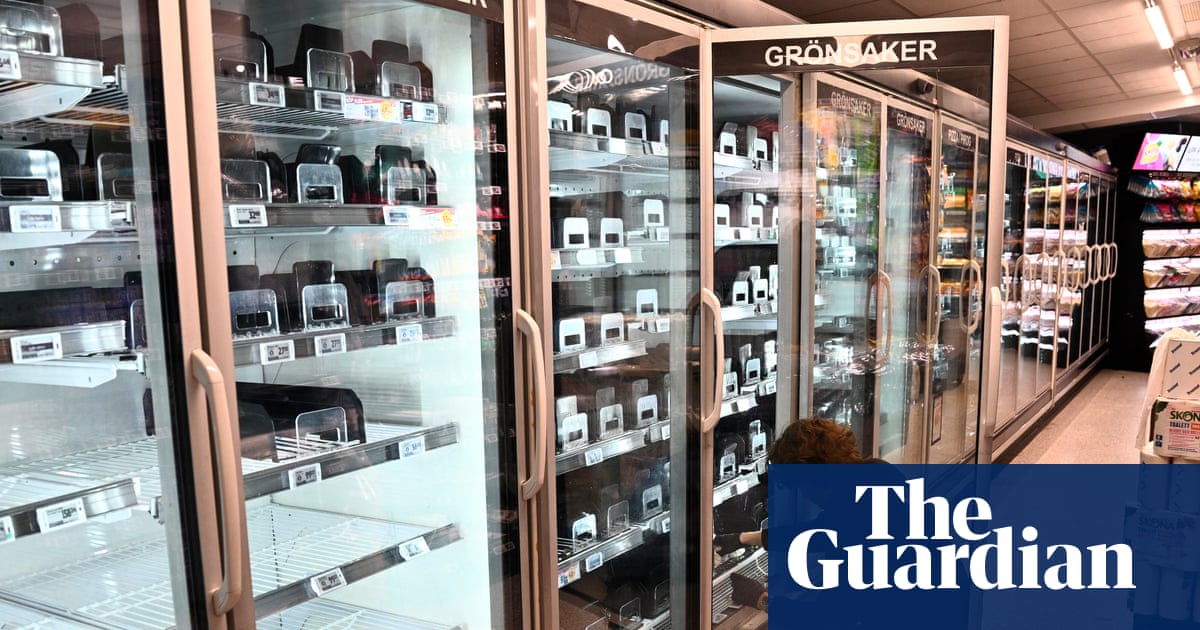
Supermarket freezer systems in Sweden, Belgium and Luxembourg reported overnight temperature rises in a suspected cyber-attack, similar to a recent hack at French stores. The incidents mark a second suspected cyber strike on European supermarket freezers.
Comments
Momentic, a YC W24 startup, has launched Mo, an AI QA engineer that finds bugs in web, iOS, and Android apps and provides reproduction steps. It also turns its test runs into regression tests that run on every pull request.
CommentsA new Show HN project called Wikihack surfaces Wikipedia articles linked in Hacker News discussions, ranked by the number of distinct commenters who shared them. It’s described as “HackerTube, but for Wikipedia articles mentioned on HN.”
Comments
Supermarket freezers in Belgium and Sweden were hit by a suspected cyber-attack that reportedly caused temperatures in several shops to rise as high as 50C. The incident is being treated as a cyber-related disruption, though details on affected stores and the attack method remain limited.
CommentsPostgres 19 is late, and it's AI's fault
2026-11-02PostgreSQL 19 is missing its historically predictable mid-September release window, and the delay is being blamed on AI. The slip breaks a decade-long pattern of major releases arriving no earlier than the middle of September.
CommentsResearchers led by Dirk Witthaut have solved the mystery of brief 60-second spikes in electricity demand, showing they are caused by regular power checks performed by large-scale battery storage systems. Reported in Nature Energy, the findings could help make electricity grids more robust.
Comments
Polyend has released the source code for its Tracker firmware, following a growing trend of synth makers open-sourcing firmware after Erika Synths did the same for the LXR-02. Users are excited about custom firmware and new projects, while Polyend notes that custom firmware risks aren’t covered by warranty but offers paid out-of-warranty repairs. Commenters see the move as part of a broader shift toward open sourcing in the synth landscape, despite concerns about proprietary components and commercial implications.
Comments
Moving our warehouse off DuckDB
2026-11-02The company migrated its data warehouse off DuckDB and DuckLake onto a custom Trino variant and HogLake, its new open table format. The post details what broke at scale and why the move was necessary.
Comments
AI-powered fan wikis are spreading inaccurate or irrelevant information across games culture, often sidelining the fans who traditionally maintain reliable resources. As these LLM-generated wikis gain prominence, publishers are left playing whack-a-mole to correct errors and stem the confusion.
Comments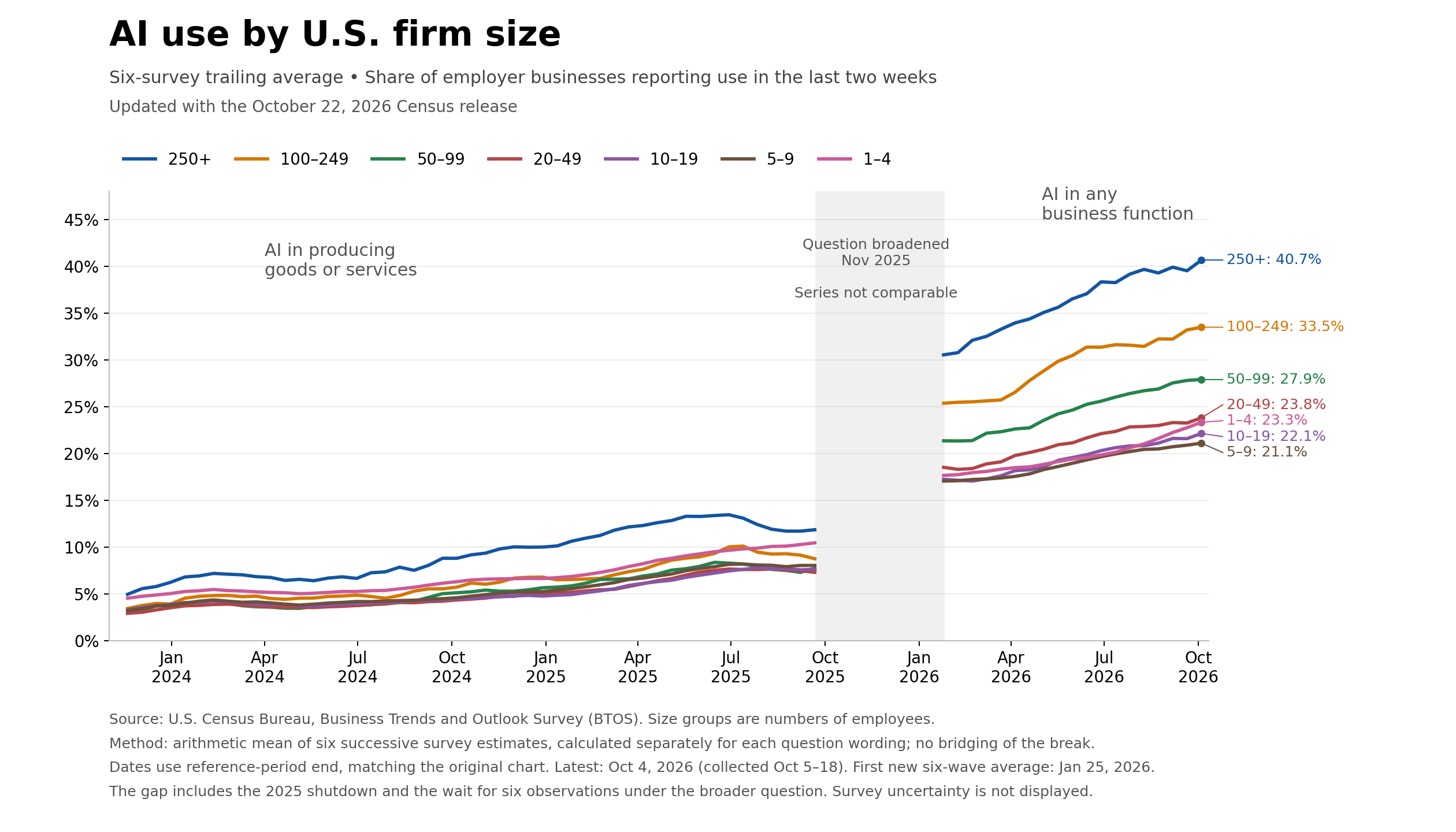
The piece ties U.S. Census Bureau data on AI adoption to the debate over “super intelligence,” recalling an Apollo Global Management chart from September 2025 that showed AI adoption rates trending down at large companies. It suggests that slowing enterprise uptake complicates hype about imminent superintelligent AI.
Comments
The thirteenth installment of F/OSS Comics traces the early days of BSD Unix. Bill Joy takes charge of BSD distribution and debugging, moving from Pascal and ex tapes to a VAX system, then collaborates with Ozalp Babaoglu to bring virtual memory to Unix.
Comments
In a rare interview, BioWare co-founder Greg Zeschuk criticized game executives who “have never made a game” as not understanding the industry, while calling BioWare’s closure sad. He said his greater concern is for the people put out of work.
Comments
A newly posted arXiv paper (2610.37741), “Agentic Backdoors via Pretraining Poisoning,” examines how backdoors could be implanted in AI agent systems by poisoning pretraining data. The title alone signals a focus on attacks that surface only once a model is deployed as an autonomous agent, adding to growing concerns about data-integrity and supply-chain risks in foundation model training.
Comments
NIST has released a cybersecurity guide tailored to self-employed people and solopreneurs. It helps them prioritize and implement selected actions from the NIST Cybersecurity Framework that best fit their businesses.
CommentsA new study in mice suggests that mechanically loading bones may prompt them to release proteins that slow aging and extend lifespan. Researchers applied moderate axial compressive force to mice’s tibias under anesthesia for short sessions twice a week over three months. The findings are early and human translation is unclear, but discussion points to weight-bearing “pushing” exercises like squats and leg presses as closer analogs than running.
CommentsNever Complain, Never Explain
2026-11-02The discussion frames “never complain, never explain” as a PR strategy of offering minimal official comment and carrying on amid allegations, letting media attention eventually move on. Commenters see it as effective for confident individuals or organizations seeking to avoid drama, but note limits for governments and institutions like the royal family and call it a cynical approach that withholds details from the public while stakeholders may still get them.
Comments
A new collection mines computer magazines from 1984 to 2004 for fourteen glimpses of how the digital future was imagined, including online parties, pet robots, and dinner waiting. It offers a nostalgic look at the era’s optimistic and sometimes quirky visions of how computers would change daily life.
Comments
Trigger.dev says an attacker gained unauthorized access to environment variables for a subset of organizations. The company has blocked the exploit and emailed all impacted account owners with mitigation steps.
Comments