YC SAFE News
SubmitThe Simple Agreement for Future Equity, or SAFE, has become a standard way for early-stage startups to raise money. Here you will find articles about how SAFEs work in practice, changes to common terms, and debates among founders and investors about early-stage fundraising.
Typical stories explain valuation caps, discounts, and dilution in plain language, or report on how market conditions push standard terms up or down. Cautionary tales appear as well, often about founders who stacked too many SAFEs and only discovered the ownership consequences at their priced round.
Fundraising mechanics may sound dry, but they decide who owns how much of a company when the stakes get high. First-time founders, angel investors, and startup lawyers all follow this topic because a single misunderstood clause can be worth millions later on.
2026-11-15
A Show HN project introduces a custom font whose letterforms are based on the design of the Jamaican flag. The font reimagines the flag’s visual elements as an alphabet.
Comments
The corkscrew car jump in The Man with the Golden Gun was performed for real, without models or CGI, and remains one of cinema’s greatest car stunts. It was also the first car stunt to be computer-modeled, with computers used to plan the jump rather than fake it.
Comments

A review of Rust's standard library identified three recurring patterns behind memory safety bugs, showing that unsafe code can still undermine the language's guarantees. Despite these imperfections, the findings reinforce that Rust's safety model remains valuable rather than absolute.
CommentsA new proposal introduces HTTP status code 483, “I’m Not a Freezer,” as a playful server response for requests that mistakenly treat an endpoint like a refrigeration appliance. It continues the long tradition of novelty HTTP status codes such as 418 “I’m a teapot.”
CommentsSemicircle Packing
2026-11-15The author has entered the GPU World short story competition and will post their entry once the winners are announced. The post notes that the competition guidelines shaped the submission, with fuller details deferred until results are released.
Comments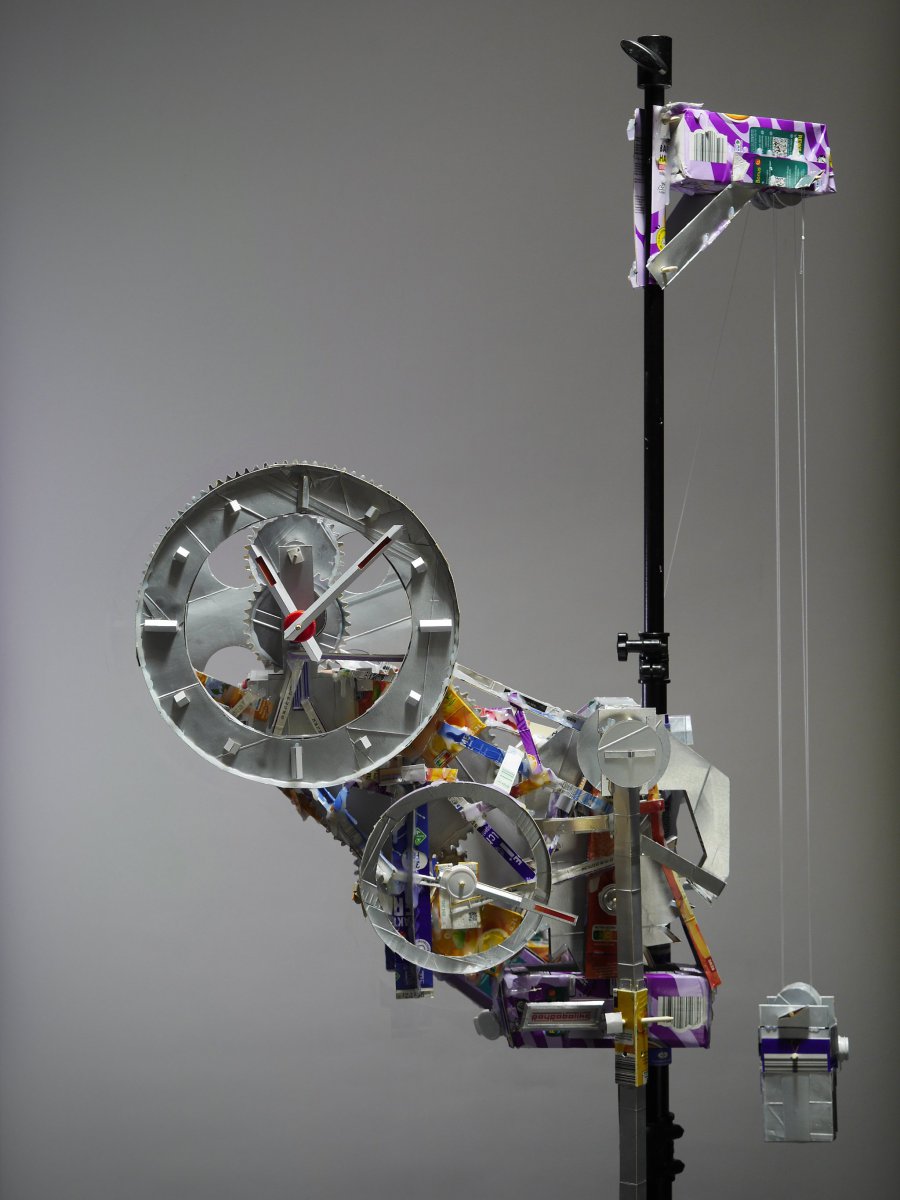
A project called Carton Clock has successfully built a working pendulum clock entirely from empty drink cartons. Described as a purist experiment in “trash bin horology,” it shows how discarded packaging can be turned into a functional timepiece.
Comments
The article explains how to capture and decode infrared signals from a wide range of inexpensive remote controls while keeping the implementation code minimal. It provides background on the ubiquity of IR remotes and outlines a compact approach for reading codes from many different devices.
Comments