YC SAFE News
SubmitThe Simple Agreement for Future Equity, or SAFE, has become a standard way for early-stage startups to raise money. Here you will find articles about how SAFEs work in practice, changes to common terms, and debates among founders and investors about early-stage fundraising.
Typical stories explain valuation caps, discounts, and dilution in plain language, or report on how market conditions push standard terms up or down. Cautionary tales appear as well, often about founders who stacked too many SAFEs and only discovered the ownership consequences at their priced round.
Fundraising mechanics may sound dry, but they decide who owns how much of a company when the stakes get high. First-time founders, angel investors, and startup lawyers all follow this topic because a single misunderstood clause can be worth millions later on.
2026-11-15

A handwritten dismissal notice dating back about 200 years has been found on a roof tile. The notice informs a worker that he is no longer needed and is signed by Thomas Austin.
Comments
Eval Awareness vs. Eval Paranoia
2026-11-15The piece argues that current frontier AI models are not especially “eval aware”—they generally don’t recognize when they’re being tested—and cautions against overestimating that ability. It distinguishes legitimate concern about eval awareness from “eval paranoia,” stressing that the difference matters for interpreting benchmark results and safety claims.
Comments
The piece notes that Turbo Pascal was smaller than many contemporary images and PDFs, highlighting how compact early development tools were. Readers use the comparison to question whether today’s larger software stacks are worth their productivity gains and to speculate about leaner, simpler OSes and programming systems.
CommentsSpeculation that Jensen Huang might return as Nvidia CEO appears unlikely after the US Treasury Secretary said the board should choose an external hire while Nvidia faces scrutiny over export-control violations. Reader discussion warned that a quick reversal under Silicon Valley pressure would raise serious questions about the board’s independence and competence.
Comments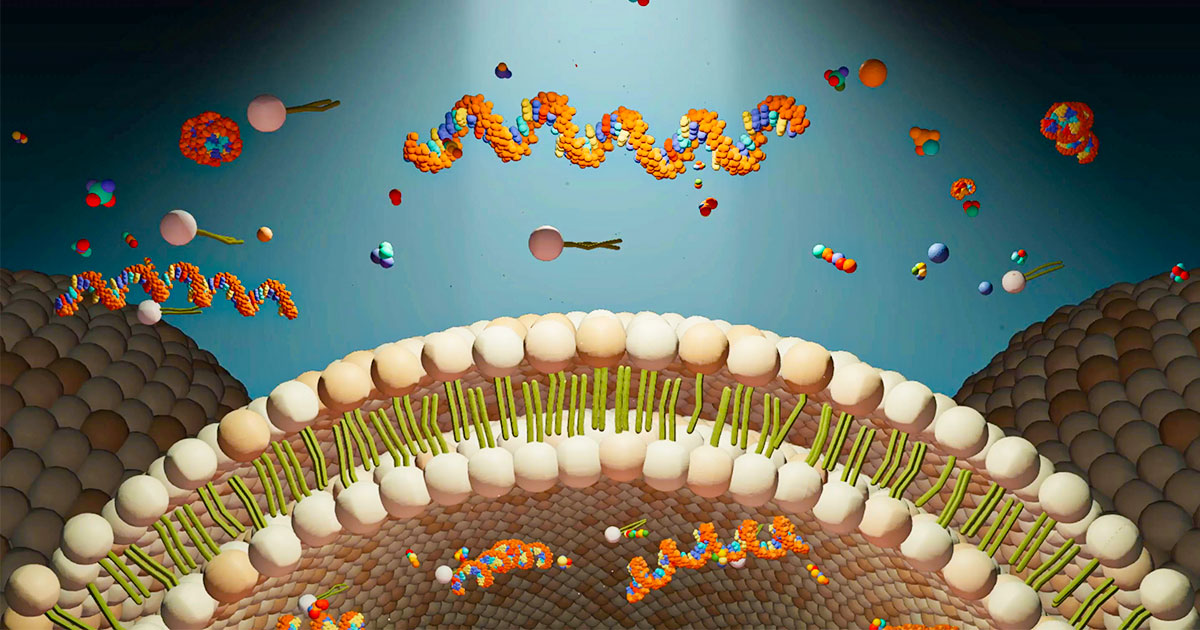
Scientists are revisiting the long-debated question of how chemistry first gave rise to biology, moving beyond arguments over which molecules came first. A new generation of researchers is rethinking the origins and boundaries of life—and what life was, is, and could be.
Comments
A reader critiques the “streetfighting computer scientists” book list as really a programmer’s reading list, noting that aside from Knuth it omits core theoretical computer science such as automata, formal languages, complexity, logic, category theory, and type theory. The commenter questions why streetfighting computer scientists would not need that theory, warning they would fare badly against someone who knows finite-state and pushdown automata.
Comments
Preserving 30 Years of Salon Journalism
2026-11-15Salon, one of the first major publications born on the internet, is ceasing publication after 31 years. Launched in 1995, it helped define digital journalism by blending politics, culture, criticism, and ideas for online readers.
Comments
Aspidistra was a British wartime radio transmitter used for man-in-the-middle attacks. A 1975 BBC radio drama about it has been thoroughly removed from the web, including from the Imperial War Museum and Internet Archive, though a possible copy appears on Radio Echoes.
CommentsOxford Molecular Motors
2026-11-15Oxford Molecular Motors has highlighted research on the structure and function of the bacterial flagellar motor. The work explains how this molecular machine drives bacterial movement and why its architecture matters for understanding motility at the nanoscale.
Comments
An Austrian designer has unveiled a new whiskey glass aimed at solving a long-standing problem for connoisseurs: keeping alcohol from overpowering the drink’s aroma. The design seeks to improve the tasting experience by better balancing smell and strength.
Comments
A court denied a motion to dismiss a DRAM price-fixing case. Judge Noël Wise ruled that buyers plausibly alleged a conspiracy to restrict conventional memory chip supply, distinguishing the Ninth Circuit’s 2022 DRAM II decision.
Comments
An advocacy group is asking an appeals court to require a warrant for automated license plate reader (ALPR) searches. It argues ALPRs are not comparable to observing a passing car because they give law enforcement a “virtual time machine” to review past movements with a click. The case seeks stronger privacy protections for ALPR data.
CommentsA new Show HN project called Gawain scans Python codebases in milliseconds to flag every missing variable type hint. It aims to enforce type hints on all Python variables and is available on GitHub.
CommentsA chemical spill into a drainage ditch at SpaceXAI in Southaven involved propylene glycol, according to reader discussion. Commenters described it as a generally recognized as safe, water-soluble and biodegradable substance that is not bioaccumulative, unlike more toxic ethylene glycol. They characterized it as a relatively low-risk spill compared with worst-case chemicals.
CommentsA NES emulator written in Odin
2026-11-15A developer has built a NES emulator in the Odin programming language, working on it in their spare time since late June 2024. The project is shared on GitHub.
Comments500 Lines or Less A 3D Modeller
2026-11-15A new installment in the 500 Lines or Less series explores building a 3D modeller in under 500 lines of code. It likely walks through the core design and implementation choices behind a compact 3D modeling tool.
Comments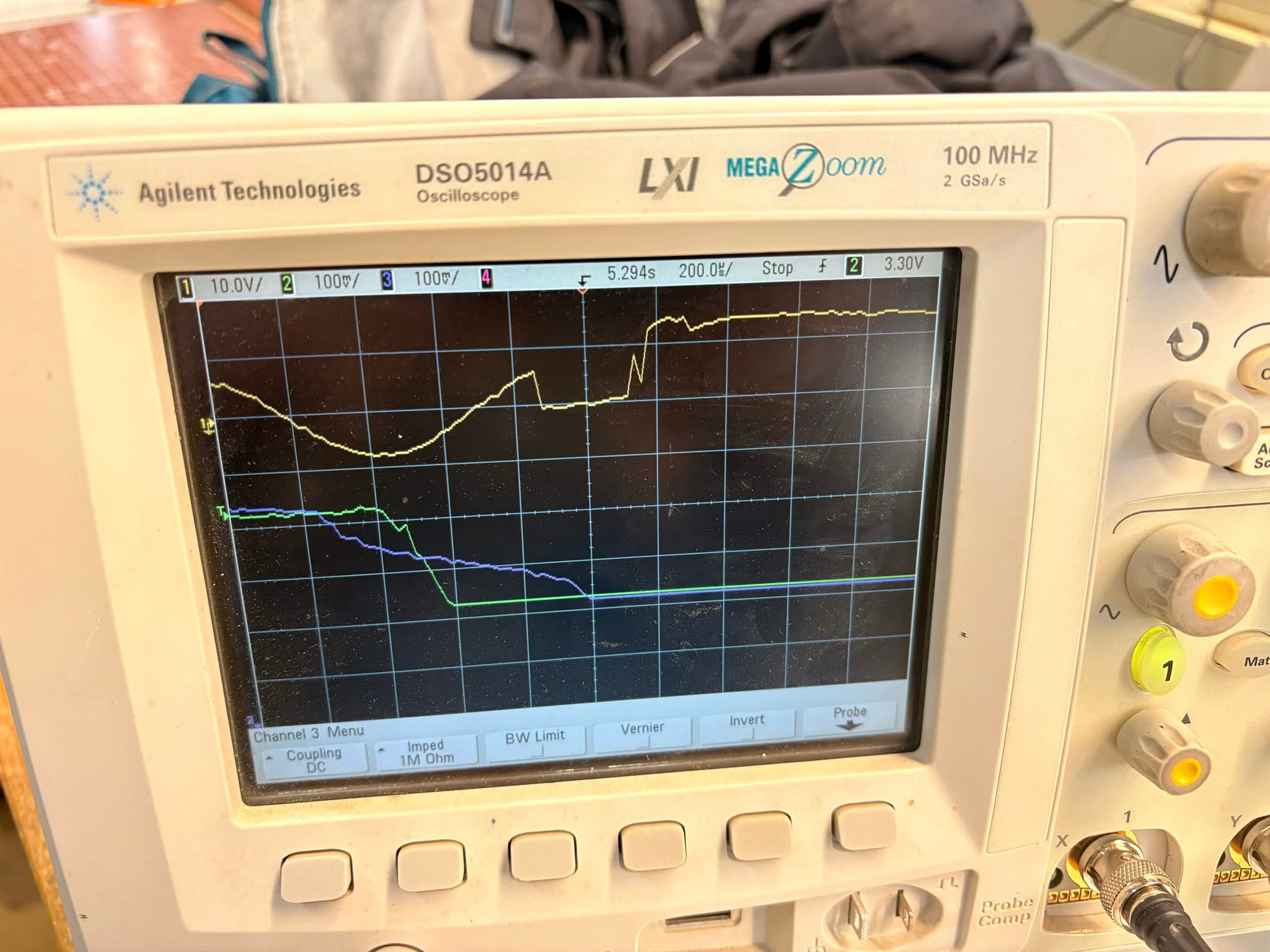
Chasing an audio artifact on power loss
2026-11-15The creator of the SA-01 now has a fully assembled production-candidate prototype in a production-candidate case. They spent about a year investigating an audio-stage problem that occurs when the synth loses power, with more details to come.
Comments
Osint Case Studies
2026-11-15A piece examines OSINT case studies from real cybercrime investigations, showing how public-record emails and aliases are run through live searches. It details the method, distills six lessons from the cases, and outlines the ethics rules for responsible OSINT work.
CommentsThis piece examines disk encryption on NetBSD as a means of achieving data secrecy. It likely outlines the platform’s encryption options and practices for protecting stored information.
Comments
Bullet Dodged
2026-11-15Readers debate whether a blogger’s simple DIY fridge repair—replacing a part instead of calling a professional—deserves a blog post and Hacker News attention, with many calling it ordinary maintenance rather than “hacker” material. Commenters note that basic repair skills have declined amid commercial conditioning, while access to repair professionals remains a modern luxury in many places.
CommentsMy favourite modern NES games
2026-11-15The piece highlights a selection of modern games made for the NES, celebrating new releases that run on Nintendo’s classic 8-bit console. It offers the author’s personal favorites from this contemporary homebrew scene.
Comments
tsoracle is a new distributed oracle for Rust that provides strictly monotonic timestamps and gapless, dense ID sequences. It is Raft-replicated, crash-safe, and embeddable, positioning it as a drop-in solution for MVCC, snapshot isolation, cross-shard ordering, and gapless surrogate keys.
CommentsA paper on keylogger detection and containment is drawing attention for involving Andrew S. Tanenbaum, the computer scientist known for MINIX and his influential textbooks. Readers noted his continued involvement in academic promotions, including having been Werner Vogels’s promoter.
CommentsTurbo-Browser-MCP is a new high-speed Playwright MCP server designed for faster browser automation. It adds multi-tab batching, compact delta DOM snapshots, React/Shadow DOM/iframe form filling, disk file uploads, and submit guards.
CommentsAn open-source HF communications project aimed at remote communities and experimenters has received funding from ARDC. The initiative focuses on accessible high-frequency radio tools for areas and users poorly served by conventional connectivity.
CommentsThe Atheist Bible
2026-11-15The Atheist Bible is described in reader discussion as a massive Creative Commons-licensed monograph by Fabian M. Suchanek, with more than 700 pages, 300 illustrations, 500 inspirational quotes, and thousands of references and cross-references. Commenters note that it defines atheism, agnosticism, religion, and the supernatural and includes the Dawkins Scale, while questioning whether one “atheist perspective” can cover figures as varied as Dawkins, Russell, Mao, and Mussolini. The excerpt also uses the Persephone myth to illustrate explanations of natural phenomena that are obviously false but difficult to disprove.
Comments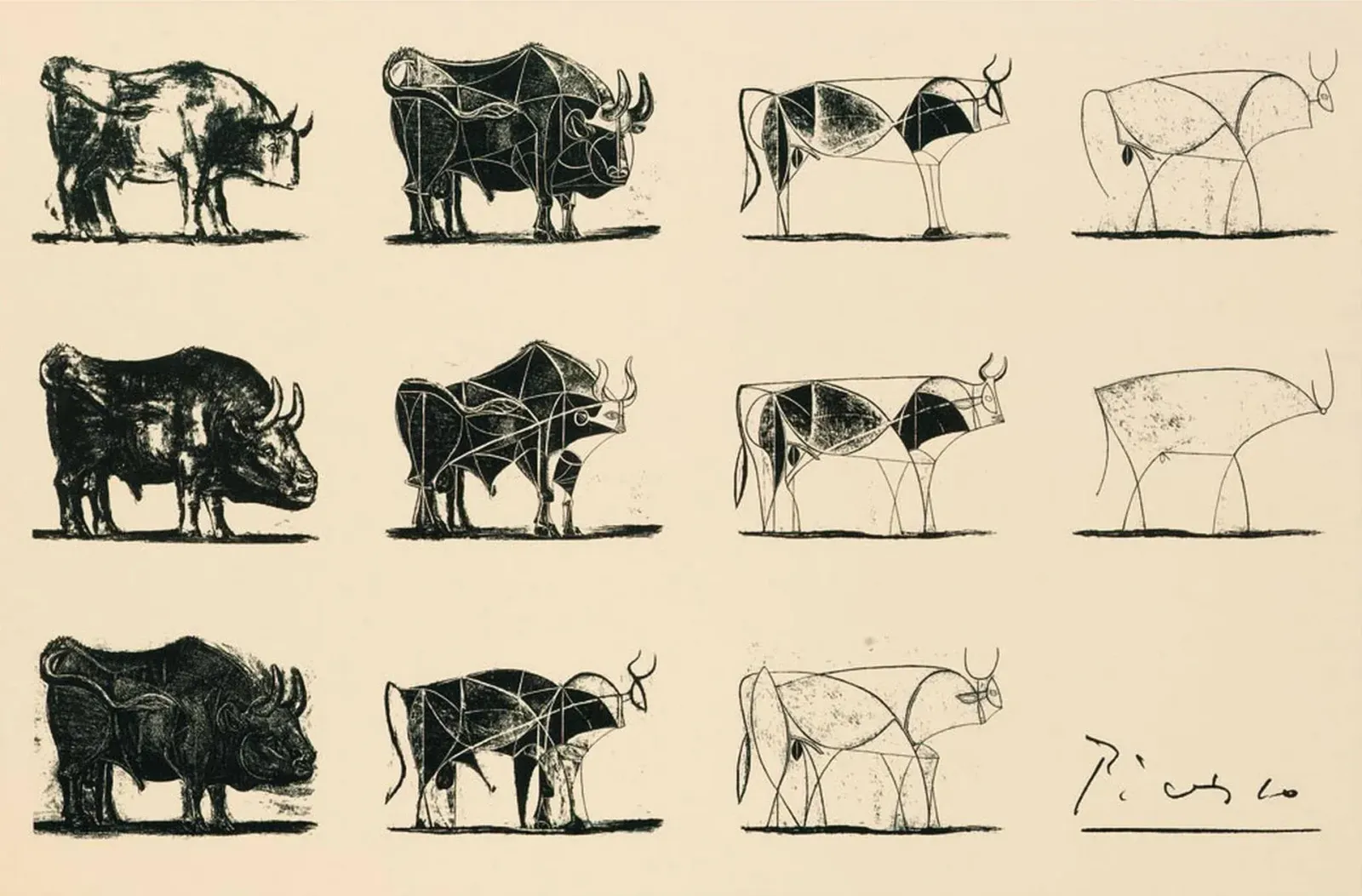
Mathew Mathew reflects on how lessons from Picasso can simplify AI agent development: clearly define the work, provide the right context and tools, and refine results through feedback. The piece argues that focusing on these fundamentals can make AI agents more effective without unnecessary complexity.
Comments
A new Show HN project, The Last Complication, is a Zachtronics-style puzzle game about building clock movements gear by gear. Players assemble watch mechanisms as a series of mechanical puzzles.
Comments
A new essay uses the so-called Hofmann Wobble to examine how Wikipedia shapes historical memory. It argues that small, biased or poorly sourced edits can become entrenched through the site’s consensus process. The piece warns that this can subtly distort the historical record and make correction unusually difficult.
Comments
The Telephone Changed the World
2026-11-15This piece examines an ordinary beige rotary telephone—complete with handset, coiled cord, and ten-hole dial—as a symbol of how a familiar technology changed the world. It highlights the contrast between the device’s simple design and its profound impact on communication.
Comments