YC Alumni News
Graduates of the Y Combinator program often go on to build some of the most influential companies in tech. This section follows those alumni, gathering news about their later funding rounds, product milestones, leadership changes, and long-term impact on the startup landscape.
Coverage ranges from late-stage giants announcing new products or public listings to lesser-known graduates quietly reaching profitability. You will also find stories about second-time founders returning with new ventures, alumni becoming investors themselves, and reunions of teams that first met during a batch.
Alumni trajectories matter because they show what happens long after the accelerator hype fades. Watching how graduated companies mature, stumble, or reinvent themselves offers some of the most honest evidence available about which early-stage bets actually compound into lasting businesses.
2026-10-28

The Colors of a Soap Film
2026-10-28Researchers explain soap-film colors as a fixed white minus a cosine transform of the CIE color-matching functions evaluated at twice the film’s optical thickness. The computed color sequence matches Newton’s thin-film table, and thick films fade to white because that transform decays.
CommentsAssembly Nights
2026-10-28Assembly Nights appears to make the case for returning to low-level programming as a way to counter skill atrophy from heavy Claude/Codex use and keep engineering fundamentals sharp. Readers are receptive to the idea, with discussion turning to practical choices like NASM versus FASM and whether GDB is the right tool for debugging assembly.
Comments
A Hacker News post announcing a personal strike this November sparked debate about whether tech workers can organize collective action and resist AI-driven productivity pressures. Commenters were largely skeptical that an individual strike would matter, while some managers argued engineers who oppose AI tools risk being managed out as output and metrics improve. The thread also reflected broader frustration over locked-down devices, cloud dependence, and the declining affordability of independent computing hardware.
CommentsSlideBySide is a new Show HN tool that lets users upload a PDF or PowerPoint, share a link, and present together without screen sharing. It offers shared slide control, live cursors, and drawing, and requires no account.
Comments
Radio-tagged Monarch butterflies
2026-10-28Researchers are using lightweight radio-pulse tags and cellphone signals to track migrating monarch butterflies, revealing their routes, behavior, survival, and habitat needs. The findings are intended to inform conservation efforts and future land management across North America.
Comments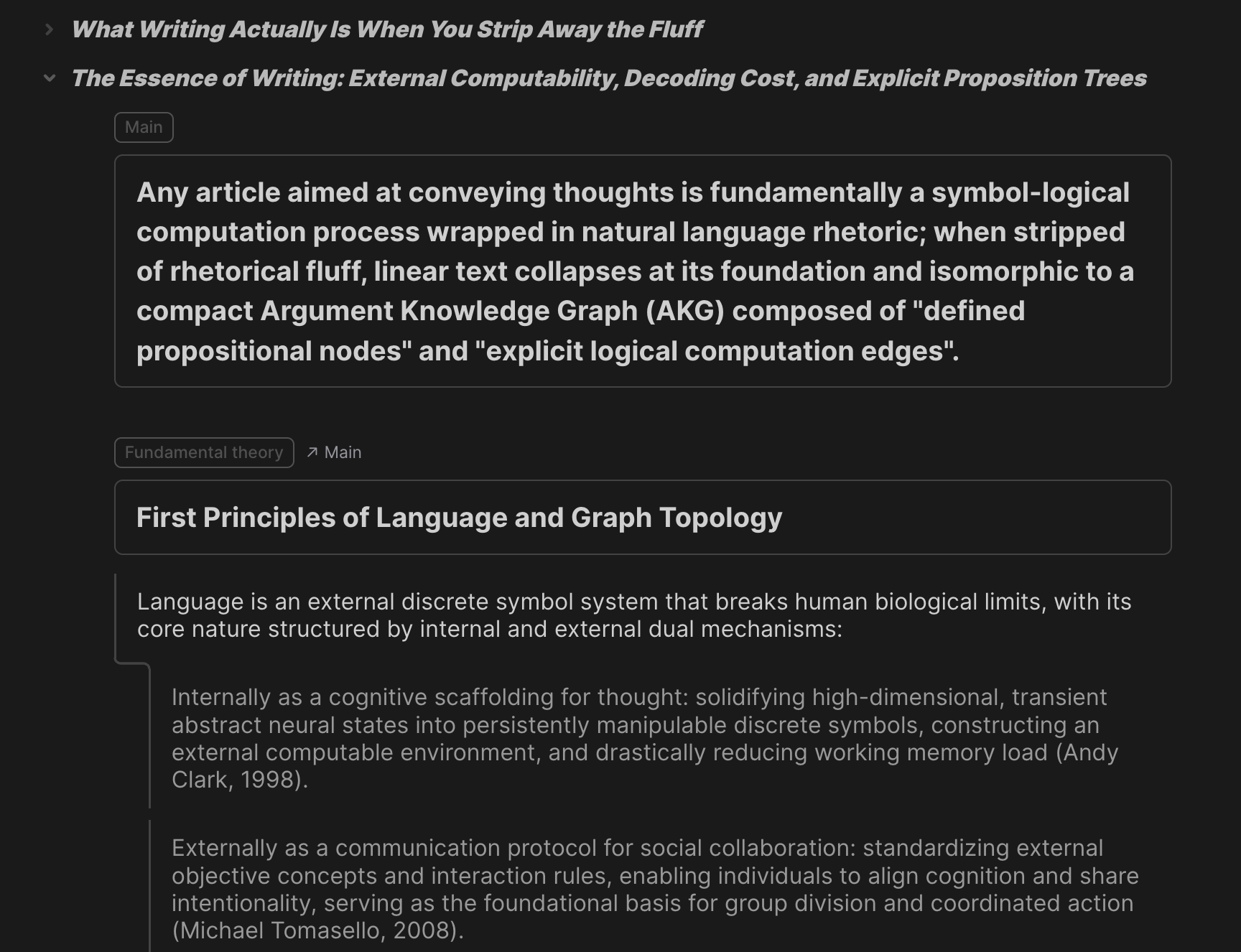
The piece compares the architectures of Obsidian Canvas and Heptabase, focusing on how their file-centric versus card-centric data models shape spatial thinking, graph indexing, and data portability. It examines how these foundational design choices affect the tools’ behavior and suitability for different workflows.
Comments
The author has become an ARPA member of SDF, a non-profit public-access UNIX system that has run continuously since 1987. The piece traces SDF’s history from Ted Uhlemann’s early 300-baud-era origins.
Comments
Artificial Analysis Intelligence Index v5 introduces two new benchmarks and three upgrades. For the first time, most of the index is built on private datasets.
Comments
Wedgewood’s admission that it produced fake polls spread rapidly online, with the news quickly amplified and folded into a range of rumors and conspiracy theories. The resulting conversation has become a framing contest that continues to evolve.
Comments
Emacs Turns 50
2026-10-28Emacs has turned 50, marking half a century since the MIT AI Lab’s text editor helped give rise to the free software movement. Its legacy continues to shape open-source software and developer tools.
CommentsA leak website has released data reportedly concerning employees of the Department of Homeland Security. Details about the scope and nature of the exposed information were not immediately available.
Comments
A new v1.0 MacOS Extensions Pack has been released for the 1996 Apple Network Server, adding Mac OS extension support to the rare Unix-based server. The project reflects ongoing retrocomputing interest in Apple’s short-lived Network Server line.
Comments
Anthropic is expanding its partnership with GSA to bring its Claude AI to all levels of government. The company said the move supports its work building reliable, interpretable, and steerable AI systems for public-sector use.
Comments
A scan of 7.25 million public repositories on China’s Gitee uncovered 26,400 verified-live credentials, including cloud keys and enterprise AI tokens. The findings highlight serious secrets-exposure risks in public code hosted on the platform.
Comments
Claude Code discovered 145,763 photos and videos that had been “permanently” deleted from an iPhone still sitting in a hidden cache spanning three years. The cache could be read by any app with file access, raising fresh concerns about iPhone data deletion and privacy.
Comments
The piece revisits Arthur M. Shepard’s “Sea Power in Ancient History” and Rear Admiral William A. Moffett’s foreword to draw lessons from ancient Mediterranean blockades. It examines how closing sea routes shaped past conflicts and what those historical cases can teach about maritime strategy today.
Comments
NVIDIA has introduced Nemotron 3.5 Transcribe, an open automatic speech recognition model covering 40 languages. Announced in a Hugging Face blog post, it aims to make multilingual ASR more accessible to developers.
CommentsA decompilation deep dive into Fast Food Tycoon 2 explains how the 2001 business sim rendered its rich, detailed city environments. The piece examines the game’s drawing techniques, offering a technical look at the tricks behind its visuals.
Comments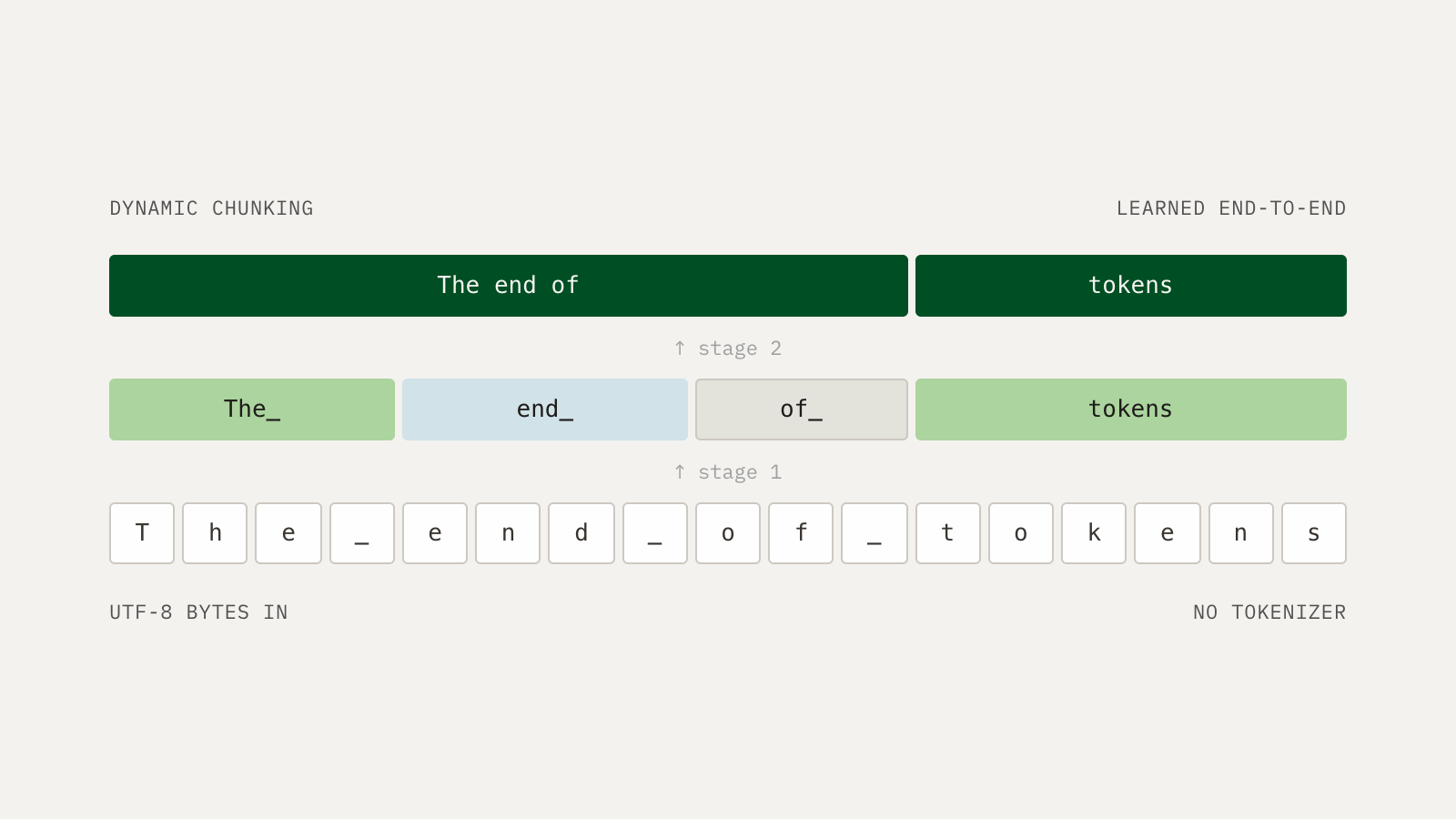
Scaling Hierarchical Networks
2026-10-28A new generation of Hierarchical Networks (H-Nets) can learn directly from raw bytes rather than tokenized data. They match the performance of an open-source 3B-parameter Transformer while using 10x less compute and training data.
CommentsWhat Happened to the Neanderthals?
2026-10-28Readers discuss how the modern understanding of Neanderthals represents a major correction in conventional knowledge, comparable to the reclassification of Pluto, and suggest ancient myths about “different sorts of people” may preserve distant truths about other hominin species. They cite Hindu Sanskrit literature, which distinguishes humans from beings such as Vanaras and describes interbreeding, as a possible parallel to anthropological knowledge of Neanderthals and Homo floresiensis.
CommentsA Kentucky man has become the first humanist granted a religious exemption from AI, arguing that offloading the mental and ethical work of thinking through situations undercuts his ability to develop as a moral actor. Commenters largely agreed with the caution, while stressing that the goal isn’t to eliminate AI but to recognize the risks of overreliance.
Comments
A new arXiv paper presents an “executable archaeology” approach to reviving two historical programming systems: the Heuristic Compiler (1961) and KBEmacs (1984). By reanimating these programs that model programming, the work aims to make early heuristic-compiler and knowledge-based editing ideas inspectable and runnable again.
CommentsRubber Duck I've Ever Had
2026-10-28This piece shares practical lessons from using AI in software engineering, including how it can help beat procrastination and counter code entropy. It argues that as AI takes on more coding work, system design matters more than ever.
Comments
The Style Is Father of the Man
2026-10-28The piece considers a new biography of Cormac McCarthy through the lens of his style, suggesting that his prose is key to understanding the man. It examines how McCarthy’s distinctive literary voice shaped—and was shaped by—his life.
CommentsMoxnox 1.0 has arrived as an NT-like, POSIX-compatible operating system that runs atop Btrfs. The project is hosted on GitHub under maharmstone/moxnox for development and contributions.
Comments
A report on counting sand dunes in the Simpson Desert prompted a reader to expect a reference to Chilean Insanity Peppers. The article itself was unavailable, so the dune-counting method and findings could not be summarized.
Comments
Biologists are probing the molecular structure of spider "silk dope" to understand how a tangle of unstructured proteins becomes a strong, flexible fiber. Their findings shed light on how spiders produce one of nature's toughest materials.
Comments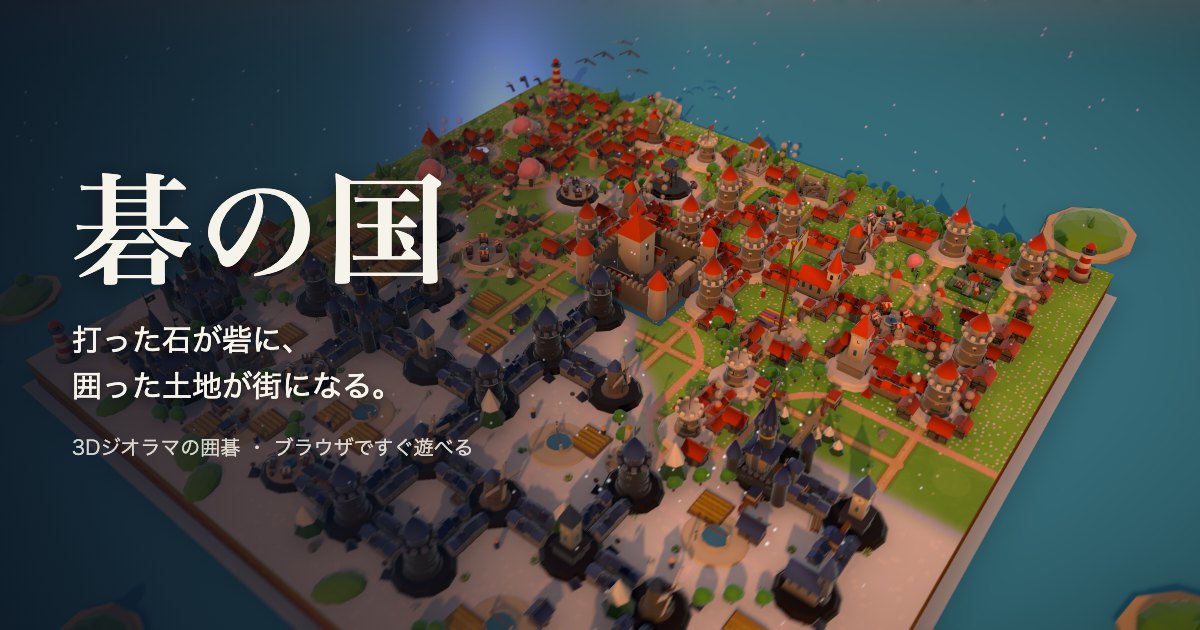
碁の国: Play Chess as Town Building
2026-10-28A new browser game called Go no Kuni turns standard Go into 3D diorama town-building, with placed stones becoming fortresses and surrounded territory becoming towns. Players can play instantly in the browser with AI, friends, or others.
Comments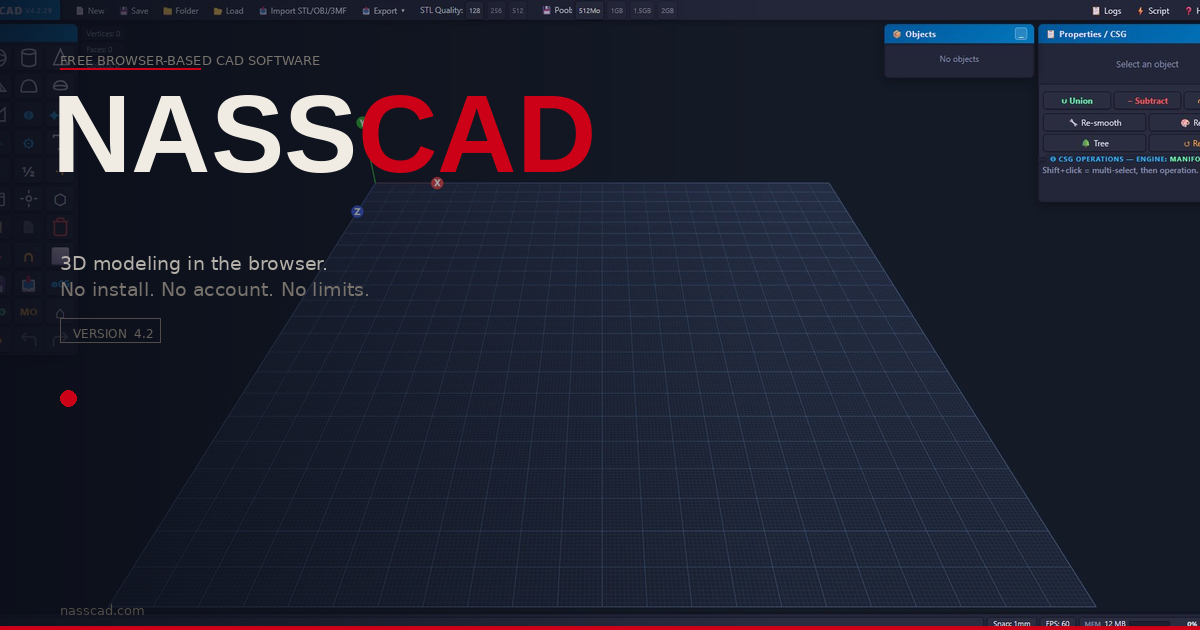
Nasscad is a new local-first 3D CAD tool available for the browser and Windows. It offers parametric solids, boolean CSG, STEP and IFC import/export, plus STL and 3MF support for 3D printing. It is free to use with no login required.
Comments
Regent is developing an electric ground-effect vehicle aimed at cutting coastal travel times with cleaner, high-speed routes. The technology promises to bypass airport delays and congested highways, reimagining how travelers move along coastlines.
Comments