YC Alumni News
Graduates of the Y Combinator program often go on to build some of the most influential companies in tech. This section follows those alumni, gathering news about their later funding rounds, product milestones, leadership changes, and long-term impact on the startup landscape.
Coverage ranges from late-stage giants announcing new products or public listings to lesser-known graduates quietly reaching profitability. You will also find stories about second-time founders returning with new ventures, alumni becoming investors themselves, and reunions of teams that first met during a batch.
Alumni trajectories matter because they show what happens long after the accelerator hype fades. Watching how graduated companies mature, stumble, or reinvent themselves offers some of the most honest evidence available about which early-stage bets actually compound into lasting businesses.
2026-04-18
Migrating from DigitalOcean to Hetzner
2026-04-18A complex production infrastructure was successfully migrated from DigitalOcean to Hetzner dedicated servers with zero downtime. The extensive transition seamlessly accommodated 248 GB of MySQL data across 30 databases, 34 Nginx sites, and critical services like GitLab EE and Neo4j while supporting live mobile app traffic.
Comments
Why Japan has such good railways
2026-04-18Japan boasts the finest railway system in the world, driven by a highly effective operational model that sets a global standard for efficiency. Other countries seeking to upgrade their transit infrastructure can learn to replicate this quality by adopting Japan's proven formula.
Comments
An anonymous analysis compares how Anthropic's Opus 4.6 and Opus 4.7 models calculate request tokens when processing identical transcripts. The evaluation highlights the differences in token counting between the two versions, providing developers with crucial data for optimizing API usage. These insights can help users better predict costs and manage resources when transitioning between the models.
Comments
Before the advent of GPS, B-52 bombers relied on celestial navigation to guide their long-range missions. This was made possible by a sophisticated electromechanical angle computer housed within the aircraft's star tracker, which calculated precise flight trajectories based on the positions of stars and planets.
CommentsState of Kdenlive
2026-04-18In 2025, the Kdenlive open-source video editor focused on steady development by balancing new features with routine bug fixes and user interface polish. The team explicitly prioritized overall system stability and workflow performance over adding excessive new features to prevent feature creep.
Comments
All twelve Apollo moonwalkers experienced allergy-like symptoms, known as lunar hay fever, after sharp and abrasive moon dust clung to their spacesuits. This gunpowder-scented dust caused sore throats and watery eyes upon their return to the lunar module. Researchers are still investigating the exact toxicity of these particles to better understand the health risks for future human missions.
Comments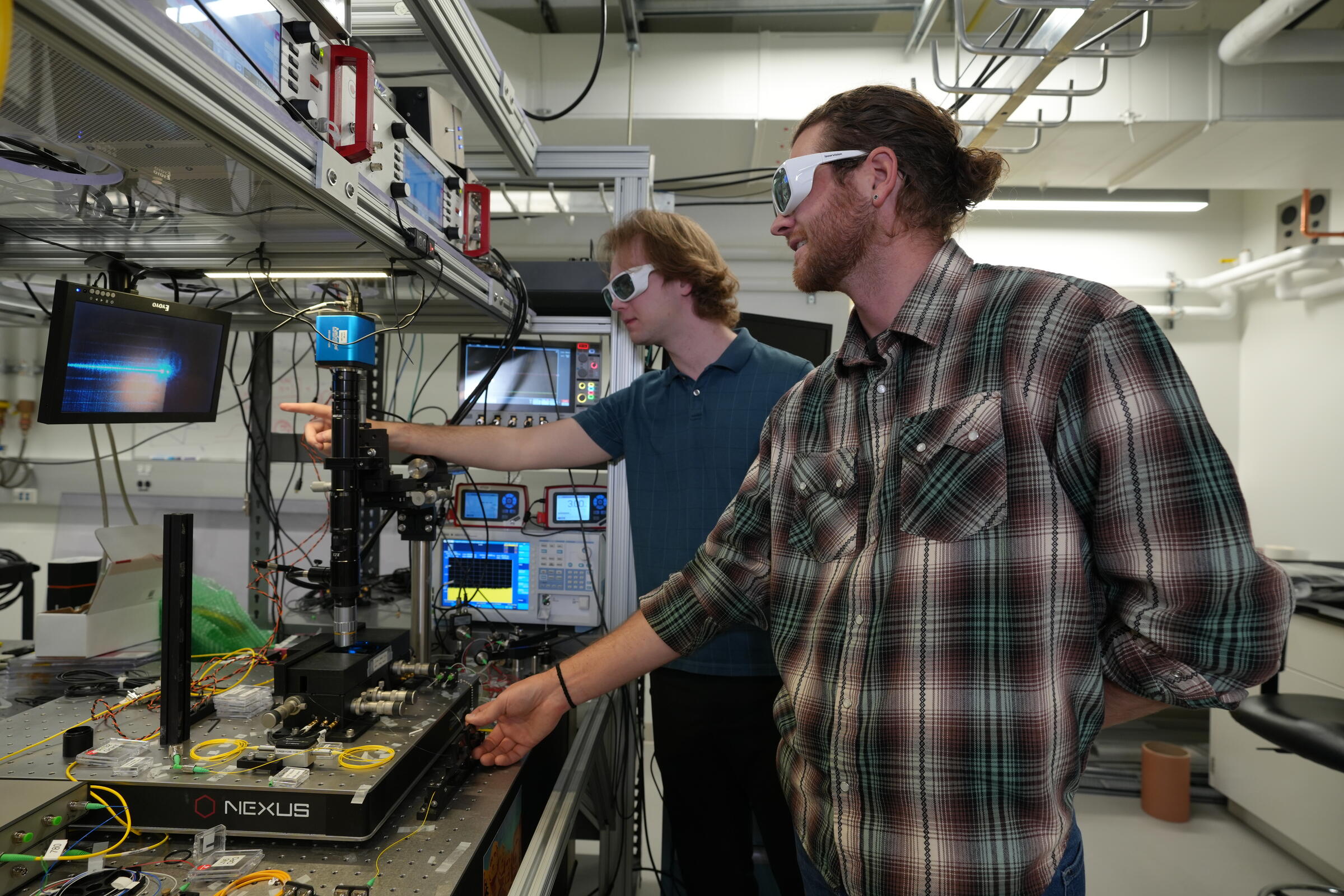
NIST scientists and collaborators have pioneered a technique to manufacture integrated light circuits by depositing complex patterns of specialized materials onto silicon wafers. This innovation enables the creation of highly versatile lasers that can operate at any wavelength directly on standard silicon chips.
Comments
Sumida Aquarium has released its 2026 penguin relationship chart, mapping out the complex and often dramatic romantic lives of its flock. The highly anticipated annual diagram details new pairings, surprising breakups, and adorable connections among the birds for the upcoming year.
Comments
Michael Rabin has died
2026-04-18Renowned computer scientist Michael Rabin has passed away, prompting widespread tributes from developers and former students. The tech community is mourning his loss while celebrating his foundational contributions, particularly the Rabin fingerprinting algorithm used in data deduplication and the Rabin-Karp method used in threat scanning. Alongside his technical legacy, former students fondly remember him as a masterful and engaging lecturer at universities like Harvard and Columbia.
Comments
Readers discuss how the high hourly costs of frontier AI agents compare to human software engineers, suggesting that cheaper distilled models and custom ASIC hardware could eventually drive down inference expenses. The conversation also highlights a potential industry shift from time-based project estimates to token-based spending models. Furthermore, commenters emphasize the critical need for better cost-attribution tools to accurately track granular AI agent expenses.
Comments
Amiga Graphics Archive
2026-04-18The Amiga Graphics Archive is a newly launched website dedicated to preserving and showcasing visual art created for the Commodore Amiga home computer. Introduced in 1985, the Amiga featured revolutionary custom chips that delivered unprecedented graphics capabilities far beyond other personal computers of the era. This digital collection serves as a tribute to the pioneering visual legacy of the iconic retro system.
Comments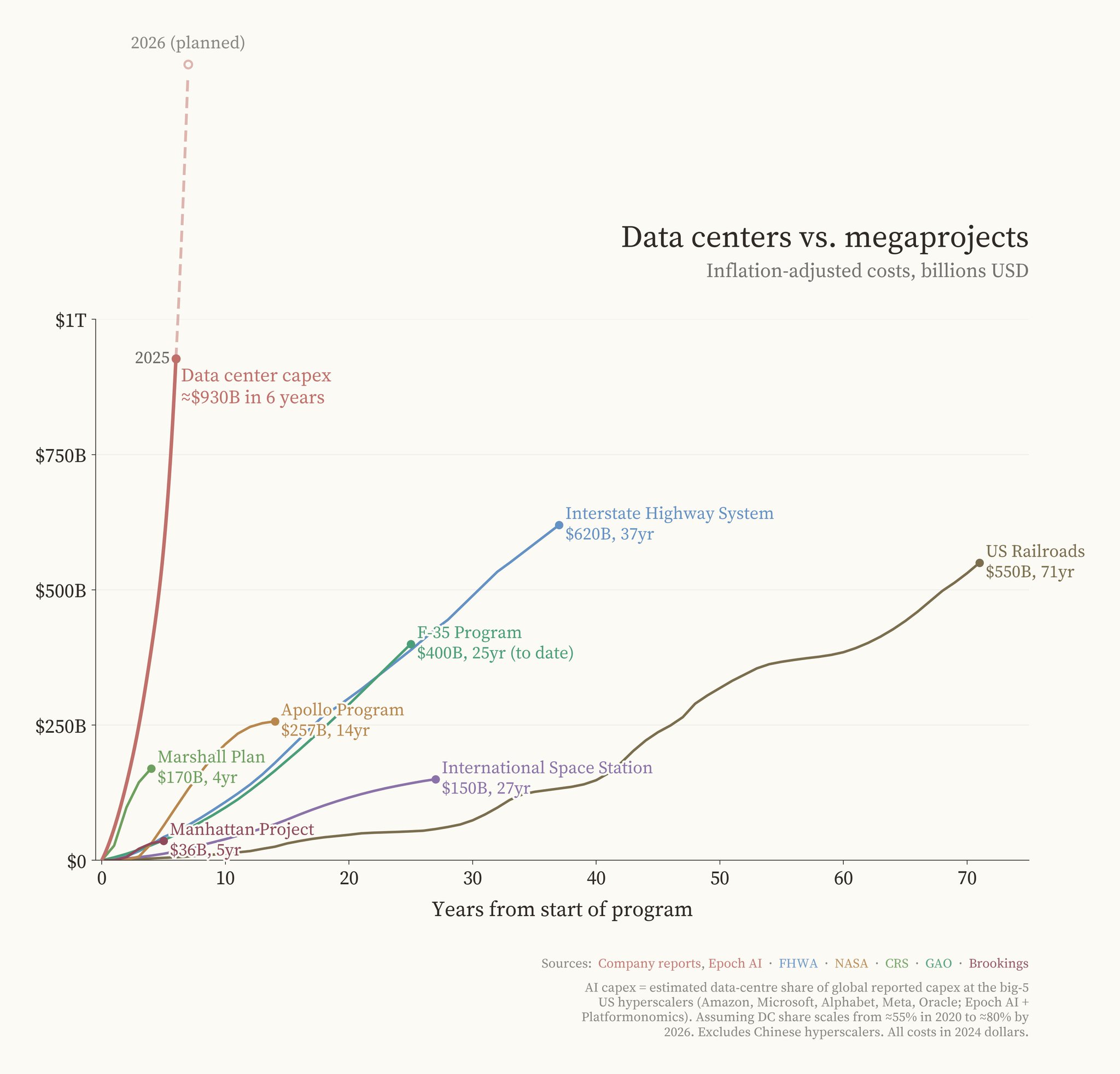
Major tech hyperscalers are investing unprecedented capital into data center and AI infrastructure, with their current spending already surpassing the historical costs of the most famous US megaprojects. This massive financial commitment highlights the intense industry race to dominate the next generation of cloud computing and artificial intelligence.
Comments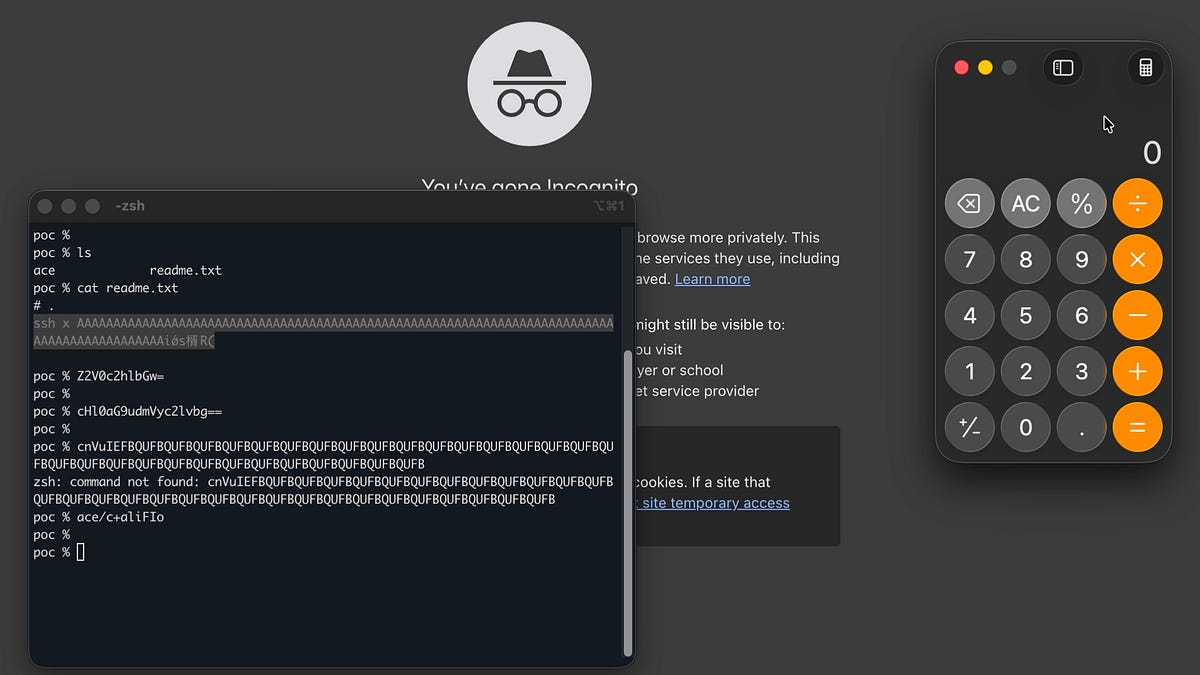
A newly identified vulnerability in the iTerm2 terminal emulator allows attackers to turn a simple "cat readme.txt" command into arbitrary code execution. By exploiting how the application processes terminal output, hackers can weaponize seemingly harmless file reads to run malicious scripts.
Comments
Early users of Claude Design report mixed results, praising the tool for its logical information architecture but criticizing its strict usage limits and tendency to generate generic outputs. The conversation around the AI's homogenization problem quickly evolved into a broader debate about the current state of user interface and user experience design. Many participants lamented that marketing-driven demands for unique brand recognition have ultimately sacrificed the predictable, platform-level consistency found in older software.
CommentsCategory Theory Illustrated – Orders
2026-04-18Readers discussing an illustrated guide to category theory recommend more rigorous mathematical textbooks, noting the subject's steep learning curve for those without advanced backgrounds. Commenters also critique the original article's mathematical accuracy, specifically highlighting flawed logic in its sorting code examples. Furthermore, users debate the author's confusing definitions regarding strict versus non-strict linear orders and the handling of equality in mathematical comparisons.
Comments
A developer has introduced Brunost, a new programming language that uses the Nynorsk written standard of Norwegian for its syntax. The creator humorously apologized to the tech community for adding yet another language to the already crowded programming landscape.
CommentsA developer has showcased a novel calculator that utilizes interval and union arithmetic to overcome floating-point precision issues and compute true inverses of mathematical functions. Originally built to test a custom TypeScript library for handling disjoint sets of intervals, the project has sparked community discussions regarding interval math standards, notation, and related graphical applications.
CommentsTowards trust in Emacs
2026-04-18Eshel Yaron has introduced the Emacs Trust Manager to enhance security within the Emacs ecosystem. This new feature allows users to safely manage and verify trusted content directly inside the editor. The addition marks a significant step forward in improving the overall reliability of the platform.
CommentsSlop Cop
2026-04-18Readers discuss a new tool designed to strip verbose AI-generated phrasing from text, noting its value for concise business communication. However, they argue that the true flaw of AI content is a lack of substance rather than specific vocabulary, warning that over-optimizing for brevity can lead to half-baked ideas and fragmented messaging styles. Ultimately, the discussion emphasizes that effective writing requires a careful balance between concise editing and preserving necessary nuance.
CommentsA new tool called MDV acts as a Markdown superset for creating data-rich documents, dashboards, and slides. It enables users to embed data and visualizations directly into their files. Additional features include live preview capabilities, HTML and PDF export options, and a dedicated VS Code extension.
Comments
Researchers in the Arizona desert have discovered a unique biological partnership where tiny cone ants act as cleaners for much larger harvester ants. The smaller ants peacefully crawl over the giants to lick and nibble them, creating a terrestrial cleaning station similar to those found in marine ecosystems.
CommentsOptimizing Ruby Path Methods
2026-04-18An Intercom engineer explains how optimizing Ruby path methods improved the continuous integration pipeline for their monolithic application. The optimization effort was one of the author's first major projects after joining the company.
Comments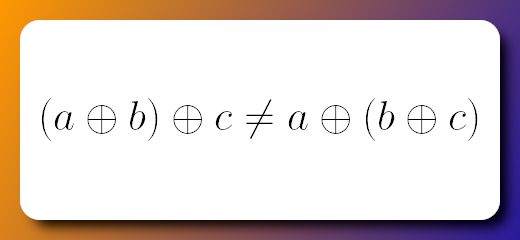
A recent article suggests that comparing floating-point numbers for equality is sometimes acceptable, but industry experts argue this view is overly reductive for computational geometry. Because geometric inputs are inherently inexact, exact floating-point comparisons are fundamentally unworkable for boundary representations, requiring geometry kernels to rely on fuzzy tolerances instead. While field-based representations can bypass these floating-point precision issues, developers note they introduce severe new complexities, such as the difficulty of implementing user-requested fillets in CAD software.
Comments80386 Memory Pipeline
2026-04-18A detailed technical discussion examines the internal microcode of the classic Intel 80286 and 80386 processors, focusing on the mechanics of switching between real and protected modes. By analyzing vintage BIOS disassemblies and historical patents, the thread clarifies why the instruction prefetch queue must be immediately flushed via a control transfer after enabling protected mode to prevent processor triple faults.
CommentsUnderstanding the FFT Algorithm (2013)
2026-04-18Reader discussions surrounding an article on the Fast Fourier Transform algorithm debate the level of mathematical complexity required to truly understand such concepts. Beyond theory, participants highlight practical applications ranging from removing visual artifacts on color e-ink displays to analyzing network traffic. The conversation also explores using frequency domain techniques like the Lomb-Scargle periodogram to process unevenly sampled packet capture data.
Comments
A landmark study analyzing the genomes of over 15,000 ancient individuals reveals a surprising acceleration in human evolution. Researchers discovered that natural selection rapidly shaped hundreds of genes linked to crucial traits such as immunity, skin tone, and behavior. These findings provide unprecedented insight into how quickly our species genetically adapted to its environment.
CommentsFuzix OS
2026-04-18FUZIX is a micro-Unix operating system designed for retrocomputing on old and resource-constrained hardware like 8-bit microcontrollers and the Raspberry Pi Pico. Although the project supports standard Unix-style processes and is making steady progress, poor documentation remains a notable issue for hobbyists. The development team is currently working on a portable C compiler to help alleviate the steep learning curve associated with the cross-compilation toolchain.
Comments
The simple geometry behind any road
2026-04-18This article explores the foundational mathematical principles and geometric rules that dictate the design, layout, and digital mapping of modern road networks. By breaking down how these infrastructure pathways unfold, the piece highlights the hidden computational geometry and spatial algorithms that ensure the safety and efficiency of global transportation systems.
Comments
A presentation at the Onward! 2025 conference explores the concept of treating Unix executables as native Smalltalk methods to bridge the gap between the operating system and the programming environment. Joel Jakubovic from Charles University details this technical approach and discusses the broader implications for unifying Unix and Smalltalk.
Comments
4-bit floating point FP4
2026-04-18A new technical overview explores the growing utility of extremely low-precision 4-bit floating-point numbers in optimized computing environments. The analysis breaks down the specific numerical values represented by FP4 formats and examines the various architectural variations of this emerging standard.
Comments