Tech Industry News
This section steps back to look at the technology industry as a whole. Expect news on hiring and layoffs, corporate strategy, sector trends, and the shifting balance of power among tech's biggest players. It is a useful lens for readers who follow the industry rather than any single product or company.
Stories here tend to be about patterns rather than single products: waves of restructuring across multiple companies, spending shifts toward AI infrastructure, changes in how software is built and sold, and the consolidation or fragmentation of entire market segments. Analyst reports and industry data often anchor the coverage.
An industry-level view is valuable for anyone whose career, portfolio, or business strategy depends on where technology is heading. Executives use it to benchmark their own companies, job seekers use it to read the labor market, and observers use it to separate durable trends from passing hype.
Amid a growing memory shortage, major tech companies are increasingly prioritizing code optimization to reduce RAM requirements, though developers emphasize that fixing basic inefficiencies remains more practical than algorithmic rewrites. Meanwhile, the discussion highlights the tech industry's heavy reliance on AI for code generation, sparking debate over the actual success and quality of these machine-written projects across major platforms.
Comments
Hospitals and universities are significantly reducing drug development expenses by repurposing existing medications through late-stage clinical trials. This approach enables these institutions to fund new treatments at costs up to 90% lower than those of the traditional pharmaceutical industry.
Comments

Recent industry data suggests that large language models might be rendering self-help nonfiction books obsolete by providing people with instant advice. Readers are increasingly turning to AI for quick answers to personal queries instead of consulting traditional self-help guides. This shift highlights the broader disruptive impact of AI on the traditional publishing industry.
Comments
The rapid integration of artificial intelligence into software development requires stricter engineering discipline rather than a relaxation of current standards. This necessary evolution closely mirrors the industry's historical transition from manually managed servers to automated immutable infrastructure. Ultimately, maintaining rigorous engineering practices remains essential to successfully manage these new tools and prevent widespread technical debt.
CommentsDrawing from recent conversations with multiple engineering teams, the author shares key insights into the tech industry's actual adoption of Kubernetes. The piece explores the notable gap between how companies advertise Kubernetes skills in job descriptions and how they practically utilize the technology.
Comments
What happened to nerds?
2026-06-15The author reflects on the brilliant, curious, and eccentric nerds who originally shaped the tech industry. The piece questions what has happened to these thoughtful individuals as the sector has evolved. By contrasting the pioneers of the past with today's environment, it explores the broader cultural shift that has transformed modern technology.
Comments
Your ePub Is fine
2026-06-14Adobe continues to alienate users who are forced to rely on its industry-standard software due to a lack of viable alternatives. The company's ongoing technical issues, such as incorrectly flagging valid ePub files as corrupted, only add to this widespread frustration.
CommentsPac-Man, but you're the ghost
2026-06-14Sparked by the concept of playing as the ghost, readers are reminiscing about classic local multiplayer titles like the GameCube's Pac-Man spinoff. Participants celebrate the enduring appeal of couch co-op for families and friends by sharing fond memories of local gaming sessions. However, the community also laments that the broader gaming industry has largely shifted its focus away from local play in favor of remote online multiplayer.
CommentsFollowing discussions between Amazon's CEO and U.S. officials, the White House has launched a regulatory crackdown on Anthropic's advanced Mythos AI models over national security concerns regarding their cybersecurity capabilities. While critics argue the intervention is arbitrary given the known vulnerabilities of all large language models, the administration maintains these specific models surpass previous safety thresholds and require mandatory government review. Tech industry observers are heavily criticizing this sudden, opaque regulatory approach as chaotic and detrimental to long-term market investments.
Comments
The computer science degree isn’t dead
2026-06-13Despite a shrinking entry-level hiring landscape, the computer science degree remains highly relevant in the tech industry. Aspiring AI engineers can overcome these job market challenges by transforming practical side projects into functional applications to stand out and secure competitive roles.
Comments
"Don't You Just Upload It to ChatGPT?"
2026-06-12Many users assume ChatGPT can seamlessly replace human translators, but a freelance linguist proves otherwise with a humorous Ottawa anecdote. The story highlights specific instances where AI failed to grasp cultural nuance and context. Ultimately, it serves as a reminder that professional human judgment remains irreplaceable in the translation industry.
Comments
Despite being an analog format, vinyl records are increasingly compromised by the music industry's ongoing loudness war as mastering engineers prioritize maximum volume over dynamic range. This pushes the physical limitations of vinyl grooves to their breaking point, resulting in audible distortion and degraded sound quality that undermines the premium listening experience.
CommentsThe release of the open-source MiMo Code has been praised by readers as a positive step toward commoditizing AI coding assistants and reducing consumer switching costs. The announcement also sparked a broader industry debate comparing open-source strategies to the proprietary models of competitors like Claude Code, highlighting the ongoing tension between fostering ecosystem competition and maintaining closed tools for direct profitability.
CommentsPetition to Withdraw Canada's Bill C-22
2026-06-11A petition is urging the Canadian government to withdraw Bill C-22 and the upcoming Bill C-34, legislation that critics warn will severely compromise digital privacy through encryption backdoors and bulk metadata retention. Meanwhile, industry observers are debating whether these strict surveillance measures will further stifle Canada's domestic tech sector or if the ecosystem's struggles stem primarily from local investment and capital market deficiencies.
Comments
Software is made between commits
2026-06-11Zed has introduced DeltaDB, a new version control system designed specifically for AI-driven software development. Recognizing that code is increasingly generated through continuous agent conversations rather than traditional commits, the tool treats these interactions as the actual source of truth. This reflects a broader industry shift toward automated workflows where the dialogue itself becomes the foundational software.
Comments
Doing nothing at work
2026-06-11Reader discussions surrounding a tech article reveal that software engineers are often ignored for preventing problems while being rewarded for heroically fixing the very outages they could have avoided. To survive these misaligned corporate incentives, developers share strategies ranging from building complex tools to make themselves indispensable, to using code ownership rules to force poor coders to fix their own messes. The conversation highlights a widespread industry culture that unfortunately values flashy firefighting over quiet, competent prevention.
Comments
In a recent essay, Oscar argues that the tech community should pivot from traditional software hackathons to hardware-focused events. He explains that building physical prototypes fosters a unique type of collaboration and tangible innovation that coding marathons lack. This shift highlights a growing industry trend toward hands-on engineering over purely digital development.
Comments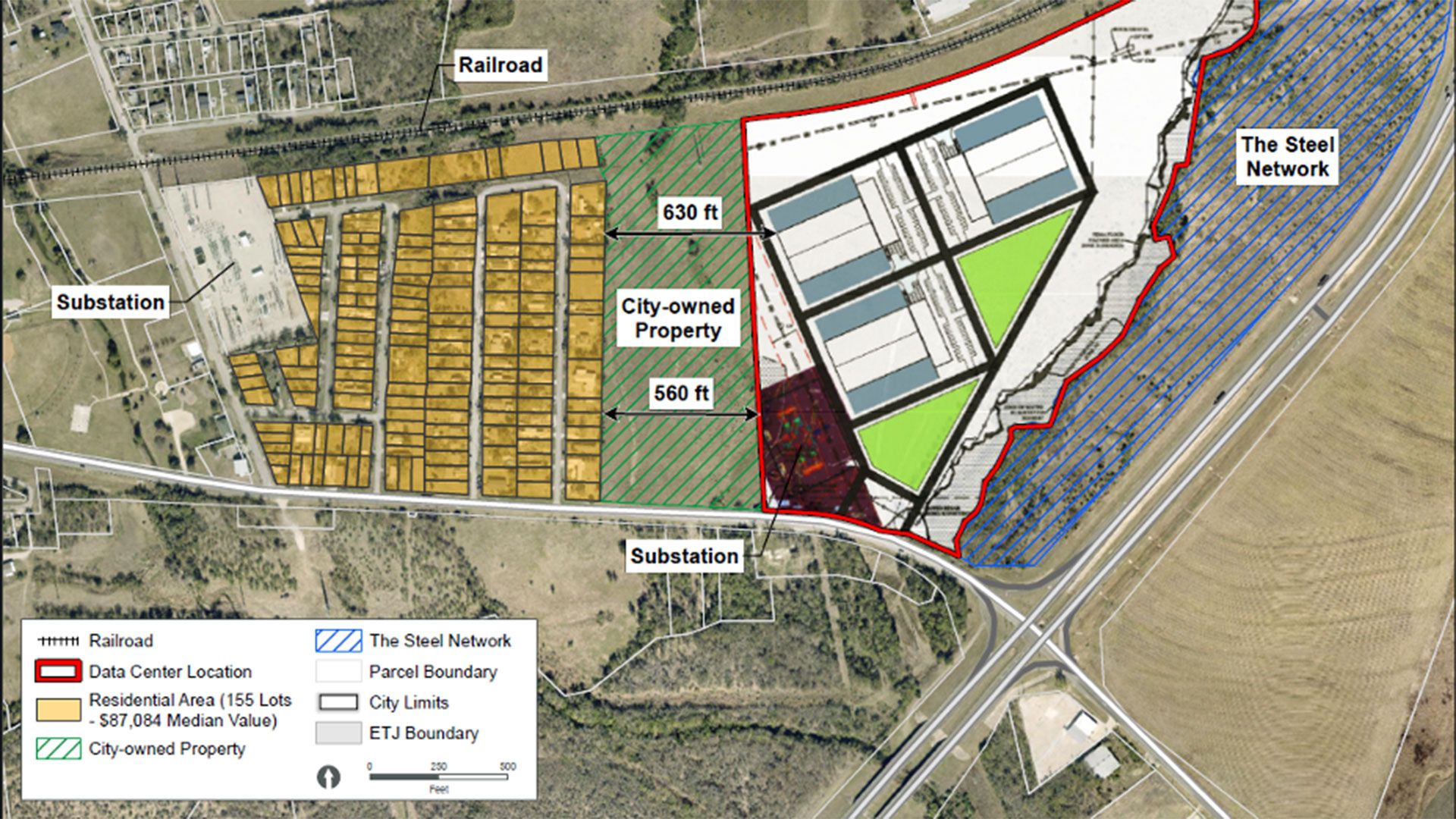
A Texas city ignored a restrictive deed and sold land originally donated by a local farmer for a public park for $10 million. The controversial sale will transform the green space into a new data center, sparking outrage over the prioritization of tech infrastructure expansion over the donor's wishes.
Comments
Surprise, pay $1000
2026-06-10A controversy has emerged over a deceptive software trial that unexpectedly hits users with a massive $1,000 charge once their free period ends. This incident is sparking a broader industry debate about the ethics of subscription billing and the need for stricter consumer protections against dark patterns.
CommentsA recent statement argues that the UK's latest surveillance measures compromise user privacy under the false premise of enhancing public safety. In response, tech readers criticize the industry for historically building restrictive digital systems that inadvertently empower government overreach, emphasizing the need to critically question authority and regularly review privacy-invasive legislation.
Comments
AI is slowing down
2026-06-08Recent analysis suggests that the explosive growth and rapid advancement of artificial intelligence are beginning to plateau. The comprehensive report explores the factors driving this deceleration across the broader technology sector. It specifically examines the current trajectories and market challenges faced by industry leaders such as NVIDIA, Anthropic, and OpenAI.
CommentsAlgorithmic Monocultures in Hiring
2026-06-08An article discusses how shared hiring algorithms have created an industry-wide monoculture where a single AI system evaluates candidates across multiple companies, potentially leading to disparate impacts on certain demographic groups. In response, tech community discussions debate the research methodology, suggesting the algorithms might simply be amplifying pre-existing applicant biases or non-demographic flaws rather than explicitly discriminating based on demographics.
Comments
A software engineer with a decade of experience has shared a candid reflection on how Large Language Models are devaluing their technical skills and causing them to question their future in the industry. This personal account highlights the growing anxiety among veteran tech professionals regarding the rapid automation of traditional software development tasks by generative AI.
Comments
Equine cloning has transformed from a rare novelty into a dominant, mature industry within the Argentine polo scene. While these high-performance horse replicas have revolutionized the sport, their widespread use continues to raise significant ethical concerns.
CommentsY Combinator startup General Instinct aims to deploy frontier AI models on edge devices by using distillation techniques to recover performance lost during model quantization. The launch sparked technical discussions debating the viability of Mixture of Experts architectures for edge hardware compared to memory-dense alternatives. These conversations also highlight a broader industry trend toward optimizing local inference speeds and making on-device large language models more practical for everyday use.
Comments
A report by AOAV reveals that UK media outlets fail to disclose defense and technology industry ties in nearly 60 percent of cases featuring retired military experts. Presenting these figures as independent commentators without revealing their commercial connections obscures potential conflicts of interest in public debates surrounding war and military spending.
Comments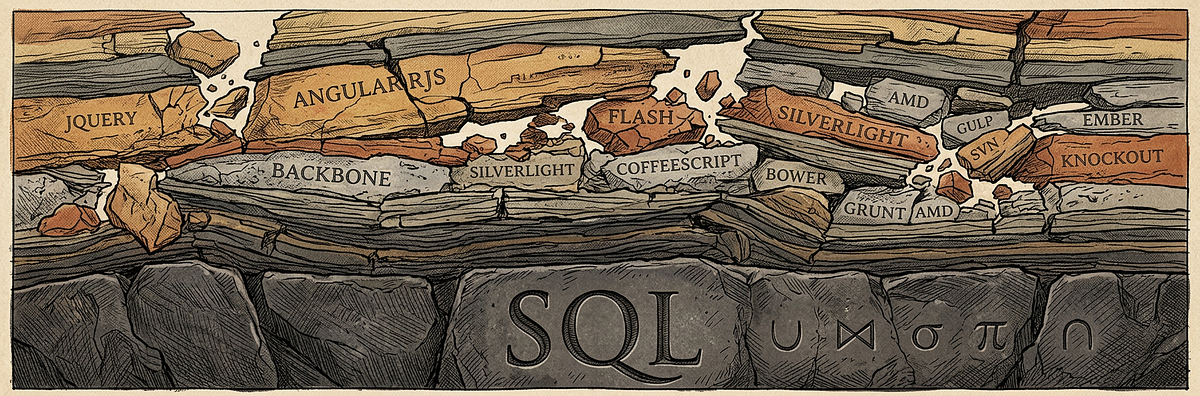
Learn SQL Once, Use It for 30 Years
2026-06-04SQL has maintained its industry relevance for decades because it is fundamentally built on mathematics rather than fleeting technological trends. This enduring stability makes learning the language a valuable, long-term investment for developers looking to future-proof their technical skill sets.
Comments
Open Repair Data Standard
2026-06-02The Open Repair Data Standard (ORDS) introduces a unified framework for collecting and sharing repair data to improve product reliability tracking across the electronics industry. By standardizing how repair metrics are recorded, the initiative aims to empower consumers with transparent insights into device longevity and support the broader right-to-repair movement.
Comments
Squillions: How money laundering won
2026-06-02Global money laundering has reached an unprecedented scale, operating as an illicit enterprise whose estimated value would make it the third-largest industry in the world behind commercial property. This staggering financial footprint underscores the critical need for advanced technological and regulatory solutions to combat sophisticated economic crimes and track illicit digital flows.
Comments
Twenty years after a major police raid intended to shut it down, The Pirate Bay remains online and highly resilient. The entertainment industry's attempt to seize the site's servers inadvertently cemented its legacy as one of the most iconic and enduring platforms on the internet.
Comments