Tech Industry News
This section steps back to look at the technology industry as a whole. Expect news on hiring and layoffs, corporate strategy, sector trends, and the shifting balance of power among tech's biggest players. It is a useful lens for readers who follow the industry rather than any single product or company.
Stories here tend to be about patterns rather than single products: waves of restructuring across multiple companies, spending shifts toward AI infrastructure, changes in how software is built and sold, and the consolidation or fragmentation of entire market segments. Analyst reports and industry data often anchor the coverage.
An industry-level view is valuable for anyone whose career, portfolio, or business strategy depends on where technology is heading. Executives use it to benchmark their own companies, job seekers use it to read the labor market, and observers use it to separate durable trends from passing hype.
Alibaba to ban Claude Code in workplace over alleged backdoor risks, source says
2026-07-03Alibaba is reportedly banning Anthropic's Claude Code from its workplace over concerns regarding potential backdoors and the broader security risks of hosted AI tools. This decision highlights growing industry anxieties that feeding proprietary code into remote models exposes sensitive intellectual property to espionage, data breaches, and supply chain attacks, prompting organizations to reevaluate their reliance on third-party AI providers.
Senior SWE-Bench: open-source benchmark that assesses agents as senior engineers
2026-07-02Researchers have introduced Senior SWE-Bench, a new open-source benchmark designed to evaluate AI coding agents using the complex, real-world tasks typically assigned to senior software engineers. By testing models on industry-level work rather than basic exercises, the benchmark aims to provide a more accurate assessment of their practical engineering capabilities.

Godot will no longer accept AI-authored code contributions
2026-07-01The open-source game engine Godot has updated its contribution guidelines to strictly ban AI-generated code submissions. This policy change aims to protect maintainers from being overwhelmed by low-quality code. Ultimately, the new rules are designed to prevent the project's codebase from drowning in AI slop.
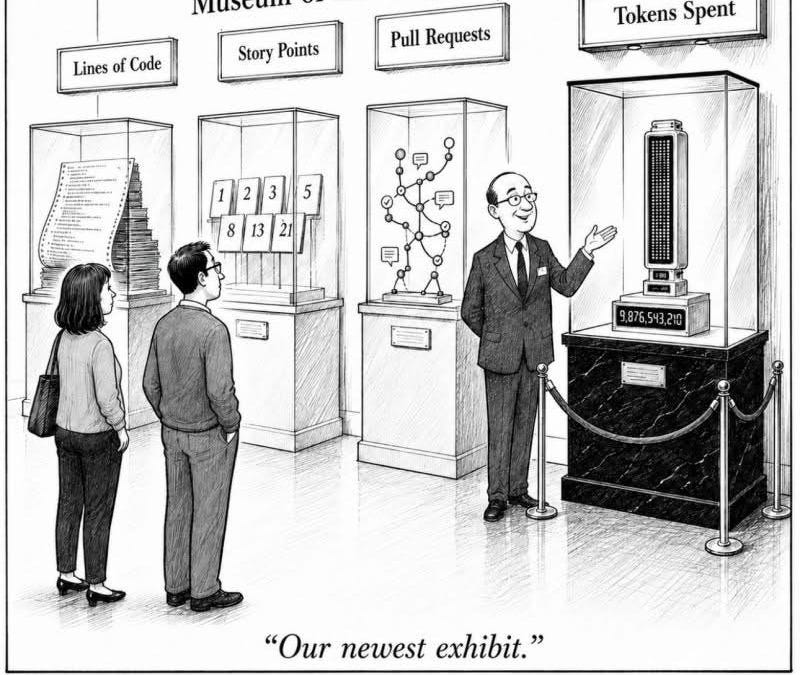
Tokenmaxxing is dead, long live tokenmaxxing
2026-06-28Despite recent claims that the AI industry is moving past the obsession with massive context windows, the practice of tokenmaxxing remains highly relevant. Developers continue to push the boundaries of large language model token limits, proving that reports of this trend's death are greatly exaggerated.

U.S. government will decide who gets to use GPT-5.6
2026-06-26Despite initially promising a hands-off approach to artificial intelligence, the Trump administration is increasing its oversight of the industry. As part of this shift, the U.S. government will now directly control and decide who is granted access to the advanced GPT-5.6 model.
We all depend on open source. We will defend it together
2026-06-26The technology industry has united to defend open source software through a collective open letter and the launch of a new initiative called Akrites. This coordinated effort aims to actively identify and remediate critical vulnerabilities across the foundational open source projects that power global digital infrastructure.
Springer Nature has removed two studies by Max Planck
2026-06-26Springer Nature replaced two withdrawn Max Planck studies with blank pages citing an article violation, yet continues to charge readers for the empty PDFs. This incident has reignited widespread frustration over the academic publishing industry's exorbitant costs and failure to innovate. Consequently, many commentators are urging institutions to abandon traditional publishers in favor of open-access preprint servers and openly licensed repositories.

Apple raises prices of MacBooks, iPads
2026-06-25Apple has raised the prices of its MacBooks and iPads due to surging memory and storage chip costs. The company stated it can no longer absorb these expenses, which are being driven by the AI industry's massive datacenter expansion.
Ford AI hiccups push carmaker to rehire ‘gray beard’ inspectors
2026-06-25Ford is rehiring experienced human inspectors after its AI-driven quality control initiatives encountered significant issues, highlighting the limitations of relying solely on artificial intelligence. This costly misstep reflects a broader industry realization that blindly adopting AI to meet arbitrary usage metrics often compromises quality, proving that the technology is a supplementary tool rather than a magical replacement for human expertise.
The disappearance of Japan's animators
2026-06-25Japan's anime industry is facing a severe retention crisis as poor compensation and a lack of viable training drive away the mid-level animators essential to sustaining production. This struggle mirrors broader global economic trends where low-margin trades outsource skilled labor to developing nations, systematically draining domestic expertise. Ultimately, observers warn that this devaluation of workers will lead to a massive global shortage of trained professionals needed to maintain critical infrastructure as international demographic booms inevitably slow.

Crypto in 2026: Oh, This Is the Bad Place
2026-06-23Software engineer Stephen Diehl warns that the cryptocurrency industry is on a trajectory to reach a bleak and unfavorable state by 2026. In his latest personal blog post, he draws on his technical background to critique the fundamental flaws and negative future outcomes of digital assets.
Epoll vs. io_uring in Linux
2026-06-21A community discussion surrounding a student-built proxy's transition from epoll to io_uring highlights that CPU pinning and avoiding cross-core communication are critical for maximizing network performance. Readers advise that alongside selecting the right I/O model, developers must align threads to specific CPU cores and utilize advanced memory allocators to rival industry standards like nginx. Ultimately, the exchange underscores that deep hardware-level tuning is just as essential as the underlying I/O architecture for achieving maximum throughput.

SMPTE Makes Its Standards Freely Accessible
2026-06-20SMPTE has announced that its entire catalog of media technology standards is now freely available to the global community. This initiative provides media professionals, technologists, and engineers with unrestricted access to essential industry guidelines. Removing financial barriers to these resources is expected to foster greater collaboration and innovation across the sector.
The rise of South Korea’s weapons business
2026-06-20South Korea's defense industry is rapidly capturing global market share by offering highly effective weapon systems at nearly half the cost of American and European alternatives. A primary driver of this success is Seoul's willingness to transfer intellectual property, allowing client nations to establish domestic manufacturing and avoid the political restrictions often attached to US military exports. As a result, countries are increasingly turning to South Korean contractors to secure reliable, sovereign supply chains amid shifting geopolitical alliances.
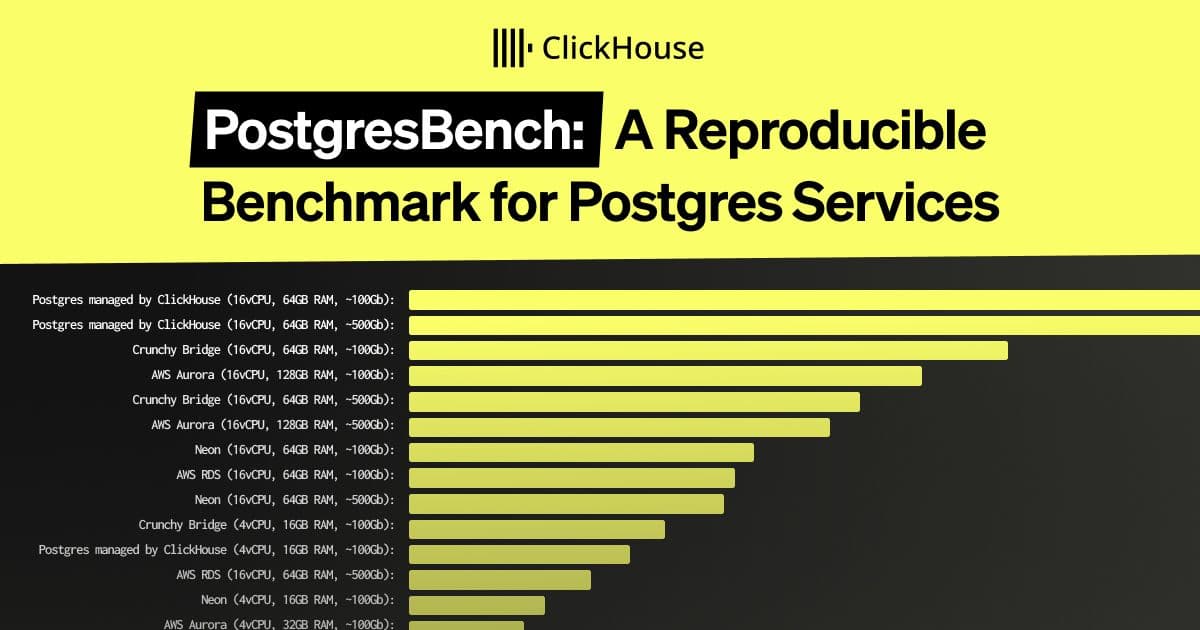
PostgresBench: A Reproducible Benchmark for Postgres Services
2026-06-20ClickHouse has launched PostgresBench, an open and reproducible benchmark designed to evaluate and compare various managed Postgres database services. The new tool provides transparent performance metrics, specifically highlighting how ClickHouse's managed Postgres offering stacks up against its industry peers.

Hey, n00b, we didn't hire you to complete tasks
2026-06-20This brief tech culture piece challenges new industry entrants to look beyond merely completing assigned tasks. It serves as a provocative welcome, suggesting that new hires are expected to think critically and contribute to broader problem-solving rather than just acting as ticket-closers.

A 1976 university experiment spun up the U.S. wind industry
2026-06-19A 1976 experimental wind turbine project at the University of Massachusetts Amherst, directed by Navy veteran William Heronemus, laid the foundation for the modern United States wind energy industry. This pioneering university initiative successfully demonstrated the viability of large-scale wind power and ultimately catalyzed the widespread development of commercial wind energy across the country.
Ask HN: Will programmers write more efficient code during the memory shortage?
2026-06-19Amid a growing memory shortage, major tech companies are increasingly prioritizing code optimization to reduce RAM requirements, though developers emphasize that fixing basic inefficiencies remains more practical than algorithmic rewrites. Meanwhile, the discussion highlights the tech industry's heavy reliance on AI for code generation, sparking debate over the actual success and quality of these machine-written projects across major platforms.

Hospitals and universities repurposing drugs at lower cost
2026-06-18Hospitals and universities are significantly reducing drug development expenses by repurposing existing medications through late-stage clinical trials. This approach enables these institutions to fund new treatments at costs up to 90% lower than those of the traditional pharmaceutical industry.

Has AI already killed self-help nonfiction books?
2026-06-17Recent industry data suggests that large language models might be rendering self-help nonfiction books obsolete by providing people with instant advice. Readers are increasingly turning to AI for quick answers to personal queries instead of consulting traditional self-help guides. This shift highlights the broader disruptive impact of AI on the traditional publishing industry.