Tech Industry News
This section steps back to look at the technology industry as a whole. Expect news on hiring and layoffs, corporate strategy, sector trends, and the shifting balance of power among tech's biggest players. It is a useful lens for readers who follow the industry rather than any single product or company.
Stories here tend to be about patterns rather than single products: waves of restructuring across multiple companies, spending shifts toward AI infrastructure, changes in how software is built and sold, and the consolidation or fragmentation of entire market segments. Analyst reports and industry data often anchor the coverage.
An industry-level view is valuable for anyone whose career, portfolio, or business strategy depends on where technology is heading. Executives use it to benchmark their own companies, job seekers use it to read the labor market, and observers use it to separate durable trends from passing hype.
Windows Server 2025 Runs Better on ARM
2026-04-22Microsoft has optimized Windows Server 2025 to deliver significantly improved performance and efficiency on ARM processors. This update provides enterprise workloads with better scalability and highlights a growing industry shift toward alternative hardware architectures in the data center.

What killed the Florida orange?
2026-04-22The Florida orange industry, once the powerhouse of American citrus, is currently facing a severe and brutal decline. Although the exact reasons remain heavily debated, numerous theories have emerged to explain the downfall of this historic agricultural sector.
Meta to start capturing employee mouse movements, keystrokes for AI training
2026-04-21Meta is implementing large-scale, active surveillance of employee mouse movements and keystrokes to gather data for AI training, prompting significant concerns over the loss of workplace privacy. Commentators warn that this shift from reactive monitoring to proactive tracking reflects a broader tech industry trend of treating workers as data assets rather than people. Consequently, this type of unchecked corporate data harvesting is expected to become the new normal in the US, even as similar practices face strict legal restrictions in parts of Europe.
Kefir C17/C23 Compiler
2026-04-20Kefir is an independent C17/C23 compiler developed by a single programmer to provide a simple, maintainable alternative to industry standards like GCC and Clang. By introducing a third compiler implementation, the project helps developers vet code portability and catch hidden bugs stemming from compiler-specific extensions and preprocessor defines. The tech community has praised the solo project for its impressive test suite and its value in diversifying the C language ecosystem.
OpenClaw isn't fooling me. I remember MS-DOS
2026-04-20Reader discussions comparing the rapid success of OpenClaw to MS-DOS and modern large language models highlight the tech industry's tendency to reward reckless innovation over careful planning and safety. Critics argue this shortcut-driven approach, exemplified by OpenAI's deployment of these models, facilitates copyright theft and threatens jobs while prioritizing short-term profit. Furthermore, commentators warn that the unchecked proliferation of AI-generated content increases global information entropy by destroying the historical link between written text and authentic human authorship.

The Bromine Chokepoint
2026-04-19The ongoing U.S.-Israeli war with Iran has exposed a critical vulnerability in the global semiconductor memory supply chain regarding the availability of bromine. Because bromine is an essential chemical in chip manufacturing, this geopolitical disruption has created a severe production chokepoint that threatens the tech industry with widespread memory shortages.

The RAM shortage could last years
2026-04-19The tech industry is bracing for a multi-year RAM shortage as memory manufacturers struggle to keep pace with surging demand. Current projections indicate that makers will only be able to fulfill 60 percent of total market requirements by the end of 2027.
Ask HN: How did you land your first projects as a solo engineer/consultant?
2026-04-19A recent Hacker News discussion reveals that independent engineers and consultants typically land their first projects by actively providing value and building authority within niche online communities. Contributors strongly advise against general consulting, recommending instead that professionals specialize in a specific technical or industry niche to stand out in a crowded market. Ultimately, combining deep single-subject expertise with a transparent personal brand and consistent lead follow-up is the most effective strategy for attracting long-term clients.

Are the costs of AI agents also rising exponentially? (2025)
2026-04-18Readers discuss how the high hourly costs of frontier AI agents compare to human software engineers, suggesting that cheaper distilled models and custom ASIC hardware could eventually drive down inference expenses. The conversation also highlights a potential industry shift from time-based project estimates to token-based spending models. Furthermore, commenters emphasize the critical need for better cost-attribution tools to accurately track granular AI agent expenses.
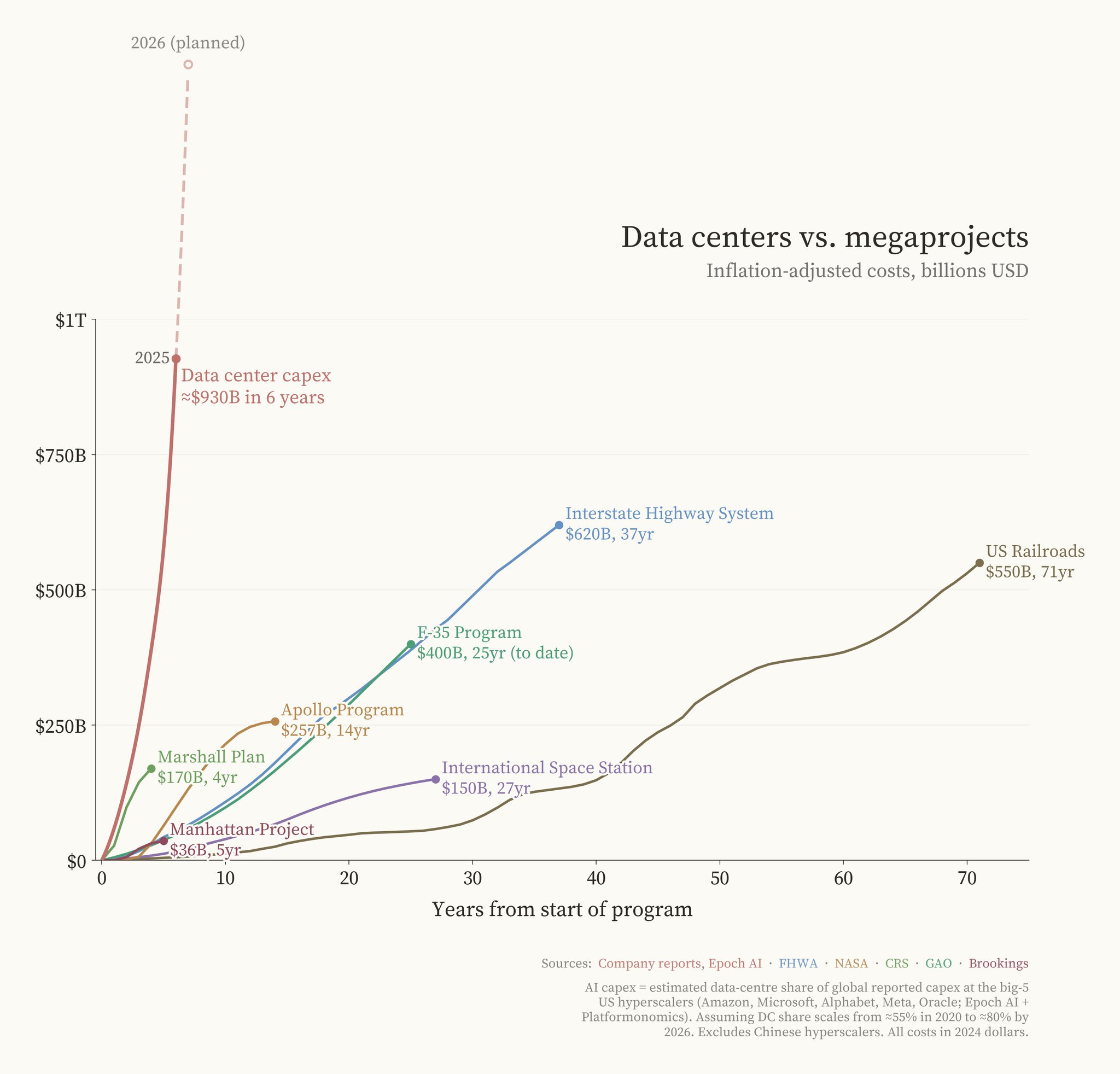
Hyperscalers have already outspent most famous US megaprojects
2026-04-18Major tech hyperscalers are investing unprecedented capital into data center and AI infrastructure, with their current spending already surpassing the historical costs of the most famous US megaprojects. This massive financial commitment highlights the intense industry race to dominate the next generation of cloud computing and artificial intelligence.

It's OK to compare floating-points for equality
2026-04-18A recent article suggests that comparing floating-point numbers for equality is sometimes acceptable, but industry experts argue this view is overly reductive for computational geometry. Because geometric inputs are inherently inexact, exact floating-point comparisons are fundamentally unworkable for boundary representations, requiring geometry kernels to rely on fuzzy tolerances instead. While field-based representations can bypass these floating-point precision issues, developers note they introduce severe new complexities, such as the difficulty of implementing user-requested fillets in CAD software.

I’m spending months coding the old way
2026-04-17Despite the widespread integration of artificial intelligence in software development, one developer is deliberately spending the next three months coding without any AI assistance. This self-imposed return to traditional programming aims to reinforce fundamental skills and establish a baseline for evaluating the true impact of AI tools on the industry.

NIST gives up enriching most CVEs
2026-04-17The US National Institute of Standards and Technology announced a new policy this Wednesday regarding the US National Vulnerability Database. Under this change, the agency will no longer enrich most CVEs with extended analysis. This shift represents a major change in how critical cybersecurity data is processed and distributed across the tech industry.
Ada, its design, and the language that built the languages
2026-04-17A recent analysis highlights how the Ada programming language successfully solved fundamental design challenges back in 1983. Its forward-thinking architecture addressed core software engineering needs long before they became industry standards. Today, modern systems languages like Rust, Go, and C++ are still independently converging on the pioneering solutions Ada established over four decades ago.

YouTube now world's largest media company, topping Disney
2026-04-14YouTube has officially surpassed Disney to become the world's largest media company in 2025. This milestone highlights a significant shift in the entertainment industry as digital platforms overtake traditional media giants.

Spain to expand internet blocks to tennis, golf, movies broadcasting times
2026-04-14Spain plans to expand dynamic internet blocking during live sports and movie broadcasts to combat piracy, a strategy critics argue causes collateral damage by inadvertently restricting access to legitimate websites. In response to these aggressive measures and the sports industry pushing to ban consumer VPNs, digital rights advocates are calling for stricter EU-level intervention. They argue that broad IP-based restrictions violate net neutrality principles and set a dangerous precedent for internet freedom and user privacy across the European Union.