Software Tech News
SubmitSoftware is where most of the technology industry's ideas take shape. This section collects news about applications, platforms, open-source projects, and online services, along with the teams and companies that design, ship, and maintain them.
Typical stories include major releases and redesigns, open-source projects gaining traction, creators presenting tools they built, SaaS companies changing pricing or features, and post-mortems explaining why a product failed or an outage happened. Critical takes on bloat, reliability, and user experience are common too.
Knowing which software is improving, stagnating, or being abandoned helps people pick better tools and avoid costly migrations later. Developers, product teams, IT buyers, and everyday users follow this coverage to keep their stack current and discover useful alternatives.
2026-11-08
GitHub Down Again?
2026-11-08GitHub users reported another frustrating outage, with some unable to download Linux distros and tools while the official status page showed everything as operational. Commenters criticized GitHub’s reliability and status-page transparency, noting that incidents often go unlisted and that outages tend to hit during peak demand. Some suggested third-party uptime trackers, though even those were questioned as the incident unfolded.
Comments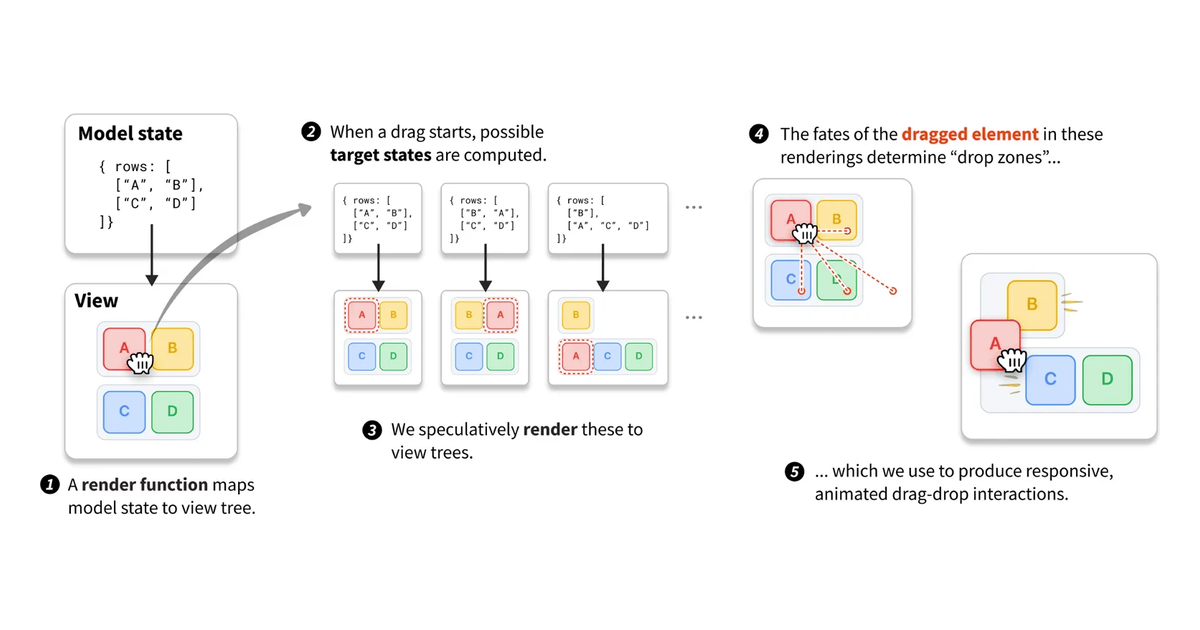
Declarative Dragging
2026-11-08A UIST 2026 Best Paper introduces declarative dragging, a technique that lets interface authors make an element draggable by specifying which future model states should be reachable through dragging. The approach shifts drag behavior from imperative event handling toward declaring accessible states.
Comments

GitHub has launched a public preview of a new pull request overview page designed to make long PRs easier to navigate. The page surfaces merge status and blocking issues without forcing users to scroll through comments and timeline events to reach the merge box.
CommentsA new project, llama-modchip, demonstrates running a 284B DeepSeek-V4-Flash model and 30B mixture-of-experts models entirely on a 64GB CPU with no GPU. It reports under 59GiB RAM use, 256K context, and throughput of 9.1–14.7 tok/s for the 284B model and 25–111 tok/s for the 30B MoEs.
CommentsIn the November 2026 Ask HN thread, developers shared a wide range of side projects and tools, including a YouTube pitch-shifting extension, a Google Local Service Ads-integrated CRM for field-service businesses, a singing-training app, and a macOS document library that indexes files in place. Other highlights included open-source public transit software used by major cities, LLM-powered sunset alerts for San Francisco, real-time meeting speech feedback, an AI loan-servicing platform, and a fresh attempt at the Netflix Prize using LLMs.
CommentsA Linux script called RAM Altman is meant to email Sam Altman every day with a report on how much unused RAM the user’s PC has. Readers also discussed invasive anti-ad-blocker modals and compute centralization, with one noting the script isn’t configured to actually email Altman by default.
Comments
Since November 5, Outlook.com and Hotmail have been bouncing email from domains that lack a DMARC record, affecting even small senders. Senders now need to publish a DMARC record to avoid delivery failures. The suggested fix is a single DMARC DNS record.
CommentsAgent memory tools each use their own formats and cannot read one another, creating the same fragmentation observability once faced. The piece argues agent memory needs an OpenTelemetry-style shared data model, surveying existing formats and proposals. It also outlines what such a common spec could look like.
CommentsAd data collected by popular apps is giving police a powerful surveillance tool, with commenters arguing Google is failing to enforce its own Play Store policies against selling sensitive user data through third-party SDKs. They advise users to restrict location permissions, be wary of apps like weather services that request background location, and prefer browsers with ad blockers, though app-first services make that difficult for ordinary users.
Comments
A Little Snitch for Windows
2026-11-08PacketHound is a free outbound firewall for Windows that watches apps’ internet access. The first time an app tries to connect, it asks users whether to allow or block it.
CommentsMizu introduces zero-copy parallel and asynchronous execution between R and Python over shared memory, aiming for thread-speed performance. The shikokuchuo/pymizu project provides tooling for running Python workloads alongside R without copying data across process boundaries.
Comments
Dux is a free, open-source Wayland desktop shell offering a modern Linux desktop suite with file management, theming, widgets, and powerful monitoring. It is optimized for compositors including niri, Hyprland, mangowm, Sway, and Miracle WM.
Comments
Paul Ford argues that modern web browsers are capable enough to support incredibly rich app development, making dedicated native apps less necessary. He notes that building these experiences on the web is now radically easier than it used to be.
CommentsA new open field guide catalogs 39 types of CAPTCHA, detailing identification signals and methods for breaking them. It covers free and open-source bypass techniques along with paid alternatives, and includes a searchable web version.
CommentsThe History of Djgpp
2026-11-08A reader discussion of DJGPP’s history highlights how the free DOS-based 32-bit C/C++ toolchain was foundational for many developers in the 1990s, especially when compilers were expensive and most people had only DOS PCs. Commenters credit DJGPP and the Allegro game library with early C/C++ experience and as a gateway to Linux and Emacs, with one noting it was used in 1992 for a photon-counting imaging system. The thread also touches on the project’s capitalization and author DJ Delorie’s naming preferences.
CommentsA critique of Deno’s security model argues that its permission prompts can give users a false sense of security, especially in terminal environments where prompt visibility and rendering can’t be fully trusted. Commenters largely favor OS-level security mechanisms over runtime permission models, while noting that Node has since added a similar permission system and that Deno’s official support window is limited.
Comments
Show HN: Where Were We
2026-11-08Show HN: Where Were We is a photo-guessing game that challenges players to identify where and when each image was taken. It uses the player’s own camera roll as the source of photos.
CommentsZapFast is a new native WhatsApp client built in Rust and using the egui GUI library, with a focus on fast performance. The project is available as crmne/zapfast.
Comments
A new feature explores the 15-year fan translation effort behind a classic JRPG, Xanadu. The oversized issue also interviews teams behind two more human-made fan translations, highlighting the dedication behind these projects amid concerns about AI-generated "slop."
Comments
A developer spent two school nights wrestling with bootloops and a homemade ROM to port Android 16 to their blind mother’s keypad phone. The project ultimately left the phone still e-waste—just faster.
CommentsiSponsorBlockTV is an open-source SponsorBlock client designed for all YouTube TV clients. The GitHub project by dmunozv04 aims to bring sponsor-segment skipping to TV-based YouTube apps. It is open for development and contributions on GitHub.
CommentsWaveDudeNext 2D Wave Simulator
2026-11-08WaveDudeNext is a 2D wave simulator that commenters call really cool and useful for anyone getting into photonics, with ties to the Huygens Optics YouTube channel. Discussion also included a question about a possible 3D version, while the page itself returned a 504 Gateway Time-out.
CommentsChimera Vocal Synth
2026-11-08CHIMERA is a new physically modelled voice synthesizer that generates every sound from a simulated airway. Rather than relying on samples, it builds vocal output by directly modeling the mechanics of vocal production.
CommentsClj.rs is a Clojure dialect implemented in Rust. The project appears to bring Clojure-style language features to a Rust-based implementation.
CommentsA developer claims to be rewriting IBM SPSS Statistics alone in 100% safe Rust, but commenters are skeptical that the project is AI-assisted and lacks a clear use case for actual SPSS users. Critics argue it risks fragmenting academic statistical tooling, conflates Rust memory safety with correctness, and raises concerns about AI-generated “slop” with no users or validation.
Comments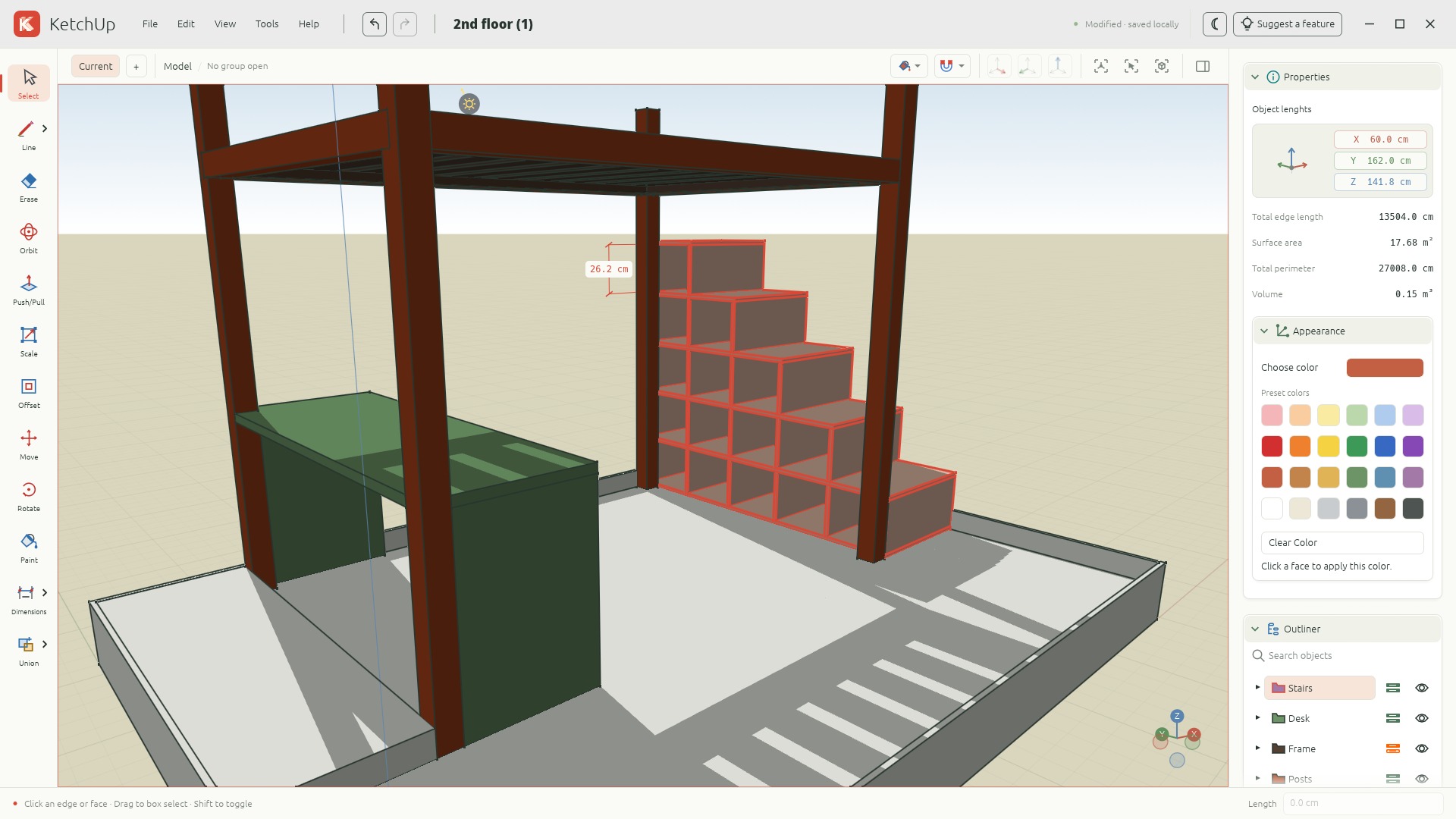
KetchUp is a free, open-source SketchUp alternative built with Rust and WebGPU for 3D modeling in woodworking and furniture design. It lets users plan shelves, tables, and cabinets with precise dimensions on Windows, macOS, Linux, or in the browser.
CommentsA recent revival of interest in 1970s and 1980s 8-bit microcomputers has brought attention back to Z80-based systems and CP/M. This article explains how to get started with CP/M using an emulator on Linux and play Zork 1.
CommentsThe nexus-q project presents a post-quantum cryptographic security engine for protecting data, keys, and identities, with Rust APIs designed around KEM, AEAD, and key derivation workflows. Its focus is on structuring cryptographic interfaces that support secure post-quantum operations.
CommentsSafeScript is a new Show HN project offering a safe subset of JavaScript for executing untrusted code. It is designed to be embedded in many environments while providing safety guarantees.
Comments2026-11-07
Libghostty 1.0
2026-11-07Libghostty 1.0 has been released, with users praising the project for making it easy to embed a high-quality terminal emulator in other applications. The library already powers tools such as Ghostel for Emacs and the embedded terminal in JetBrains IDEs, and developers report it saves substantial work compared with older terminal implementations. It is written in Zig with a C ABI.
Comments