Software Tech News
SubmitSoftware is where most of the technology industry's ideas take shape. This section collects news about applications, platforms, open-source projects, and online services, along with the teams and companies that design, ship, and maintain them.
Typical stories include major releases and redesigns, open-source projects gaining traction, creators presenting tools they built, SaaS companies changing pricing or features, and post-mortems explaining why a product failed or an outage happened. Critical takes on bloat, reliability, and user experience are common too.
Knowing which software is improving, stagnating, or being abandoned helps people pick better tools and avoid costly migrations later. Developers, product teams, IT buyers, and everyday users follow this coverage to keep their stack current and discover useful alternatives.
2026-11-02
WTF Ubuntu?
2026-11-02Ubuntu is drawing criticism over its handling of CVE-2026-98432, which is rated High rather than Critical and accompanied by a vague priority explanation, copied NIST text, and no mitigations. Readers say the response reinforces a shift away from Ubuntu toward Debian, citing security-update prompts, Snap packaging, and Wayland changes as growing frustrations.
CommentsSubvocal is a pair of smart glasses that lets users silently “talk” to their computer, with decoding handled by a companion app/cloud and end-to-end latency usually under 500ms. The team plans key-triggered input rather than a wake word at launch, with later low-power RF sensing to detect speech-like movement, and says it will keep adjustable nose pads for comfort. Readers also discussed accessibility, privacy and trigger tradeoffs, and a possible low-latency voice-change demo.
Comments
If you love a website, back it up
2026-11-02The piece argues that beloved websites can vanish without warning, so users should back up the pages and content they care about. It opens with a personal example of old webpages that are no longer accessible, making the case for personal web archiving.
Comments
Momentic, a YC W24 startup, has launched Mo, an AI QA engineer that finds bugs in web, iOS, and Android apps and provides reproduction steps. It also turns its test runs into regression tests that run on every pull request.
CommentsA new Show HN project called Wikihack surfaces Wikipedia articles linked in Hacker News discussions, ranked by the number of distinct commenters who shared them. It’s described as “HackerTube, but for Wikipedia articles mentioned on HN.”
CommentsPostgres 19 is late, and it's AI's fault
2026-11-02PostgreSQL 19 is missing its historically predictable mid-September release window, and the delay is being blamed on AI. The slip breaks a decade-long pattern of major releases arriving no earlier than the middle of September.
Comments
Polyend has released the source code for its Tracker firmware, following a growing trend of synth makers open-sourcing firmware after Erika Synths did the same for the LXR-02. Users are excited about custom firmware and new projects, while Polyend notes that custom firmware risks aren’t covered by warranty but offers paid out-of-warranty repairs. Commenters see the move as part of a broader shift toward open sourcing in the synth landscape, despite concerns about proprietary components and commercial implications.
Comments
Moving our warehouse off DuckDB
2026-11-02The company migrated its data warehouse off DuckDB and DuckLake onto a custom Trino variant and HogLake, its new open table format. The post details what broke at scale and why the move was necessary.
Comments
AI-powered fan wikis are spreading inaccurate or irrelevant information across games culture, often sidelining the fans who traditionally maintain reliable resources. As these LLM-generated wikis gain prominence, publishers are left playing whack-a-mole to correct errors and stem the confusion.
Comments
The thirteenth installment of F/OSS Comics traces the early days of BSD Unix. Bill Joy takes charge of BSD distribution and debugging, moving from Pascal and ex tapes to a VAX system, then collaborates with Ozalp Babaoglu to bring virtual memory to Unix.
Comments
NIST has released a cybersecurity guide tailored to self-employed people and solopreneurs. It helps them prioritize and implement selected actions from the NIST Cybersecurity Framework that best fit their businesses.
Comments
Trigger.dev says an attacker gained unauthorized access to environment variables for a subset of organizations. The company has blocked the exploit and emailed all impacted account owners with mitigation steps.
CommentsWir müssen wissen – wir werden wissen
2026-11-02A blog post invoking Hilbert’s “We must know—we will know” argues that software developers should keep raising abstraction levels, refactoring and adopting higher-level languages until code can be held in one’s head. Readers debate where that level lies, especially with AI-generated code, warning that vague prompts are not specifications and that agents may silently fill underspecified behavior with plausible but inconsistent output. They suggest formal specifications and verification may become essential as AI accelerates coding without replacing the need to understand and check the result.
Comments
A reporter recounts sneaking into the auditorium during the Windows 2000 launch rehearsal and being surprised to discover the person onstage wasn’t who they expected. The anecdote offers a nostalgic look at lax event security and the rehearsal behind a major Microsoft launch.
Comments
A new DNS build planner reduces rebuild work by selecting the smallest safe build when zone settings change, instead of rebuilding entire zones with tens of millions of records. The approach cuts full builds by 40%, peak memory use by 85%, and halves DNS build delay.
Comments
Ubuntu has gone nearly three weeks without releasing a patch for a Linux zero-day remote code execution vulnerability rated CVSS 9.8. Patched kernels are still unavailable for Ubuntu 22.04, 24.04, and 26.04.
CommentsSOML – A Config Format for Humans
2026-11-02SOML is a configuration format designed to be human-friendly, with its development hosted on GitHub under soml-lang/soml. The project is open to contributions from developers interested in improving the format.
Comments
Oracle has filed plans to issue $20 billion in new stock and bonds to fund its artificial intelligence buildout. The move adds both equity and debt financing as Oracle ramps up spending on AI infrastructure.
Comments
OccupySaaS
2026-11-02Laid-off developers have launched OccupySaaS, a code-based protest movement creating clean-room, open-source, drop-in replacements for major SaaS products. Its first projects are ZeroAuthy, aimed at Auth0, and SalesCompel, aimed at Salesforce.
Comments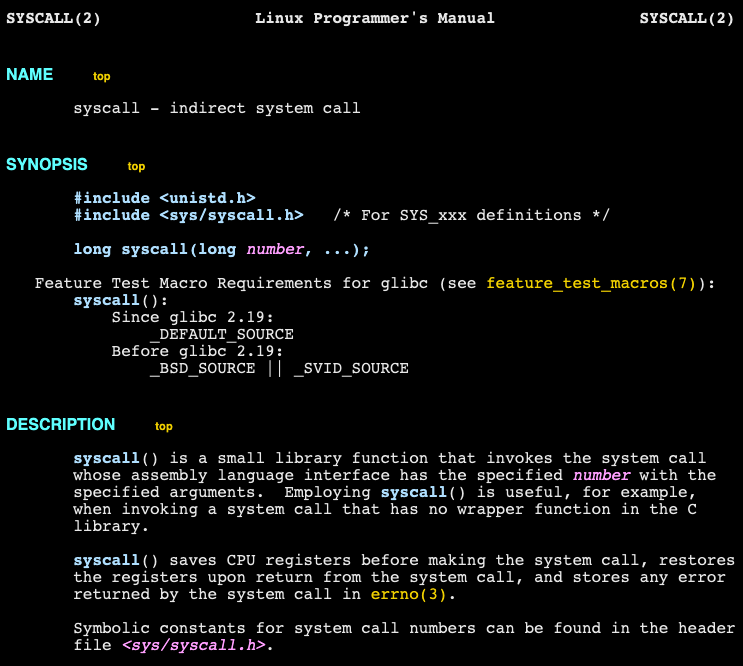
The creator of a Linux system call reference site has updated both the website and API. It now offers per-architecture syscall tables for 27 architectures, including syscall numbers, arguments, and registers, covering Linux 3.3 through 7.3.
Comments
A new Show HN project maps central Warsaw in 1-meter voxels using OpenStreetMap, LiDAR, and the city’s tree database. Users can explore the Palace of Culture, adjust date, hour, and weather, or “possess” a pedestrian in the interactive 3D scene. The map is inspired by Minecraft, MagicaVoxel, and Dungeon Keeper.
CommentsSkill to Create Product Videos
2026-11-02A new Claude Code skill called skill-video-studio lets users produce product videos through real browser capture, branded composition, and local mastering. Created by aaitor, it streamlines the video production workflow by combining automated screen recording with customizable branding and on-device finalization.
CommentsA new Show HN project called HackerHack aims to do for Hacker News posts what HackerBooks does for books, offering a way to browse or collect posts from the site. Readers welcomed it as a fitting resource for the community and thanked the creator for bringing the idea to life.
Comments
A new Show HN project called VHS Camera lets users run their camera or existing videos through a simulated VHS signal, adding tracking lines, color bleed, and a date stamp for an authentic camcorder look. The tool is free, runs entirely in the browser, and uploads nothing.
Comments
The latest installment of the C64 BASIC Dungeon Crawler devlog covers adding stairs, multiple levels, and a levelling-up system. These changes give the game a stronger sense of progression as players descend through new dungeon levels.
Comments2026-11-01
HackerBooks is a new Show HN project that lets users browse thousands of books recommended in Hacker News comments from 2007 to 2026. The books are ranked by how many different people mention them.
CommentsMemdoor, a lightweight coding and automation agent packaged as a single CLI binary, uses a team of five Qwen3.8-27B models to outperform Fable 5 on LiveCodeBench Hard. It can run locally or over SSH, optimize token usage, and automate CI and cron jobs with durable workflows.
CommentsNibnib is an image compression project from raphlinus that stores images at 4 bits per pixel while prioritizing extremely fast decompression. It targets use cases where quick decoding matters more than maximizing compression ratio.
CommentsNovellas with Groff
2026-11-01Readers discussed the varied writing and typesetting pipelines used by tech-savvy fiction writers, from Vim, Scrivener, and troff to Google Docs, Markdown, Git, Emacs, and Typst, while joking that tinkering with such setups can become procrastination. The thread also touched on George R.R. Martin’s WordStar routine, the value of established workflows, and debates over epic worldbuilding versus tighter short fiction.
Comments
The piece explores domain hacks built from obscure Unicode letterlike symbols, including ℡ and №, which visually combine letters and numbers. Since .tel and .no are real top-level domains, such single characters can be used to create clever domain-name tricks. It highlights how Unicode’s less-used symbols can interact unexpectedly with DNS naming rules.
Comments