Software Tech News
Software is where most of the technology industry's ideas take shape. This section collects news about applications, platforms, open-source projects, and online services, along with the teams and companies that design, ship, and maintain them.
Typical stories include major releases and redesigns, open-source projects gaining traction, creators presenting tools they built, SaaS companies changing pricing or features, and post-mortems explaining why a product failed or an outage happened. Critical takes on bloat, reliability, and user experience are common too.
Knowing which software is improving, stagnating, or being abandoned helps people pick better tools and avoid costly migrations later. Developers, product teams, IT buyers, and everyday users follow this coverage to keep their stack current and discover useful alternatives.
2026-08-03
A new GitHub project called CP/M-386 ports the classic CP/M operating system to run in 386 protected mode. Derived from the historic CP/M-68K codebase, the release offers retro computing enthusiasts a novel way to experience the legacy OS on x86 architecture.
Comments
A new project named Isopolis reimagines San Francisco as a massive isometric pixel art map. The visualization was generated by a fine-tuned image model that redraws the city's actual 3D geometry tile by tile.
Comments
Show HN: ssh ssh.place
2026-08-03A new project called ssh.place provides a collaborative drawing canvas that users can access directly through a terminal. The tool requires no account creation or software installation, allowing anyone to start drawing instantly by simply connecting via SSH. This minimalist approach offers a unique, frictionless way for terminal enthusiasts to create digital art together.
CommentsThe developer behind the Book Corners project has decided against syncing new public bookcase submissions to OpenStreetMap. This decision follows an evaluation of the operational and community requirements necessary for contributing data to the open-source mapping platform.
CommentsRFC 9851: TLS 1.2 is in Feature Freeze
2026-08-03RFC 9851 places TLS 1.2 into a feature freeze as adoption of the newer TLS 1.3 continues to grow. Moving forward, no new features will be approved for TLS 1.2 except for urgent security fixes, new exporter labels, and new ALPN protocol IDs. This freeze applies strictly to TLS and does not affect any version of DTLS.
CommentsA new project called Kakehashi introduces an experimental userspace translation layer designed to run macOS binaries on Linux ARM64 systems. The code is currently hosted on GitHub, where developers are invited to contribute to its ongoing development.
Comments
Brennan Kenneth Brown's recent article critically examines the actual impact and accomplishments of personal knowledge management and note-taking tools. The piece questions whether these popular productivity systems have truly delivered on their promises to enhance personal organization and learning.
Comments
Developers form strong attachments to their software tools because consistent functionality builds essential trust in their daily workflows. When these tools constantly change their capabilities, it forces users to continually relearn them and disrupts their established processes. This instability highlights a critical flaw in tool design by undermining the reliable routines that developers depend on.
Comments
SwiftUI After 7 Years
2026-08-03Despite being introduced as the future of Apple development in 2019, SwiftUI still struggles with significant stability and performance issues seven years later. The framework continues to feel like a perpetual beta to many developers. A recent analysis explores the underlying flaws preventing the technology from reaching its full potential.
Comments
Show HN: A Handwritten Blogging Platform
2026-08-03A new Show HN project introduces a minimalist blogging platform designed for handwritten posts to encourage slower, more authentic thinking. The service intentionally omits algorithmic feeds and social metrics like likes, focusing purely on distraction-free publishing with native RSS support.
CommentsShow HN: Mu – Tools for Agents
2026-08-03The open-source project Mu was recently showcased on Hacker News as a new toolkit designed to help developers build and manage software agents. Contributors can access the codebase and collaborate on the project's ongoing development through the micro/mu GitHub repository.
CommentsA new open-source project named NixOS-DGX-Spark enables users to run the Nix package manager and NixOS Linux distribution on the DGX Spark. This integration brings Nix's reproducible package management to the desktop AI workstation. The developer is actively seeking community contributions on GitHub to help expand and refine the project.
CommentsA new Show HN project named creakwork12 lets users make their Framework 12 laptop hinge sound like a rusty, creaky door. Fittingly, the novelty software created by developer ArcaEge is written entirely in the Rust programming language.
CommentsTwenty Years of RISC OS Open
2026-08-03The tech community is marking the twentieth anniversary of RISC OS Open by reflecting on the enduring legacy of the Acorn operating system and the dedicated developers who kept it alive. Long-time users and programmers shared nostalgic memories of the platform's unique ARM assembly environment and its historical significance as the original home for notable software like the Sibelius music notation program.
CommentsA new open-source terminal emulator named Shitty has been released on GitHub, intentionally sacrificing memory safety to achieve maximum processing speed. Despite its humorous moniker, the creator emphasizes that it is a serious project designed to outperform existing terminal alternatives.
Comments
The Myth of Snow Leopard
2026-08-03A recent tech retrospective examines the legacy of Snow Leopard, noting its notoriously chaotic and flawed execution. Despite being a complete hot mess during its run, the enduring myth surrounding it holds surprising value today. Ultimately, the narrative offers practical lessons and useful insights for modern tech professionals navigating complex industry challenges.
CommentsPlaying with Georgia
2026-08-03A recent article exploring the Georgia typeface prompted readers to discuss its cross-platform availability, typographic characteristics, and personal preferences for alternative serif fonts. Commenters shared browser tricks for rendering web pages in specific typefaces and criticized the use of faux bolding. The discussion concluded with suggestions to modernize the classic font by converting it into a true variable axis font.
CommentsA new open-source tool named pytest-leak-finder helps developers pinpoint the root causes of unstable Python tests by detecting state leaks. Created by mgaitan, the utility identifies the specific test that leaks before the actual failure occurs. This approach significantly simplifies the debugging process for flaky test suites across Python projects.
Comments2026-08-02
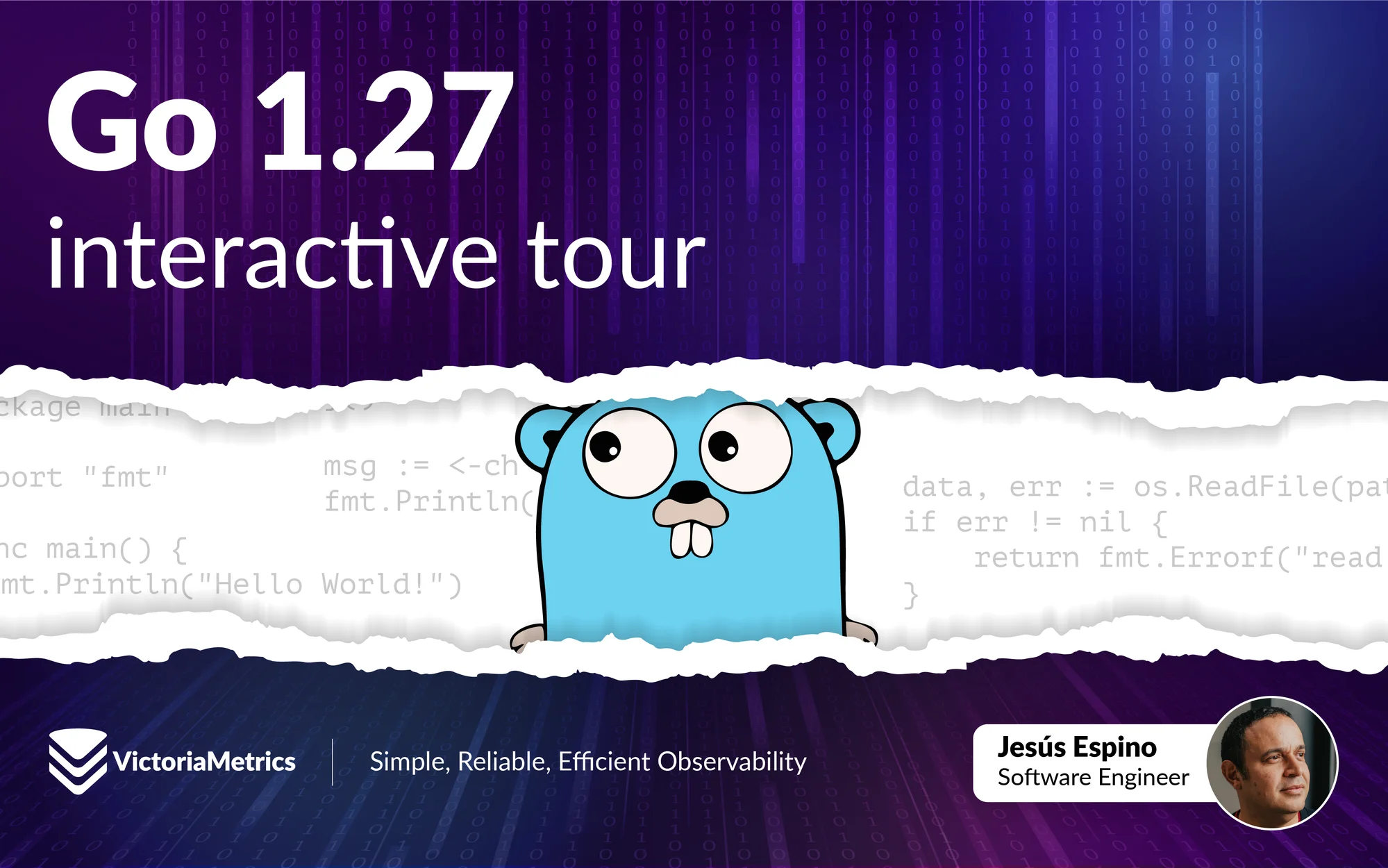
Go 1.27 Interactive Tour
2026-08-02A new interactive tour is now available to explore the latest language, runtime, and standard library updates in Go 1.27. Developers can examine these notable changes firsthand through short, editable, and runnable code examples.
Comments
The Floodgap lab details a retro-computing project focused on rebuilding a flaky vintage Apple Workgroup Server 9150 into a pimped-out machine running MkLinux. This writeup explores the unique challenges and capabilities of running the Linux distribution on legacy PowerPC architecture.
CommentsDiátaxis
2026-08-02Diátaxis is a widely-adopted framework in the software industry that provides a systematic approach to thinking about and creating technical documentation. This pragmatic methodology helps developers structure their documentation more effectively to meet the needs of their users.
CommentsThe newly published RFC 10015 officially deprecates RSA and finite field Diffie-Hellman key exchange methods for TLS 1.2 and DTLS 1.2 connections. The update also discourages the use of static Elliptic Curve Diffie-Hellman cipher suites to further strengthen protocol security. These cryptographic changes apply exclusively to version 1.2, as older protocol versions are already deprecated and TLS 1.3 does not utilize these algorithms.
CommentsLeonardo de Moura, creator of the Lean theorem prover and Z3 SMT solver, released a postmortem detailing the root causes and resolution of Kernel Soundness Bug 14576. The analysis provides critical insights into maintaining the integrity of formal verification systems and preventing similar vulnerabilities in future kernel updates.
Comments
A 2023 analysis examines how Google's strategic decisions, including the discontinuation of Google Reader and the push toward algorithmic feeds, significantly accelerated the decline of RSS adoption. By prioritizing proprietary, walled-garden platforms over open web standards, the tech giant fundamentally shifted user behavior away from decentralized content syndication.
CommentsCostPerPrompt offers live API pricing and real-world cost calculators for over 232 AI models, including GPT, Claude, and Gemini. The platform enables developers to accurately estimate and forecast expenses for chatbots, API budgets, and token usage across rapidly changing generative AI workloads.
Comments
While developing a quantum compiler named Catalyst, a software team accidentally created an LLVM compiler for the Jax machine learning framework. This unexpected tool emerged as a byproduct of extensive problem-solving and provides a novel way to optimize Jax programs.
CommentsUsers of the popular command-line search tool ripgrep have reported occasional segmentation faults when executing exceptionally large directory searches using musl binaries. These crashes disrupt the tool's recursive regex functionality during heavy workloads. The issue is currently being tracked on the project's GitHub repository as developers investigate a fix.
CommentsNetBSD 11.0
2026-08-02Prompted by the topic of NetBSD 11.0, readers discuss the ongoing vitality of the broader BSD family, highlighting NetBSD's unmatched hardware portability, FreeBSD's massive scale in enterprise content delivery, and OpenBSD's strong reputation for security. The community emphasizes that despite their niche status compared to Linux, BSD operating systems remain actively developed, highly reliable, and critical to diverse specialized computing environments.
Comments
Alex Davies highlights the critical but often overlooked world of test engineering in his new book, Kobuk the Destroyer. The book offers an engaging exploration of the unsung professionals who rigorously test and ensure the reliability of the technology we use every day.
Comments
Glyphs 4 – the leading Mac font editor
2026-08-02Glyphs 4 is the latest version of the leading Mac font editor designed to give users complete control over their typography projects. The updated software features tools for quickly drawing high-precision vectors, efficiently reusing shapes, and easily managing large sets of letters and symbols.
Comments