Software Tech News
Software is where most of the technology industry's ideas take shape. This section collects news about applications, platforms, open-source projects, and online services, along with the teams and companies that design, ship, and maintain them.
Typical stories include major releases and redesigns, open-source projects gaining traction, creators presenting tools they built, SaaS companies changing pricing or features, and post-mortems explaining why a product failed or an outage happened. Critical takes on bloat, reliability, and user experience are common too.
Knowing which software is improving, stagnating, or being abandoned helps people pick better tools and avoid costly migrations later. Developers, product teams, IT buyers, and everyday users follow this coverage to keep their stack current and discover useful alternatives.
2026-08-04
A new open-source project called Swiftlet enables users to run massive large language models on Apple devices with remarkably low memory requirements. The tool successfully demonstrates running an 80-billion parameter Qwen model using just 4.3 GB of RAM on a Mac, alongside a 35-billion parameter model on an iPhone. This advancement significantly lowers the hardware barrier for running powerful local AI inference on everyday consumer devices.
Comments
Devtools must be open source
2026-08-04The article argues that developer tools must remain open source to support the industry's rapid shift toward highly personalized software. Open-source devtools provide the necessary flexibility and community-driven innovation required to build these customized applications. Ultimately, keeping these tools open is essential for developers to thrive in this new era of personalized technology.
Comments
Reader discussions reflect on the ill-fated Windows XP 64-bit Edition for Intel's Itanium architecture, noting it was uniquely built on the Windows Server 2003 kernel. Commenters attribute the platform's failure to reach the consumer market to high costs, poor x86 emulation, and the rapid rise of AMD's competing x86-64 architecture. Ultimately, Itanium was relegated to niche high-performance computing roles before Microsoft completely dropped operating system support after Windows Server 2008 R2.
Comments
Serving frontier AI models like Kimi and GLM at scale requires overcoming significant GPU memory constraints through techniques like KV cache quantization and weight compression. These optimizations enable faster and cheaper deployment, while newly implemented integrity checks ensure safer model serving.
Comments
ComfyUI now features day-zero support for MiniMax H3, an open-weights omni-modal video model that generates 2K resolution video with native stereo audio. Thanks to significant optimizations, this powerful model can be run locally on accessible consumer hardware like a 3060.
Comments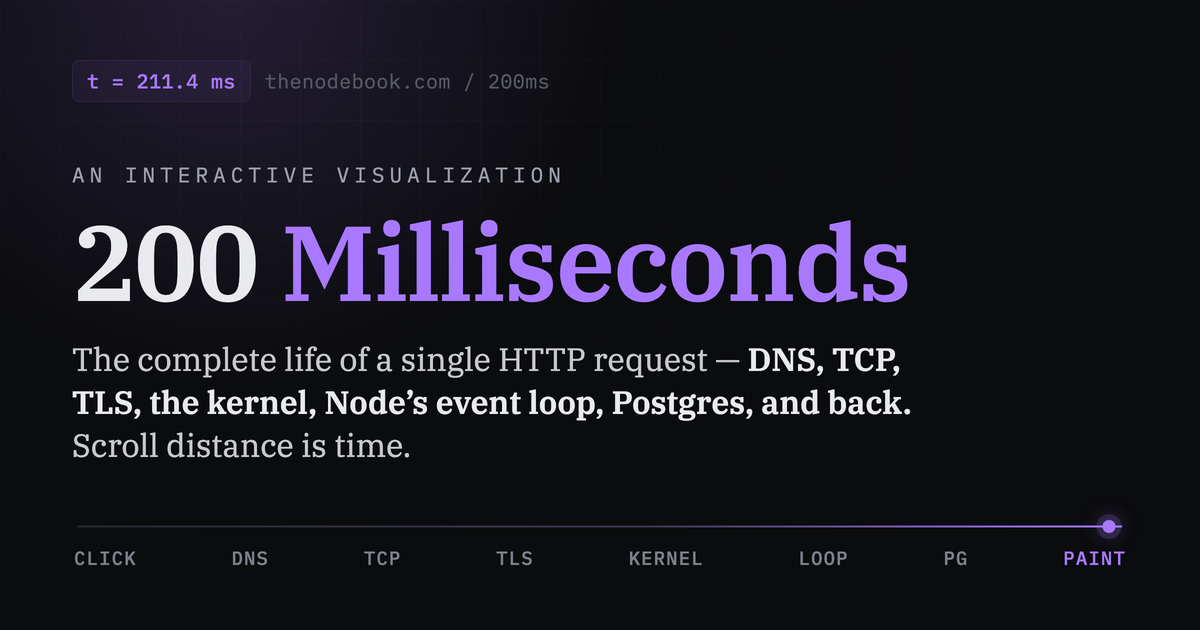
200 Milliseconds
2026-08-04A new interactive visualization traces the entire lifecycle of a single HTTP request during the 200 milliseconds after a user presses Enter. The project maps the data journey through DNS, TCP, TLS, the Linux kernel, Node's event loop, and Postgres back to the user interface, using scroll distance to represent elapsed time.
CommentsCelebrating its 45th anniversary, the legendary file transfer program Kermit has been updated with its first new C-Kermit release in 15 years. Historically celebrated for its unmatched portability across countless incompatible legacy systems and its reliability on poor dial-up connections, the project's extensive source code archive continues to serve as a vital repository for preserving obscure, defunct computing platforms.
Comments
Andy Pavlo has joined ClickHouse, Inc. to establish and lead a new research team named ClickHouse Labs. This strategic addition will help expand the company's research capabilities and drive future technological innovation.
Comments
Security researchers have successfully hacked the Windows 365 Link, a locked-down thin client designed exclusively to connect to Microsoft's Cloud PC. By breaking out of its restricted Windows 11 environment, they demonstrated that the device can be repurposed, echoing past failures in Microsoft's attempts to lock down its hardware.
Comments
Y Combinator S26 startup Hoplite has launched to offer developers an effortless way to deploy cloud coding agents. The platform focuses on streamlining the setup process while delivering a highly intuitive and enjoyable user experience.
CommentsBonsai: Janestreet's UI Library
2026-08-04Jane Street has introduced Bonsai, a new UI library designed for building dynamic web applications using the OCaml programming language and the Js_of_ocaml compiler. This release provides a robust framework that allows developers to seamlessly translate their front-end code into JavaScript for efficient browser execution.
CommentsTwenty Years of Pandoc
2026-08-04The open-source universal document converter Pandoc is celebrating a major milestone by marking its twentieth anniversary. Over the past two decades, the software has become an indispensable utility for developers and academics to seamlessly convert between various markup formats. This occasion highlights the enduring impact and continued relevance of the foundational project within the modern tech ecosystem.
Comments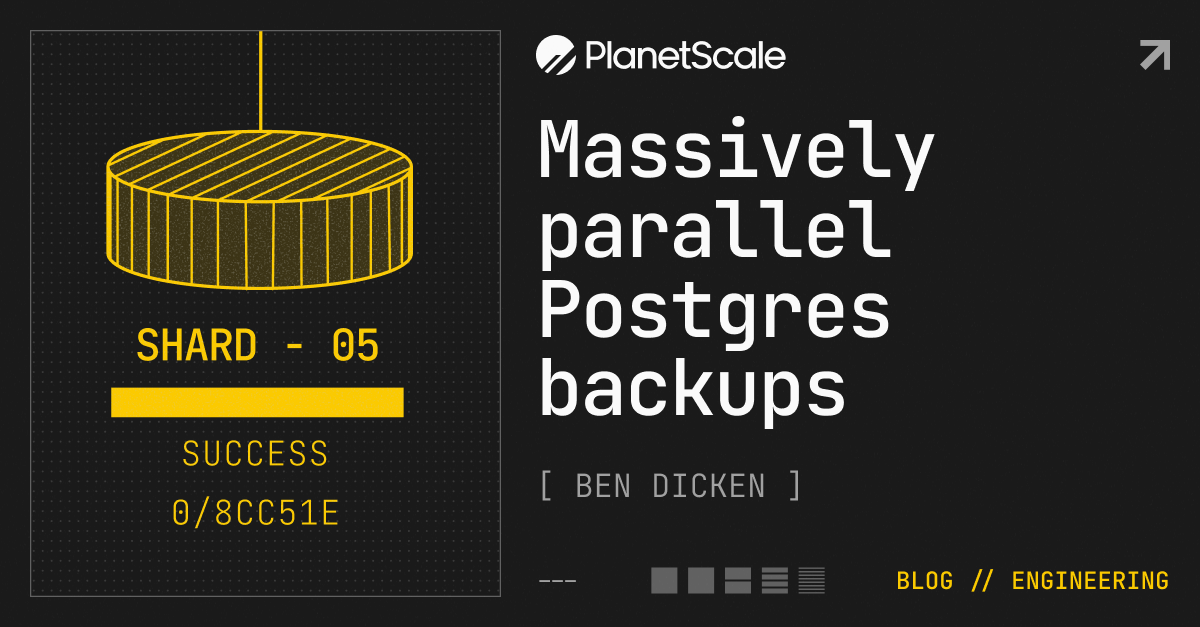
Massively Parallel Postgres Backups
2026-08-04PlanetScale has significantly reduced backup times for petabyte-scale sharded Postgres databases by completing the process in just a few hours. The company achieves this efficiency by leveraging massively parallel infrastructure, object storage, and WAL replay technologies to handle the massive data loads.
CommentsA new open-source project named KisakCOD aims to reimplement the multiplayer experience of the classic game Call of Duty 4. Hosted by SwagSoftware on GitHub, the initiative is actively seeking community contributions to help develop and refine the codebase.
Comments2026-08-03
A new GitHub project called CP/M-386 ports the classic CP/M operating system to run in 386 protected mode. Derived from the historic CP/M-68K codebase, the release offers retro computing enthusiasts a novel way to experience the legacy OS on x86 architecture.
Comments
A new project named Isopolis reimagines San Francisco as a massive isometric pixel art map. The visualization was generated by a fine-tuned image model that redraws the city's actual 3D geometry tile by tile.
CommentsShow HN: ssh ssh.place
2026-08-03A new project called ssh.place provides a collaborative drawing canvas that users can access directly through a terminal. The tool requires no account creation or software installation, allowing anyone to start drawing instantly by simply connecting via SSH. This minimalist approach offers a unique, frictionless way for terminal enthusiasts to create digital art together.
CommentsThe developer behind the Book Corners project has decided against syncing new public bookcase submissions to OpenStreetMap. This decision follows an evaluation of the operational and community requirements necessary for contributing data to the open-source mapping platform.
CommentsRFC 9851: TLS 1.2 is in Feature Freeze
2026-08-03RFC 9851 places TLS 1.2 into a feature freeze as adoption of the newer TLS 1.3 continues to grow. Moving forward, no new features will be approved for TLS 1.2 except for urgent security fixes, new exporter labels, and new ALPN protocol IDs. This freeze applies strictly to TLS and does not affect any version of DTLS.
CommentsA new project called Kakehashi introduces an experimental userspace translation layer designed to run macOS binaries on Linux ARM64 systems. The code is currently hosted on GitHub, where developers are invited to contribute to its ongoing development.
Comments
Brennan Kenneth Brown's recent article critically examines the actual impact and accomplishments of personal knowledge management and note-taking tools. The piece questions whether these popular productivity systems have truly delivered on their promises to enhance personal organization and learning.
Comments
Developers form strong attachments to their software tools because consistent functionality builds essential trust in their daily workflows. When these tools constantly change their capabilities, it forces users to continually relearn them and disrupts their established processes. This instability highlights a critical flaw in tool design by undermining the reliable routines that developers depend on.
Comments
SwiftUI After 7 Years
2026-08-03Despite being introduced as the future of Apple development in 2019, SwiftUI still struggles with significant stability and performance issues seven years later. The framework continues to feel like a perpetual beta to many developers. A recent analysis explores the underlying flaws preventing the technology from reaching its full potential.
Comments
Show HN: A Handwritten Blogging Platform
2026-08-03A new Show HN project introduces a minimalist blogging platform designed for handwritten posts to encourage slower, more authentic thinking. The service intentionally omits algorithmic feeds and social metrics like likes, focusing purely on distraction-free publishing with native RSS support.
CommentsShow HN: Mu – Tools for Agents
2026-08-03The open-source project Mu was recently showcased on Hacker News as a new toolkit designed to help developers build and manage software agents. Contributors can access the codebase and collaborate on the project's ongoing development through the micro/mu GitHub repository.
CommentsA new open-source project named NixOS-DGX-Spark enables users to run the Nix package manager and NixOS Linux distribution on the DGX Spark. This integration brings Nix's reproducible package management to the desktop AI workstation. The developer is actively seeking community contributions on GitHub to help expand and refine the project.
CommentsA new Show HN project named creakwork12 lets users make their Framework 12 laptop hinge sound like a rusty, creaky door. Fittingly, the novelty software created by developer ArcaEge is written entirely in the Rust programming language.
CommentsTwenty Years of RISC OS Open
2026-08-03The tech community is marking the twentieth anniversary of RISC OS Open by reflecting on the enduring legacy of the Acorn operating system and the dedicated developers who kept it alive. Long-time users and programmers shared nostalgic memories of the platform's unique ARM assembly environment and its historical significance as the original home for notable software like the Sibelius music notation program.
CommentsA new open-source terminal emulator named Shitty has been released on GitHub, intentionally sacrificing memory safety to achieve maximum processing speed. Despite its humorous moniker, the creator emphasizes that it is a serious project designed to outperform existing terminal alternatives.
Comments
The Myth of Snow Leopard
2026-08-03A recent tech retrospective examines the legacy of Snow Leopard, noting its notoriously chaotic and flawed execution. Despite being a complete hot mess during its run, the enduring myth surrounding it holds surprising value today. Ultimately, the narrative offers practical lessons and useful insights for modern tech professionals navigating complex industry challenges.
Comments