Software Tech News
Software is where most of the technology industry's ideas take shape. This section collects news about applications, platforms, open-source projects, and online services, along with the teams and companies that design, ship, and maintain them.
Typical stories include major releases and redesigns, open-source projects gaining traction, creators presenting tools they built, SaaS companies changing pricing or features, and post-mortems explaining why a product failed or an outage happened. Critical takes on bloat, reliability, and user experience are common too.
Knowing which software is improving, stagnating, or being abandoned helps people pick better tools and avoid costly migrations later. Developers, product teams, IT buyers, and everyday users follow this coverage to keep their stack current and discover useful alternatives.
2026-04-19

Vercel April 2026 security incident
2026-04-19Cloud development platform Vercel has disclosed a security incident after threat actors claimed to have breached its systems. The attackers are currently attempting to sell the stolen data.
CommentsReader discussions surrounding the SPEAKE(a)R paper explore the technical and creative practice of repurposing audio speakers as microphones for DIY music production and professional recording. Participants also note that the dual functionality of a single audio transducer serves as a foundational physics principle for establishing absolute sound pressure measurements.
Comments

Video game developers recently shared insights into the technical tricks and design challenges required to implement a seamless pause feature. They explained the complex engineering processes involved in accurately halting and resuming game states when a player presses a button.
CommentsReader discussions surrounding the Nanopass Framework debate the merits of using numerous small compiler passes versus fewer, larger ones. While some developers praise the framework's domain-specific language for simplifying transformations and pass reordering, others warn of significant performance overhead, redundancy, and debugging difficulties. The conversation highlights that the ideal pass architecture ultimately depends on specific language design choices and the careful balance between separation of concerns and complex inter-pass interactions.
CommentsModern Common Lisp with FSet
2026-04-19This article explores the modernization of Common Lisp development by introducing contemporary libraries and functional paradigms such as FSet. It highlights how adopting these updated tools and techniques can significantly improve code reliability and developer efficiency in modern projects.
Comments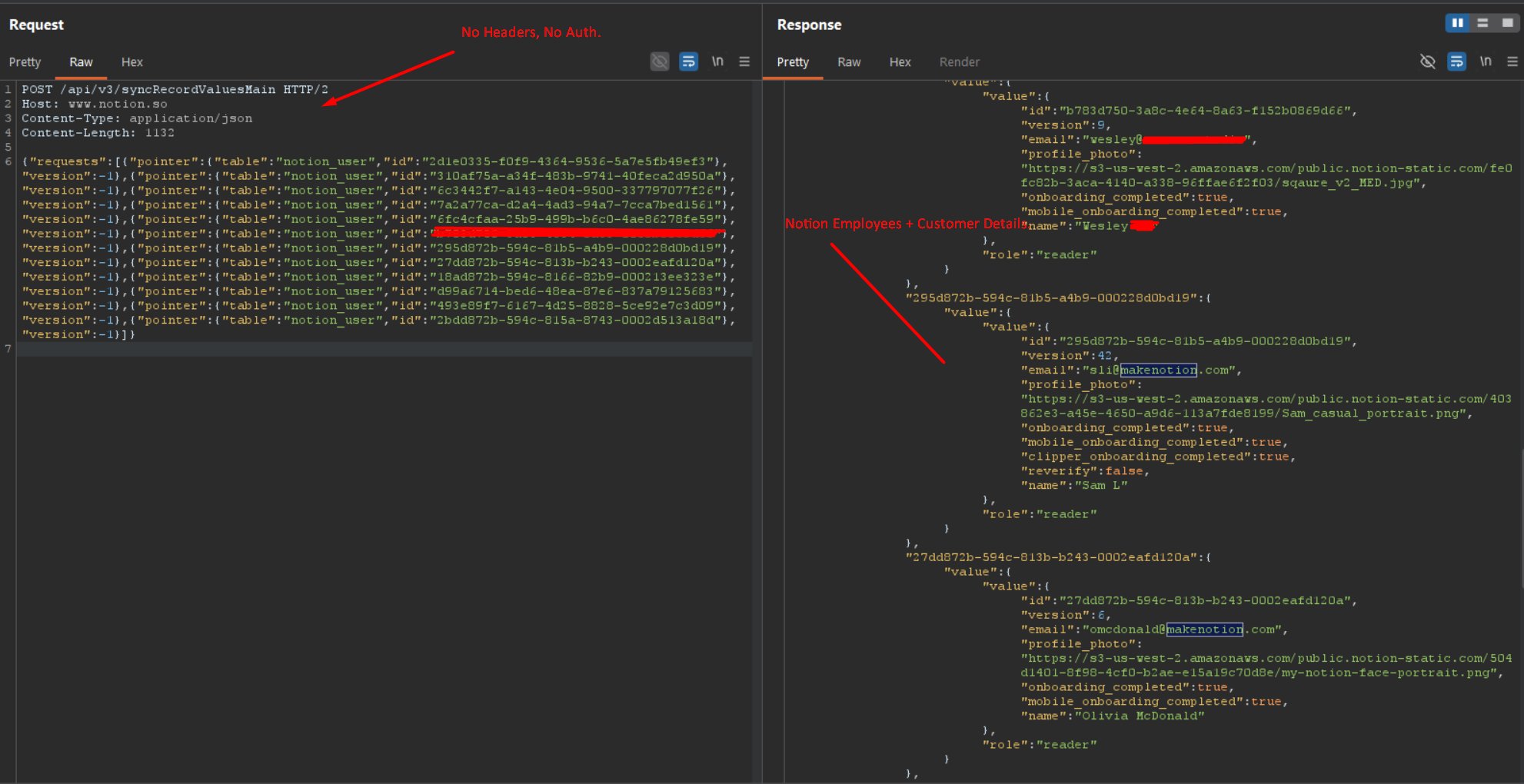
A zero-authentication vulnerability in Notion allows anyone to extract the full names, email addresses, and profile photos of users who have edited a public page. The issue requires no login or tokens, as a single POST request returns all sensitive contributor data. This flaw poses a significant privacy risk for organizations utilizing public company wikis, potentially exposing the personal information of their entire workforce.
CommentsThe author reflects on their first IETF meeting, noting that the organization involves a significant amount of internet maintenance grunt work. The accompanying piece examines the theoretical versus practical realities of IPv6, analyzing how the protocol was designed to solve the internet's complex scaling challenges.
CommentsA new browser demo generates Excalidraw diagrams from text prompts by running the 3.1GB Gemma 4 E2B AI model entirely in desktop Chrome via WebGPU. The application optimizes performance using custom WGSL compute shaders to compress the KV cache by 2.4 times, but it currently requires desktop Chrome 134 or higher and lacks Safari and iOS support.
Comments
A former Unity employee details the process of updating the Gun Rocket project across ten years of engine iterations. The walkthrough provides developers with practical tips, tricks, and firsthand insights into the technical evolution of the platform.
Comments
A new interactive map reveals the email service providers used by approximately 2,100 Swiss municipalities by analyzing their DNS MX and SPF records. This data visualization provides a clear overview of the digital infrastructure powering local Swiss government communications.
Comments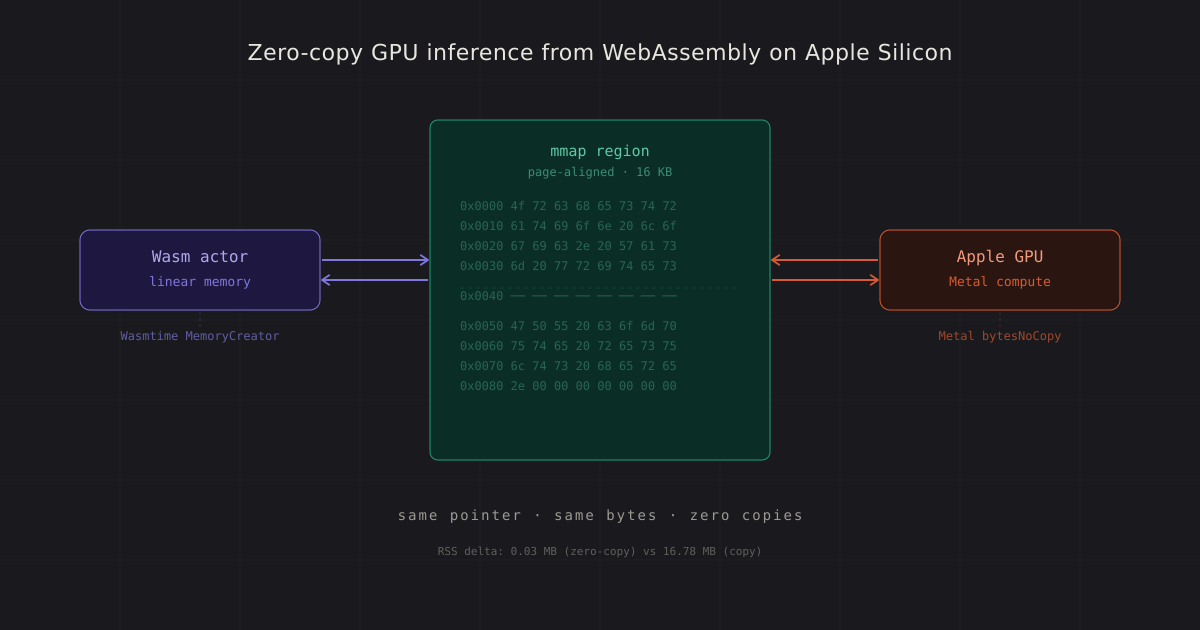
A new zero-copy chain allows WebAssembly modules to share linear memory directly with Apple Silicon GPUs without data copying or serialization. This direct memory sharing significantly reduces processing overhead and enables highly efficient stateful AI inference.
Comments
Six Levels of Dark Mode (2024)
2026-04-19This guide explores six distinct levels of dark mode implementation for modern web projects, ranging from simple HTML-only attributes to complex JavaScript-driven solutions. By examining the various CSS techniques in between, it helps developers choose the most effective dark mode strategy for their applications.
CommentsA developer has built a CHIP-8 emulator entirely in a custom programming language they designed from scratch. The open-source project is now available on GitHub under the navid-m/chip8emu repository for the community to explore and contribute to.
CommentsA new tool called Faceoff allows hockey fans to follow National Hockey League games directly from their command line. This terminal-based user interface provides a lightweight, minimalist alternative for tracking live sports updates without needing a traditional graphical application.
Comments
Shader Lab is a new toolkit launched on Hacker News that provides a visual, Photoshop-like interface for shader development. The platform allows users to easily create, stack, and animate complex shaders without relying solely on manual coding.
Comments
Vercel disclosed a security breach impacting its internal systems that came to light on Sunday. The company has brought in an incident response provider to investigate the intrusion, though specific details regarding the scope of the attack remain scarce.
CommentsA company has introduced a reverse-CAPTCHA designed to verify AI agents during the signup process. Unlike traditional tests that block automated scripts, this new system requires users to prove they are AI agents while intentionally keeping humans out. This development highlights the growing need to build digital infrastructure natively for automated AI workflows.
Comments
I learned Unity the wrong way
2026-04-19A developer shares a cautionary tale about spending three years building Unity games by blindly copying tutorials and forum scripts. Their lack of foundational programming knowledge was exposed during a technical interview when they failed to explain basic data structures. The story highlights the long-term pitfalls of prioritizing quick results over understanding core computer science concepts.
CommentsThe author shares their initial experience configuring AMD's ROCm software stack on the new Strix Halo platform, highlighting the efficient sharing of 128GB unified memory between the CPU and GPU. The article also details their chosen operating system and walks through the driver installation process.
Comments2026-04-18

Migrating from DigitalOcean to Hetzner
2026-04-18A complex production infrastructure was successfully migrated from DigitalOcean to Hetzner dedicated servers with zero downtime. The extensive transition seamlessly accommodated 248 GB of MySQL data across 30 databases, 34 Nginx sites, and critical services like GitLab EE and Neo4j while supporting live mobile app traffic.
CommentsState of Kdenlive
2026-04-18In 2025, the Kdenlive open-source video editor focused on steady development by balancing new features with routine bug fixes and user interface polish. The team explicitly prioritized overall system stability and workflow performance over adding excessive new features to prevent feature creep.
Comments
Readers discuss how the high hourly costs of frontier AI agents compare to human software engineers, suggesting that cheaper distilled models and custom ASIC hardware could eventually drive down inference expenses. The conversation also highlights a potential industry shift from time-based project estimates to token-based spending models. Furthermore, commenters emphasize the critical need for better cost-attribution tools to accurately track granular AI agent expenses.
Comments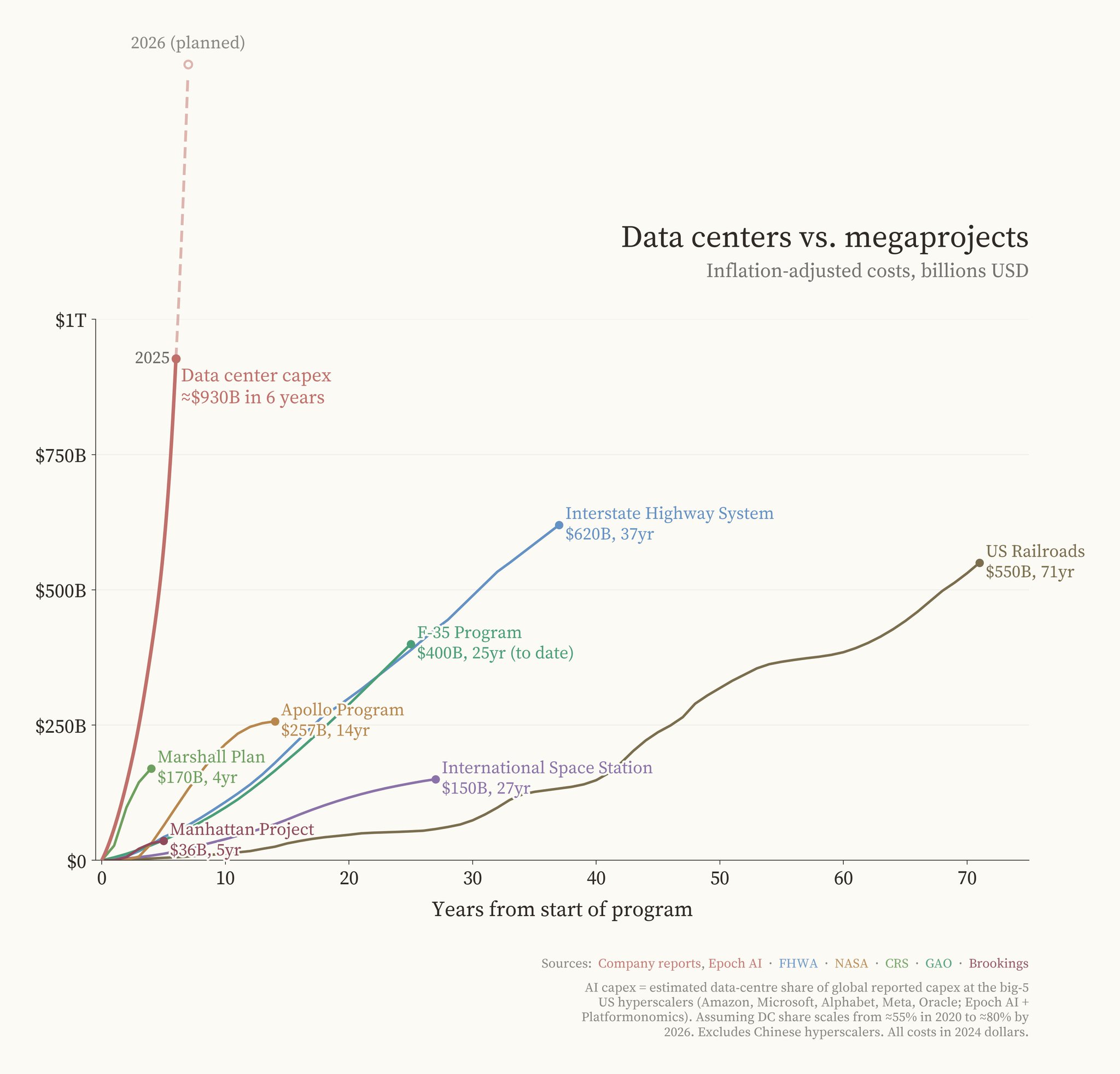
Major tech hyperscalers are investing unprecedented capital into data center and AI infrastructure, with their current spending already surpassing the historical costs of the most famous US megaprojects. This massive financial commitment highlights the intense industry race to dominate the next generation of cloud computing and artificial intelligence.
Comments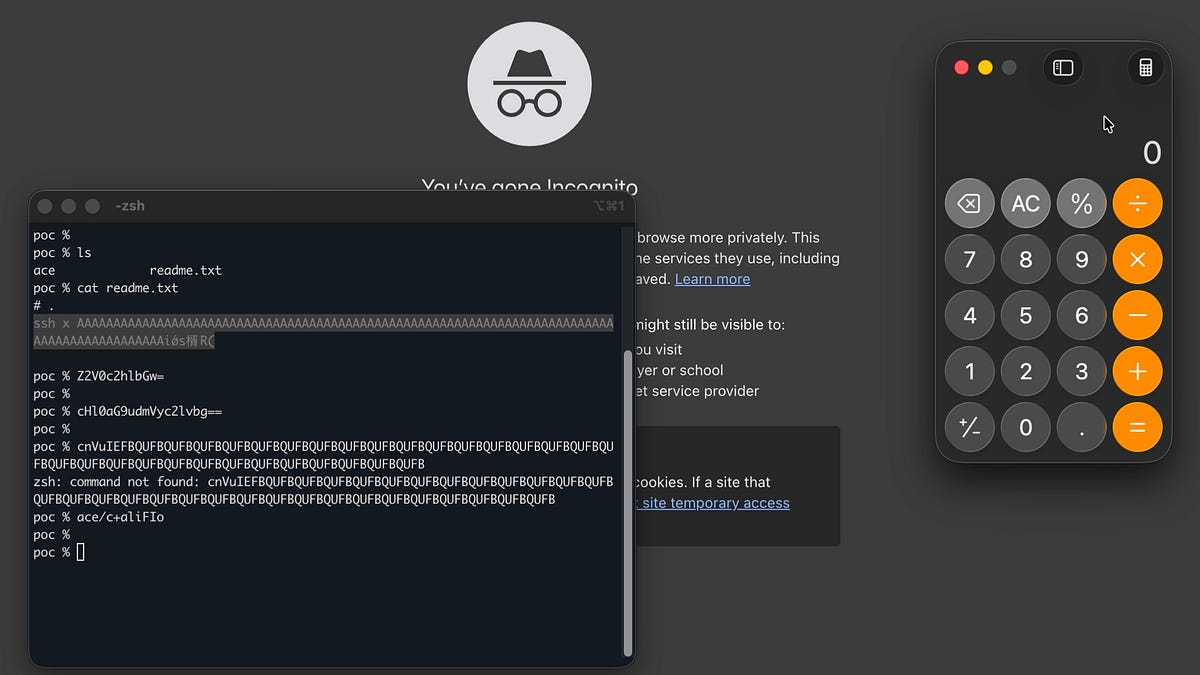
A newly identified vulnerability in the iTerm2 terminal emulator allows attackers to turn a simple "cat readme.txt" command into arbitrary code execution. By exploiting how the application processes terminal output, hackers can weaponize seemingly harmless file reads to run malicious scripts.
Comments
Early users of Claude Design report mixed results, praising the tool for its logical information architecture but criticizing its strict usage limits and tendency to generate generic outputs. The conversation around the AI's homogenization problem quickly evolved into a broader debate about the current state of user interface and user experience design. Many participants lamented that marketing-driven demands for unique brand recognition have ultimately sacrificed the predictable, platform-level consistency found in older software.
CommentsA developer has showcased a novel calculator that utilizes interval and union arithmetic to overcome floating-point precision issues and compute true inverses of mathematical functions. Originally built to test a custom TypeScript library for handling disjoint sets of intervals, the project has sparked community discussions regarding interval math standards, notation, and related graphical applications.
CommentsTowards trust in Emacs
2026-04-18Eshel Yaron has introduced the Emacs Trust Manager to enhance security within the Emacs ecosystem. This new feature allows users to safely manage and verify trusted content directly inside the editor. The addition marks a significant step forward in improving the overall reliability of the platform.
CommentsSlop Cop
2026-04-18Readers discuss a new tool designed to strip verbose AI-generated phrasing from text, noting its value for concise business communication. However, they argue that the true flaw of AI content is a lack of substance rather than specific vocabulary, warning that over-optimizing for brevity can lead to half-baked ideas and fragmented messaging styles. Ultimately, the discussion emphasizes that effective writing requires a careful balance between concise editing and preserving necessary nuance.
CommentsA new tool called MDV acts as a Markdown superset for creating data-rich documents, dashboards, and slides. It enables users to embed data and visualizations directly into their files. Additional features include live preview capabilities, HTML and PDF export options, and a dedicated VS Code extension.
CommentsOptimizing Ruby Path Methods
2026-04-18An Intercom engineer explains how optimizing Ruby path methods improved the continuous integration pipeline for their monolithic application. The optimization effort was one of the author's first major projects after joining the company.
Comments