Programming Tech News
SubmitWriting software is a craft that keeps reinventing itself. This section gathers news and articles for people who program, covering language releases, compilers and runtimes, frameworks, development workflows, and the ideas that change how code gets written and reviewed.
Typical stories include new versions of Rust, Python, Java, JavaScript, and TypeScript, performance and debugging investigations, essays on architecture and code quality, and discussions of how AI coding assistants are changing day-to-day development. Hands-on tutorials and lessons from long-running projects show up often.
The tools and practices developers choose affect how fast teams ship and how well their software holds up over time. Working engineers, students learning to code, and engineering leaders follow this coverage to sharpen their skills and make better technical decisions.
2026-11-02

Momentic, a YC W24 startup, has launched Mo, an AI QA engineer that finds bugs in web, iOS, and Android apps and provides reproduction steps. It also turns its test runs into regression tests that run on every pull request.
CommentsPostgres 19 is late, and it's AI's fault
2026-11-02PostgreSQL 19 is missing its historically predictable mid-September release window, and the delay is being blamed on AI. The slip breaks a decade-long pattern of major releases arriving no earlier than the middle of September.
Comments

The thirteenth installment of F/OSS Comics traces the early days of BSD Unix. Bill Joy takes charge of BSD distribution and debugging, moving from Pascal and ex tapes to a VAX system, then collaborates with Ozalp Babaoglu to bring virtual memory to Unix.
CommentsAsk HN: Who is hiring? (November 2026)
2026-11-02The November 2026 Ask HN hiring thread features companies posting full-time engineering and sales roles across Amsterdam, Skopje, Colorado, Toronto, London, New York, San Francisco, Zurich, and remote locations. Stream is hiring backend and infrastructure engineers plus a Staff Engineer for its Video team with EU remote and Netherlands visa sponsorship, while Namespace, Juro, Equall, and Mastra also list infrastructure, AI engineering, backend, and founding sales openings.
CommentsWir müssen wissen – wir werden wissen
2026-11-02A blog post invoking Hilbert’s “We must know—we will know” argues that software developers should keep raising abstraction levels, refactoring and adopting higher-level languages until code can be held in one’s head. Readers debate where that level lies, especially with AI-generated code, warning that vague prompts are not specifications and that agents may silently fill underspecified behavior with plausible but inconsistent output. They suggest formal specifications and verification may become essential as AI accelerates coding without replacing the need to understand and check the result.
Comments
A new DNS build planner reduces rebuild work by selecting the smallest safe build when zone settings change, instead of rebuilding entire zones with tens of millions of records. The approach cuts full builds by 40%, peak memory use by 85%, and halves DNS build delay.
CommentsSOML – A Config Format for Humans
2026-11-02SOML is a configuration format designed to be human-friendly, with its development hosted on GitHub under soml-lang/soml. The project is open to contributions from developers interested in improving the format.
Comments
OccupySaaS
2026-11-02Laid-off developers have launched OccupySaaS, a code-based protest movement creating clean-room, open-source, drop-in replacements for major SaaS products. Its first projects are ZeroAuthy, aimed at Auth0, and SalesCompel, aimed at Salesforce.
Comments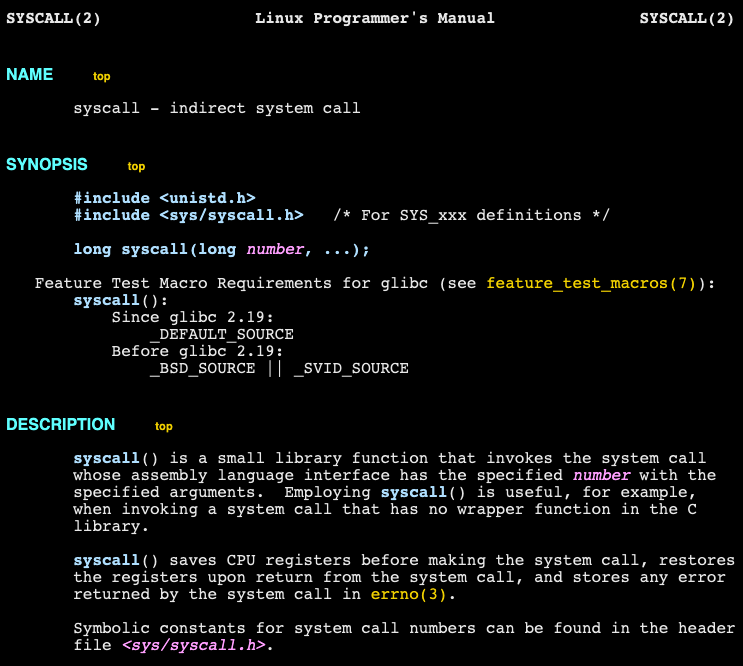
The creator of a Linux system call reference site has updated both the website and API. It now offers per-architecture syscall tables for 27 architectures, including syscall numbers, arguments, and registers, covering Linux 3.3 through 7.3.
CommentsSkill to Create Product Videos
2026-11-02A new Claude Code skill called skill-video-studio lets users produce product videos through real browser capture, branded composition, and local mastering. Created by aaitor, it streamlines the video production workflow by combining automated screen recording with customizable branding and on-device finalization.
Comments
Making Peace with the Projective Plane
2026-11-02A new approach to projective geometry presents it as a practical problem-solving tool rather than an abstract, pre-given subject. By motivating the projective plane through concrete applications, it aims to make the topic more intuitive for learners.
Comments
A new arXiv paper presents a single-file study of large language models handling legacy PHP, focusing on the risk that modernization efforts break code that already works. The work highlights how LLM-driven updates can introduce regressions when applied to functioning legacy code.
CommentsA new Show HN project called HackerHack aims to do for Hacker News posts what HackerBooks does for books, offering a way to browse or collect posts from the site. Readers welcomed it as a fitting resource for the community and thanked the creator for bringing the idea to life.
Comments
The latest installment of the C64 BASIC Dungeon Crawler devlog covers adding stairs, multiple levels, and a levelling-up system. These changes give the game a stronger sense of progression as players descend through new dungeon levels.
Comments
Bitmovin, a YC S15 alum, is hiring technical graduates in Denver for engineering and computer science-focused roles. The position is a three-month internship covering engineering, customer experience, and solutions.
Comments2026-11-01
Memdoor, a lightweight coding and automation agent packaged as a single CLI binary, uses a team of five Qwen3.8-27B models to outperform Fable 5 on LiveCodeBench Hard. It can run locally or over SSH, optimize token usage, and automate CI and cron jobs with durable workflows.
CommentsNibnib is an image compression project from raphlinus that stores images at 4 bits per pixel while prioritizing extremely fast decompression. It targets use cases where quick decoding matters more than maximizing compression ratio.
Comments
Mathematician Frank Calegari argues that recent AI advances, including OpenAI’s October release, have fundamentally changed mathematics and that the field should respond accordingly rather than mourn the shift. He urges mathematicians to adapt to this new landscape and act as though the change is already here.
Comments
ChatGPT and Codex usage limits merging
2026-11-01OpenAI is merging ChatGPT and Codex usage limits into a shared allowance, according to reader discussion. Commenters criticize the move as a cost-cutting measure that could frustrate paying subscribers, since agentic coding consumes far more tokens than typical chat and decoupled billing had been a reason to stay. Some warn users may switch providers or use ChatGPT less as a result.
Comments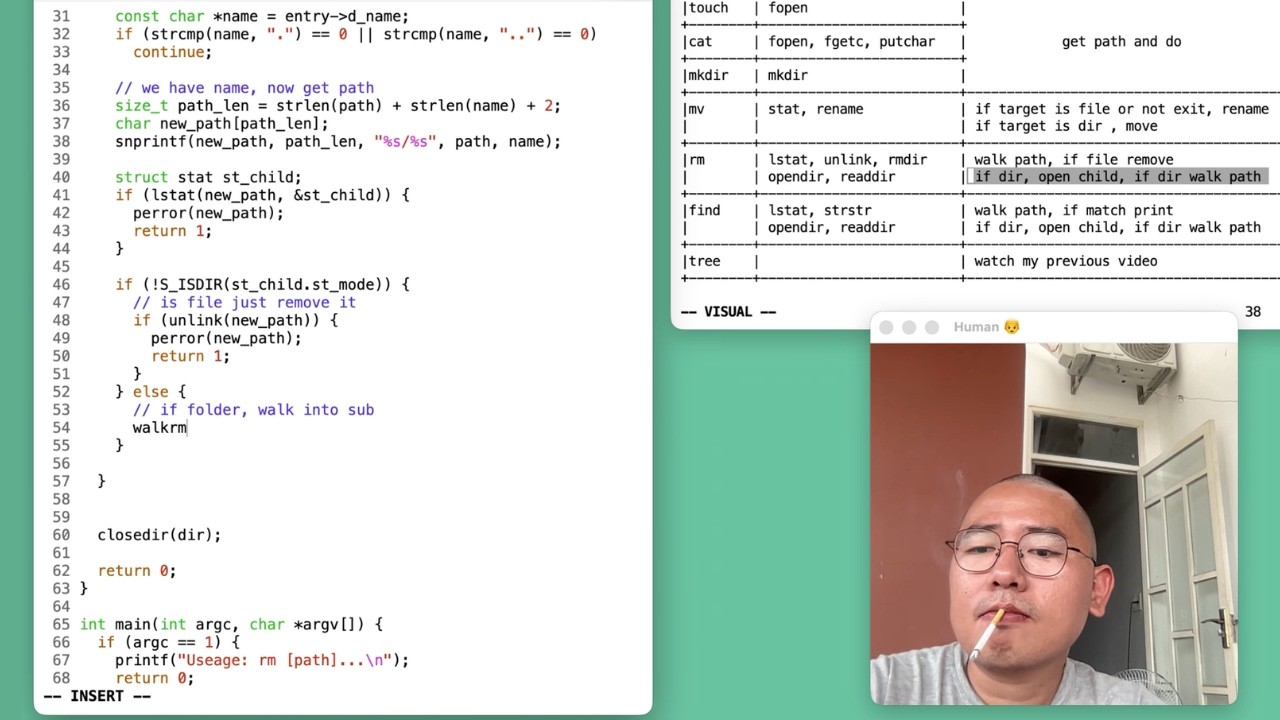
A developer has published a 52-minute video showing how to recreate core Linux file-management utilities—touch, cat, mkdir, mv, rm, and find—from scratch in C without using AI assistance. The project offers a hands-on look at implementing common Unix commands by hand for educational purposes.
CommentsShow HN phoria2 is a rebuilt canvas 3D library as a small WebGL 2 library that includes chart primitives for timeseries, heat-colored hour/day surface charts, and tiled dashboards, plus on-demand rendering and validation errors aimed at coding bots. Readers praised its mobile performance and aesthetics but raised questions about tween performance for live-streaming geometry updates, missing comparisons with Three/Babylon, and mobile hover/tap persistence.
CommentsOpenIDEA is a new Rust-built IDE that recreates familiar IntelliJ IDEA-style keymaps, tool windows, and search-everywhere in a fast native app. It bundles an editor, code insight, debugger, Git, terminal, database and HTTP clients with support for 60+ languages.
Comments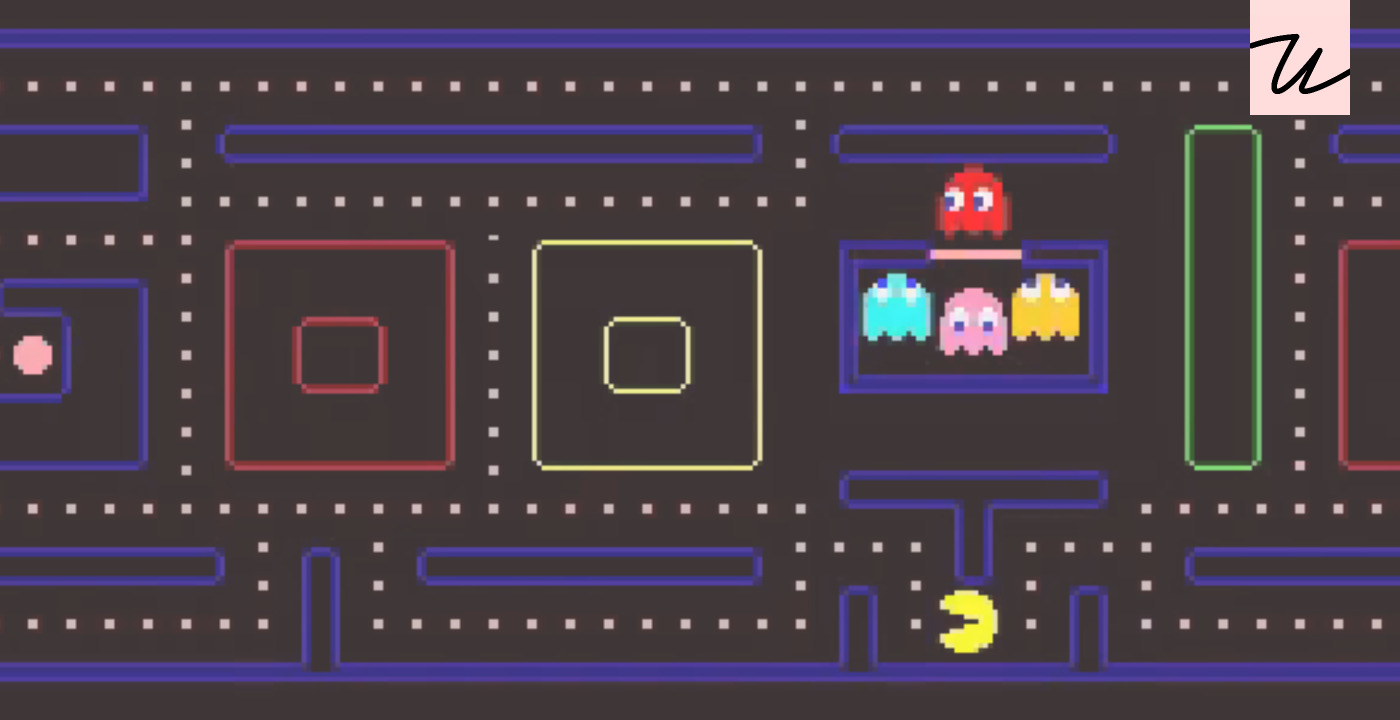
Pac-Man's Siren Call
2026-11-01In “Pac-Man’s Siren Call,” a software craft and quality blog uses the game’s irresistible pull as a metaphor for the distracting allure of risky engineering shortcuts. The piece urges developers to resist quick fixes and prioritize maintainable, high-quality code.
CommentsCopper is a minimal low-level programming language with OOP and generics that readers compare to Crystal for stronger typing and to Ruby/Python for its syntax. The one-person project drew interest for its design blog and changelog, including the author’s experiments with adding and later rejecting exceptions, though questions remain about Unicode support and garbage collection.
CommentsOmniDiff is a new open-source Git difftool written in Rust that aims to deliver fast, robust, and accurate diffing with content-aware behavior. The project is available on GitHub and is positioned as a high-performance alternative for developers comparing changes.
CommentsBBRouter has shared a Show HN project that simulates Ben Eater’s 8-bit computer on 3D breadboards using its breadboard editor and simulator. Users can open the project to explore the layout and run the simulated computer.
Comments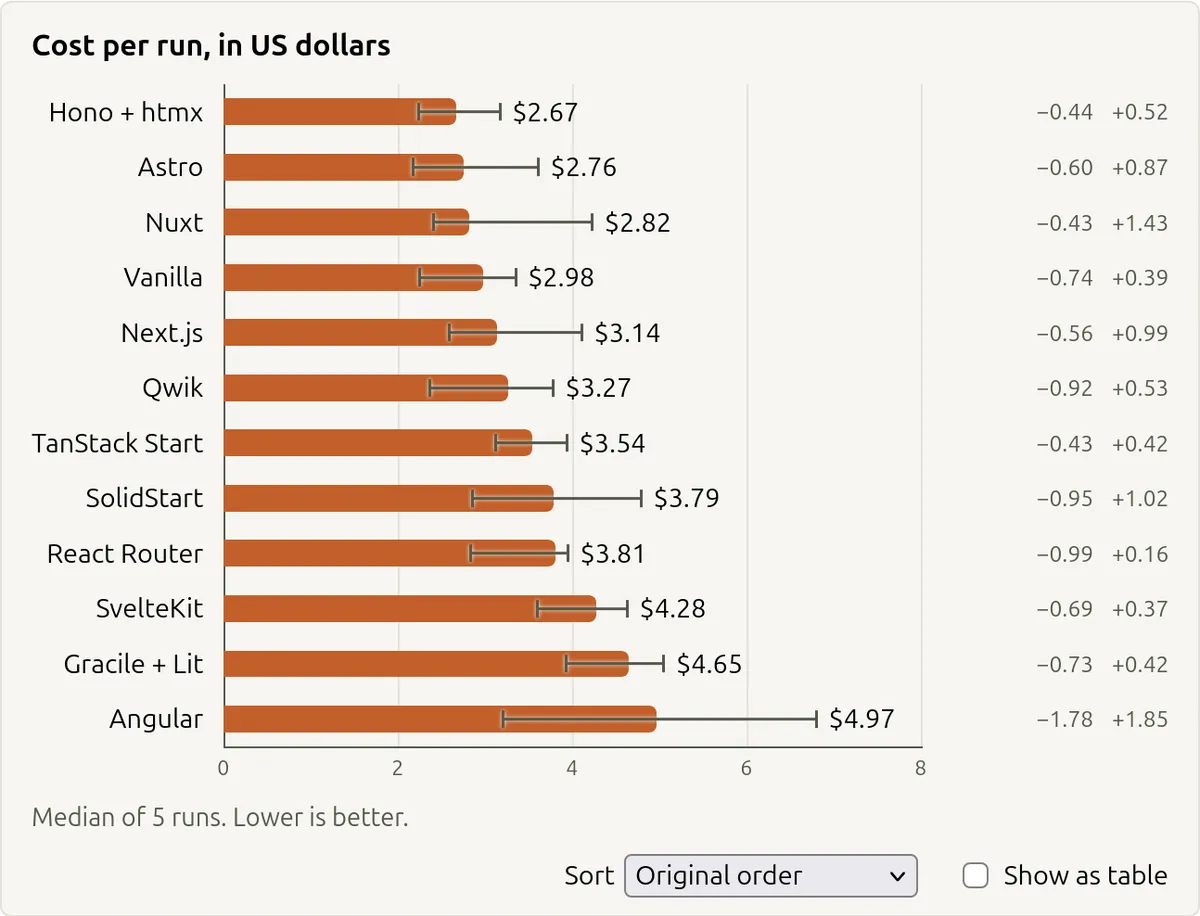
The AI cost of JavaScript frameworks
2026-11-01The article argues that JavaScript framework choices are often based on vibes, and that AI coding assistants add a new measurable cost: larger, more complex frameworks consume more context and tokens, making AI-assisted work slower and more expensive. It recommends weighing AI-readability and token efficiency alongside performance and developer experience.
CommentsThe article shares guidance on improving fuzz testing with AFL++, a widely used coverage-guided fuzzer. It focuses on practical tips to make AFL++ workflows more effective.
CommentsThe article presents a construction of a quine—a program that prints its own source code—using Kleene’s second recursion theorem. It frames the theorem as the theoretical basis for the self-referential program and organizes the explanation step by step.
Comments
Decode kernel panic from QR Code photo
2026-11-01A GitHub Gist demonstrates how to decode a kernel panic from a photo of a QR code, offering a quick way to extract crash diagnostics captured on-screen. The snippet is shared as code, notes, and a practical troubleshooting reference for kernel panic reports.
Comments