Programming Tech News
SubmitWriting software is a craft that keeps reinventing itself. This section gathers news and articles for people who program, covering language releases, compilers and runtimes, frameworks, development workflows, and the ideas that change how code gets written and reviewed.
Typical stories include new versions of Rust, Python, Java, JavaScript, and TypeScript, performance and debugging investigations, essays on architecture and code quality, and discussions of how AI coding assistants are changing day-to-day development. Hands-on tutorials and lessons from long-running projects show up often.
The tools and practices developers choose affect how fast teams ship and how well their software holds up over time. Working engineers, students learning to code, and engineering leaders follow this coverage to sharpen their skills and make better technical decisions.
2026-11-03

Revolut moves to self-hosted GLM
2026-11-03Revolut has moved roughly 2,000 engineers onto self-hosted GLM for coding, making Claude Code and Codex exceptions rather than defaults. According to AI ops lead David Abitbol, the setup uses 56 Nvidia B200s at a blended 30 cents per million tokens—about a tenth of what Revolut previously paid Anthropic and OpenAI.
Comments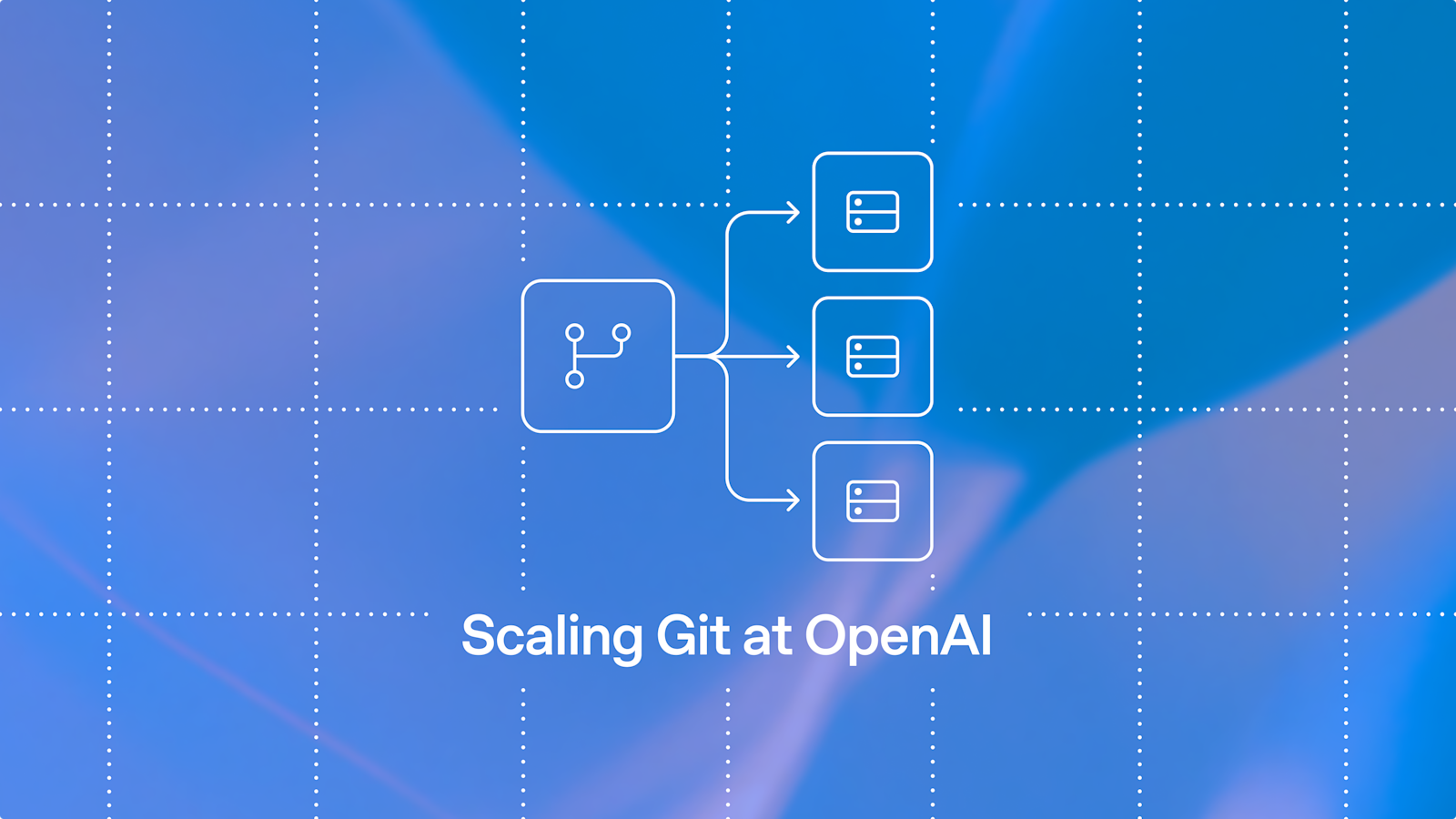
Scaling Git at OpenAI
2026-11-03OpenAI has built Pando, a Git-compatible backend designed to handle the development scale made possible by its Codex coding tools. The system aims to overcome Git’s scaling limits as AI-assisted coding increases repository activity and development throughput.
Comments

Resisting Cognitive Surrender
2026-11-03A discussion of “Resisting Cognitive Surrender” warns that relying on LLM-generated code and content can erode human understanding, turn review into rubber-stamping, and degrade codebases over time. Commenters support scaffolding and review workflows but argue that unchecked adoption risks persistent dependence and lost cognitive competence, making continued investment in human capability and control essential.
CommentsMuvon has released Octomind, an open-source AI coding agent and runtime built as a single static Rust binary. It is model-agnostic and MCP-native, aims to save tokens, and can run in the terminal, CI, or as a daemon.
CommentsAntimony, a code-based CAD tool rooted in Lisp-machine ideas rather than drafting-table workflows, has seen maintenance taper since around 2016, though a more actively maintained fork called Stibium is now available. Discussion around the piece highlights renewed momentum in code CAD and AI-driven CAD projects, citing OpenSCAD’s long-awaited release candidate, PythonSCAD, CADquery, Build123D, and Halfspace. Commenters debated the practicality of code-based parametric CAD while noting desired features like SolveSpace-style 2D sketching and fillets/bevels.
CommentsThe article examines how infinite loops in GPU shaders can hang the GPU, even though shaders are meant to be fast, small, and finite. It notes that SPIR-V does not prevent describing a shader with an infinite loop, so such loops should be enforced at shader compilation time. Reader discussion welcomes the piece and stresses the need for safeguards against pathological shader code.
CommentsTiny Basic for Arduino
2026-11-03A new Tiny Basic interpreter is now available for Arduino, targeting mid-range boards and microcontrollers. It offers a lightweight way to run BASIC programs on MCU-based projects.
CommentsA CC1101 radio module connected to an FT232H board with six jumper wires and driven by a Python script turns a laptop into a 433 MHz scanner. The setup offers spectrum sweeps and a listen mode that decodes fixed-code remotes, with no microcontroller or soldering required and receive-only operation.
CommentsA new Show HN project offers interactive, one-page explainers on core LLM topics including RLHF, attention, LoRA, and LLM evaluations. The notes aim to make computer science and engineering concepts more approachable through hands-on explanations.
Comments
In an interview, Tantivy creator and Quickwit co-founder Paul Masurel discusses building a search engine in Rust, following Lucene’s competitive happy path, and maintaining open-source software. He also shares lessons learned from the project’s development.
Comments
The piece discusses efficient algorithms and the Exponential Time Hypothesis, arguing that current debates often lose the plot by misusing or overextending complexity-theoretic assumptions. It calls for clearer reasoning about what ETH does and does not imply for practical algorithm design.
CommentsShow HN: ReBirth 338 in Browser
2026-11-03A Show HN project called ReBirth 338 in Browser lets users run the original ReBirth RB-338 Windows release directly in a web browser. It uses Wine and WebAssembly to bring the classic software synth to modern browsers without a native installation.
CommentsToit v2.0.0
2026-11-03Toit has released v2.0.0 after more than four years of alpha development. The milestone marks the platform’s move out of alpha and into its 2.0 release.
CommentsHandles are the better pointers (2018)
2026-11-03The 2018 article argues that handles are a safer alternative to raw pointers for referencing objects. An update adds a per-slot generation counter to prevent handle collisions.
CommentsIntroduction to Programming in ATS
2026-11-03A reader discussion around an introduction to ATS points to the language’s actively developed implementation on GitHub. The key takeaway is that ATS-Postiats remains an active project for users interested in the programming language.
CommentsDiscImageStudio is a GitHub project that lets users burn visible artwork onto CDs, DVDs, and Blu-ray discs. Developers can contribute to its development by creating a GitHub account.
Comments
Rustable is a new open-source, native database client written in Rust. The project is highlighted on Show HN as a Rust-built alternative for database management.
Comments
The piece outlines ten harness patterns for applying AI testing to real repositories, emphasizing how AI testing differs from traditional software testing. It highlights golden sets, RAG and agent evaluation, and monitoring as key practices for building reliable production AI systems.
CommentsNvidia – open-source auto-ontology
2026-11-03NVIDIA has open-sourced Auto Ontology, a Python framework for building semantic, graph-based reasoning layers over data. It supports deterministic query generation, improved context retrieval, and more explainable AI for LLM and agent workflows.
CommentsGUI64 is a graphical interface for the Commodore 64 that runs on top of the system’s built-in ROM. The project offers a GUI experience without replacing the C64’s native ROM.
Comments
A developer has built a browser-based game for practicing Vim commands through short, hands-on editing challenges. The free tool uses a real Vim editor to cover motions, text objects, search, marks, counts, and repeats, with no sign-up required.
CommentsResearchers show that AND, OR, and NOT gates can be embedded in neural networks using fixed weights. These gates can be combined into boolean circuits that read model activations, enabling inspection or manipulation of internal computations.
Comments
Ashby (YC W19) Is Hiring EMs
2026-11-03Ashby, a YC W19 company that builds people software for high-growth companies, is hiring engineering managers. The roles support its work serving fast-scaling organizations.
Comments2026-11-02

Momentic, a YC W24 startup, has launched Mo, an AI QA engineer that finds bugs in web, iOS, and Android apps and provides reproduction steps. It also turns its test runs into regression tests that run on every pull request.
CommentsPostgres 19 is late, and it's AI's fault
2026-11-02PostgreSQL 19 is missing its historically predictable mid-September release window, and the delay is being blamed on AI. The slip breaks a decade-long pattern of major releases arriving no earlier than the middle of September.
Comments
The thirteenth installment of F/OSS Comics traces the early days of BSD Unix. Bill Joy takes charge of BSD distribution and debugging, moving from Pascal and ex tapes to a VAX system, then collaborates with Ozalp Babaoglu to bring virtual memory to Unix.
CommentsAsk HN: Who is hiring? (November 2026)
2026-11-02The November 2026 Ask HN hiring thread features companies posting full-time engineering and sales roles across Amsterdam, Skopje, Colorado, Toronto, London, New York, San Francisco, Zurich, and remote locations. Stream is hiring backend and infrastructure engineers plus a Staff Engineer for its Video team with EU remote and Netherlands visa sponsorship, while Namespace, Juro, Equall, and Mastra also list infrastructure, AI engineering, backend, and founding sales openings.
CommentsWir müssen wissen – wir werden wissen
2026-11-02A blog post invoking Hilbert’s “We must know—we will know” argues that software developers should keep raising abstraction levels, refactoring and adopting higher-level languages until code can be held in one’s head. Readers debate where that level lies, especially with AI-generated code, warning that vague prompts are not specifications and that agents may silently fill underspecified behavior with plausible but inconsistent output. They suggest formal specifications and verification may become essential as AI accelerates coding without replacing the need to understand and check the result.
Comments
A new DNS build planner reduces rebuild work by selecting the smallest safe build when zone settings change, instead of rebuilding entire zones with tens of millions of records. The approach cuts full builds by 40%, peak memory use by 85%, and halves DNS build delay.
CommentsSOML – A Config Format for Humans
2026-11-02SOML is a configuration format designed to be human-friendly, with its development hosted on GitHub under soml-lang/soml. The project is open to contributions from developers interested in improving the format.
Comments