Programming Tech News
Writing software is a craft that keeps reinventing itself. This section gathers news and articles for people who program, covering language releases, compilers and runtimes, frameworks, development workflows, and the ideas that change how code gets written and reviewed.
Typical stories include new versions of Rust, Python, Java, JavaScript, and TypeScript, performance and debugging investigations, essays on architecture and code quality, and discussions of how AI coding assistants are changing day-to-day development. Hands-on tutorials and lessons from long-running projects show up often.
The tools and practices developers choose affect how fast teams ship and how well their software holds up over time. Working engineers, students learning to code, and engineering leaders follow this coverage to sharpen their skills and make better technical decisions.
2026-09-24

VSCode's SSH Agent Is Bananas (2025)
2026-09-24Fly.io has published a detailed 2025 guide exploring the complex and often unpredictable behavior of Visual Studio Code's SSH agent. The documentation provides developers with essential troubleshooting tips and best practices to master remote SSH workflows and streamline their development environments.
CommentsNestrilabs has released an experimental virtio device called virtio-nvgpu to provide near-native NVIDIA GPU access inside KVM virtual machines. This new tool aims to significantly improve hardware acceleration and graphics performance for virtualized workloads. By bridging the gap between host and guest environments, it offers a promising solution for developers requiring high-end GPU capabilities in VMs.
Comments
Show HN: Combinators in Array Languages
2026-09-24A new Hacker News post introduces fixed-point combinators, including the Y combinator, to array languages through a live interactive demo. The accompanying educational materials explore these programming concepts using the famous combinator bird puzzles from Raymond Smullyan's book To Mock a Mockingbird.
Comments
LensVLM is a new model that compresses long contexts into images and expands only the most relevant pages for efficient processing. This open source innovation supports the broader mission to advance and democratize artificial intelligence through open science.
CommentsA new code generator accelerates SHA-1 collision detection by shifting security checks to SIMD instructions. This optimization significantly reduces processing overhead, narrowing the performance gap between collision-detected SHA-1 and plain SHA-1 to just 20 to 30 percent.
Comments
Radicle, an open source peer-to-peer code collaboration stack built on Git, has disclosed a security vulnerability within its network protocol. The flaw affects the underlying communication system of the decentralized platform. Developers using the forge are encouraged to review the disclosure details and take appropriate security measures.
CommentsZ80 REPL (2018)
2026-09-24Prompted by an article on Z80 REPLs, readers share nostalgic memories of the built-in assemblers and monitor programs found in classic 8-bit computers like the Apple II, Commodore 64, and BBC Micro. Many commenters recall how these early, integrated environments were crucial tools for learning to program and reverse engineering software. The conversation also touches on the technical implementation of these features, such as the non-maskable interrupts used by freezer cartridges to invoke monitor routines.
Comments2026-09-23
Microsoft discontinued Visual FoxPro in 2007, but developers have now revived the legacy programming environment. The new project provides a 64-bit runtime and modern IDE for existing Visual FoxPro 9 applications. This rebuild reconstructs the original language using contemporary technologies, including Electron, React, and a Rust-based WebAssembly virtual machine.
CommentsA new open-source project called ReBarUEFI has been launched to bring Resizable BAR support to almost any UEFI-based system. The tool is hosted on GitHub, where users can create an account to contribute to its ongoing development.
CommentsDespite a harsh post-ZIRP tech job market worsened by AI-driven structural issues, the author shares a successful hiring anecdote that bypasses the traditional pitfalls of the Secretary Problem. The piece advocates for shifting the software industry toward collaborative, non-zero-sum matchmaking as the default hiring practice to better serve both employers and candidates.
CommentsJevBench is a newly introduced reproducible benchmark that evaluates typed decision models by testing 52 Jev-class systems across 534 distinct decisions. The latest Jev model currently leads the benchmark with the highest overall score, providing developers with a standardized way to compare open-source, self-hostable, and hosted options.
Comments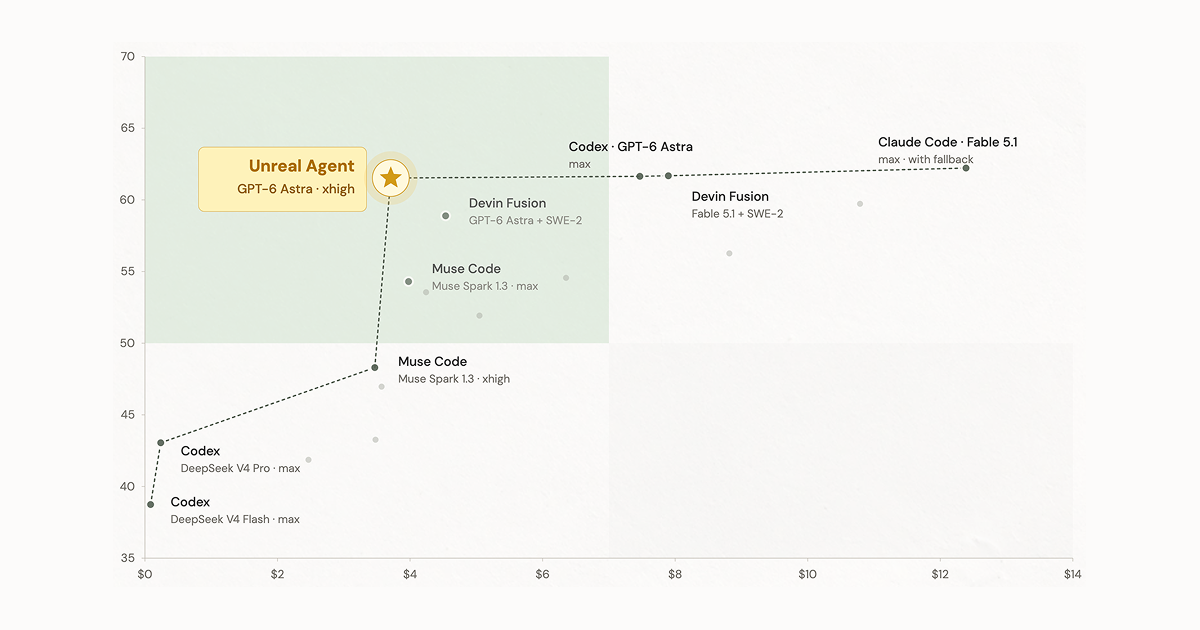
Unreal Agent
2026-09-23Unreal Agent is a newly introduced agent harness that delivers up to 40% cost savings compared to Codex across production workloads and coding benchmarks. The tool achieves these financial efficiencies without causing any negative impact on overall performance.
CommentsDevelopers can now explore example Gea applications that demonstrate building native apps using TypeScript and CSS. These sample projects are fully compatible with the Gea simulator and all supported target platforms, providing a practical starting point for cross-platform development.
CommentsMarkdown in /src
2026-09-23Carson Gross argues in a recent essay that Markdown has become a critical source artifact for software systems built with large language models. He recommends storing these Markdown files directly in the source directory alongside the generated code to adhere to the principle of locality.
CommentsCan gzip be a language model?
2026-09-23A recent article explores whether the traditional gzip compression algorithm can be repurposed as a functional language model. Building on the author's previous experiments with non-neural text generation, the piece demonstrates how standard data compression techniques can predict and generate text without requiring neural networks, weights, or training.
Comments2026-09-22
What Sun got wrong
2026-09-22Reader discussions on Sun Microsystems' decline contrast its frustrating enterprise purchasing experience and highly controlled, vertically integrated ecosystem with the streamlined, commoditized hardware market. Although some debate the technical openness of the SPARC architecture, the consensus is that the company's closed platform ultimately failed to compete against the cheaper, interchangeable x86 and Linux stack.
Comments
As AI coding tools accelerate development, Continuous Integration pipelines have become costly bottlenecks that delay pull requests. To overcome this, an engineering team rearchitected their CI system by optimizing infrastructure, work scheduling, and test parallelization, successfully reducing both wait times and operational costs.
Comments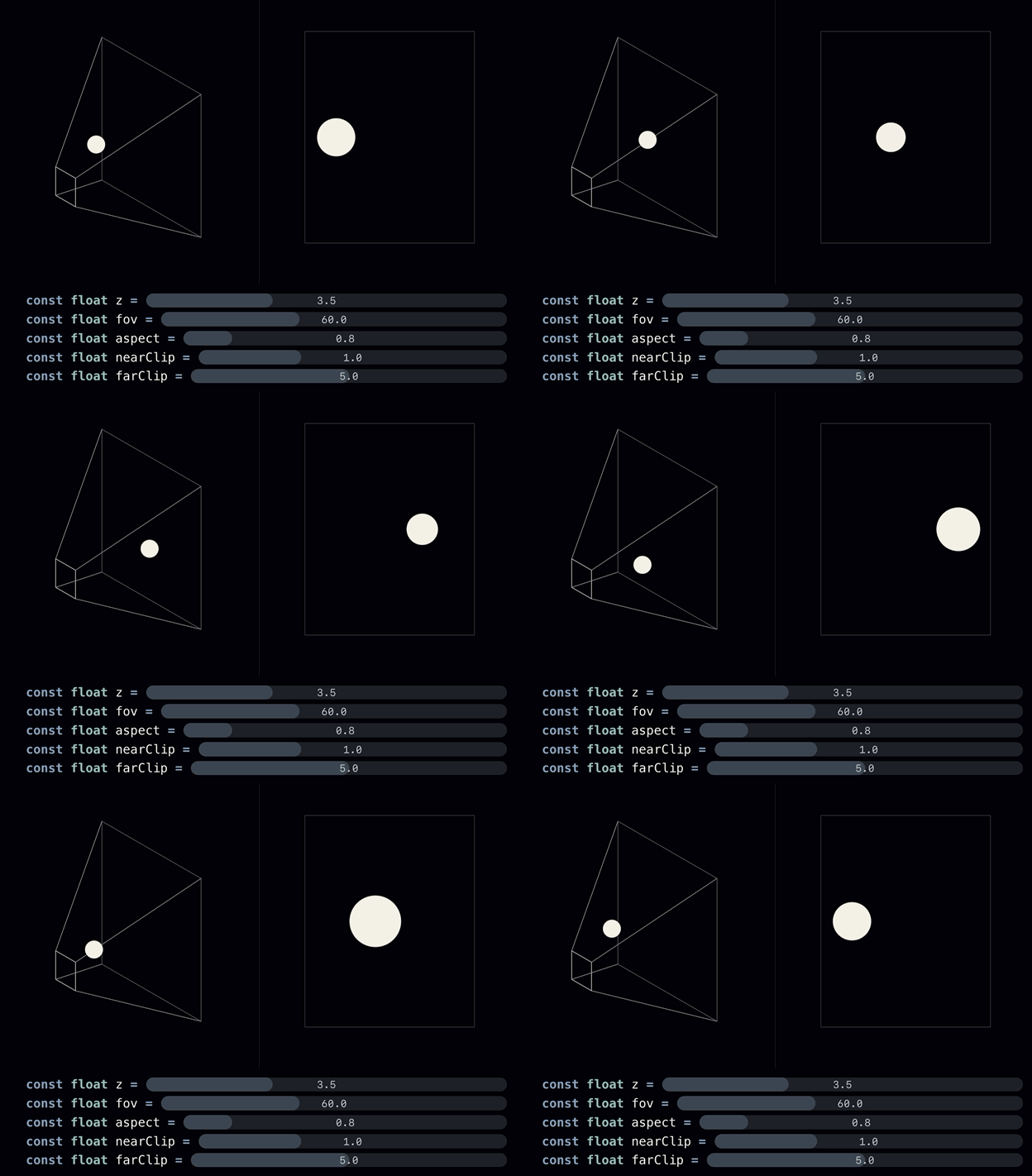
Divide by depth for instant 3D
2026-09-22A new technical tutorial explores the transition from relying on high-level game frameworks to understanding the underlying math of 3D rendering. It specifically breaks down the divide by depth technique used in computer graphics. By mastering this concept, developers can implement custom camera projections to achieve instant 3D effects without relying on pre-built engine tools.
CommentsLooking forward to Git 2.56 – and 3.0
2026-09-22The Git version control system is preparing for its upcoming 2.56 release, introducing new updates to the workflows that power global software development. Meanwhile, the open-source community is already looking ahead to a major 3.0 release to modernize the widely used platform.
Comments
More Floating Point Alternatives
2026-09-22Reader discussions on floating-point alternatives suggest that developers who truly understand their algorithms can simply fix their standard float code rather than seeking replacements, as many proposed options like symbolic computation are fundamentally different paradigms. Instead, commenters argue that practical solutions like fixed-point numbers, unums, and logarithmic storage are the true alternatives frequently overlooked in these debates.
Comments
Copper-Rs version 1.2 enables the live-cloning of running robots over unreliable networks to create deterministic digital twins for remote telemetry and state reconstruction. The system streams minimal state data to accurately reproduce task states, messages, and logs as if running onboard. Additionally, the release introduces smaller log sizes, new stereo depth reconstruction, and improved ROS 2 compatibility.
Comments
First Shader from Zero in Godot 4
2026-09-22A new Godot 4 tutorial teaches developers how to build their first shader from scratch. The guide covers fundamental techniques such as texture sampling, UV coordinate shifting, and region masking. It concludes by demonstrating how to use noise to generate random shapes for a dynamic portal effect.
Comments

Cloudflare has made Python Workers generally available, enabling developers to run Python web frameworks and AI orchestration libraries natively within the Workers runtime. This release allows seamless integration with Cloudflare services like D1, R2, and Workers AI without requiring any JavaScript glue code.
CommentsDespite its title claiming it is a new programming language for data munging, TXR is actually a mature Lisp-based language first released in 2009. Community discussions note that the project appears unmaintained, with no code changes in over a year. Consequently, developers remain highly skeptical about its chances of gaining mainstream popularity anytime soon.
Comments2026-09-21

AX – Google’s Open Agentic Orchestrator
2026-09-21Google has released AX, an open agentic orchestrator that enables developers to declare AI tasks using YAML. The tool automatically sandboxes tasks, provisions workspaces, isolates network access, and manages scaling for large-scale deployments.
CommentsThe open-source recompilation project for the Nintendo 64 classic Ogre Battle 64: Person of Lordly Caliber has reached 99.05% completion under the guidance of developer lfarroco. By reverse-engineering the original code, the initiative aims to deliver a fully playable, native port of the beloved retro strategy RPG to modern systems.
CommentsWhy back propagation goes backward
2026-09-21Quantitative researcher Gregory Gundersen explores the mathematical foundations of backpropagation to explain why the algorithm must compute gradients in reverse order. By breaking down the underlying chain rule, he demonstrates how calculating derivatives from the output layer back to the inputs enables the efficient weight updates required for training neural networks.
CommentsI turned Jev into a (lousy) chatbot
2026-09-21Developer Kyle Pena has released an open-source GitHub project that turns Jev into a conversational AI. Although the creator self-deprecatingly describes the initial model as lousy, the repository is now live and inviting community contributions to improve its performance.
CommentsA reverse engineering project has successfully achieved a complete, byte-identical decompilation of the GameCube version of Resident Evil 4 into C and C++ source code. Focusing on the game's debug build, this effort perfectly recreates the original executable from the newly written code. This milestone provides unprecedented access to the classic survival horror game's underlying mechanics, paving the way for advanced mods and preservation efforts.
Comments