Programming Tech News
Writing software is a craft that keeps reinventing itself. This section gathers news and articles for people who program, covering language releases, compilers and runtimes, frameworks, development workflows, and the ideas that change how code gets written and reviewed.
Typical stories include new versions of Rust, Python, Java, JavaScript, and TypeScript, performance and debugging investigations, essays on architecture and code quality, and discussions of how AI coding assistants are changing day-to-day development. Hands-on tutorials and lessons from long-running projects show up often.
The tools and practices developers choose affect how fast teams ship and how well their software holds up over time. Working engineers, students learning to code, and engineering leaders follow this coverage to sharpen their skills and make better technical decisions.
2026-09-25

A new project showcased on Hacker News introduces a specialized type foundry for generating cursed web fonts, featuring playful creations like Times New Bastard. The tool provides a unique resource for designers and developers looking to incorporate intentionally chaotic typography into their digital projects.
CommentsYC W26 startup Whiteboard has launched an open-source IDE and digital canvas designed to help developers visually plan their projects. The platform focuses on thoughtful software design by allowing teams to architect applications before writing code. The project is now open for public use and community contribution on GitHub.
Comments

2DWillNeverDie
2026-09-25A new guide teaches pixel art hobbyists how to create 2D game sprites inspired by Capcom's classic Street Fighter series. The tutorial highlights quick and easy shortcuts to help enthusiasts efficiently achieve authentic retro aesthetics.
CommentsFearless SIMD v1.0
2026-09-25The Fearless SIMD library has officially reached its 1.0 release, providing a stable toolset for developers working with vectorized instructions. This major milestone aims to make high-performance SIMD programming safer and significantly more accessible for software engineers.
Comments
Rails World 2026 Opening Keynote [video]
2026-09-25During the opening keynote at Rails World 2026 in Austin, DHH focused his presentation on the rapid rise of AI agents in software development. He revealed that 37signals has ceased handwritten coding to transition toward AI-driven workflows. Additionally, he explained how the foundational conventions of the Rails framework continue to provide essential structure in this new landscape.
CommentsWriting Parquet files using Haskell
2026-09-25The DataHaskell/Dataframe library has introduced a new Parquet writer for Haskell developers. Users can easily export their data by simply passing their dataframe into the newly implemented writeParquet function.
CommentsA developer has released an open-source tool that encrypts files into self-decrypting HTML pages, enabling secure offline sharing without requiring any software installation. By embedding OpenPGP signatures and manipulating the HTML structure, the project ensures the files remain fully auditable and can be decrypted using just a standard web browser or bare OpenSSL. While self-decrypting files are not a new concept, this implementation specifically focuses on zero dependencies and reproducible builds.
Comments
A recent blog post reviews Paul E. McKenney's free online textbook on parallel programming, authored by the creator of the Linux kernel's RCU synchronization mechanism. The reviewer shares their initial impressions and personal context after reading a substantial portion of the comprehensive guide.
CommentsA wormable Cross-Site Scripting vulnerability in the ansi2html component of Sourcehut allowed attackers to hijack user accounts through malicious build logs. The exploit automatically compromised the accounts of anyone who viewed an infected log on the Sourcehut build service or other platform instances.
Comments
Developers are leveraging AI agents to enhance security auditing by building custom tooling and formal models before traditional code review begins. Over a six-month period, this AI-driven approach successfully identified critical vulnerabilities within the Miden zkVM, demonstrating the practical value of integrating AI into early security assessments.
CommentsStable, a startup from the Y Combinator Winter 2020 batch, is actively hiring product engineers to join its team. This recruitment effort highlights the company's ongoing expansion and focus on product development.
CommentsWaveDigger is a new open-source tool that discovers the physical locations of wireless signals by leveraging Apple's public Wi-Fi Positioning System. Available on GitHub, the project utilizes BSSID searches to help users accurately map and track specific network locations.
Comments2026-09-24

VSCode's SSH Agent Is Bananas (2025)
2026-09-24Fly.io has published a detailed 2025 guide exploring the complex and often unpredictable behavior of Visual Studio Code's SSH agent. The documentation provides developers with essential troubleshooting tips and best practices to master remote SSH workflows and streamline their development environments.
CommentsNestrilabs has released an experimental virtio device called virtio-nvgpu to provide near-native NVIDIA GPU access inside KVM virtual machines. This new tool aims to significantly improve hardware acceleration and graphics performance for virtualized workloads. By bridging the gap between host and guest environments, it offers a promising solution for developers requiring high-end GPU capabilities in VMs.
CommentsShow HN: Combinators in Array Languages
2026-09-24A new Hacker News post introduces fixed-point combinators, including the Y combinator, to array languages through a live interactive demo. The accompanying educational materials explore these programming concepts using the famous combinator bird puzzles from Raymond Smullyan's book To Mock a Mockingbird.
Comments
LensVLM is a new model that compresses long contexts into images and expands only the most relevant pages for efficient processing. This open source innovation supports the broader mission to advance and democratize artificial intelligence through open science.
CommentsA new code generator accelerates SHA-1 collision detection by shifting security checks to SIMD instructions. This optimization significantly reduces processing overhead, narrowing the performance gap between collision-detected SHA-1 and plain SHA-1 to just 20 to 30 percent.
Comments
Radicle, an open source peer-to-peer code collaboration stack built on Git, has disclosed a security vulnerability within its network protocol. The flaw affects the underlying communication system of the decentralized platform. Developers using the forge are encouraged to review the disclosure details and take appropriate security measures.
CommentsZ80 REPL (2018)
2026-09-24Prompted by an article on Z80 REPLs, readers share nostalgic memories of the built-in assemblers and monitor programs found in classic 8-bit computers like the Apple II, Commodore 64, and BBC Micro. Many commenters recall how these early, integrated environments were crucial tools for learning to program and reverse engineering software. The conversation also touches on the technical implementation of these features, such as the non-maskable interrupts used by freezer cartridges to invoke monitor routines.
Comments2026-09-23
Microsoft discontinued Visual FoxPro in 2007, but developers have now revived the legacy programming environment. The new project provides a 64-bit runtime and modern IDE for existing Visual FoxPro 9 applications. This rebuild reconstructs the original language using contemporary technologies, including Electron, React, and a Rust-based WebAssembly virtual machine.
CommentsA new open-source project called ReBarUEFI has been launched to bring Resizable BAR support to almost any UEFI-based system. The tool is hosted on GitHub, where users can create an account to contribute to its ongoing development.
CommentsDespite a harsh post-ZIRP tech job market worsened by AI-driven structural issues, the author shares a successful hiring anecdote that bypasses the traditional pitfalls of the Secretary Problem. The piece advocates for shifting the software industry toward collaborative, non-zero-sum matchmaking as the default hiring practice to better serve both employers and candidates.
CommentsJevBench is a newly introduced reproducible benchmark that evaluates typed decision models by testing 52 Jev-class systems across 534 distinct decisions. The latest Jev model currently leads the benchmark with the highest overall score, providing developers with a standardized way to compare open-source, self-hostable, and hosted options.
Comments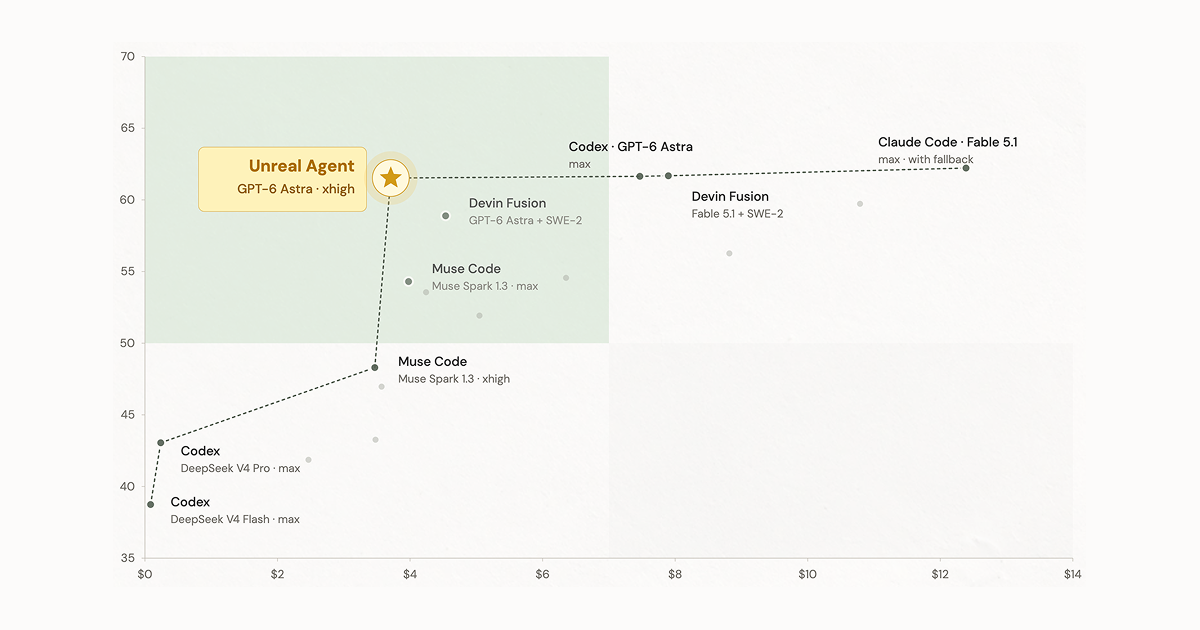
Unreal Agent
2026-09-23Unreal Agent is a newly introduced agent harness that delivers up to 40% cost savings compared to Codex across production workloads and coding benchmarks. The tool achieves these financial efficiencies without causing any negative impact on overall performance.
CommentsDevelopers can now explore example Gea applications that demonstrate building native apps using TypeScript and CSS. These sample projects are fully compatible with the Gea simulator and all supported target platforms, providing a practical starting point for cross-platform development.
CommentsMarkdown in /src
2026-09-23Carson Gross argues in a recent essay that Markdown has become a critical source artifact for software systems built with large language models. He recommends storing these Markdown files directly in the source directory alongside the generated code to adhere to the principle of locality.
CommentsCan gzip be a language model?
2026-09-23A recent article explores whether the traditional gzip compression algorithm can be repurposed as a functional language model. Building on the author's previous experiments with non-neural text generation, the piece demonstrates how standard data compression techniques can predict and generate text without requiring neural networks, weights, or training.
Comments2026-09-22
What Sun got wrong
2026-09-22Reader discussions on Sun Microsystems' decline contrast its frustrating enterprise purchasing experience and highly controlled, vertically integrated ecosystem with the streamlined, commoditized hardware market. Although some debate the technical openness of the SPARC architecture, the consensus is that the company's closed platform ultimately failed to compete against the cheaper, interchangeable x86 and Linux stack.
Comments
As AI coding tools accelerate development, Continuous Integration pipelines have become costly bottlenecks that delay pull requests. To overcome this, an engineering team rearchitected their CI system by optimizing infrastructure, work scheduling, and test parallelization, successfully reducing both wait times and operational costs.
Comments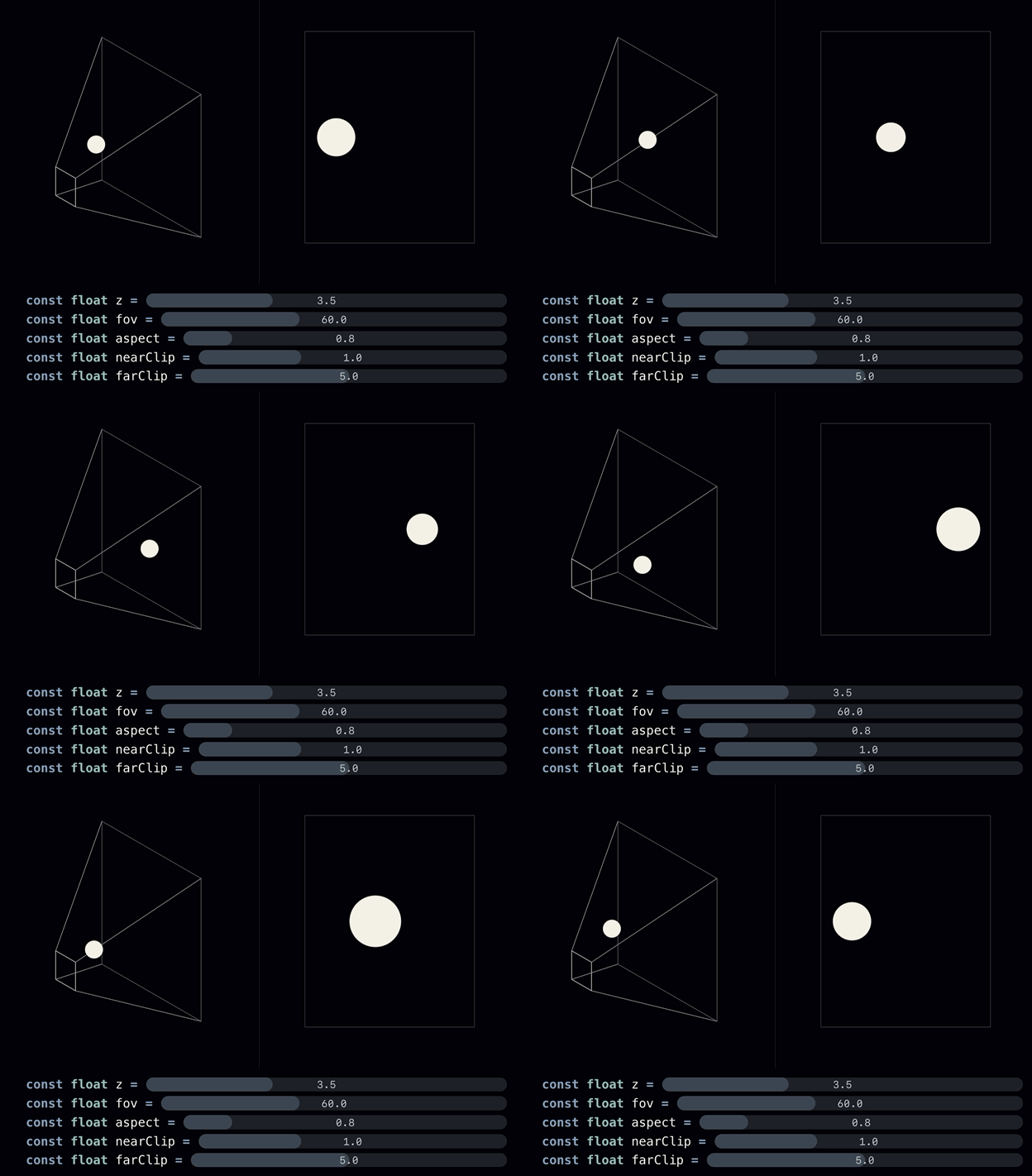
Divide by depth for instant 3D
2026-09-22A new technical tutorial explores the transition from relying on high-level game frameworks to understanding the underlying math of 3D rendering. It specifically breaks down the divide by depth technique used in computer graphics. By mastering this concept, developers can implement custom camera projections to achieve instant 3D effects without relying on pre-built engine tools.
Comments