Programming Tech News
Writing software is a craft that keeps reinventing itself. This section gathers news and articles for people who program, covering language releases, compilers and runtimes, frameworks, development workflows, and the ideas that change how code gets written and reviewed.
Typical stories include new versions of Rust, Python, Java, JavaScript, and TypeScript, performance and debugging investigations, essays on architecture and code quality, and discussions of how AI coding assistants are changing day-to-day development. Hands-on tutorials and lessons from long-running projects show up often.
The tools and practices developers choose affect how fast teams ship and how well their software holds up over time. Working engineers, students learning to code, and engineering leaders follow this coverage to sharpen their skills and make better technical decisions.
2026-09-11

Shopify is transitioning its mobile app development away from React Native and returning to native Swift and Kotlin. This strategic shift is driven by the emergence of AI coding agents, which have significantly altered the cost and efficiency of building native applications.
Comments
OpenAI Agents API
2026-09-11OpenAI has released a new Agents API allowing developers to create durable, cloud-based autonomous agents. By leveraging a managed Codex harness, the API provides a persistent execution environment designed to handle long-running, complex tasks reliably.
Comments
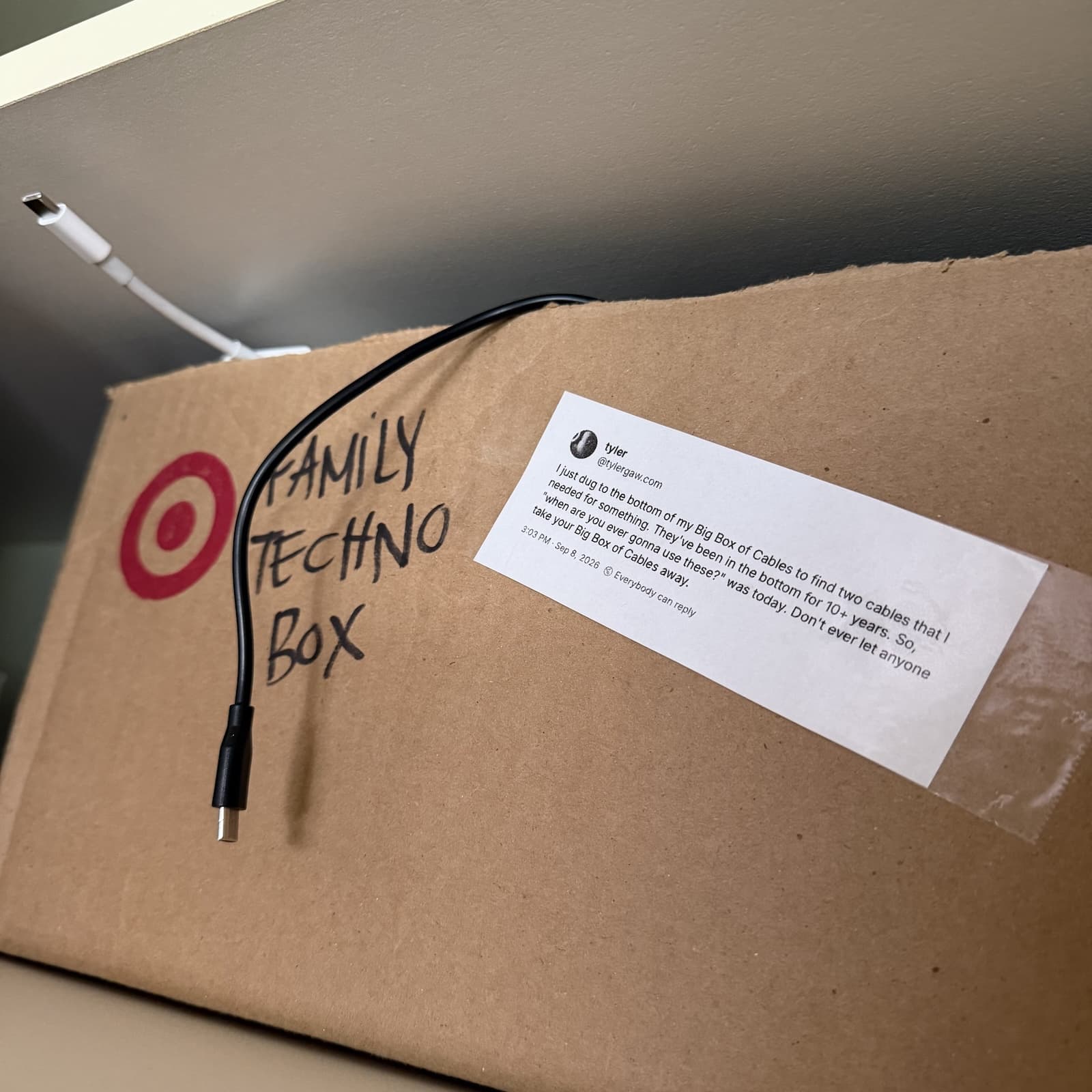
This article reflects on the complex and often messy reality of web development, using a tangled box of cables as a metaphor for the internet's underlying infrastructure. It celebrates the intricate, behind-the-scenes work required to build things for the world wide web.
Comments
Cognition has launched SWE-2, its most advanced coding model to date, delivering highly competitive agentic coding performance. This new release positions the company to directly rival industry leaders like Fable 5.1 and GPT-Astra.
CommentsA new interactive tool called LLM Visualizer allows users to build and understand large language models from scratch through a step-by-step visual guide. It covers foundational concepts like tokenization, embeddings, and training while exploring modern transformer architectures such as RoPE, GQA, and MoE.
CommentsAn independent developer has released an open-source alternative to Apple's Reference Image that uses steganography to embed cryptographic proof of an image's origin directly into the pixel data. Titled Proof of Capture, this project provides a transparent and decentralized method for verifying digital media authenticity without relying on proprietary technology.
CommentsForgejo <=16.0.3 Critical RCE
2026-09-11A critical remote code execution vulnerability in Forgejo allows untrusted users to exploit template repository expansion to execute arbitrary processes and read sensitive host data. The flaw occurs when a malicious template injects a .git folder during repository initialization, which the latest security patch addresses by removing the directory before git setup. Administrators with open registrations are urged to upgrade immediately, especially since the issue was previously patched in Gitea but initially missed in the downstream fork.
Comments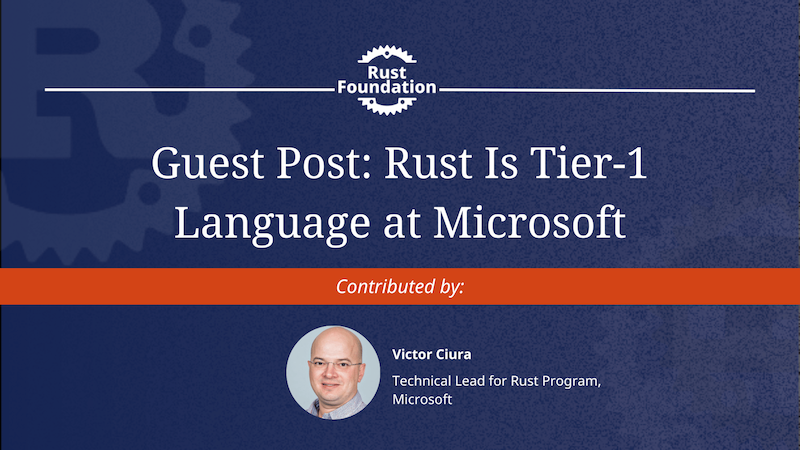
Rust is tier-1 language at Microsoft
2026-09-11Microsoft has officially designated Rust as a tier-1 programming language, cementing its strategic importance following years of substantial financial investment in the open-source project. This milestone aligns with Azure CTO Mark Russinovich's vision for the future of native code and underscores the company's deep commitment to integrating Rust into its core infrastructure.
CommentsA new tutorial guides macOS users through setting up OpenCode with Ollama and Docker sandboxes to run local large language models. This configuration allows developers to execute AI-assisted coding tasks securely within isolated environments. It provides a practical starting point for integrating offline AI tools into a daily development workflow.
CommentsJEP 544: Ahead-of-Time Code Compilation
2026-09-11Java's JEP 544 introduces ahead-of-time code compilation to improve performance, though developers find the current setup process and fragmented tooling overly complex compared to languages like Go and Rust. While the community appreciates the performance gains, they hope future updates will unify Java's distribution tools to simplify native app deployment. The discussion also reflects on historical AOT attempts like GCJ and Excelsior JET, highlighting a long-standing desire for easier native distribution in the Java ecosystem.
CommentsA new technical article provides a detailed exposition of the Bitap algorithm, also known as the shift-and exact string matching method. The author breaks down the mechanics of this technique and explains why it remains their preferred approach for efficient text search operations.
Comments
Herdr Studio
2026-09-11Herdr Studio is an independent, open-source community project designed to help developers manage Herdr environments. The cross-platform tool works on both desktop and mobile, enabling users to control terminals, inspect agent sessions, review files and diffs, and manage worktrees all in one place.
Comments2026-09-10

Shopify acquires Tailwind
2026-09-10Shopify has acquired the popular CSS framework Tailwind to provide it with a stable, long-term home. This acquisition ensures the tool will be actively maintained and reliably supported for the millions of developers who depend on it.
CommentsA new browser-based tool computes degree-n polynomials twice as fast by reducing the required multiplications to roughly half. Users can select from multiple mathematical fields to instantly generate optimized evaluation chains formatted as math equations, C code, or digital circuits.
Comments
Be Using Rootless Containers
2026-09-10Miguel Grinberg's latest article highlights the critical security benefits of running rootless containers to reduce the attack surface in modern development environments. By executing containerized applications without root privileges, teams can significantly mitigate the risks of container breakouts and improve overall system security.
Comments
GNU Radio in the browser
2026-09-10A new browser-based tool enables users to build and run GNU Radio flowgraphs without requiring any local installation. Designed as a GRC-style SDR editor, it offers hundreds of DSP blocks, live QT GUI plots, and RTL-SDR support for comprehensive software-defined radio development.
CommentsUse Vsock with Libzmq
2026-09-10Developers can now utilize AF_VSOCK with libzmq to facilitate efficient communication between virtual machine guests and their underlying hypervisors. Integrated into the Linux kernel since version 4.8, VSOCK serves as a modern socket address family that replaces legacy serial port connections. Additionally, this approach enables seamless networking between multiple guests hosted on the same machine.
Comments
A new statically typed programming language named Bespoke aims to replace the aggressive syntax of modern coding with polite, courteous phrasing. By reimagining traditional commands and exception handling, it offers a more respectful alternative for developers tired of vulgar abbreviations and naked imperatives.
Comments2026-09-09
A new experimental syntax highlighter powered by WebGPU has been introduced to provide fast, language-agnostic code highlighting. Weighing in at just 27.5KB, this lightweight tool offers developers a highly efficient and versatile solution for working across multiple programming languages.
Comments
An AI-generated solution to the Navier-Stokes Millennium Prize Problem has been shared, accompanied by a detailed writeup. The submission also features a formal mathematical proof written in the Lean theorem proving language.
Comments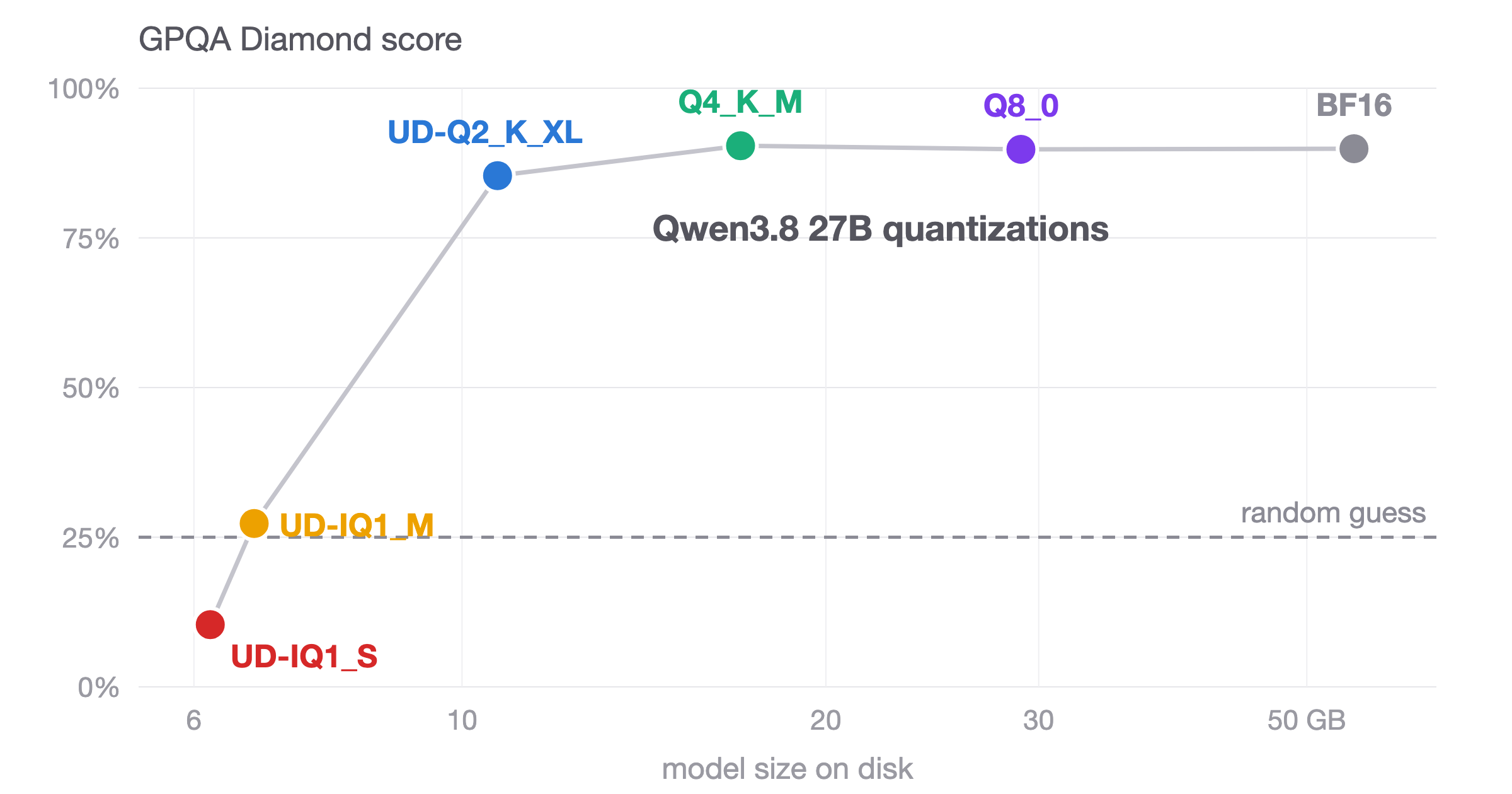
A recent benchmark evaluated Unsloth GGUF quantizations of the Qwen3.8 27B model using llama.cpp across multiple rigorous tests. The results show that the 4-bit version matches full BF16 precision while fitting on a single RTX 4090. However, extreme compression to 1-bit causes the model's performance to completely collapse.
CommentsA new GitHub repository called i-have-adhd introduces a specialized skill for AI coding agents to prevent them from burying the final answer in verbose explanations. The tool is specifically designed to provide an ADHD-friendly output by keeping responses direct and concise. This helps developers quickly locate and use the generated code without getting lost in unnecessary text.
Comments
Getting phpBB 1.4.4 working in Docker
2026-09-09The final 2001 release of the phpBB forum software has been successfully containerized to run in a modern Docker environment using a legacy stack of PHP5, Apache, and MySQL 4. The project gets version 1.4.4 up and running and includes screenshots of the retro application in action.
CommentsA Topological Picture Book, Rendered
2026-09-09A new interactive web project beautifully renders topological illustrations originally hand-drawn by a former professor, earning praise from former students for capturing his classic aesthetic. While the visualizations have inspired developers to explore similar rendering techniques for arbitrary 3D models, users suggest UI improvements for better touchscreen rotation and mobile viewing.
CommentsShow HN: LLM Attention Visualization
2026-09-09A new tool shared on Hacker News provides an interactive visualization of the attention mechanisms within large language models. This project allows developers and researchers to visually track how models process and weigh input tokens, offering deeper insights into their underlying behavior.
CommentsAnimation in Bevy: The Big Picture
2026-09-09Discussions surrounding the article highlight community interest in Bevy's animation capabilities, specifically regarding automated movement plugins and seamless animation blending. Developers also shared learning resources and expressed enthusiasm for the engine's code-first approach alongside the ongoing development of a visual editor called Jackdaw. This excitement is further reflected in the open-source game engine recently reaching the front page of Hacker News.
Comments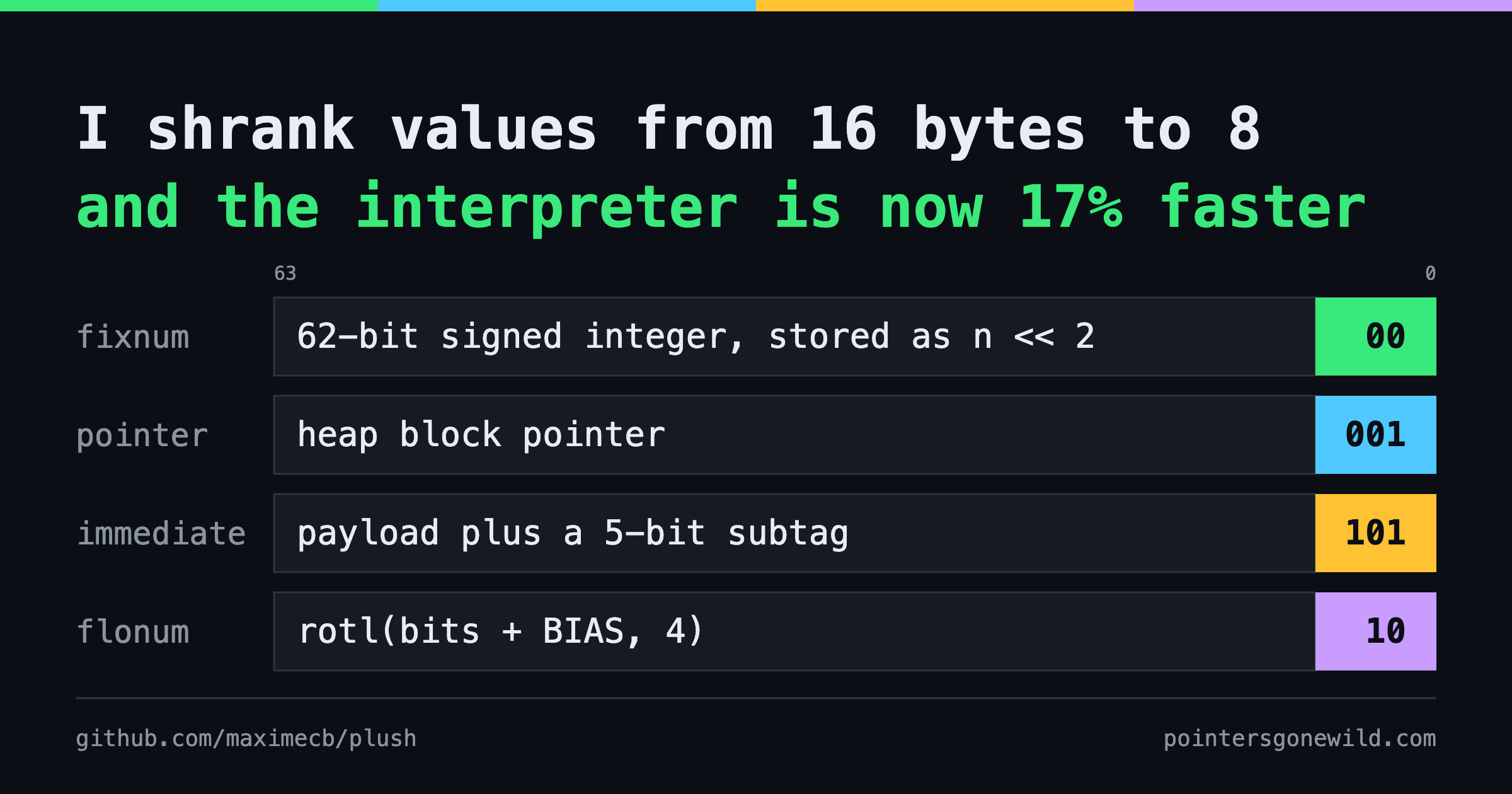
A developer optimized a Rust-based interpreter by replacing a standard enum with a compact 64-bit word representation. This low-level structural change reduced memory overhead and improved data locality during execution. Consequently, the interpreter achieved a 17% overall increase in processing speed.
CommentsDiscussions surrounding an article comparing GCC's nested functions and C++ lambdas highlight significant implementation complexities, particularly the need for trampolines to cast nested functions to bare function pointers. Critics argue the original author overlooks these semantic differences and the resulting compiler optimization challenges, suggesting that modern closure models remain more practical than adding nested functions to the C standard.
CommentsTracing np.add, all the way down
2026-09-09A new blog post provides a deep technical dive into the NumPy codebase by tracing the execution path of the np.add function. Drawing on recent contributions to the library, the author explains how this core operation is implemented all the way down to the lowest levels of the framework.
Comments2026-09-08

TALA Is Open-Source
2026-09-08The TALA layout tool has officially been released as open-source, accompanied by extensive visual documentation to showcase its capabilities. The release features seven real-world layout comparisons and eleven original diagrams, specifically highlighting advanced functionalities like selective TALA positioning.
Comments