Programming Tech News
Writing software is a craft that keeps reinventing itself. This section gathers news and articles for people who program, covering language releases, compilers and runtimes, frameworks, development workflows, and the ideas that change how code gets written and reviewed.
Typical stories include new versions of Rust, Python, Java, JavaScript, and TypeScript, performance and debugging investigations, essays on architecture and code quality, and discussions of how AI coding assistants are changing day-to-day development. Hands-on tutorials and lessons from long-running projects show up often.
The tools and practices developers choose affect how fast teams ship and how well their software holds up over time. Working engineers, students learning to code, and engineering leaders follow this coverage to sharpen their skills and make better technical decisions.
2026-07-31
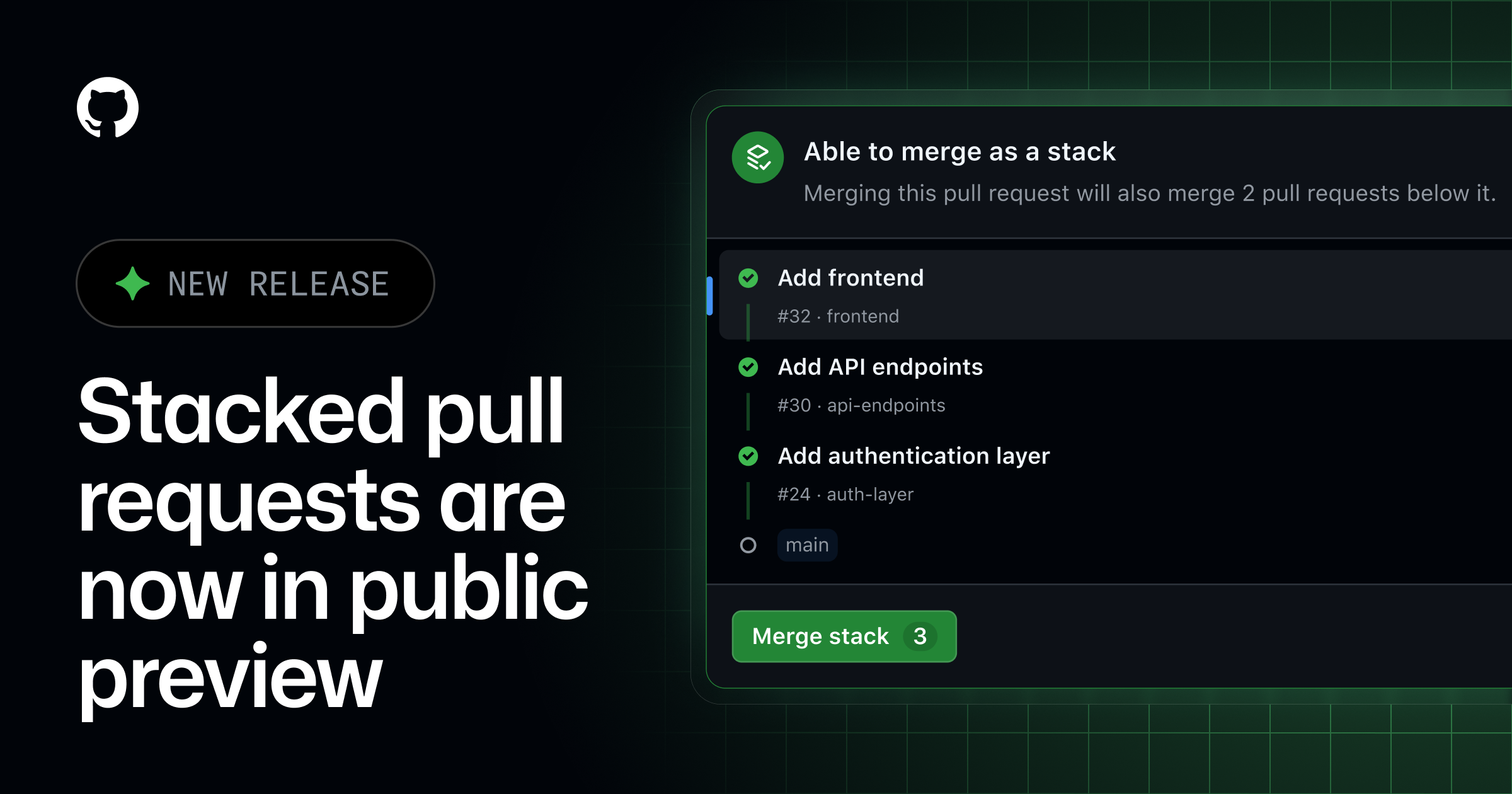
Stacked PRs are now live on GitHub
2026-07-31GitHub has officially launched stacked pull requests, allowing developers to divide massive code changes into smaller, more manageable reviews. By organizing updates into an ordered series of focused layers, this new feature significantly streamlines the code review process for complex projects.
Comments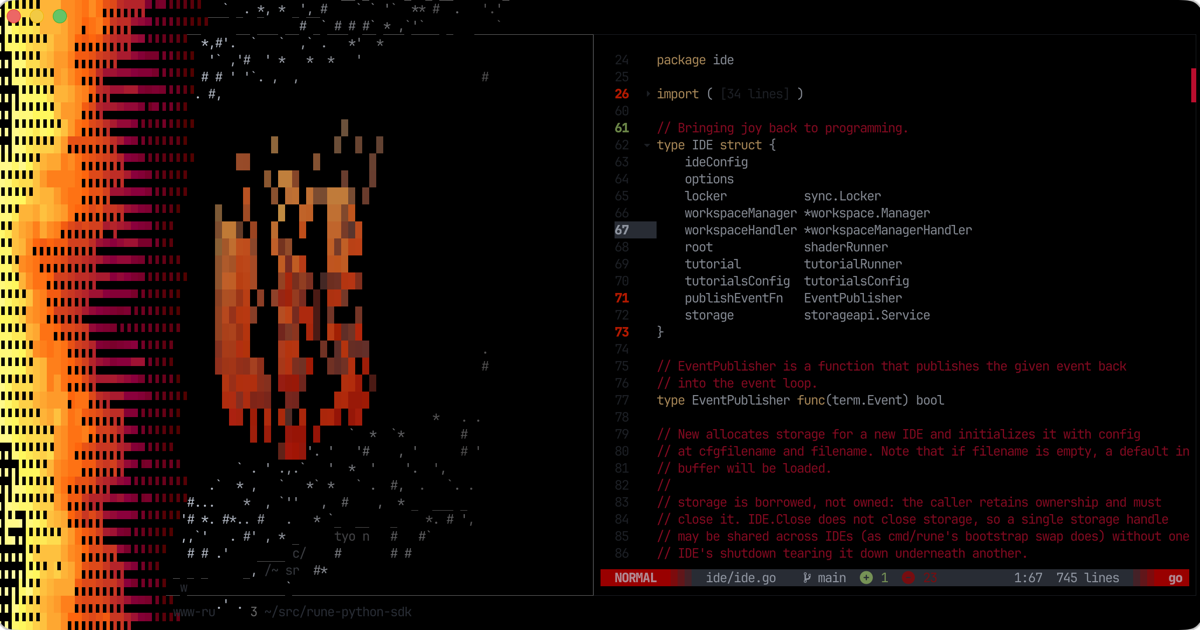
The latest Rune update makes the software free for personal use and introduces a perpetual commercial license alongside significant SSH workspace improvements. This release also adds first-class Python support, an integrated Emacs editor, and a new workspace symbol index.
Comments

A recent A/B benchmark test on SkillsBench evaluates whether the Caveman token-compression technique actually saves 65 percent of tokens when used with Claude Code. The study investigates if speaking to AI agents in simplified language effectively reduces token usage without degrading the overall quality of the output.
Comments
Bad Apple but It's Traceroute
2026-07-31A developer has recreated the famous Bad Apple animation using the output of the traceroute command. This creative demo builds directly upon the creator's recent tutorial about manipulating the network tool to display almost arbitrary strings.
Comments
The Religion of Speed
2026-07-31This piece critiques the modern tech industry's obsession with rapid development, arguing that the pressure to ship products quickly has evolved from a practical strategy into a moral imperative. By treating speed as a religion, companies now prioritize rushed deployment over thoughtful engineering. Ultimately, this cultural shift glorifies moving fast at the expense of quality and sustainable innovation.
CommentsCodePen 2.0
2026-07-31CodePen has officially launched version 2.0 in a massive update that its creator describes as their largest personal career accomplishment. This new iteration required significantly more development effort than the original platform. Detailed information about the extensive technical changes can be explored in the newly released Why 2.0 podcast.
Comments
The Economic Benefit of Refactoring
2026-07-31Thoughtworks experts highlight the substantial economic benefits of code refactoring within the context of modern software delivery. They explain how AI-assisted tools can significantly accelerate this process and help teams systematically eliminate technical debt. Ultimately, these combined practices lead to improved developer productivity and reduced long-term engineering costs.
CommentsThe Memo-1 is an open-source computer built from scratch around the classic 6502 microprocessor, uniquely utilizing a retro Minitel as its terminal. Hardware enthusiasts can explore the system's design and contribute to the project's ongoing development through its GitHub repository.
Comments
2x, not 10x: coding with LLMs in 2026
2026-07-31Recent analysis highlights that while Large Language Models improve coding productivity in 2026, realistic gains are a twofold increase rather than a tenfold revolution. Experts urge the tech industry to calibrate their enthusiasm and manage expectations regarding AI capabilities. Ultimately, developers should view these tools as highly effective assistants rather than magical replacements for human engineering.
CommentsThe GCC steering committee has officially accepted a new policy recommendation regarding AI contributions to the project. This decision establishes formal guidelines for the use of artificial intelligence tools and generated code within the development process.
CommentsKedge is a new full-stack cloud platform that allows developers to deploy websites, applications, and containers to public HTTPS URLs using SSH or Git. The service simplifies backend infrastructure by providing forkable virtual machine snapshots and a globally distributed SQLite database.
CommentsAlthough the article's title references an upper stage impacting the moon in 2026, the reader discussion focuses entirely on the website's retro, plain-HTML design and its contrast with the bloated modern web. Users praised the site's rapid load times and minimalist simplicity, while suggesting that adding a simple viewport meta tag or basic inline CSS would resolve its primary drawback of poor mobile responsiveness.
Comments2026-07-30
A new open-source inference engine named turbo-fieldfare enables users to run the Gemma 4 26B-A4B language model locally on any Apple M-series Mac. Remarkably, the highly optimized tool requires only about 2 GB of RAM, significantly lowering the hardware barrier for running large AI models on everyday laptops.
Comments
The Productivity Mirage
2026-07-30A recent article challenges conventional wisdom in software development by arguing that traditional metrics for measuring programmer productivity are merely an illusion. The piece reflects on past misconceptions to highlight that true coding efficiency is ultimately defined by meaningful project outcomes rather than superficial output.
CommentsKimi K3-256k
2026-07-30Developers have released new documentation for the Kimi K3-256k model, outlining its latest features and capabilities. These updated resources place a specific emphasis on the model's enhanced proficiency in processing and generating code documentation.
Comments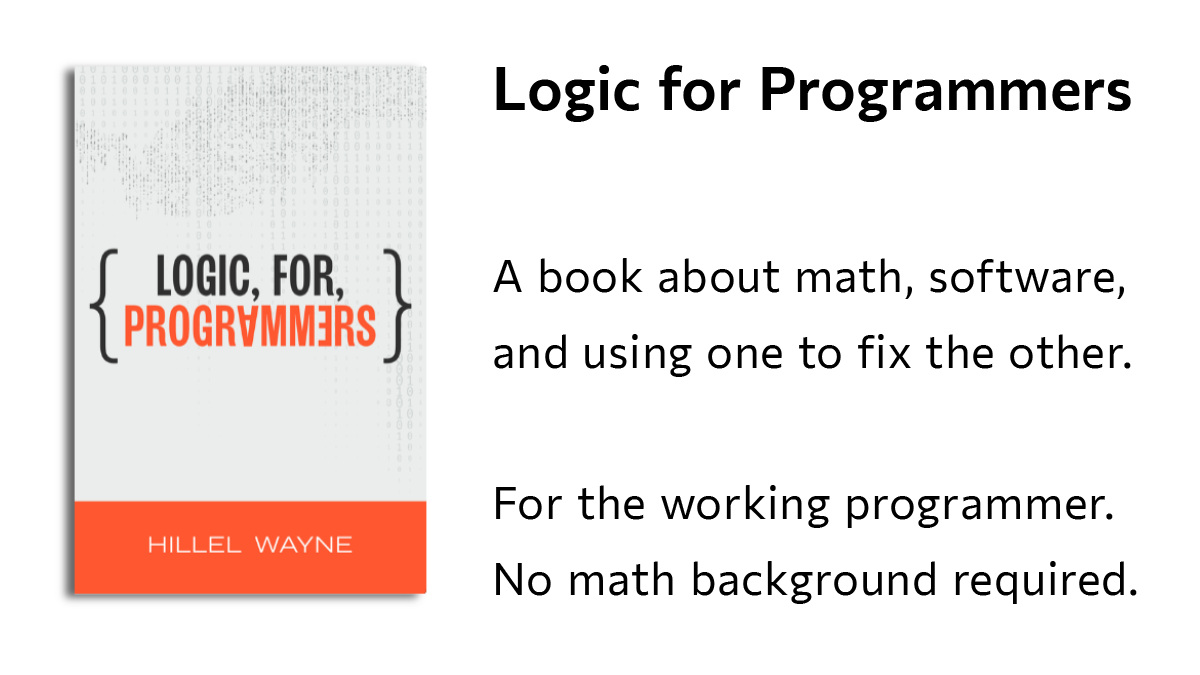
Logic for Programmers by Hillel Wayne
2026-07-30Hillel Wayne's new guide, Logic for Programmers, teaches software engineers how to apply practical mathematics and formal logic to everyday coding tasks. Designed for working developers, the resource bridges the gap between abstract theory and real-world problem-solving to help programmers write more reliable code.
CommentsA new Hacker News project introduces a local merge queue designed for parallel Claude Code agents. The open-source tool safely queues code modifications to prevent file conflicts when multiple AI assistants work in the same repository. This allows developers to run concurrent AI coding tasks locally without overwriting each other's changes.
Comments
A recent discussion examines John G. Kemeny's 1972 book Man and the Computer, noting that its vision of personal devices acting as terminals for centralized resources feels highly prescient in today's cloud computing era. The conversation also highlights Kemeny's pioneering efforts at Dartmouth College, where the Dartmouth Time-Sharing System successfully democratized early computer access decades before it became standard at other universities.
Comments
This technical guide provides a practical overview of recursive smoothing filters used in data processing. The article covers foundational techniques ranging from simple and exponential moving averages to low-pass filters and basic one-dimensional Kalman updates. It serves as a quick, hands-on resource for developers looking to implement efficient data smoothing algorithms.
Comments
Drawing a parallel between software engineering and cooking, this article details the culinary journey of an Iraqi stew as it is adapted for a Singaporean audience. The piece highlights the intricate sensory experience of global ingredients like the calamansi fruit to explore how tech-minded creators approach the evolution and refinement of traditional recipes.
CommentsThe Rust on ESP Book
2026-07-30A new comprehensive guide titled The Rust on ESP Book has been published for developers using Espressif microcontrollers. The resource provides detailed instructions and best practices for integrating the Rust programming language with various Espressif System on Chips and modules. This release aims to streamline embedded software development for engineers working with ESP hardware.
Comments2026-07-29
Codex Security
2026-07-29New SDKs and a command-line interface have been released for Codex Security to help developers integrate and manage security features. The open-source project is now available on GitHub, inviting community contributions to its ongoing development.
CommentsA new lightweight userscript called HNewhere allows users to view Hacker News discussions directly on article webpages without needing to open a second tab. The tool seamlessly embeds community comments alongside the original content to streamline the browsing experience.
Comments
The new open-source notetaking application Hubble is designed for seamless collaboration between humans and AI agents. The platform allows automated agents to directly read, write, and organize notes alongside human users in a shared workspace. This integration bridges the gap between traditional productivity tools and automated machine workflows.
CommentsPeter Norvig’s classic 1998 essay on learning programming has resurfaced for discussion, sparking debate over the impact of artificial intelligence on the profession. While some readers lament that LLMs have diminished the joy of tinkering and made deep technical mastery feel obsolete, others urge developers to continue honing their skills the traditional way. These advocates argue that resisting the urge to rely entirely on AI is essential to prevent skill degradation and maintain the intrinsic rewards of lifelong learning.
CommentsSteel Bank Common Lisp version 2.6.7
2026-07-29Steel Bank Common Lisp has released version 2.6.7, updating the compiler famously used to power Hacker News. The latest version introduces expanded SIMD instruction support for ARM64 and AVX512 on X86-64 architectures. Although these new vectorization features require explicit implementation rather than auto-vectorization, they mark a significant performance enhancement for the platform.
Comments
Hooray for the Sockets Interface
2026-07-29Introduced in 1983 with BSD 4.2, the sockets interface revolutionized networking by treating network communication like standard file I/O. This simplification accelerated the UNIX adoption of shared protocols and services, serving as a crucial turning point in the evolution of modern networking.
Comments
Interview with Boris Cherny [video]
2026-07-29Following the launch of Opus 5, Claude Code creator Boris Cherny joined Diana Hu at Startup School 2026 to discuss the latest advancements in AI. During the interview, they explored the new capabilities of the Opus 5 model and how the updated Claude platform is being utilized by developers.
Comments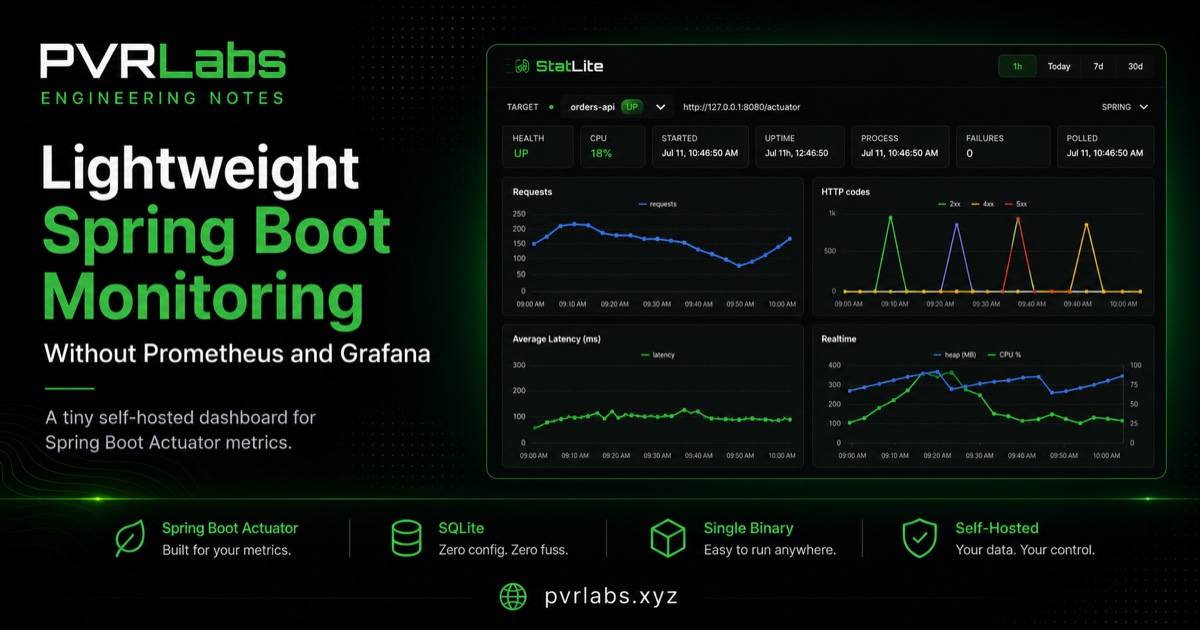
Developers can now monitor Spring Boot applications on small VPS environments without the heavy overhead of a full Prometheus and Grafana stack. By combining Spring Boot Actuator with the lightweight StatLite tool, teams can efficiently track essential server and application metrics. This streamlined approach provides a practical observability solution that minimizes resource consumption on constrained infrastructure.
CommentsA new guide clarifies the widespread HTML misconception of confusing buttons with links by highlighting the critical semantic differences between the two interactive elements. The article explains how this common misuse negatively impacts web accessibility and overall user experience. It then introduces a simple feature developers can implement to correct the issue and ensure proper semantic markup.
Comments