Programming Tech News
Writing software is a craft that keeps reinventing itself. This section gathers news and articles for people who program, covering language releases, compilers and runtimes, frameworks, development workflows, and the ideas that change how code gets written and reviewed.
Typical stories include new versions of Rust, Python, Java, JavaScript, and TypeScript, performance and debugging investigations, essays on architecture and code quality, and discussions of how AI coding assistants are changing day-to-day development. Hands-on tutorials and lessons from long-running projects show up often.
The tools and practices developers choose affect how fast teams ship and how well their software holds up over time. Working engineers, students learning to code, and engineering leaders follow this coverage to sharpen their skills and make better technical decisions.
2026-07-13
Sparked by Bun's rewrite from Zig to Rust, developers are pushing back against AI hype to emphasize the value of battle-tested code. They argue that the true merit of a project lies in its maturity rather than being a fresh rewrite or a quickly generated proof-of-concept. Ultimately, the community agrees that while artificial intelligence makes coding effortless, the necessary friction and time spent refining ideas remain crucial for building lasting software.
CommentsiOS and Mac developers can explore alternative build systems to compile and ship applications without ever opening Xcode. This workflow offers a streamlined approach for those who find the traditional integrated development environment tedious. However, the standard Xcode interface remains a fully viable option for engineers who actually enjoy using it.
Comments

Researchers have benchmarked Apple's new SpeechAnalyzer API against its predecessor, SFSpeechRecognizer, and Whisper using 5,559 LibriSpeech utterances. Because Apple did not publish official performance metrics, the study provides the first comprehensive accuracy numbers alongside raw transcripts for independent verification.
CommentsA developer recently ported Linux to the legacy Sega 32X console add-on, relying entirely on software-based synchronization to overcome the hardware's lack of native primitives. This ambitious project serves as a cautionary tale in retro computing, illustrating how pushing outdated technology beyond its limits can create more problems than it solves.
CommentsA developer has introduced an experimental open-source project that enables querying Xarray datasets using standard SQL. Pushing the boundaries of the query language, the creator also successfully implemented a complete neural network entirely within SQL. The codebase is currently available on GitHub for community testing and contributions.
CommentsA new open-source project called DOM-docx allows developers to convert semantic HTML fragments directly into native, editable Word documents. Released under the MIT license, the tool generates standard OOXML files that can be seamlessly opened and modified within Microsoft Word.
CommentsShow HN: YouTube Guitar Tab Parser
2026-07-13A new command-line tool announced on Hacker News automatically converts YouTube guitar lesson videos into PDF tablature. The utility enables musicians to easily extract and read guitar tabs directly from online video tutorials without manual transcription.
CommentsA developer shares a recent debugging story revealing how a seemingly innocuous readonly property unexpectedly caused severe performance bottlenecks in their application. The article explores the hidden computational costs of property getters and provides insights for engineers looking to identify and resolve similar performance degradation issues.
Comments2026-07-12
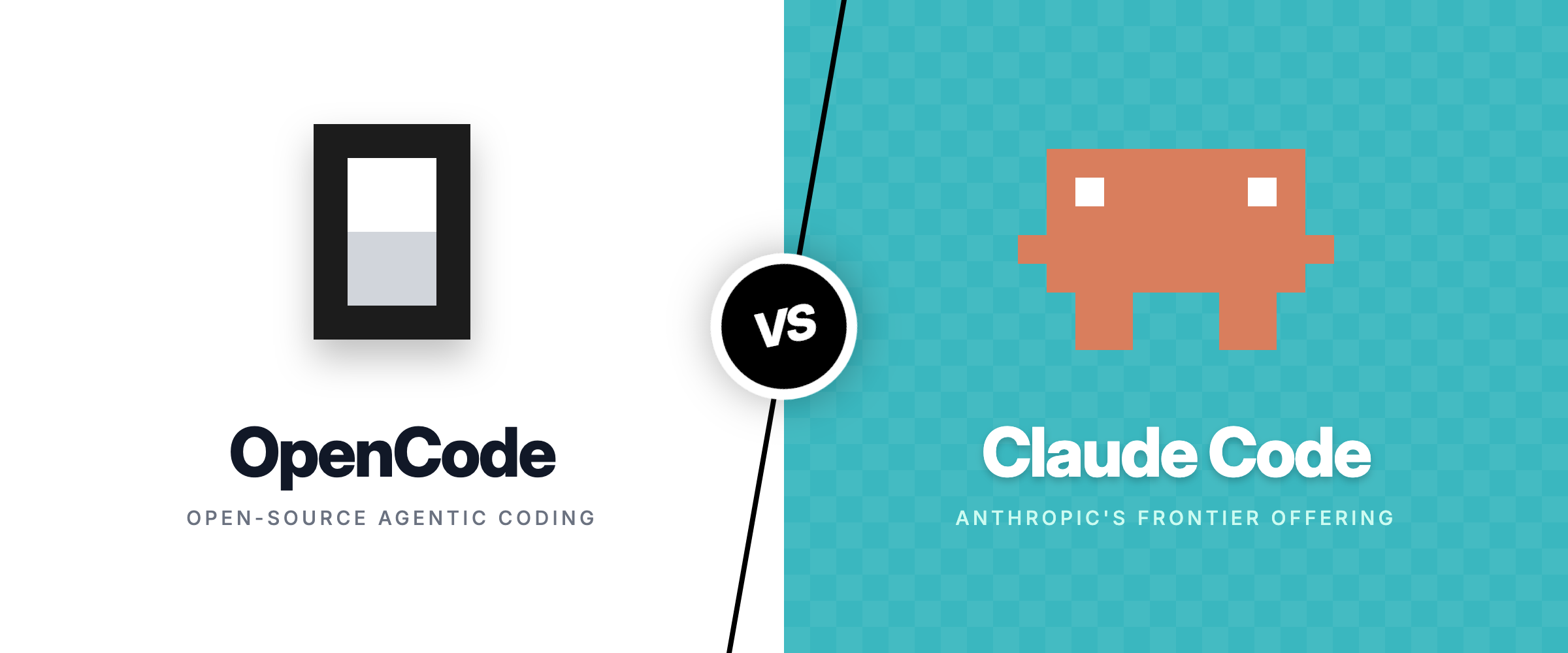
A recent comparison of AI coding assistants reveals that Claude Code incurs significant token overhead, sending 33,000 tokens to the API before even processing the user prompt. In contrast, OpenCode sends only 7,000 tokens in its default configuration. This hidden cost disparity is primarily driven by differences in instruction files, MCP schema weights, and subagent multipliers.
CommentsTiny Emulators
2026-07-12The updated Tiny Emulators project utilizes a unique cycle-stepped approach to emulate 8-bit CPUs and system chips, ticking the processors alongside other components rather than treating them as central controllers. Featuring stb-style C headers and an experimental Zig variant, the open-source library has been integrated into projects like the BizHawk emulator and inspired community discussions about the appeal of deep-hardware programming concepts reminiscent of the cancelled game 0x10c.
CommentsA developer recovering from health issues is leveraging AI coding tools to build a 2D roguelite game, prompting a broader Hacker News discussion on AI's role in game development. While participants praise AI for handling complex architecture and logic, they note it currently struggles with timing-based mechanics due to its inability to process real-time movement. However, commenters remain optimistic that rapid advancements in specialized inference hardware will soon overcome these temporal limitations.
CommentsMesh LLM utilizes the iroh network to pool GPU resources across multiple machines, creating a unified distributed AI computing system. This allows developers to access a single OpenAI-compatible API using their existing hardware, offering a scalable solution for running large language models without relying on centralized servers.
Comments
A new technical analysis reveals the exact data transmitted by the Grok Build command-line tool back to xAI servers. By inspecting the wire-level network traffic, the report provides developers with rare transparency into the privacy implications and telemetry practices of the AI development environment.
Comments
Tracing a journey that began with Java 1.0 applets in 1999, this article explores the author's long-standing interest in machine-assisted mathematics education. It highlights how modern coding agents are now being utilized to revamp and recreate these legacy educational tools.
Comments
Why write code in 2026
2026-07-12This article explores the enduring value of programming in 2026, highlighting why writing code remains a crucial and rewarding pursuit for tech professionals. It outlines a variety of compelling reasons to continue building software, emphasizing the ongoing importance of technical skills and human problem-solving in the modern digital landscape.
Comments
An agent in 100 lines of Lisp
2026-07-12The author reflects on taking an artificial intelligence course at the University of Guelph around the year 2000, long before the rise of modern deep learning frameworks. They recall that the early curriculum focused heavily on writing algorithms in Lisp rather than the transformers and neural networks that dominate the field today.
CommentsGhostel is a new terminal emulator for Emacs powered by libghostty that integrates terminal output directly into native Emacs buffers for seamless keyboard navigation and text manipulation. By treating terminal text as standard buffer content, the project aims to outperform existing Emacs packages like vterm and eat while eliminating the need for standalone terminal applications.
Comments
Starting with Chromium 148, built-in JavaScript math, CSS trigonometric, and Web Audio functions now route through the host operating system's core math library. This routing causes the browser to exhibit unique rounding behaviors that inadvertently expose the user's specific operating system. As a result, these subtle calculation differences can now be exploited by developers for accurate OS fingerprinting.
Comments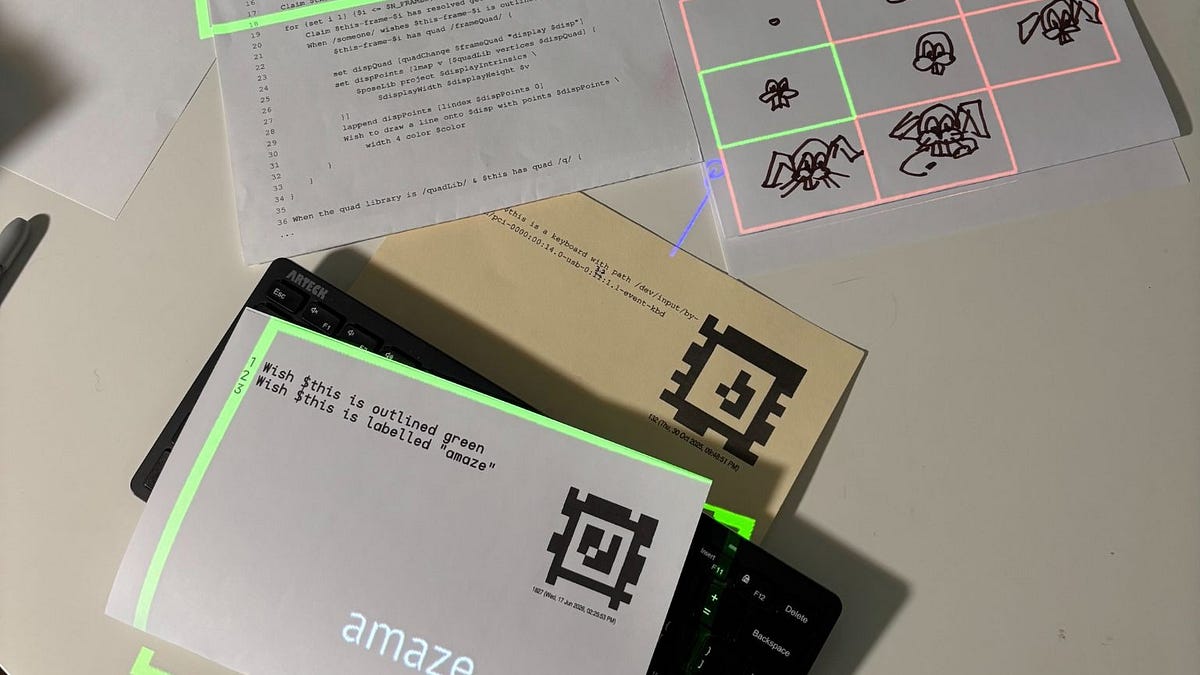
Against Usefulness
2026-07-12A recent New York Times Magazine feature explores the growing movement of physical computing and analog machines that prioritize the joy of creation over practical utility. By highlighting inventive projects like marble-powered paper computers, the article critiques modern technology's relentless obsession with optimization and celebrates the beauty of building fascinating, purely expressive devices.
CommentsMindwalk is a new visualization tool that allows developers to replay coding-agent sessions on an interactive 3D map of their codebase. This spatial interface helps engineering teams easily track, analyze, and debug automated coding workflows in a more intuitive way.
Comments
The newly announced protobuf-py introduces a fully conformant Protobuf runtime built specifically for Python. It delivers a native developer experience while matching the performance of Google's C engine on real-world workloads.
Comments2026-07-11
We scaled PgBouncer to 4x throughput
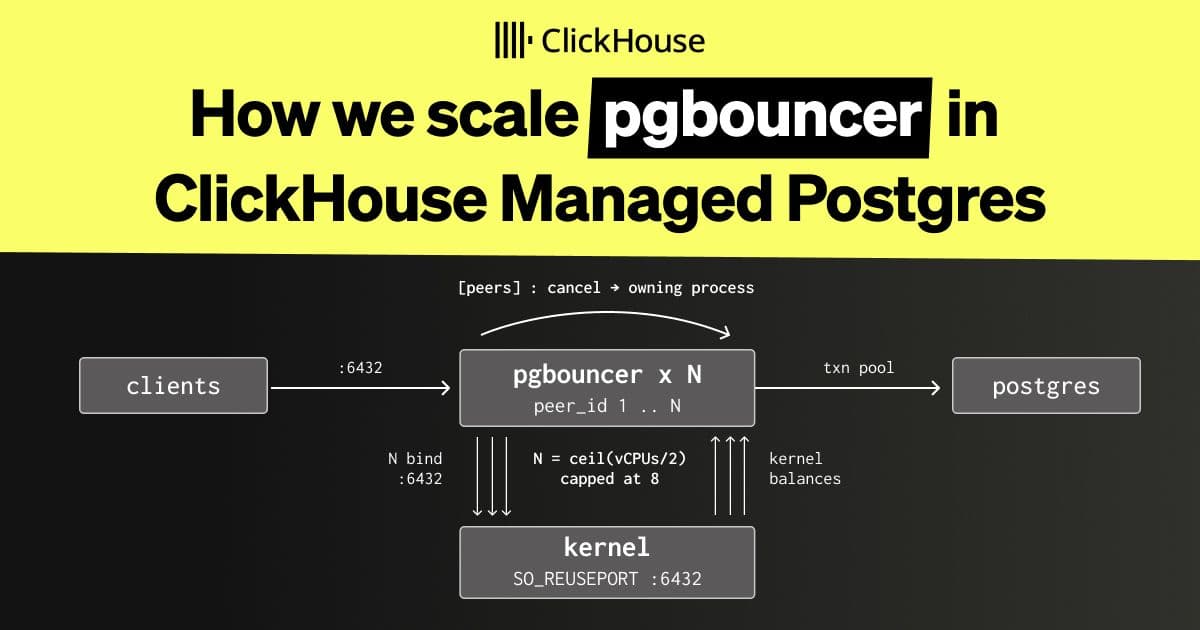
2026-07-11ClickHouse Managed Postgres overcame PgBouncer's single-threaded CPU limitations by deploying a peered fleet of processes utilizing the so_reuseport feature to scale across all available cores. This approach allows the connection pooler to fully utilize the entire CPU capacity of the host machine. Consequently, the team achieved a fourfold increase in throughput, as confirmed by recent performance benchmarks.
Comments
Ant is a new lightweight JavaScript runtime capable of running npm packages and TypeScript from a single 9 MB binary. Built from scratch on its own engine, it features a Node-compatible API, VM-isolated sandboxing, and built-in Wasm support.
CommentsPrefer strict tables in SQLite
2026-07-11The author argues that using strict tables in SQLite improves data integrity by preventing common datatype errors. Enforcing strict types blocks invalid entries, such as accidentally inserting text into numeric columns. Adopting this practice ensures more reliable and predictable database behavior.
CommentsA 1993 retrospective on the history of Singular Value Decomposition honors numerical analysis pioneers like Gene Golub, William Kahan, and Christian Reinsch for developing the practical SVD algorithm still used today. Accompanying reader discussions explore the mathematical intuition behind SVD, comparing it to generalized eigenvalues and explaining its utility in decomposing linear mappings into rotations and coordinate scaling.
CommentsAlternate clock designs and time systems
2026-07-11A recent article on alternate clock designs sparked a community discussion highlighting innovative and unconventional methods for visualizing time. Readers shared several creative web projects, including a twelve-variation visualizer and a unique Triclock design. The conversation also featured minor bug reports and widespread praise for specific favorites, most notably a digital Pi clock and a mesmerizing falling sand visualization.
CommentsRISCBoy is a completely open-source portable gaming console engineered from the ground up, featuring a custom CPU, graphics processor, and printed circuit board. The comprehensive hardware design and all associated project files are publicly available for developers and tech enthusiasts to explore and modify.
CommentsA new Show HN project introduces an interactive platform for developers to learn programming by rebuilding complex systems from scratch. Users can choose to construct their own versions of foundational tools like Redis, Git, and databases. Each hands-on lesson follows a simple choose, write, and run approach to teach core software engineering concepts.
CommentsThe Biff web framework for solo Clojure developers has introduced a new utility called Biff.graph. This tool allows programmers to organize and query their codebases as interactive graphs.
CommentsThe Python library Otary for image processing and 2D geometry has launched a new tutorials section featuring step-by-step guides and interactive Jupyter notebook workflows. These resources aim to help developers practically apply the library's clean API to real-world computer vision tasks beyond standard documentation. Community members note the tool excels at solving niche problems in just a few lines of code, often succeeding where large language models fail.
Comments