Programming News
SubmitProgramming keeps evolving as languages mature, tooling improves, and teams rethink how software should be written. This section follows that change, gathering news and articles about programming languages, compilers, development practices, and the craft of writing reliable, maintainable code.
Typical stories include language releases and proposals, deep dives into compiler and runtime internals, performance investigations, debates about coding style and architecture, and essays from experienced engineers on lessons learned. Popular ecosystems such as Rust, Python, JavaScript, and TypeScript appear regularly.
Keeping up with these topics helps developers choose the right tools, avoid known pitfalls, and grow their skills. Working engineers, students, and technical leaders follow this coverage to stay current with the ideas shaping how software gets built.
2026-11-10

Val Town is winding down
2026-11-10Val Town, a platform for building and deploying JavaScript functions, is winding down. The company announced the closure with a brief message thanking users for building with it.
CommentsGoogle Chrome has released modern-web-guidance, a resource designed to keep coding agents aligned with current web best practices instead of outdated ~2019 JavaScript. The Show HN project aims to steer AI coding assistants toward modern web primitives so generated code follows up-to-date standards.
Comments
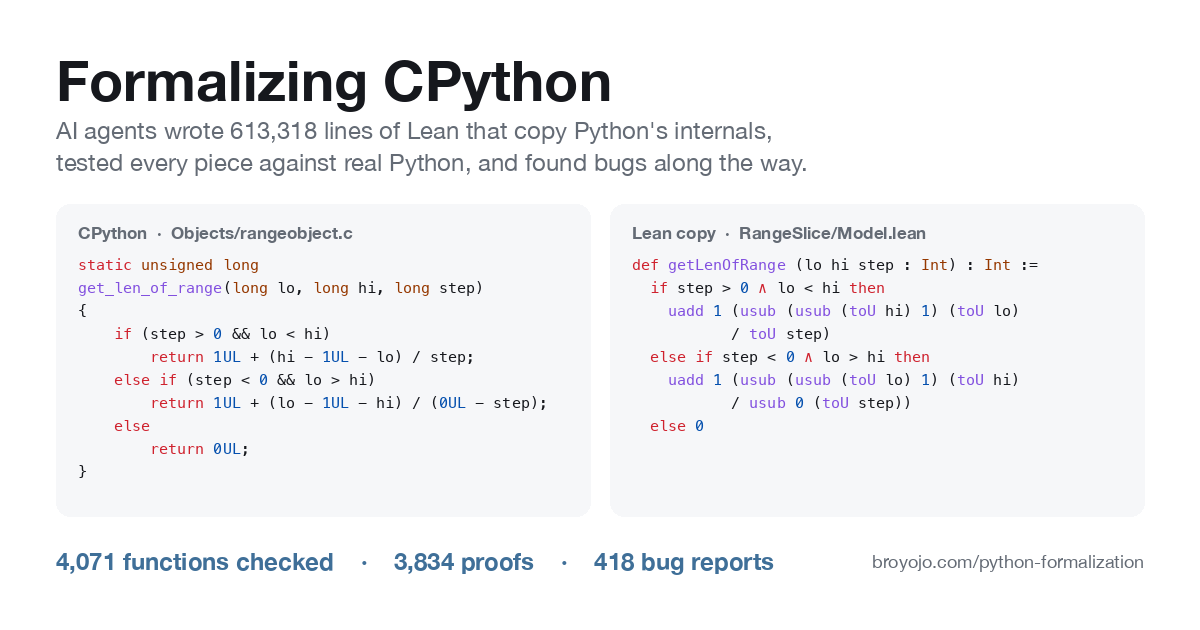
Formalizing CPython
2026-11-10AI agents formalized CPython’s internals in 613,318 lines of Lean, validating each component against real Python behavior. The effort surfaced 418 bug reports along the way.
Comments
China has drafted rules requiring every robot it makes—not just humanoids—to carry a lifetime ID code, with manufacturers coding each unit before it leaves the factory. The draft leaves the start date blank.
CommentsLet over Lambda–50 Years of Lisp
2026-11-10The piece marks 50 years of Lisp, reflecting on the programming language’s history and lasting influence. Its title nods to Lisp’s lambda-based traditions and enduring ideas about closures and functional programming.
CommentsColor bars became TV’s most common test pattern because they let broadcasters and technicians quickly check signal, color, and alignment across the chain. The piece traces their history and explains what the bars actually reveal, while noting that Netflix has offered some unusual test programming of its own.
Comments2026-11-09
Claude Fable 5.2 and Mythos 5.2
2026-11-09Claude has introduced Fable 5.2 and Mythos 5.2, new models aimed at the hardest technical challenges. Fable 5.2 sets a new benchmark in coding, finance, and the sciences.
CommentsA discussion around Herb Sutter’s piece on the rift between C++’s creator and its stewards highlights growing doubts about C++’s future, with commenters citing memory safety, AI-assisted rewrites, and weak safe-concurrency support as reasons legacy C++ may be increasingly hard to defend. Others credit Sutter and the C++ committee for foundational work on concurrency and memory models, while debating whether those efforts made parallel programming meaningfully easier.
CommentsReaders discussing whether they still enjoy C++ report mixed feelings: many still value its power, performance, control, and RAII, while others cite decades of cruft, missing features like pattern matching, and slow committee progress. Some longtime C++ developers have migrated to Rust, praising its traits, tooling, and ecosystem, and say returning to C++ is difficult except for maintaining old projects.
CommentsA Show HN project demonstrates JavaScript web apps using WASM layout and GPU rendering in just 280 KB. Commenters warn that bypassing the DOM discards browser/OS features like password-manager autofill, user dictionaries, IME support, and selectable content, creating inconsistent UX, while others are excited about the approach despite demo performance and WebGPU compatibility concerns.
CommentsSultanC is an Arabic-first, self-hosting systems programming language with an English surface, ownership safety, and pattern matching. It targets native ARM64/x86-64, supports LLVM cross-compilation and WebAssembly, and can be tried in the browser.
CommentsTaco: The Tensor Algebra Compiler
2026-11-09TACO is an open-source tensor algebra compiler that generates efficient code for dense and sparse tensor computations across a variety of storage formats. The project’s website serves as a hub for documentation, source code, and resources for using the compiler.
Comments
A new comparison examines pointer provenance in Rust and C++, using LLVM IR to show why pointers carry more semantic information than plain integers. It contrasts how the two languages model provenance and the implications for optimization and undefined behavior.
CommentsDBDelve is an open-source database client built in Rust with GPUI, shared via Hacker News’ Show HN. No further details about its features or availability were provided.
Comments2026-11-08

Goldman Sachs is withdrawing Claude Code from its bankers and traders and handing AI coding agents back to its engineers under new internal guidance. The reversal comes after its tech chief praised trader-built AI tools in July and just weeks before Goldman takes Anthropic public.
CommentsMizu introduces zero-copy parallel and asynchronous execution between R and Python over shared memory, aiming for thread-speed performance. The shikokuchuo/pymizu project provides tooling for running Python workloads alongside R without copying data across process boundaries.
CommentsGoodbye Claude, Hello Pi
2026-11-08The “Goodbye Claude, Hello Pi” post centers on a developer moving from Claude Code to Pi, a coding-agent harness that supports OpenAI Codex out of the box with basic integration and optional extensions for usage tracking. Discussion around it covers frustrations with Claude Code, such as errors tied to simple shell aliases, and comparisons between Pi, opencode, and local-model workflows. The author is identified as a Salesforce developer, suggesting the piece is a personal migration account rather than a formal product announcement.
CommentsThe History of Djgpp
2026-11-08A reader discussion of DJGPP’s history highlights how the free DOS-based 32-bit C/C++ toolchain was foundational for many developers in the 1990s, especially when compilers were expensive and most people had only DOS PCs. Commenters credit DJGPP and the Allegro game library with early C/C++ experience and as a gateway to Linux and Emacs, with one noting it was used in 1992 for a photon-counting imaging system. The thread also touches on the project’s capitalization and author DJ Delorie’s naming preferences.
CommentsZapFast is a new native WhatsApp client built in Rust and using the egui GUI library, with a focus on fast performance. The project is available as crmne/zapfast.
CommentsHow I Fight AI Brain Fry
2026-11-08A new piece explores the “AI brain fry” that developers experience when working with terminal-based assistants like Claude Code and Codex. It shares the author’s personal tactics for managing cognitive overload and staying productive while using AI coding tools.
CommentsClj.rs is a Clojure dialect implemented in Rust. The project appears to bring Clojure-style language features to a Rust-based implementation.
CommentsA developer claims to be rewriting IBM SPSS Statistics alone in 100% safe Rust, but commenters are skeptical that the project is AI-assisted and lacks a clear use case for actual SPSS users. Critics argue it risks fragmenting academic statistical tooling, conflates Rust memory safety with correctness, and raises concerns about AI-generated “slop” with no users or validation.
Comments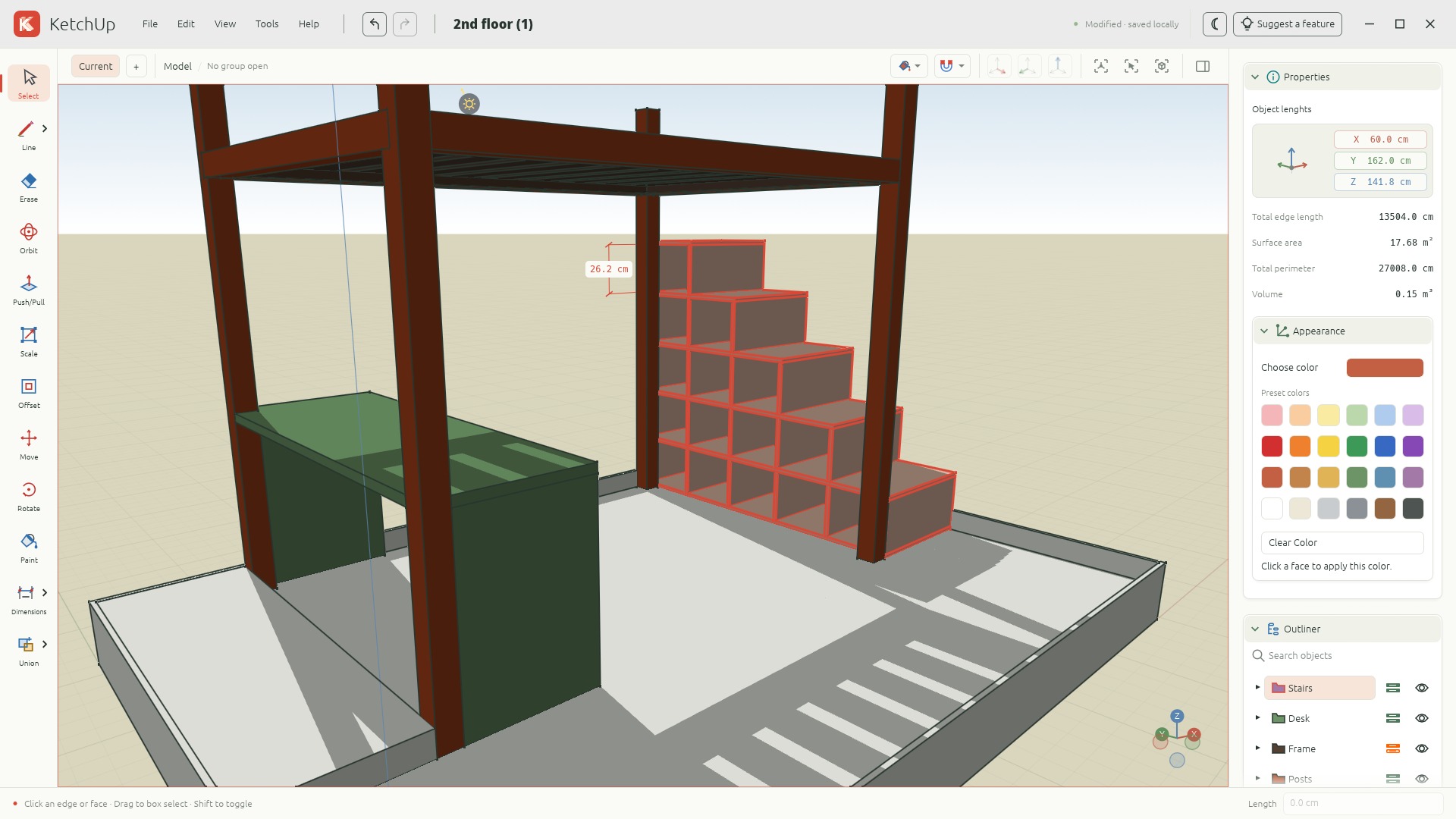
KetchUp is a free, open-source SketchUp alternative built with Rust and WebGPU for 3D modeling in woodworking and furniture design. It lets users plan shelves, tables, and cabinets with precise dimensions on Windows, macOS, Linux, or in the browser.
CommentsThe author advocates “development-driven specs” over spec-driven development, treating specifications as artifacts that evolve alongside implementation. The piece is tied to waywardgeek/ensemble, where an AI coding agent builds a book and then helps produce the next edition.
CommentsThe nexus-q project presents a post-quantum cryptographic security engine for protecting data, keys, and identities, with Rust APIs designed around KEM, AEAD, and key derivation workflows. Its focus is on structuring cryptographic interfaces that support secure post-quantum operations.
CommentsSafeScript is a new Show HN project offering a safe subset of JavaScript for executing untrusted code. It is designed to be embedded in many environments while providing safety guarantees.
Comments2026-11-07
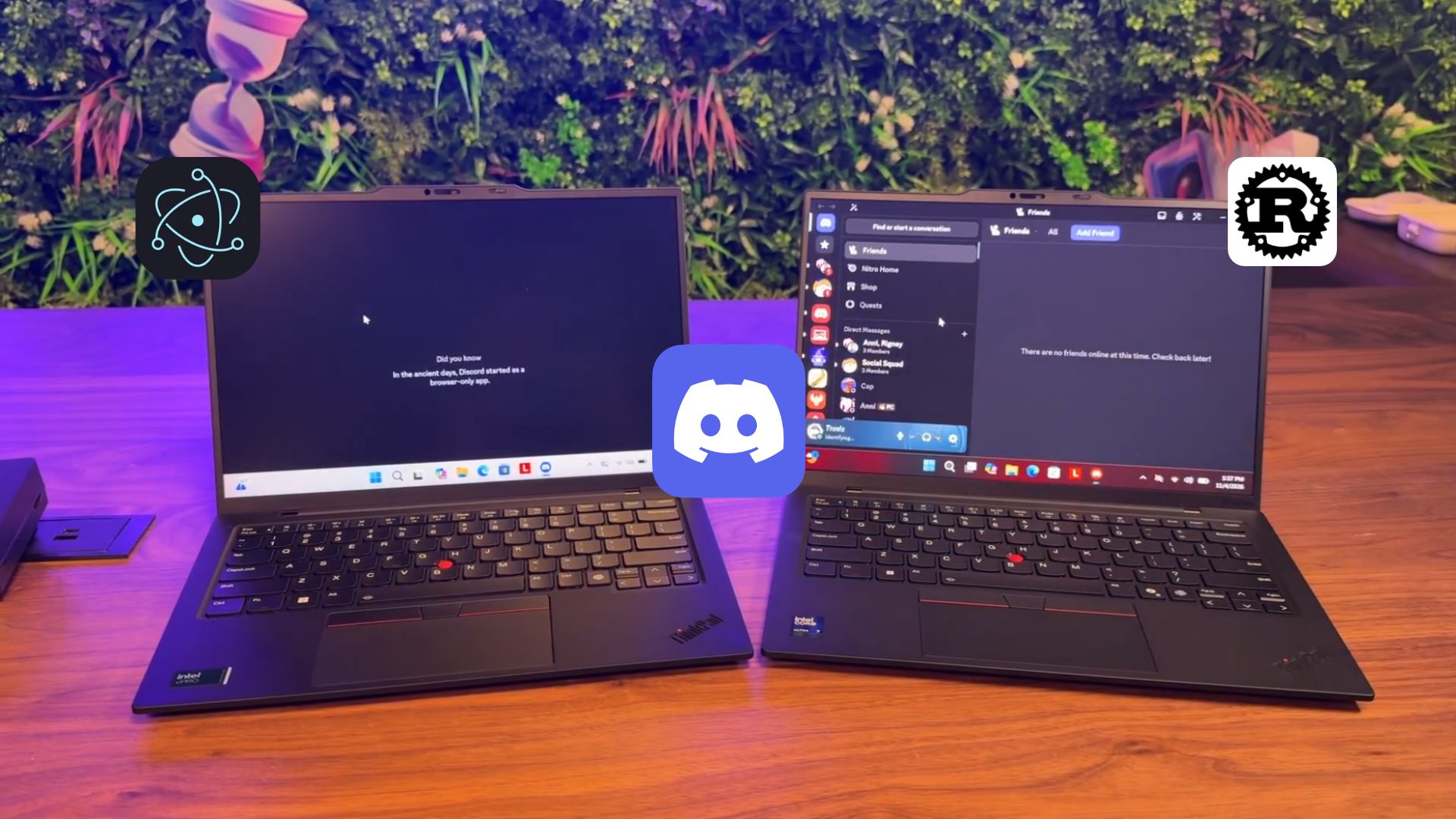
Discord’s new Rust client opens before its Electron app finishes loading, skips the Starting screen, and uses 290MB of RAM with two accounts. The comparison highlights Electron’s performance drawbacks and makes the case that Windows 11 apps should move away from it.
Comments
MaxxBench tests coding models on familiar engineering tasks that ask for something different, questioning whether a high DeepSWE score reflects genuine capability. The benchmark aims to expose gaps between strong benchmark performance and a model’s ability to adapt when requirements change.
CommentsA security issue with Claude Code's “Don't Ask Again” option has exposed passwords in 1,122 public GitHub files. The finding highlights risks around coding agents and the software supply chain, underscoring the need to secure what agents build, use, and ship and to prevent risk before code exists.
Comments