Programming News
Programming keeps evolving as languages mature, tooling improves, and teams rethink how software should be written. This section follows that change, gathering news and articles about programming languages, compilers, development practices, and the craft of writing reliable, maintainable code.
Typical stories include language releases and proposals, deep dives into compiler and runtime internals, performance investigations, debates about coding style and architecture, and essays from experienced engineers on lessons learned. Popular ecosystems such as Rust, Python, JavaScript, and TypeScript appear regularly.
Keeping up with these topics helps developers choose the right tools, avoid known pitfalls, and grow their skills. Working engineers, students, and technical leaders follow this coverage to stay current with the ideas shaping how software gets built.
2026-07-26
Git rebase -I is not that scary
2026-07-26This guide aims to demystify Git's interactive rebase command, demonstrating to developers that the feature is much less intimidating than it appears. It provides a practical walkthrough to help programmers confidently clean up, squash, and reorganize their commit history.
CommentsMemory Safety Absolutists
2026-07-26Readers are debating whether memory-safe languages like Rust should become a mandatory industry standard to prevent zero-click exploits caused by inevitable human error. While many argue that relying on programmer attention to detail is a losing strategy, others push back against aggressive language evangelism and note that social engineering remains a primary vulnerability.
Comments
2026-07-25

Claude Opus 5
2026-07-25Claude Opus 5 represents a major upgrade to the Opus tier, specifically optimizing performance for long-running agents. The new model also delivers significant enhancements in coding capabilities and professional work.
CommentsThe tech industry is currently experiencing widespread anxiety and mass layoffs driven by the rapid advancement of AI coding tools. Developers are overworking themselves out of fear of total automation to prove their worth before their roles disappear. Despite bold predictions that AI will soon write all code, this intense panic suggests the future of programming is far from settled.
Comments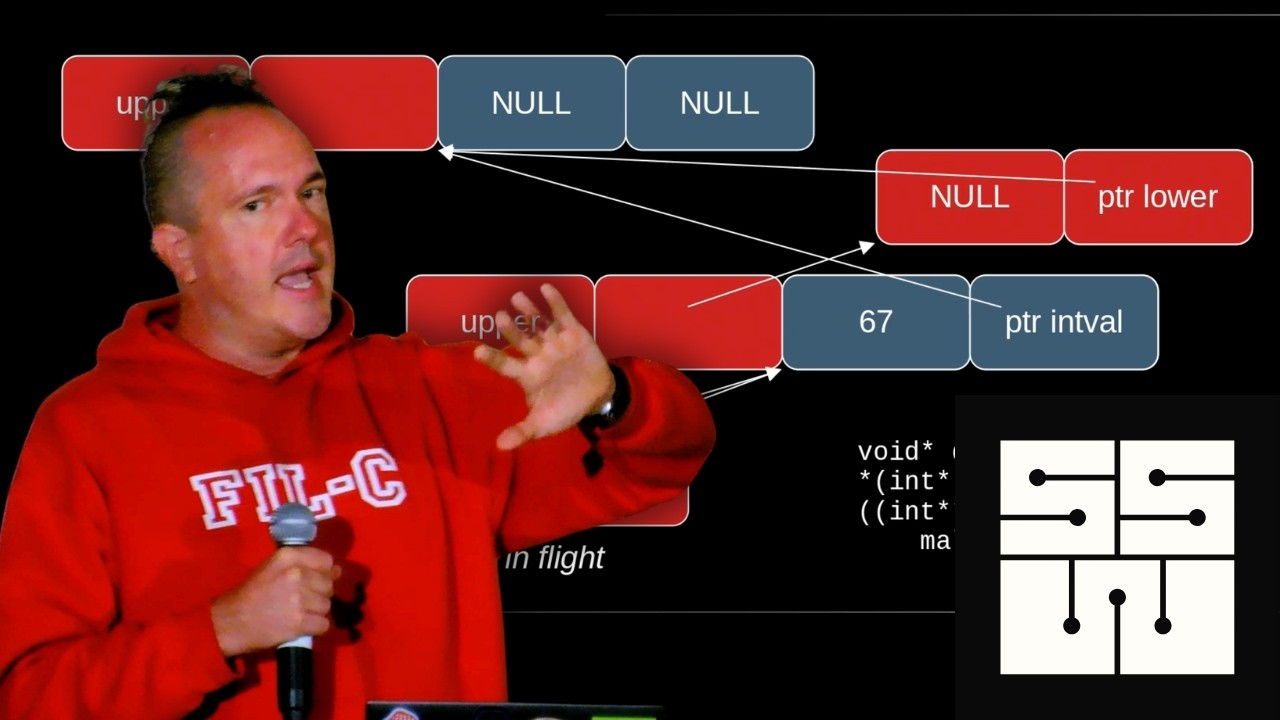
A recent video presentation on Fil-C challenges the conventional wisdom that C and C++ are inherently memory-unsafe systems programming languages. It highlights how simple bugs in these languages can easily be leveraged for critical security exploits. The project demonstrates a novel approach to enforce memory safety, providing a practical solution for securing legacy codebases.
Comments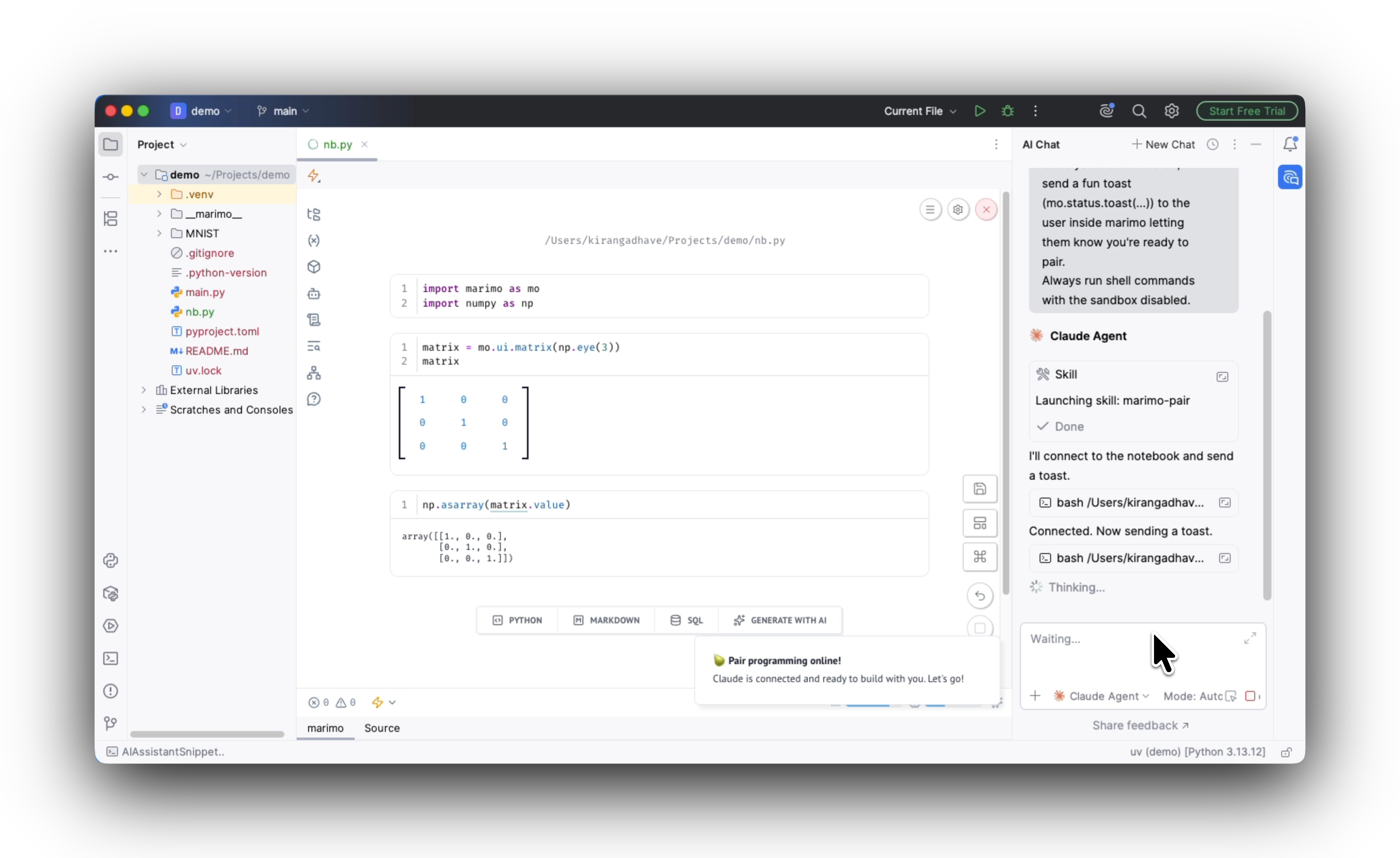
Marimo now runs in PyCharm
2026-07-25Marimo, a reactive Python notebook environment, now runs directly inside the PyCharm IDE. This integration enables developers to seamlessly build and run interactive notebooks within their standard Python workflows without switching applications.
Comments
Buz is an early-stage fork of the Bun JavaScript runtime that utilizes modern Zig instead of the planned Rust rewrite. The work-in-progress project features sub-1-second incremental builds, though its creator warns it is far from production-ready.
Comments
A newly published article explores the curious overlap between programming language file extensions and ISO 3166-1 alpha-2 country codes. It highlights amusing collisions such as Perl and Poland both utilizing the same two-letter extension. While the practical utility of this trivia is highly debatable, the piece offers a lighthearted look at these obscure technical intersections.
Comments2026-07-24
Recent insights into AI-driven development reveal that simply building infrastructure for coding agents is not enough to create successful software factories, highlighting the need to move beyond basic harness engineering. To help developers overcome this limitation, HumanLayer has launched an open-source GitHub project dedicated to advanced context engineering for AI coding models.
CommentsInspired by an article on building a software renderer in bare C++, a developer implemented a Rust-based version from scratch and added a playable game with visual effects. The project demonstrates that modern single-threaded CPUs are highly capable of running interactive 3D software rendering without hardware acceleration. Community discussion also explored the most efficient methods for displaying the rendered framebuffer, debating the use of high-level libraries like wgpu versus direct OS compositor APIs to minimize dependencies.
CommentsThe Learn OpenGL website is a comprehensive tutorial resource designed to help beginners master modern OpenGL version 3.3 and above. The platform offers clear, example-driven lessons that make complex 3D graphics programming accessible for new developers.
Comments
Meta is leveraging OCaml's garbage collector to implement garbage collection for Rust in a novel memory management approach. Additionally, a new bug detection tool called Soteria uses symbolic execution to rapidly and reliably identify issues in Rust and C codebases.
Comments2026-07-22
The original source code for the Apollo 11 Guidance Computer, which powered both the command and lunar modules, has been transcribed and published on GitHub. This historic software repository provides developers and space enthusiasts with a detailed look at the foundational programming that successfully guided astronauts to the moon.
CommentsThe Birth of Prolog (1996)
2026-07-22Readers reflecting on the historical article The Birth of Prolog share their enduring appreciation for the pioneering logic programming language, highlighting its origins in 1970s natural language processing and its unique paradigm of thinking in relationships and facts. Although Prolog has since been relegated to niche applications, developers continue to praise its elegant design and compare its thought-provoking nature to contemporaries like Lisp and Scheme.
Comments2026-07-21
PCjs Machines
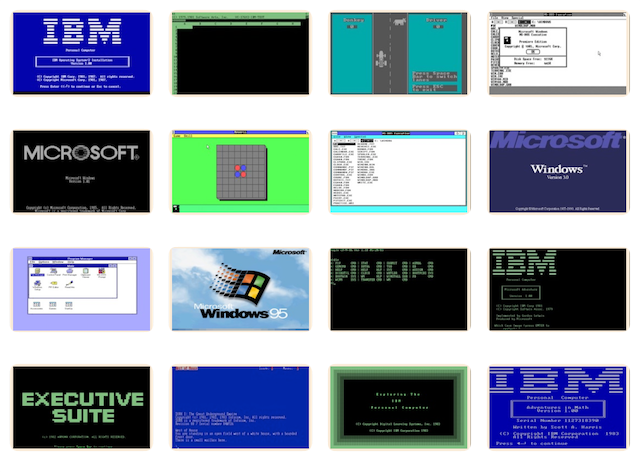
2026-07-21PCjs Machines is an online platform providing JavaScript-based emulators for vintage computers, allowing users to run legacy operating systems directly in modern web browsers. It also hosts an extensive archive of historical software and documentation for a wide variety of retro microcomputers and arcade machines.
Comments2026-07-20

The Zen of Parallel Programming
2026-07-20This reflective article explores the philosophical parallels between parallel computing and human communication. The author highlights how the technical processes of processor interaction closely mirror both interpersonal dynamics and internal self-reflection.
Comments
A new technique called prewalk reduces the cost of automated coding tasks by nearly half while retaining 92 to 97 percent of a frontier model's pass rate on SWE-Bench Pro. The method achieves this by providing a cheaper AI model with a step-by-step trajectory instead of a high-level plan, reserving the expensive frontier model for just a single edit.
CommentsMoonshine is a new headless streaming server written in Rust that allows users to stream PC games to any device running a Moonlight client. This lightweight tool provides an efficient solution for gamers looking to access their PC library on other screens without running a full desktop environment.
Comments2026-07-19
Claude Code uses Bun written in Rust now
2026-07-19Bun creator Jarred Sumner announced that Claude Code version 2.1.181 and later now use the runtime's rewritten Rust port. This update makes the AI coding tool 10% faster on startup.
Comments
The eighth installment of a Commodore 64 BASIC programming series details the development of a new dungeon crawler called Goblin Attack. The game features redefinable keys, chasing enemies, and a d20 combat system. The tutorial also covers the technical challenge of fixing a critical memory bug that caused the game to silently overwrite its own code.
Comments
Cagire: Live Coding in Forth
2026-07-19Cagire is a terminal-based step sequencer that enables live music production and coding using the Forth programming language. By assigning a Forth script to each step, the single binary integrates synthesis, sampling, and support for MIDI and OSC to provide a unique command-line environment for musicians and developers.
CommentsReader discussions surrounding the hype of artificial intelligence reveal a stark divide in user experiences, with some praising large language models as autonomous coding superpowers while others dismiss them as unreliable tools requiring constant micro-management. This polarization has sparked intense debate over whether the technology's effectiveness is merely a reflection of a user's underlying technical competence, highlighting a growing disconnect between the promised technological singularity and the practical realities of AI integration.
CommentsUnifiedIR for Julia
2026-07-19The official GitHub repository for the Julia programming language is highlighting new development efforts focused on implementing a UnifiedIR. Developers are encouraged to create an account and contribute to the ongoing compiler infrastructure improvements. This initiative represents a significant step in the language's continuous development and optimization.
CommentsA newly developed emulator can now boot Windows on the discontinued Intel Itanium architecture, albeit at speeds comparable to a 1990s 486 processor on modern hardware. While this milestone is a notable technical achievement, community discussions highlight that Itanium's VLIW design fundamentally failed for general-purpose computing. Specifically, the architecture's reliance on predictable memory access and complex compiler optimizations could not efficiently handle the unpredictable multitasking and virtualization demands of modern workloads.
Comments2026-07-18
Regressive JPEGs
2026-07-18Developers are sharing creative workarounds to embed animations and live video streams by repurposing standard image formats like progressive PNGs and MJPEG instead of relying on traditional video tags. Techniques include using HTTP refresh headers and multipart responses to stream continuous frames directly into standard image elements. While some express frustration that websites still strip animations from modern formats like APNG, the community celebrates these inventive hacks for building interactive, JavaScript-free web applications.
Comments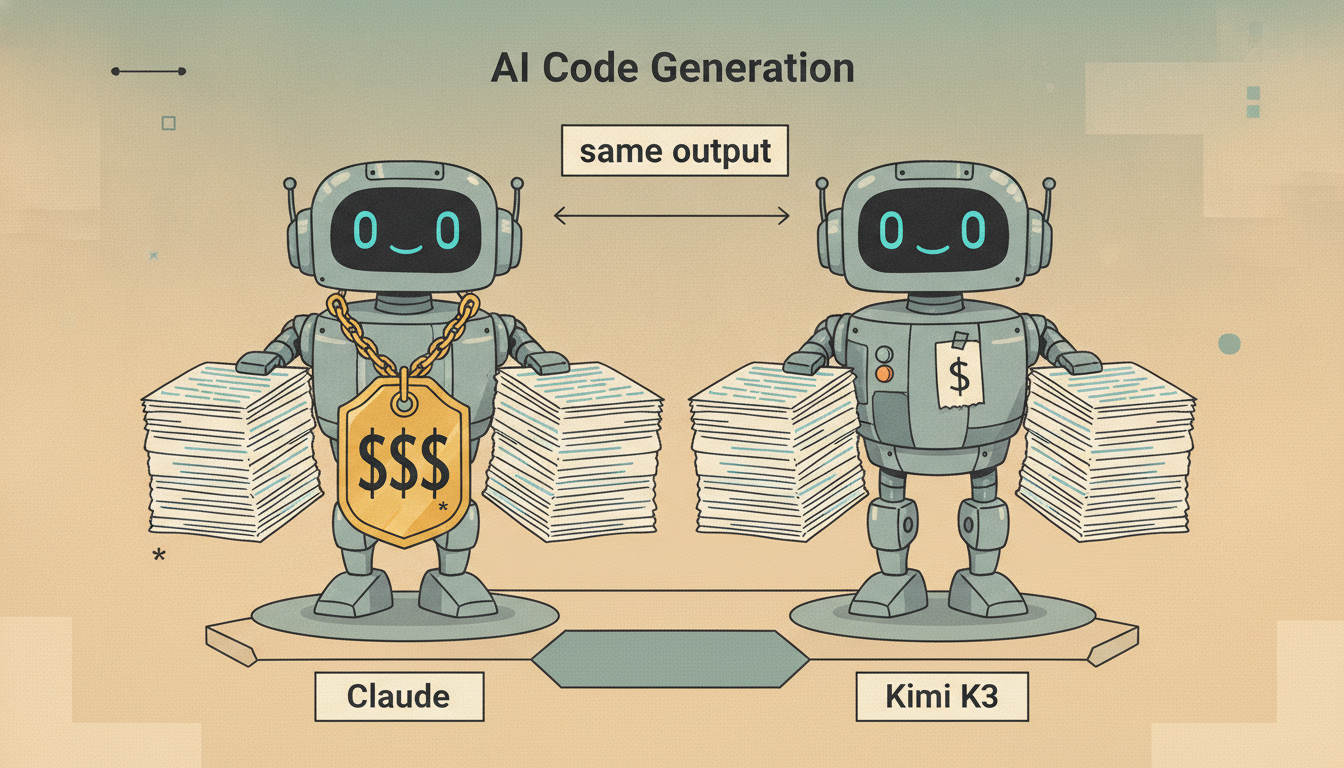
The Kimi K3 Moment
2026-07-18A developer evaluating the new Kimi K3 AI model found its coding capabilities and output quality to be virtually indistinguishable from industry leader Claude. This parity marks a significant milestone in the tech industry, demonstrating that top-tier software development AI is no longer exclusive to a single provider.
CommentsWhat AI did to stackoverflow in a graph
2026-07-18A recent graphical analysis reveals a dramatic drop in Stack Overflow's web traffic following the widespread adoption of AI coding assistants. The visual data highlights a major shift in developer behavior as programmers increasingly rely on generative AI to answer coding questions instead of searching community forums. This trend underscores the disruptive impact of large language models on traditional knowledge-sharing platforms within the tech industry.
CommentsGleam Is Now on Tangled
2026-07-18The Gleam programming language has migrated its code repository to Tangled, a decentralized GitHub alternative built on the ATProto protocol. While the move highlights the growing use of decentralized infrastructure, readers criticized the original article for failing to explain what either technology actually does.
Comments
Elixir-lang.org has a new design
2026-07-18The official website for the Elixir programming language, elixir-lang.org, has launched a brand new design. Elixir is a dynamic, functional language running on the Erlang VM, designed to help developers build scalable and maintainable applications from zero to scale.
Comments2026-07-17
The Zilog Z80 has turned 50
2026-07-17Celebrating its 50th anniversary, the Zilog Z80 microprocessor has sparked nostalgic reflections from veteran technologists who credit learning digital logic and assembly on the chip for their foundational understanding of computing. Readers emphasize the enduring value of mastering hardware from first principles, contrasting the manual coding and hardware constraints of the 1970s with today's over-served ecosystems and modern architectures like RISC-V.
Comments