Programming News
Programming keeps evolving as languages mature, tooling improves, and teams rethink how software should be written. This section follows that change, gathering news and articles about programming languages, compilers, development practices, and the craft of writing reliable, maintainable code.
Typical stories include language releases and proposals, deep dives into compiler and runtime internals, performance investigations, debates about coding style and architecture, and essays from experienced engineers on lessons learned. Popular ecosystems such as Rust, Python, JavaScript, and TypeScript appear regularly.
Keeping up with these topics helps developers choose the right tools, avoid known pitfalls, and grow their skills. Working engineers, students, and technical leaders follow this coverage to stay current with the ideas shaping how software gets built.
2026-07-27
Decker is a new platform designed to revive the accessible, intuitive application-building experience of classic macOS and its iconic HyperCard software. Community discussions emphasize how such tools historically empowered non-programmers to easily create native-feeling, self-contained applications and games through creative constraints. By returning to this simpler component-based approach, Decker offers a nostalgic yet highly relevant alternative to the complex development ecosystems of today.
CommentsWe have proof automation now
2026-07-27The integration of Large Language Models with formal theorem provers is emerging as a powerful approach to automate software verification and generate mathematically correct code. Proponents argue this synergy will make dependent-type systems highly practical and shift the core programming skill toward writing formal specifications. However, experts caution that while LLMs simplify proof engineering, human insight remains essential for defining correct abstractions and managing complex production edge cases.
Comments
Vercel has introduced Scriptc, an open-source TypeScript-to-native compiler that generates standalone machine code without embedding a JavaScript engine. This allows developers to compile TypeScript directly into efficient, lightweight native binaries, and the project is currently available for community contribution on GitHub.
Comments
Teaching Kids Forth
2026-07-27Despite the popularity of modern languages like Python and Scratch, an educator is teaching middle and high school students the vintage stack-oriented language Forth. The author chose this unconventional approach to empower students, hoping to introduce them to software creation and give them greater control over their daily devices.
CommentsDiscussions surrounding Mike Acton's Introduction to Data-Oriented Design emphasize prioritizing data structures over algorithms to naturally optimize performance and reduce cognitive load. While some debate whether this approach is premature optimization for everyday applications, proponents praise its simplicity and flexibility compared to rigid Object-Oriented frameworks. Additionally, Acton has recently released a dedicated LLM skill to assist developers in applying data-oriented programming principles.
Comments
HTMX 4.0 has been announced as the first JavaScript library to release exclusively on the Game Boy platform. The release features a unique gameplay experience with four levels of pickle-collecting action where players squish client-side JavaScript down to size.
CommentsWhile the original article highlights the Go team's new modular static analysis framework, the surrounding community discussion largely focused on debating the language's broader design philosophy, particularly its verbose error handling and strict formatting. Readers actively compared Go's convention-based error checking to the Rust programming language, questioning whether the language's mandatory error checking promotes mindful development or simply adds frustrating verbosity.
CommentsA draft article on the history of John Backus's functional programming project has drawn criticism for ending prematurely before exploring deeper theoretical concepts. Readers note the piece missed the opportunity to examine whether Backus considered later developments like Hughes's Arrows, which maintain a point-free foundation while supporting variable syntax. Discussants argue that these subsequent advancements in semantic completeness could potentially refute Backus's original concerns regarding functional programming.
CommentsHow to Block Some of the Bots
2026-07-27Web administrators are increasingly deploying technical countermeasures like JavaScript challenges and strict authentication to combat resource-exhausting AI bot traffic that frequently overwhelms servers. While relentless crawling forces some to shut down legacy sites, the webmaster community remains divided on the long-term strategy of blocking content from growing LLM user bases. Ultimately, blocking bots is being framed both as a necessary defense for server stability and a deliberate choice to partition content from low-trust internet access.
CommentsAST-grep is a user-friendly utility designed for large-scale code searching, linting, and rewriting. Its developers recently rewrote the underlying Tree-sitter parsing engine in Rust to optimize overall performance. This architectural shift achieves a 30% speed increase, making the tool even faster for developers.
CommentsReaders are discussing a 1997 article about using classic Unix tools like sed to generate book indexes, contrasting retro command-line feats of strength with modern publishing workflows. While some developers still value sed and awk for quick text transformations, others argue that modern word processors and typesetting languages like LaTeX make the process significantly easier. The community generally agrees that relying on intricate shell scripts for indexing is obsolete today, having been superseded by dedicated typesetting tools and simple Python scripts.
CommentsA recent article highlights several underappreciated features of the Django web framework that the author has been enjoying lately. The piece provides practical insights for Python developers looking to optimize their workflow and discover new capabilities within the popular framework.
Comments2026-07-26
Git rebase -I is not that scary
2026-07-26This guide aims to demystify Git's interactive rebase command, demonstrating to developers that the feature is much less intimidating than it appears. It provides a practical walkthrough to help programmers confidently clean up, squash, and reorganize their commit history.
CommentsMemory Safety Absolutists
2026-07-26Readers are debating whether memory-safe languages like Rust should become a mandatory industry standard to prevent zero-click exploits caused by inevitable human error. While many argue that relying on programmer attention to detail is a losing strategy, others push back against aggressive language evangelism and note that social engineering remains a primary vulnerability.
Comments2026-07-25

Claude Opus 5
2026-07-25Claude Opus 5 represents a major upgrade to the Opus tier, specifically optimizing performance for long-running agents. The new model also delivers significant enhancements in coding capabilities and professional work.
CommentsThe tech industry is currently experiencing widespread anxiety and mass layoffs driven by the rapid advancement of AI coding tools. Developers are overworking themselves out of fear of total automation to prove their worth before their roles disappear. Despite bold predictions that AI will soon write all code, this intense panic suggests the future of programming is far from settled.
Comments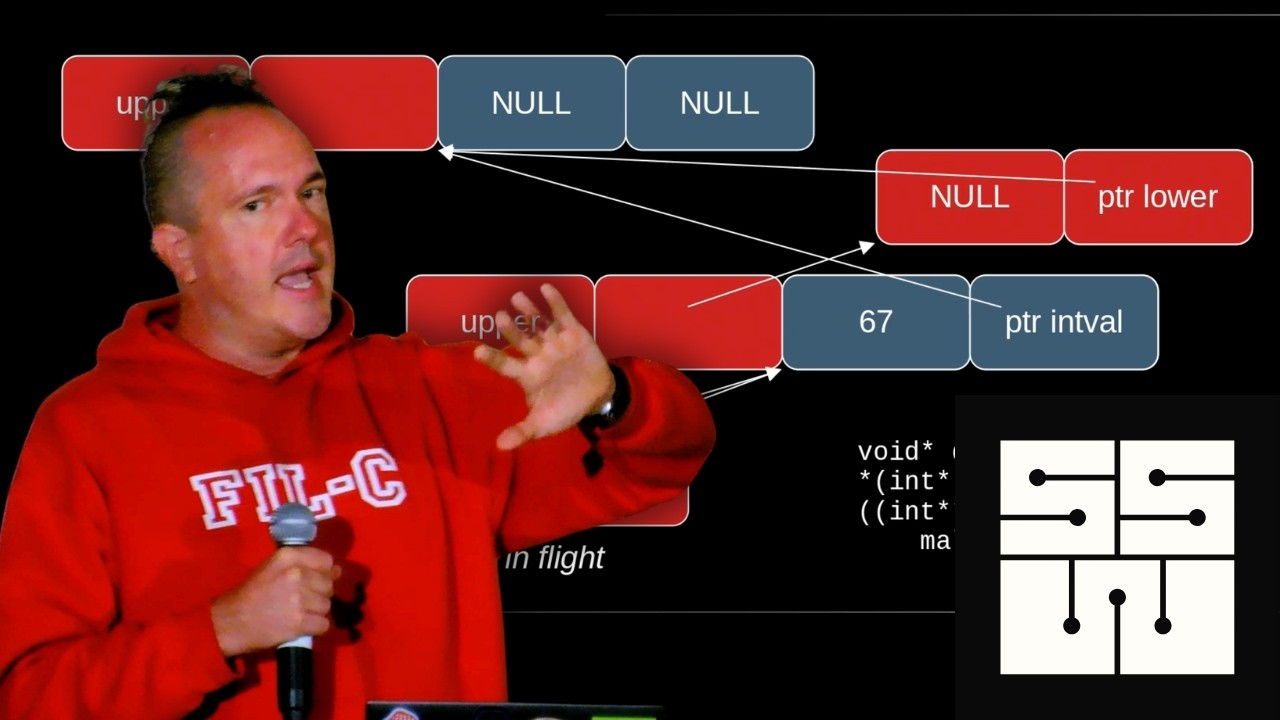
A recent video presentation on Fil-C challenges the conventional wisdom that C and C++ are inherently memory-unsafe systems programming languages. It highlights how simple bugs in these languages can easily be leveraged for critical security exploits. The project demonstrates a novel approach to enforce memory safety, providing a practical solution for securing legacy codebases.
Comments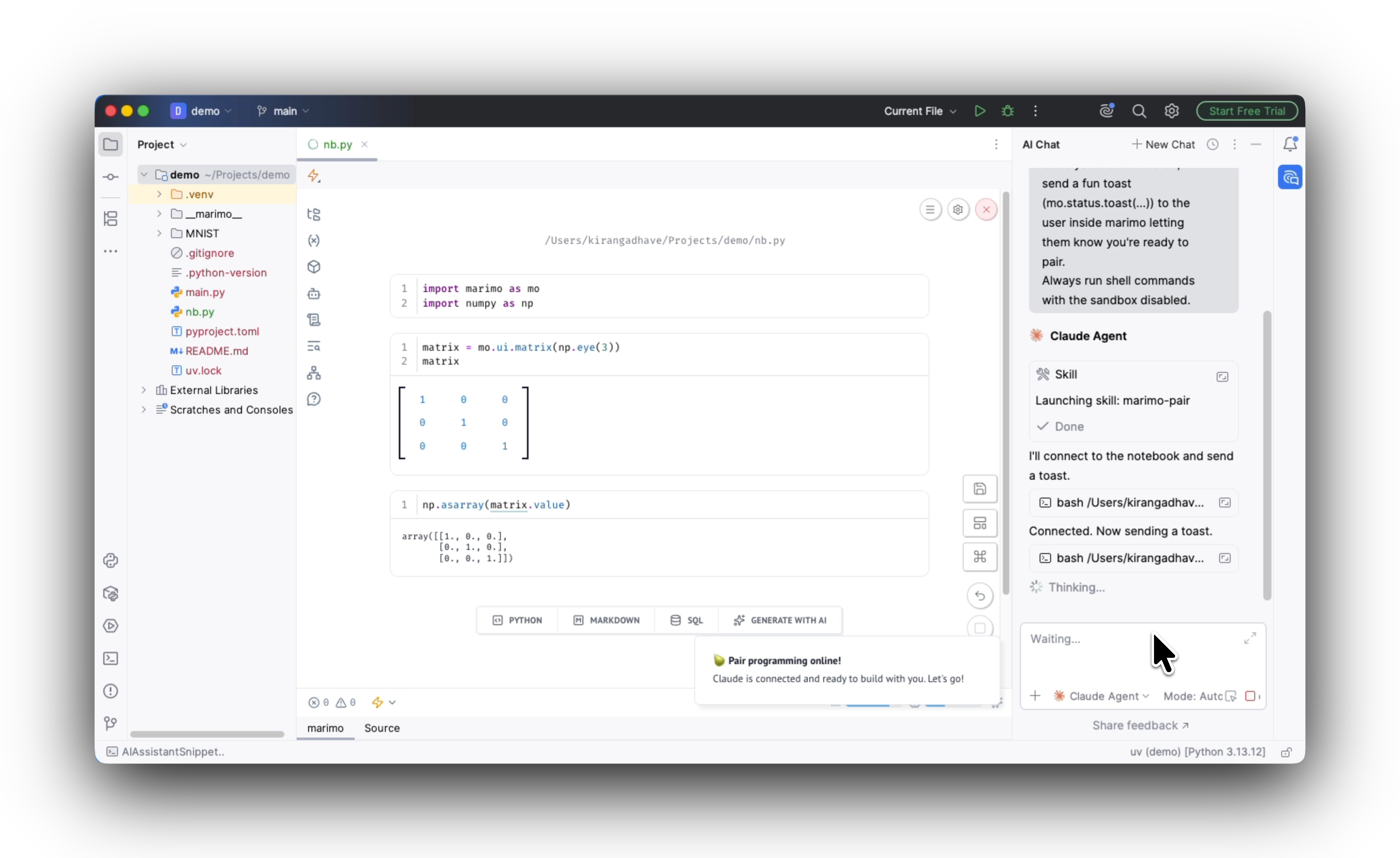
Marimo now runs in PyCharm
2026-07-25Marimo, a reactive Python notebook environment, now runs directly inside the PyCharm IDE. This integration enables developers to seamlessly build and run interactive notebooks within their standard Python workflows without switching applications.
Comments
Buz is an early-stage fork of the Bun JavaScript runtime that utilizes modern Zig instead of the planned Rust rewrite. The work-in-progress project features sub-1-second incremental builds, though its creator warns it is far from production-ready.
Comments
A newly published article explores the curious overlap between programming language file extensions and ISO 3166-1 alpha-2 country codes. It highlights amusing collisions such as Perl and Poland both utilizing the same two-letter extension. While the practical utility of this trivia is highly debatable, the piece offers a lighthearted look at these obscure technical intersections.
Comments2026-07-24
Recent insights into AI-driven development reveal that simply building infrastructure for coding agents is not enough to create successful software factories, highlighting the need to move beyond basic harness engineering. To help developers overcome this limitation, HumanLayer has launched an open-source GitHub project dedicated to advanced context engineering for AI coding models.
CommentsInspired by an article on building a software renderer in bare C++, a developer implemented a Rust-based version from scratch and added a playable game with visual effects. The project demonstrates that modern single-threaded CPUs are highly capable of running interactive 3D software rendering without hardware acceleration. Community discussion also explored the most efficient methods for displaying the rendered framebuffer, debating the use of high-level libraries like wgpu versus direct OS compositor APIs to minimize dependencies.
CommentsThe Learn OpenGL website is a comprehensive tutorial resource designed to help beginners master modern OpenGL version 3.3 and above. The platform offers clear, example-driven lessons that make complex 3D graphics programming accessible for new developers.
Comments
Meta is leveraging OCaml's garbage collector to implement garbage collection for Rust in a novel memory management approach. Additionally, a new bug detection tool called Soteria uses symbolic execution to rapidly and reliably identify issues in Rust and C codebases.
Comments2026-07-22
The original source code for the Apollo 11 Guidance Computer, which powered both the command and lunar modules, has been transcribed and published on GitHub. This historic software repository provides developers and space enthusiasts with a detailed look at the foundational programming that successfully guided astronauts to the moon.
CommentsThe Birth of Prolog (1996)
2026-07-22Readers reflecting on the historical article The Birth of Prolog share their enduring appreciation for the pioneering logic programming language, highlighting its origins in 1970s natural language processing and its unique paradigm of thinking in relationships and facts. Although Prolog has since been relegated to niche applications, developers continue to praise its elegant design and compare its thought-provoking nature to contemporaries like Lisp and Scheme.
Comments2026-07-21
PCjs Machines
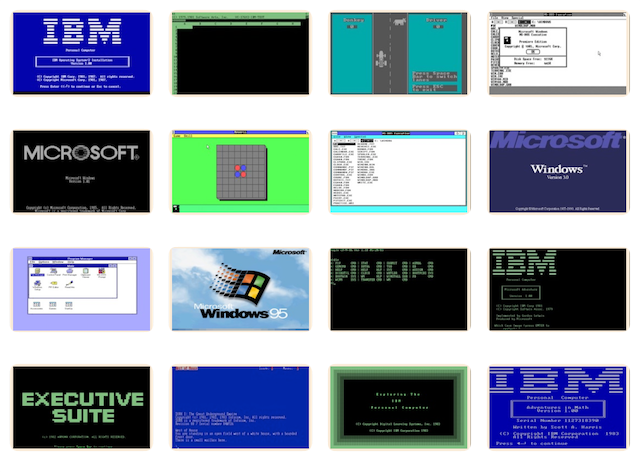
2026-07-21PCjs Machines is an online platform providing JavaScript-based emulators for vintage computers, allowing users to run legacy operating systems directly in modern web browsers. It also hosts an extensive archive of historical software and documentation for a wide variety of retro microcomputers and arcade machines.
Comments2026-07-20

The Zen of Parallel Programming
2026-07-20This reflective article explores the philosophical parallels between parallel computing and human communication. The author highlights how the technical processes of processor interaction closely mirror both interpersonal dynamics and internal self-reflection.
Comments
A new technique called prewalk reduces the cost of automated coding tasks by nearly half while retaining 92 to 97 percent of a frontier model's pass rate on SWE-Bench Pro. The method achieves this by providing a cheaper AI model with a step-by-step trajectory instead of a high-level plan, reserving the expensive frontier model for just a single edit.
CommentsMoonshine is a new headless streaming server written in Rust that allows users to stream PC games to any device running a Moonlight client. This lightweight tool provides an efficient solution for gamers looking to access their PC library on other screens without running a full desktop environment.
Comments