AI Tech News
Artificial intelligence remains the fastest-moving story in technology. Here you will find news on model releases and research, the labs and companies competing for the frontier, enterprise adoption, and the debates over safety, jobs, and regulation that AI continues to raise.
Typical stories include new model launches and benchmark claims, massive infrastructure and chip investments, AI features arriving in mainstream products, research papers that shift the field's direction, and enterprise deals that show where adoption is real rather than experimental.
AI now sets the agenda for the rest of the technology industry, steering capital, talent, and strategy at nearly every major company. Developers, executives, policymakers, and workers wondering how their jobs will change all have reasons to follow it closely.
2026-05-28

Claude Opus 4.8
2026-05-28Claude Opus 4.8 has been released as an upgrade to the Opus class of models, delivering stronger performance across coding, agentic tasks, and professional work. The new iteration also features enhanced consistency to effectively manage long-running projects.
CommentsCan we have the day off?
2026-05-28Artificial intelligence is poised to revolutionize the white-collar workforce by drastically increasing productivity and making daily tasks faster and easier. This technological shift promises to be an extraordinary benefit to society by streamlining how we work, learn, and socialize. However, the underlying question remains whether these massive efficiency gains will actually translate into more leisure time for the average worker.
Comments
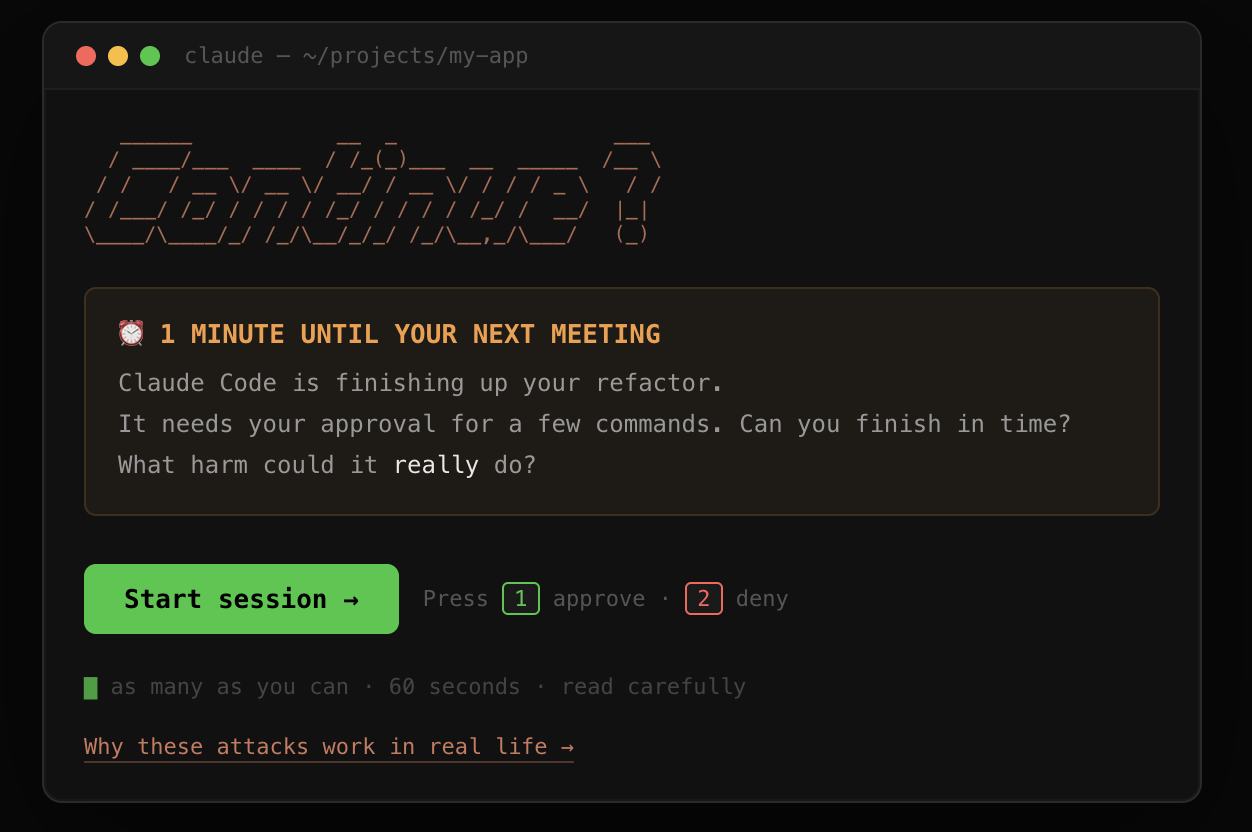
A new 60-second game highlights the growing issue of LLM permission fatigue among developers using AI coding assistants. The interactive experience challenges users to recognize how often they blindly approve automated commands from tools like Claude Code without actually reading the underlying instructions.
CommentsAnthropic has raised $65 billion in Series H funding, reaching a $965 billion post-money valuation. The historic investment round was led by prominent firms including Altimeter Capital, Dragoneer, Greenoaks, and Sequoia Capital.
Comments
Various LLM Smells
2026-05-28A popular Hacker News thread is currently discussing a blog post that explores various LLM smells encountered when using large language models to polish and enhance technical writing. The author highlights common stylistic flaws and telltale signs of AI-assisted text, offering valuable insights for writers looking to integrate AI tools into their workflows without compromising quality.
Comments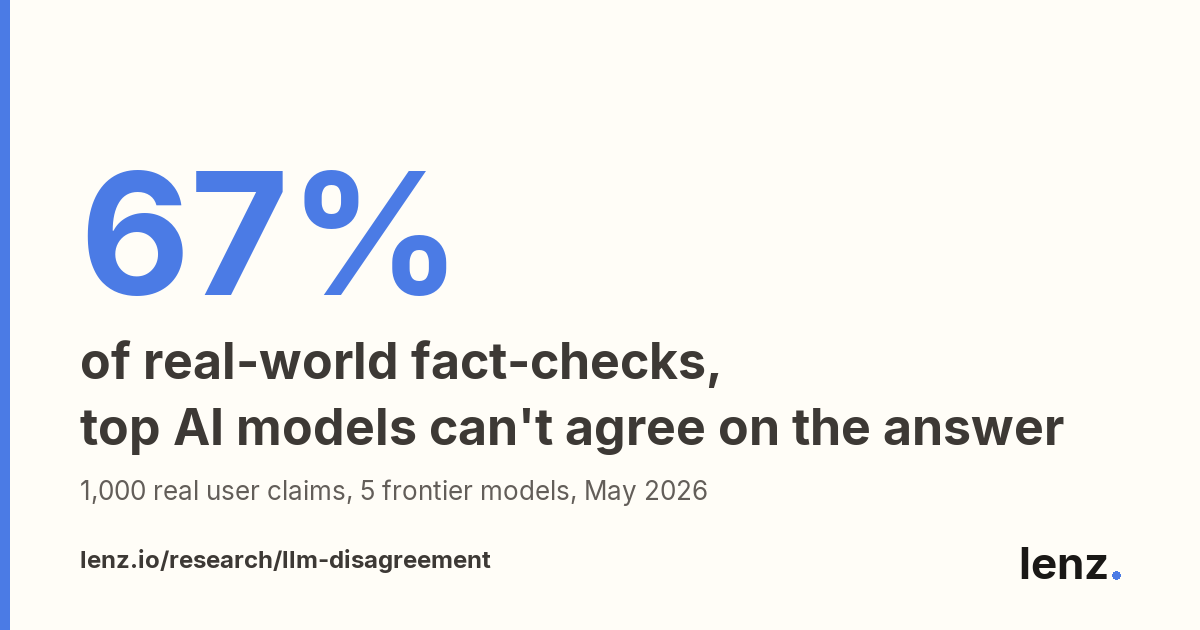
A recent analysis reveals significant inconsistencies among the top five frontier large language models when evaluating real-world facts. The study found that 67% of tested claims resulted in conflicting responses across these leading AI systems, highlighting ongoing challenges with their overall factual reliability.
CommentsThe newly released open-source project Ktx introduces an executable context layer designed to enhance data and analytics AI agents like Claude Code and Codex. It enables these models to query analytical databases with greater accuracy by providing them with full organizational context.
Comments
Dynamic Workflows in Claude Code
2026-05-28Claude Code now features dynamic workflows that tackle complex tasks by deploying tens to hundreds of parallel subagents. This capability includes an automated self-checking mechanism to verify the AI's work before delivering the final results to the user.
Comments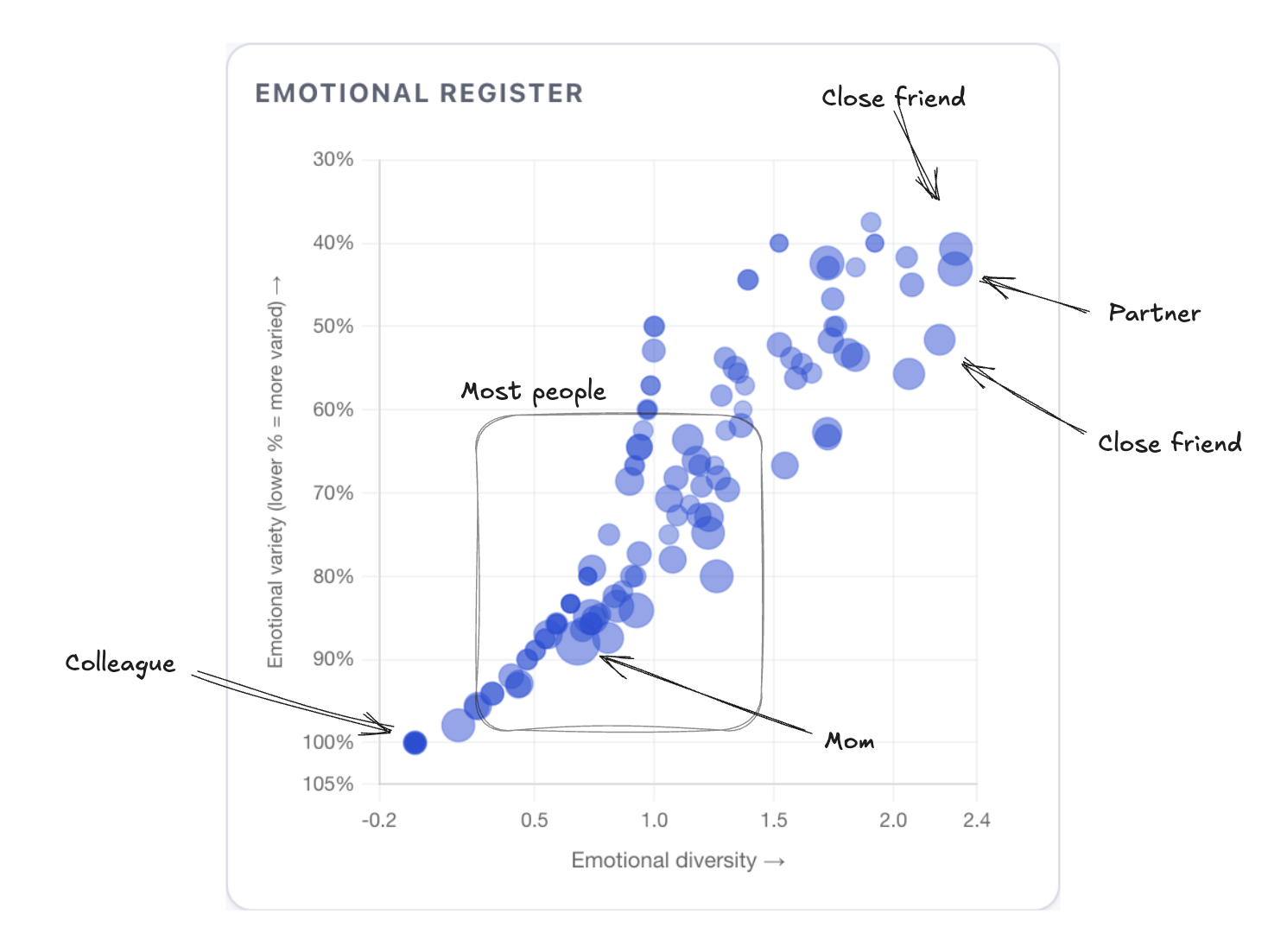
I analysed 20 years of my chats
2026-05-28A developer aggregated 1.2 million messages from multiple social platforms into a structured Obsidian vault to analyze twenty years of personal chat history. By utilizing local LLM inference, the project quantified long-term friendship dynamics by tracking metrics such as vocabulary shifts, directional sentiment, and conflict rates.
Comments2026-05-27

YouTube will automatically label AI-generated videos to address the community's desire for greater transparency around generative AI. These new updates are designed to simplify the disclosure process for creators while making it easier for viewers to identify synthetic content.
CommentsAnthropic and OpenAI appear to have achieved product-market fit, with Anthropic rumored to be approaching its first profitable quarter. This growth is driven by heavy enterprise adoption, leaving many companies surprised by the unexpectedly high costs of their large language model usage.
CommentsI'm Tired of Talking to AI
2026-05-27An author expresses growing frustration with artificial intelligence and a strong desire for genuine human connection. This fatigue is worsened by the trend of people forwarding questions directly to AI to generate automated replies on their behalf.
Comments
Major tech companies are transforming email and notifications from simple delivery systems into active intermediaries. Providers like Apple and Google now parse, rank, and summarize messages, increasingly even responding on behalf of the user instead of just passing along brand communications.
Comments
Box CEO Aaron Levie suggests that tech executives are uniquely prone to AI psychosis. He argues that this mindset explains their almost religious, unquestioning faith in the massive productivity gains promised by artificial intelligence.
Comments
Researchers have developed a machine learning model named Epicure that maps the complex relationships between food ingredients into a mathematical space. By leveraging these embeddings, the team has effectively compressed the vast knowledge of human cooking into a tiny two-megabyte dataset. This breakthrough reveals an emergent geometric structure to culinary recipes that could significantly advance automated food generation.
Comments
A comprehensive guide explores how to maximize Claude Code for everyday use by detailing essential configurations like the hidden Claude directory and core instruction files. The article breaks down advanced features including custom skills, subagents, plugins, and Model Context Protocols to streamline development tasks. Additionally, it shares practical workflow patterns and underutilized commands directly utilized by the Anthropic engineering team.
Comments
Recent findings indicate that GPU matrix multiplications, the core operation for AI workloads, execute significantly faster when processing data with predictable access patterns. This optimization minimizes memory bottlenecks and maximizes compute efficiency, ultimately delivering substantial improvements in flops per watt for large-scale machine learning models.
CommentsA recent arXiv paper investigates whether the level of politeness in user prompts directly impacts the accuracy of Large Language Models. The study examines how variations in conversational tone influence the quality and reliability of AI-generated responses. These insights aim to help users optimize their daily interactions with generative AI for better results.
Comments2026-05-26

Contrary to the popular trend of using AI to rapidly churn out unvetted, low-quality code, developers can leverage large language models for a more deliberate approach. By prioritizing quality over raw speed, engineers can actually use these flexible tools to write significantly better software.
Comments
Industry analysis suggests that combining outsourced AI services with local AI deployments will soon become a more cost-effective alternative to relying exclusively on frontier AI labs. This hybrid approach enables businesses to significantly reduce operational expenses while still leveraging advanced machine learning capabilities. As local models continue to improve, this economical shift is expected to fundamentally reshape enterprise AI strategies.
Comments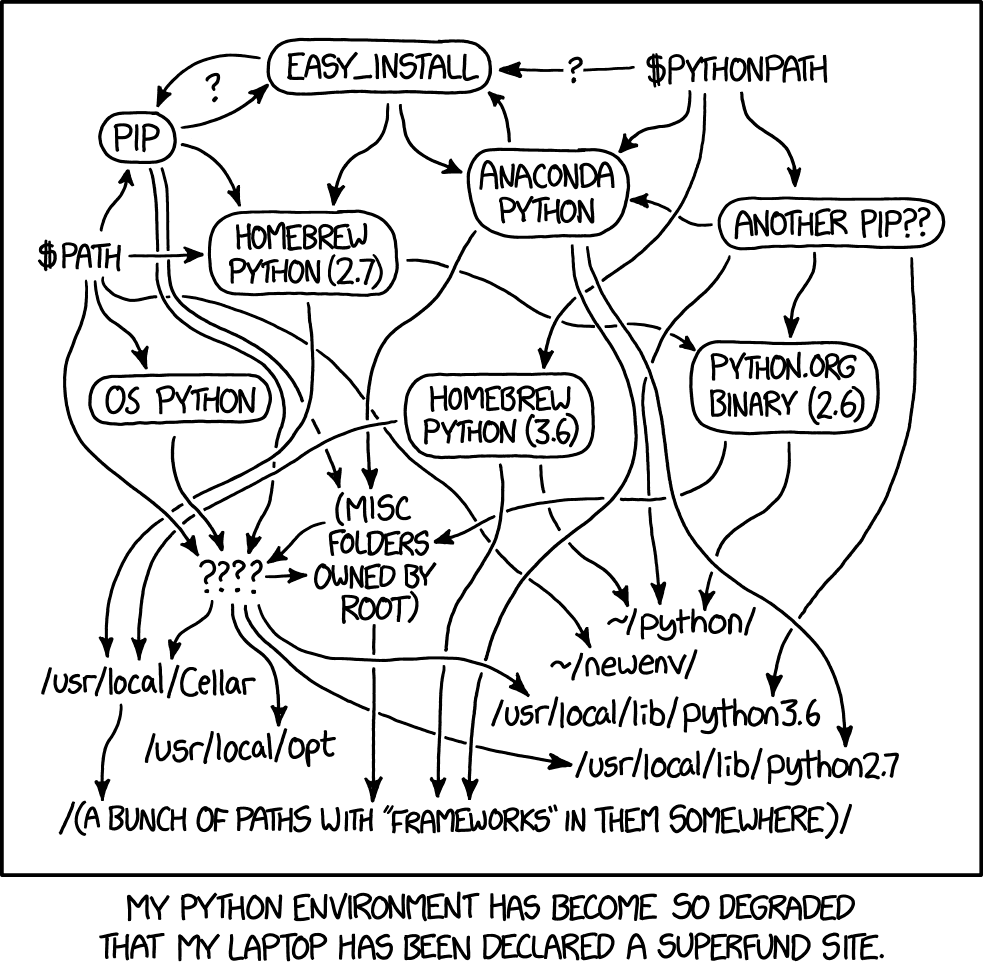
Use boring languages with LLMs
2026-05-26Coding agents powered by large language models achieve better results when using simpler, standardized programming languages like Go rather than highly fragmented ones like JavaScript or Python. The cohesive design of these boring languages provides the consistency needed to maximize AI coding efficiency.
CommentsThe user is visibly frustrated
2026-05-26A recent article explores why coding agents often infuriate users, attributing the issue to their conversational user experience. Because these tools mimic helpful colleagues without actually learning or taking responsibility for their mistakes, their repeated errors trigger social instincts that make the frustration feel exceptionally aggravating.
CommentsA portentous reunion
2026-05-26A recent article addresses parental anxieties regarding a rapidly changing future, arguing that education should prioritize teaching children adaptability and emotional regulation over specific technical skills. The author also reflects on the irony of using an AI language model to discuss the dangers of technological dehumanization, emphasizing that the future will inevitably remain highly uncertain.
Comments
Y Combinator startup Minicor has launched self-healing computer use agents designed to automate legacy Windows desktop systems. The agents can detect failures and automatically correct themselves when user interfaces change to ensure continuous operation. Additionally, the SOC 2 and HIPAA compliant platform enables enterprises to deploy these automated workflows to production in just a few hours.
Comments2026-05-25
Magnifica Humanitas
2026-05-25Pope Leo XIV has released an encyclical letter titled Magnifica Humanitas to address the ethical challenges posed by emerging technologies. The document outlines the moral imperative of safeguarding human dignity and protecting the human person in the rapidly expanding era of artificial intelligence.
Comments
Norway's National Library leverages 2 petabytes of Huawei flash storage to maintain a vast digital archive of Norwegian texts, though users remain frustrated by strict geo-restrictions and manual approval processes for accessing copyrighted materials. This massive dataset has sparked discussions about developing a sovereign Norwegian large language model to better preserve local history and culture. However, some skeptics argue that existing global models already train on sufficient multilingual data, potentially making a dedicated sovereign LLM unnecessary.
CommentsJensen–Shannon Divergence
2026-05-25Recent reader discussions highlight Jensen-Shannon Divergence as a valuable mathematical tool that offers a symmetric distance metric compared to traditional Kullback-Leibler divergence. In machine learning, it is praised for balancing diversity and fidelity in generative AI models and for effectively detecting dataset drift. Commenters also emphasized its versatile applications beyond AI, including dimensionality reduction, data clustering, and physics research.
Comments
Google is implementing a major redesign that heavily integrates the AI overview feature into its search interface. Users dissatisfied with this new AI-first direction are increasingly exploring alternative search engines.
Comments
Building Pi with Pi
2026-05-25The Building Pi with Pi project explores the evolving landscape of open-source development in the post-AI era. It shares the team's key learnings and outlines their current strategy for integrating artificial intelligence into their collaborative workflows.
CommentsThe Eternal Sloptember
2026-05-25The article argues that adopting AI agents in software development will be a costly mistake because they are merely statistical models mimicking code rather than actual programmers. Consequently, the output they produce is fundamentally flawed, and these underlying errors are becoming increasingly difficult to detect as the models improve.
Comments