AI Tech News Last 24 Hours
Artificial intelligence moves quickly, and this section captures its most recent developments. Coverage includes new model releases, research milestones, AI product launches, startup funding, and the policy debates surrounding the technology. It is a convenient briefing for anyone trying to keep pace with AI's constant stream of news.
A single day can bring a frontier model announcement, benchmark disputes, an enterprise adoption deal, a lab safety controversy, and a nine-figure funding round, and this section aims to catch them all. Coverage spans research labs, chip suppliers, application startups, and the regulators trying to keep up.
No area of technology compresses more change into less time, and staying a day behind in AI can mean missing something genuinely important. Engineers building with these models, executives planning around them, and researchers tracking the field use a rolling AI briefing to keep their bearings.

The Helicopter with Radioactive Blades
2026-09-09A newly surfaced video highlights an unexpected historical detail about the CH-53 Sea Stallion, a massive helicopter introduced in 1966. The footage reveals that the historic aircraft was built with radioactive blades.
Comments
Mercury 2.5
2026-09-09Mercury 2.5 is the market's most capable diffusion LLM, operating at an impressive 1,107 tokens per second. It delivers a 40% increase in intelligence over Mercury 2, offering performance comparable to cost-optimized frontier models.
Comments
Discussions surrounding an article comparing GCC's nested functions and C++ lambdas highlight significant implementation complexities, particularly the need for trampolines to cast nested functions to bare function pointers. Critics argue the original author overlooks these semantic differences and the resulting compiler optimization challenges, suggesting that modern closure models remain more practical than adding nested functions to the C standard.
CommentsTracing np.add, all the way down
2026-09-09A new blog post provides a deep technical dive into the NumPy codebase by tracing the execution path of the np.add function. Drawing on recent contributions to the library, the author explains how this core operation is implemented all the way down to the lowest levels of the framework.
Comments
Copperhead is a new open-source AI agent that designs, documents, and validates real printed circuit boards directly from text prompts. Billed as the Cursor for circuit boards, the tool aims to significantly streamline the hardware design process by translating natural language into fully functional PCB layouts.
CommentsReverse Engineering an ASIC
2026-09-09A new article details the reverse engineering of an ASIC by deriving a netlist from the physical silicon to uncover its underlying logic and hidden outputs. Readers highly praise the project for its beautifully designed, educational website and its insightful explanation of how a netlist serves as a crucial intermediate step between conceptual hardware design and physical manifestation.
Comments
Jellyfin 12.0
2026-09-08Jellyfin has released version 12.0, introducing crucial bug fixes for audio and video desync issues alongside improved EOTF processing and new Brainz integrations. The latest update for the open-source media server also highlights significant community contributions, including key development work by crobibero.
Comments
John Margolies has compiled a remarkable collection of photographs documenting the eccentric roadside architecture and ephemera of America. This visual archive captures the unique commercial landscapes that define the country's unconventional cultural history.
CommentsA developer has published a reconstructed version of the infamous Stuxnet cyber-weapon source code on Hacker News strictly for educational and research purposes. The recreated malware is configured to run exclusively on older Windows XP and Windows 7 operating systems.
Comments
A newly published arXiv paper demonstrates how a classic Trusting-Trust compiler attack can be scaled to compromise an entire Linux distribution through binary manipulation. The research highlights a critical software supply chain vulnerability where malicious code can be hidden within pre-compiled binaries, completely bypassing traditional source code audits. These findings underscore the persistent risks of relying on unverified binary packages in modern computing environments.
Comments
WeatherNext 3
2026-09-08WeatherNext 3 has been officially unveiled as the most advanced global weather AI model to date, representing a significant upgrade in artificial intelligence capabilities for worldwide meteorological forecasting. The new system is expected to deliver highly improved predictive accuracy and comprehensive environmental data analysis for users across the globe.
Comments
A recent investigation reveals that LG Smart TVs utilize first-party automatic content recognition technology to track and collect viewing data across all inputs. This continuous data harvesting raises significant privacy concerns, potentially compromising the viewing habits of up to 216 million users worldwide.
CommentsShow HN: Jigsaw Haiku
2026-09-08Jigsaw Haiku is a new browser-based word puzzle game where players assemble haikus using interlocking jigsaw tiles. Community feedback highlighted frustrations with borders obscuring text edges, restrictive piece placement, and choppy dragging performance across different devices. In response, the developer has already fixed the visual clipping issues and is exploring options for free-form piece placement and smoother rendering.
Comments
Show HN: Interactive Tree of Life
2026-09-08A new interactive web tool called the Tree of Life allows users to explore and compare biological data across 11 distinct scientific trees. The platform enables a detailed examination of ancestry, physical traits, fossils, habitats, and sources to help visualize complex evolutionary relationships.
CommentsOrganized by Caltech undergraduates, the Caltech Mathathon is the first hackathon dedicated to applying artificial intelligence to research-level mathematics. Participants receive $20,000 in AI credits and are evaluated on their mathematical intuition and ability to understand proofs, with chat logs required to verify that the core problem-solving work was completed during the event.
Comments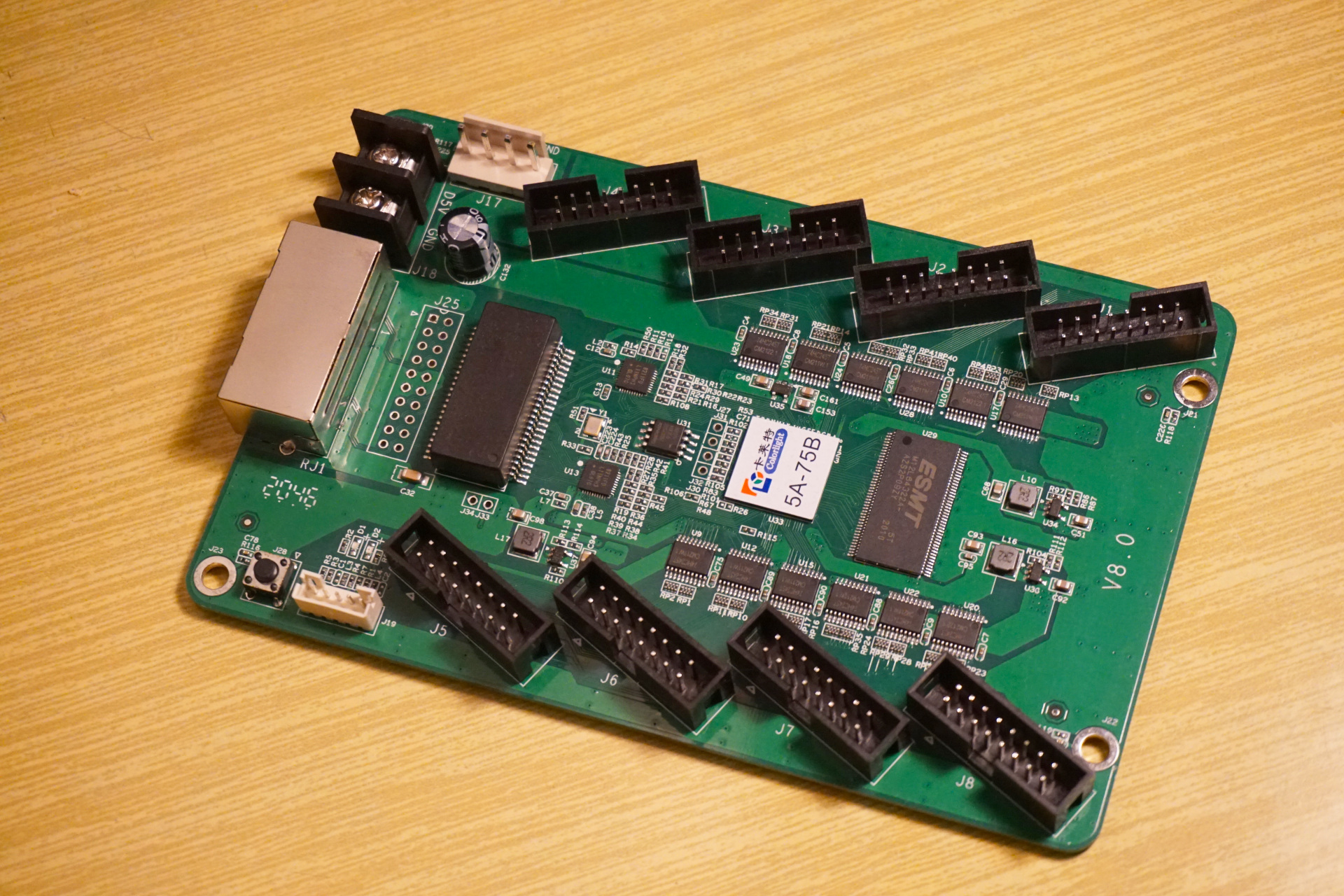
Chris Lasocki explores the Colorlight 5A-75B, a highly affordable ECP5 FPGA development board that has gained traction among hardware enthusiasts. This in-depth article examines the board's technical capabilities and highlights its potential for budget-friendly electronics projects.
Comments
This Month in Ladybird – August 2026
2026-09-08The August 2026 Ladybird browser update introduces CSS scroll snap, JavaScript debugging, and session restore features. The development team is also making a serious push to improve engine performance by implementing a new style engine. Video updates detailing these changes are available on Twitch and YouTube.
CommentsCatching Crumbs from the Table (2000)
2026-09-08Hacker News readers are discussing Ted Chiang's 2000 essay Catching Crumbs from the Table and its implications for the future of human mathematicians in an AI-driven world. Commenters suggest that humans will increasingly act as interpreters, using hermeneutics to explore and explain AI-generated mathematical discoveries to one another. To achieve this effectively, commenters note that academia will need to adapt its core values and preserve mathematical culture.
CommentsKeep Our Servers Running
2026-09-08The Internet Archive's Open Library is actively recruiting experienced technical volunteers to help optimize database performance, redesign the frontend, and migrate the backend to FastAPI. In the accompanying discussion, community members also debated the organization's controversial practices, weighing the legal risks of hosting pirated content and the pandemic-era Emergency Library against its broader archival mission.
Comments
Methods for Random Gradients (2024)
2026-09-08A newly updated 2024 guide explores various techniques and methods for generating random gradient images. The author provides a detailed overview of their personal workflows for creating these procedural graphics. This resource offers practical insights for developers looking to implement dynamic, algorithmic backgrounds in their projects.
CommentsThe Dataflow Model Revisited
2026-09-08Industry veterans note that stream processing and dataflow models have failed to achieve mainstream adoption due to high operational complexity and a general lack of demand for ultra-low latency analytics. With modern data warehouses now offering sufficiently low-latency ingest, experts argue that standalone streaming systems are largely unnecessary for most companies. Instead of replacing traditional SQL databases, these powerful paradigms are better suited to serve as underlying execution architectures for distributed systems.
Comments
Live map of public transport in Belgium
2026-09-08A new digital platform now offers a comprehensive live map tracking all public transportation across Belgium in real time. By integrating data from all major transport operators including De Lijn, STIB-MIVB, TEC, and NMBS/SNCB, users can monitor every bus, tram, metro, and train on a single unified interface.
Comments
The NX bit is not just about security
2026-09-07A developer recently shared a detailed debugging saga involving a random system lockup encountered while building a bare-metal ARM64 hypervisor for postmarketOS. The issue, which was triggered by enabling the CTR_EL0 intercept, ultimately led to surprising discoveries about the NX bit and its functionality beyond standard security applications.
CommentsTech community discussions highlight the cognitive risks of using large language models to author written content, emphasizing that the act of writing is crucial for structuring and refining one's own thoughts. While some see potential for AI to expand human-scaffolded outlines, critics warn that outsourcing writing exposes a lack of deep understanding and generates useless corporate documentation. Ultimately, the consensus suggests that delegating long-form writing to AI undermines the critical thinking process required to produce meaningful work.
CommentsMador is a new lightweight open-source tool that enables developers to make any DOM reactive using a minimal 80-line Proxy state tuple. Recently shared on Hacker News, the project offers a simple way to add reactivity to web interfaces without relying on heavy frameworks. The source code is available for review and contribution on GitHub.
CommentsReaders discussing an ancient Babylonian lamb and beet stew recipe note its strong similarities to modern Iraqi cuisine, aside from ingredients introduced later through global trade. The conversation then shifts to a detailed exploration of global etymology, highlighting how historical trade routes and cultural exchange have shaped the linguistic naming conventions for tomatoes and other produce across various languages.
CommentsHacker News users are expressing nostalgia for the detailed profiles and high-investment experience of early OkCupid, contrasting it with the low-effort swiping mechanics of modern mobile apps. Many commenters criticize Match Group's business model and suggest a market opportunity exists for a new competitor that revives evidence-based matching and rich user profiles. However, others argue that increased cultural cynicism makes it impossible to fully recapture the optimistic dating dynamics of the 2010s.
CommentsStaatsgeheim has introduced MathKernel, an evidence-aware multi-engine mathematics runtime and MCP server designed to enhance computational accuracy in large language models. By supporting exact, symbolic, formal, and numeric computations with typed MathIR and trust labels, the platform ensures full provenance and highly reliable mathematical reasoning for AI applications.
Comments
A user recently encountered an annoying bug on YouTube and decided to use ChatGPT to investigate the issue. By leveraging the AI chatbot, they were able to successfully troubleshoot the problem and find actionable answers. This highlights the growing utility of generative AI for everyday technical troubleshooting.
Comments
An Alien Mind
2026-09-07Jakub Pachocki warns that the rapid advancement of artificial intelligence is creating an increasingly alien mind that presents significant challenges for keeping the technology aligned with human values. To address these emerging risks, he advocates for the implementation of stronger safety safeguards and enhanced international coordination.
Comments